
















Solar Road Signs: An Eco-Friendly and Efficient Solution for Road Safety
Road signs play a crucial role in traffic management and maintaining safety on the roads. However, in recent years, technology has made significant strides, introducing more efficient and environmentally friendly solutions, such as solar road signs. These innovative devices not only provide better visibility but also contribute to reducing electricity consumption, making them a sustainable choice for road infrastructure.
What are solar road signs?
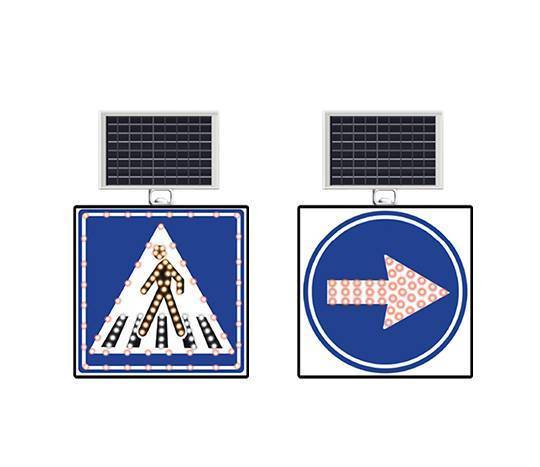
Solar road signs are traffic signs equipped with solar panels that power an LED lighting system. These signs are designed to be visible both during the day and at night, providing better information and warnings for drivers. Solar energy is captured by photovoltaic panels, stored in batteries, and used to illuminate the signs when visibility conditions are reduced, such as at night or in adverse weather conditions.
Best-selling Solar Road Signs
Advantages of Using Solar Road Signs
Energy efficiency and autonomy: One of the main advantages of solar signs is that they are completely energy autonomous. They do not require connection to the electrical grid, significantly reducing installation and maintenance costs. Additionally, their rechargeable batteries allow for continuous operation over the long term, even on days without sunlight.
Improved visibility: Solar road signs are equipped with high-intensity LEDs, making them much more visible than traditional signs. This aspect is essential for preventing accidents in high-traffic areas, on highways, or at dangerous intersections. The additional lighting helps drivers notice the signs more quickly, especially in low visibility conditions.
Durability and resistance: These signs are built to withstand harsh weather conditions. High-quality materials and advanced technology ensure a long lifespan, and the solar panels and LED systems are protected against the elements and mechanical damage.
Reduced ecological impact: In a world increasingly aware of environmental issues, solar road signs are an eco-friendly solution. By using solar energy, these devices help reduce carbon footprints and conserve traditional energy resources. Furthermore, LED lighting consumes less energy than other types of lighting, leading to significant long-term savings.
Lower maintenance costs: Being independent of the electrical grid and equipped with efficient lighting systems, solar road signs require minimal maintenance. They are not affected by power outages or voltage fluctuations, and the lifespan of LEDs and batteries is typically very long.
Applications and Uses of Solar Signs
Solar road signs are used in a variety of contexts, being extremely versatile. Here are some common examples of use:
In rural and isolated areas: In areas where there is no electrical infrastructure or it is difficult to access, solar signs are the ideal solution. They can be installed quickly and at low cost, providing increased visibility in poorly lit areas.
At dangerous intersections: Intersections with reduced visibility or those where frequent accidents have occurred can greatly benefit from solar signs. They alert drivers in advance and help reduce the risk of collisions.
On highways and heavily trafficked roads: Visibility is essential on roads with heavy traffic. Solar signs can mark exits, lane changes, or speed restrictions, ensuring that drivers are correctly informed even at night or in adverse weather conditions.
Future Perspectives of Solar Road Signs
As technology continues to evolve, solar road signs will become increasingly efficient and accessible. Already, in many countries, these solutions are widely used to improve road safety and reduce maintenance costs. In the future, these systems are expected to be integrated with other smart technologies, such as real-time traffic monitoring systems or road signs connected to smart city networks.