


Signing a work zone on a public road is not a matter of common sense but of compliance. Temporary road signs, marked with the letter U in the Romanian standard, form a system separate from permanent signs: they have a different background colour, a different placement logic and different legal obligations behind them. This guide shows which U signs you actually need, in what order they are placed along the road and what to add so that the work zone stays visible at night and in the rain.
What temporary road signs (U) are and how they differ
Temporary signs mark a situation that is not permanent: a construction site, a diversion, a closed lane, an accident or emergency work on utility networks. The immediate visual difference is the yellow background, which sets them clearly apart from permanent signs with a white or blue background. A driver entering a work zone must understand at first glance that the usual rules of the road have been temporarily suspended.
The second, less obvious difference is that temporary signs take precedence over permanent ones for the duration of the works. If the section has a permanent 70 km/h limit and you put up a 30 km/h U13, the temporary instruction is the one that applies. That is why the order and consistency of temporary signage matter so much: an incomplete layout does not just fail to help, it creates contradictions on the road.
The legal framework is set by Government Emergency Ordinance (OUG) 195/2002 and its implementing regulation approved by Government Decision (HG) 1391/2006. For roadworks, the methodological rules of Joint Order 1112/411/2000 apply, covering the conditions for closing roads to traffic and imposing traffic restrictions for works in the public road area. The technical characteristics of the panels follow SR 1848-1 and SR EN 12899-1.
The four zones of a work site
Any correct work-zone layout, whatever its size, reads as four successive zones. This is the part most improvised layouts miss: a sign is put up right next to the excavation and the job is considered signed.
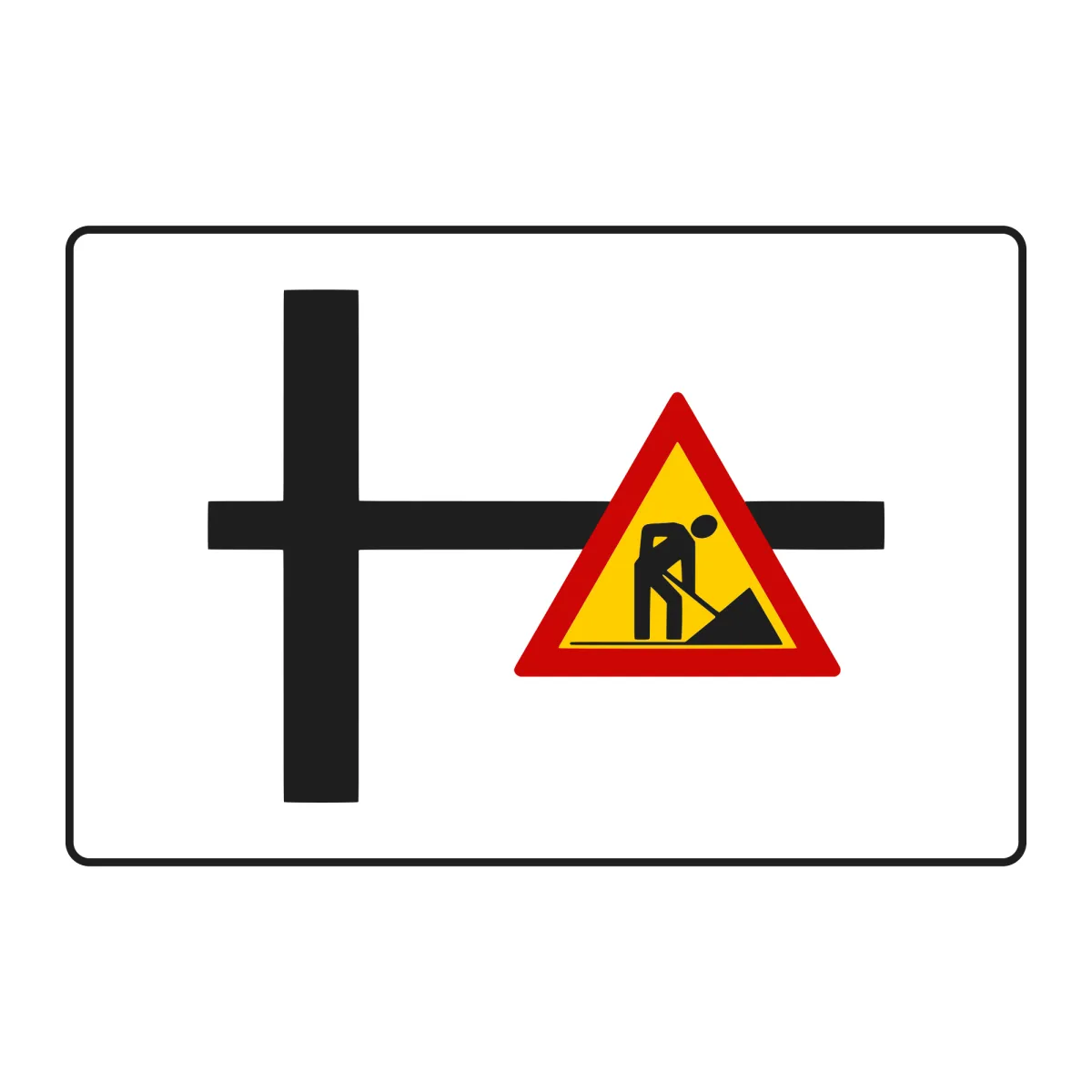
Advance warning zone. Warns drivers before they see the obstacle. This is where you use U36 to give advance warning of street works and U32 for a succession of work sites, and where a section with alternating one-way traffic is announced. The distance from the obstacle is not arbitrary: it is set in the approved layout according to the road category and the legal speed, and it is considerably longer outside built-up areas than on an urban street.
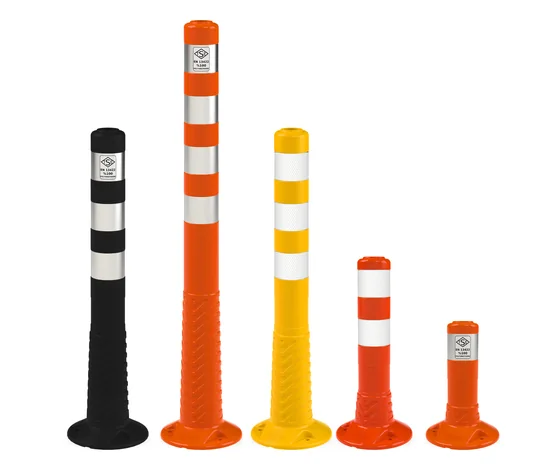
Transition zone. Physically guides traffic onto the new route. Here you use U18 and U19 for a temporary diversion and U21 and U22 for a temporary narrowing, backed by directional beacons and cones that trace the deviation. The transition must be gradual, not a sudden angle.
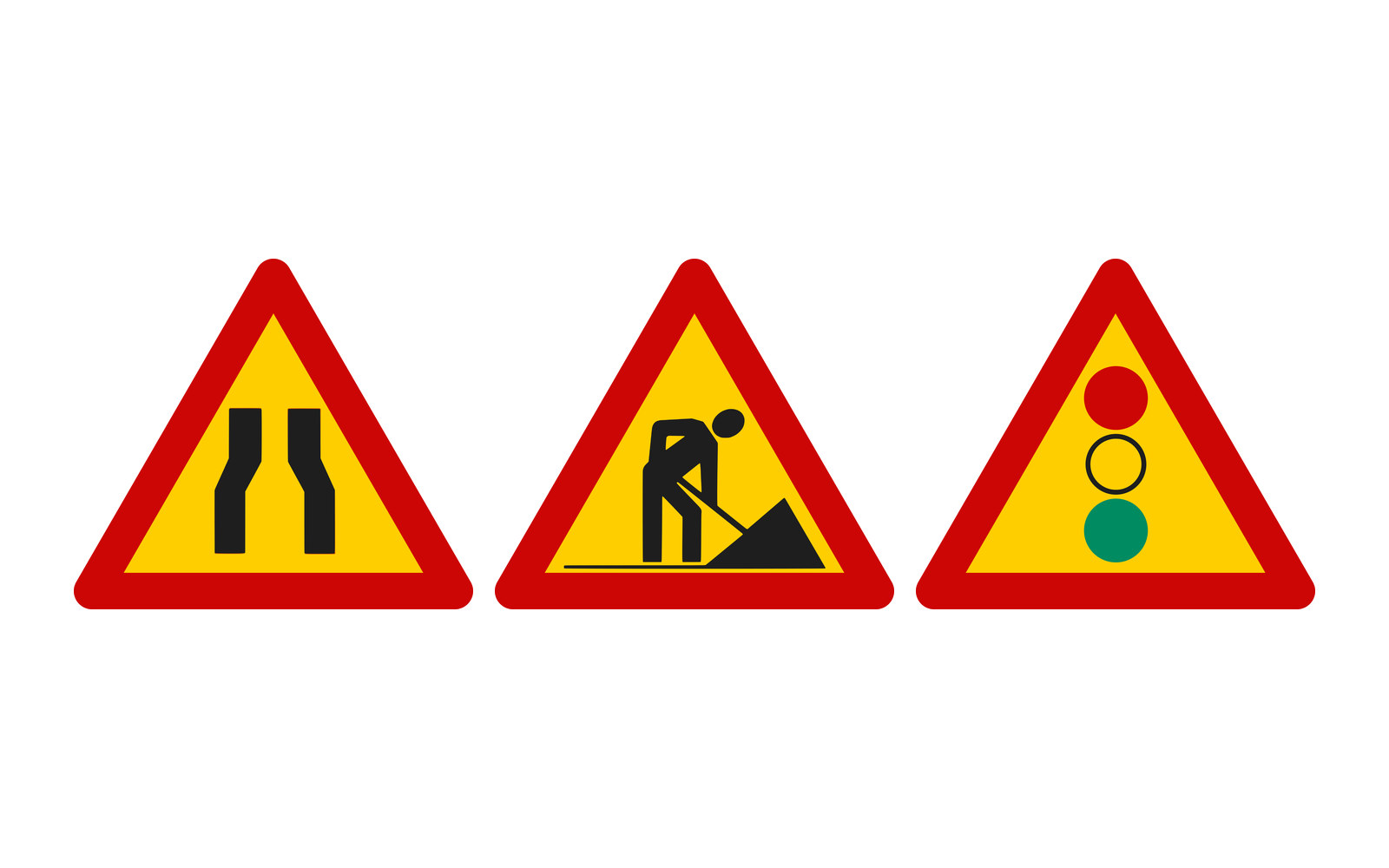
Work zone itself. Marks out the area where work takes place and separates it from the running lane. It is signed with U11 for other dangers, U20 for a level difference with the adjacent lane and the U13 speed limit that fits the situation.
Return zone. Brings traffic back to the normal layout and cancels the restrictions. U26 marks the end of the temporary deviation and U14 the end of all restrictions. Leaving out this zone leaves drivers uncertain, and it is one of the non-conformities found most often at handover.
Recommended temporary road signs (U)
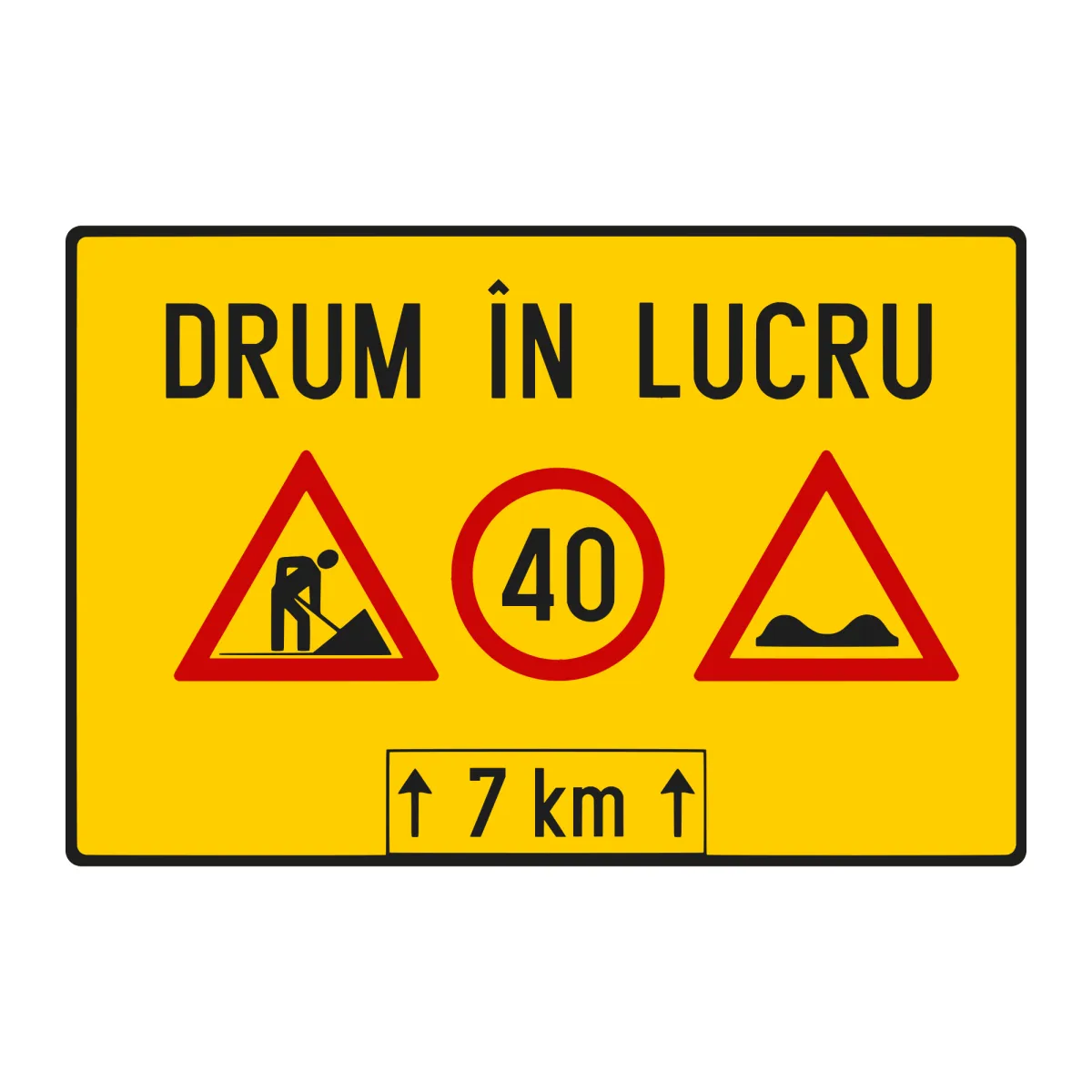
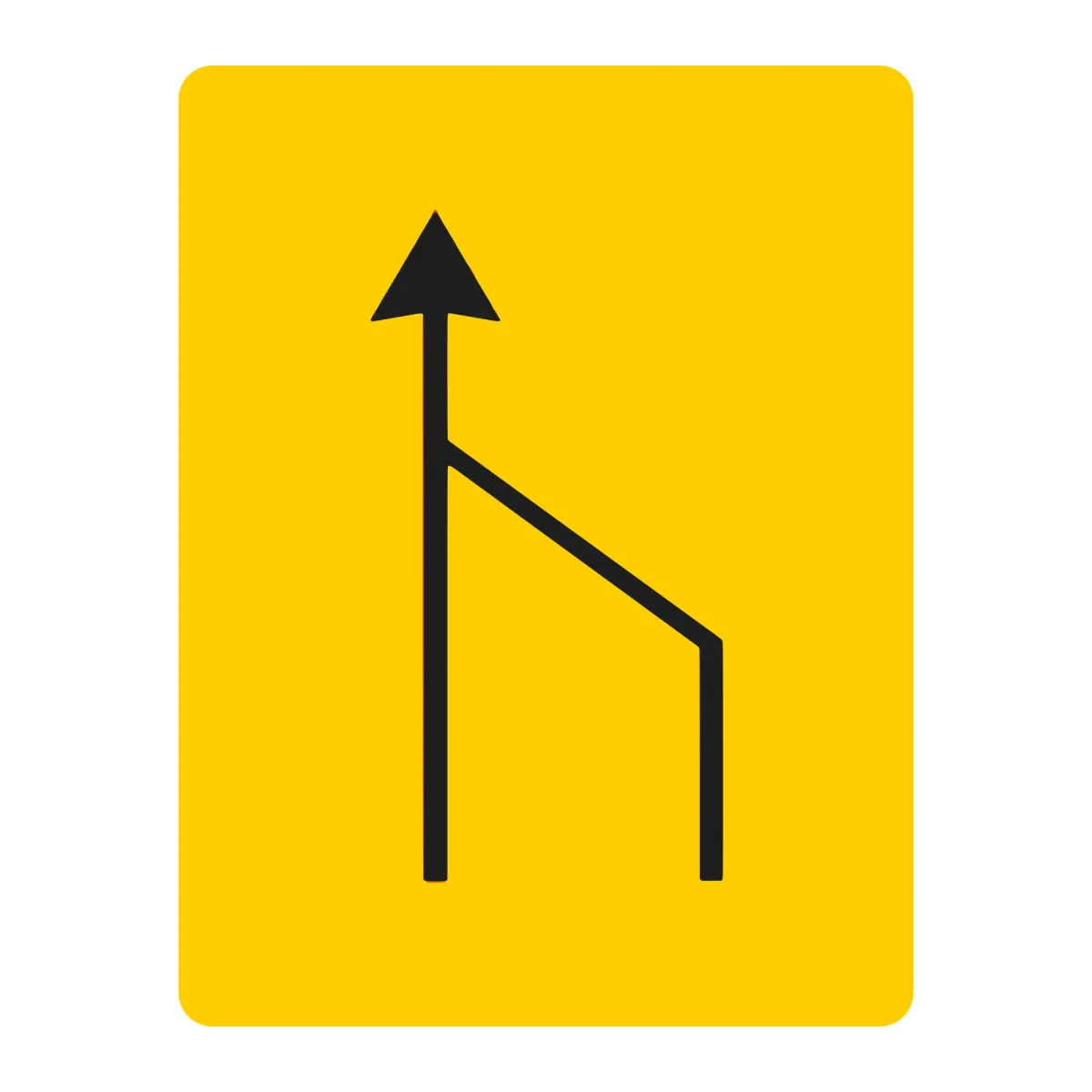
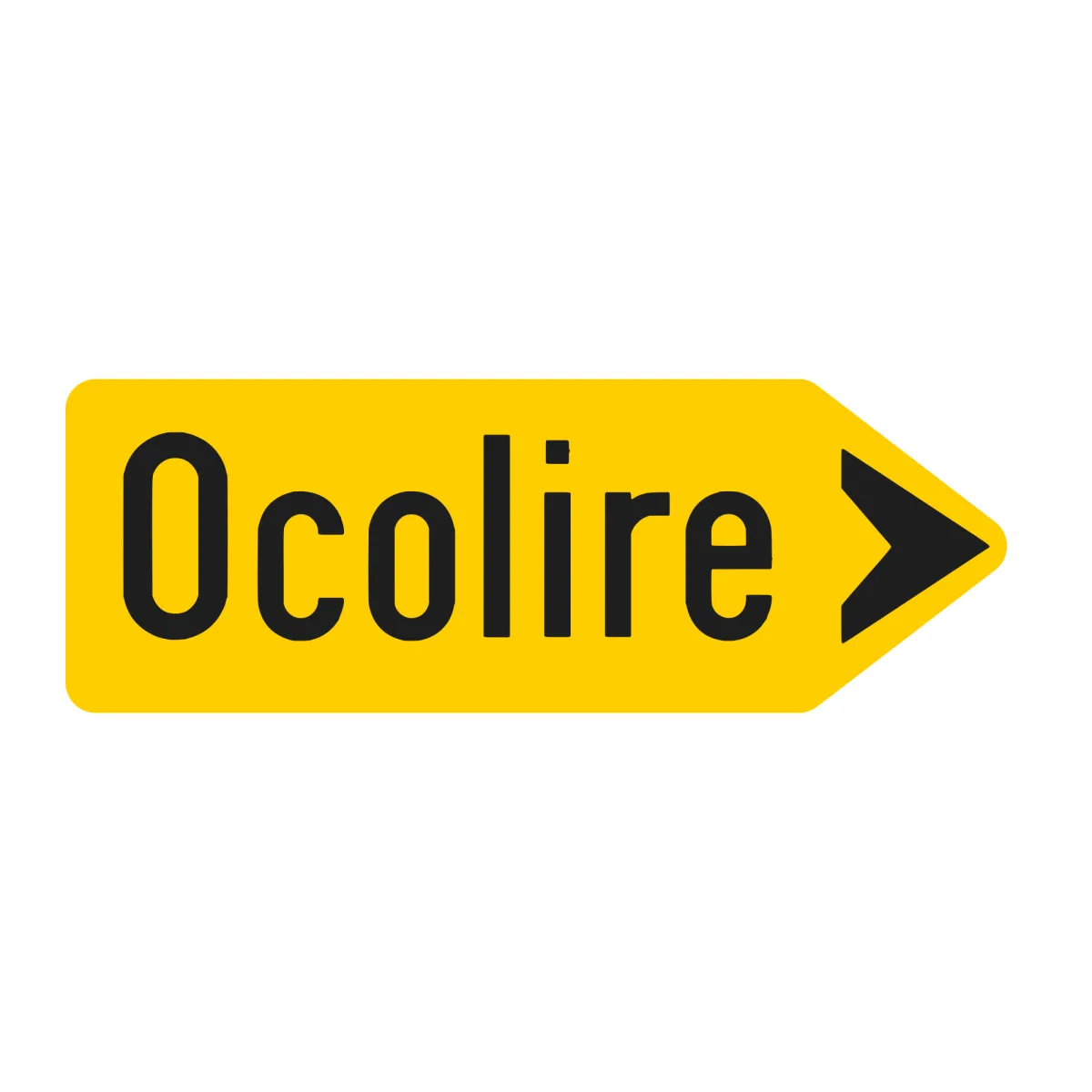
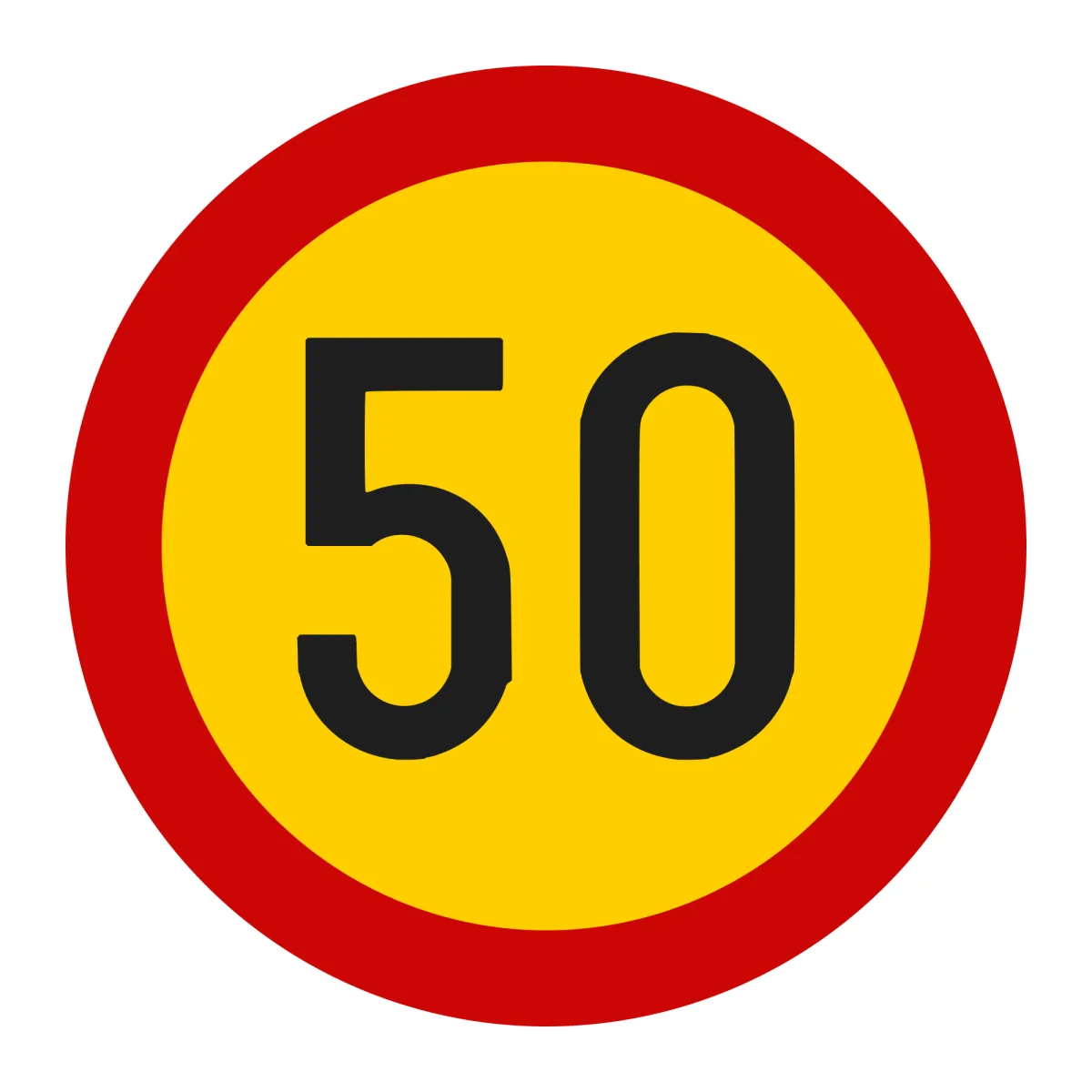

The essential U signs, grouped by function
You do not need the whole U set for every job. You need exactly the signs that cover the four zones described above. These are the ones used most in practice.
Danger warning: U1, U2 and U3 for a road narrowing on both sides or on one side, U4 dangerous verge, U5 uneven road, U6 slippery road, U7 loose chippings, U11 other dangers.
Temporary regulation: U12 no overtaking, U13 speed limit in steps from 10 to 60 km/h, U14 end of all restrictions, U15 end of no overtaking, U10 two-way traffic.
Guidance and diversion: U18 and U19 temporary diversion, U21, U21a, U22 and U22a temporary narrowing, U27 advance warning of the detour route, U26 end of the temporary deviation.
Large advance warning panels: U32 succession of work sites, U33 advance warning of a section with alternating one-way traffic, U36 advance warning of street works. These are the 120x80 cm or 180x120 cm panels that can be seen from far away and give the context of the whole job.
Unplanned situations: U39 road accident, for interventions that were not planned.
The speed limit deserves a separate mention. U13 is used in steps, not all at once: you do not take a driver from 90 to 30 km/h with a single sign, you stagger the reduction over several successive panels. It is the difference between a controlled slowdown and hard braking in front of a machine.
Why temporary signs are made in Class I
The U signs in the catalogue are made with Class I retroreflective sheeting. The reason is both economic and practical: a temporary panel stays up for weeks or months, not ten years, and it goes through repeated handling, transport and storage. Class I gives the retroreflection needed for the duration of the works at a cost that allows the site to be fully equipped.
For permanent signage, where the panel stays on its post for a decade and must remain legible in all conditions, the calculation changes completely. The detailed comparison is in the article on Class I and Class II road signs.
Equipping the work zone: what you need besides the panels
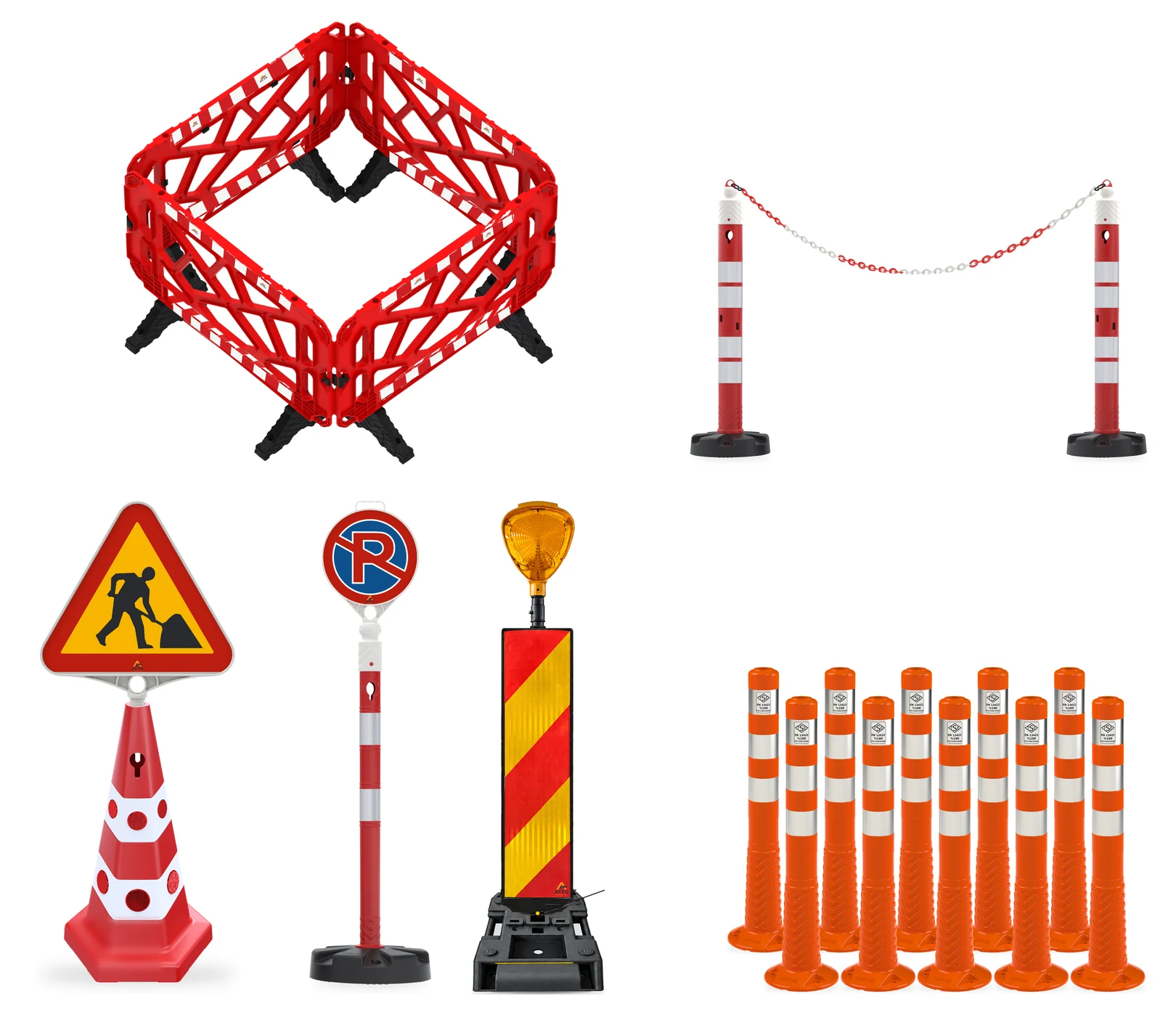
A temporary sign does not work on its own. It needs a base that keeps it upright without fixing it in concrete, and it needs elements that physically mark out the area and make it visible at night.
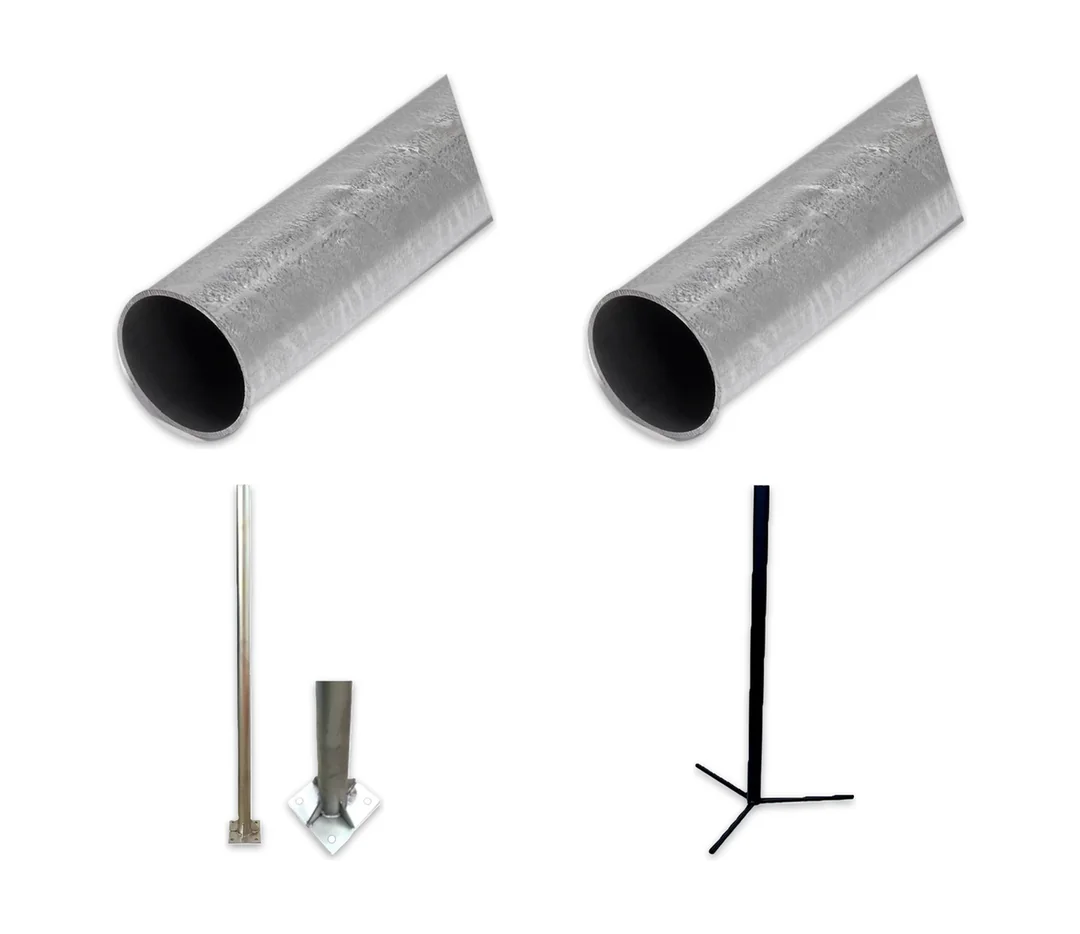
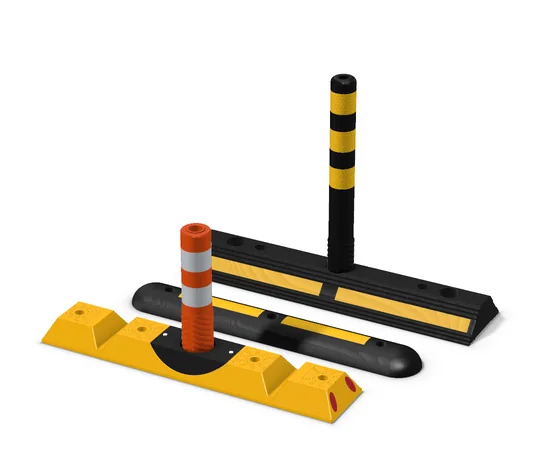
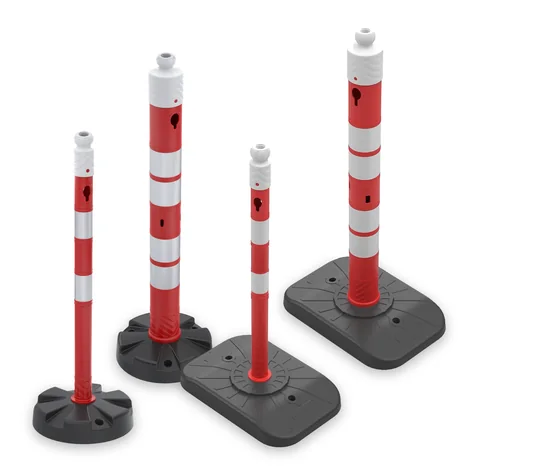
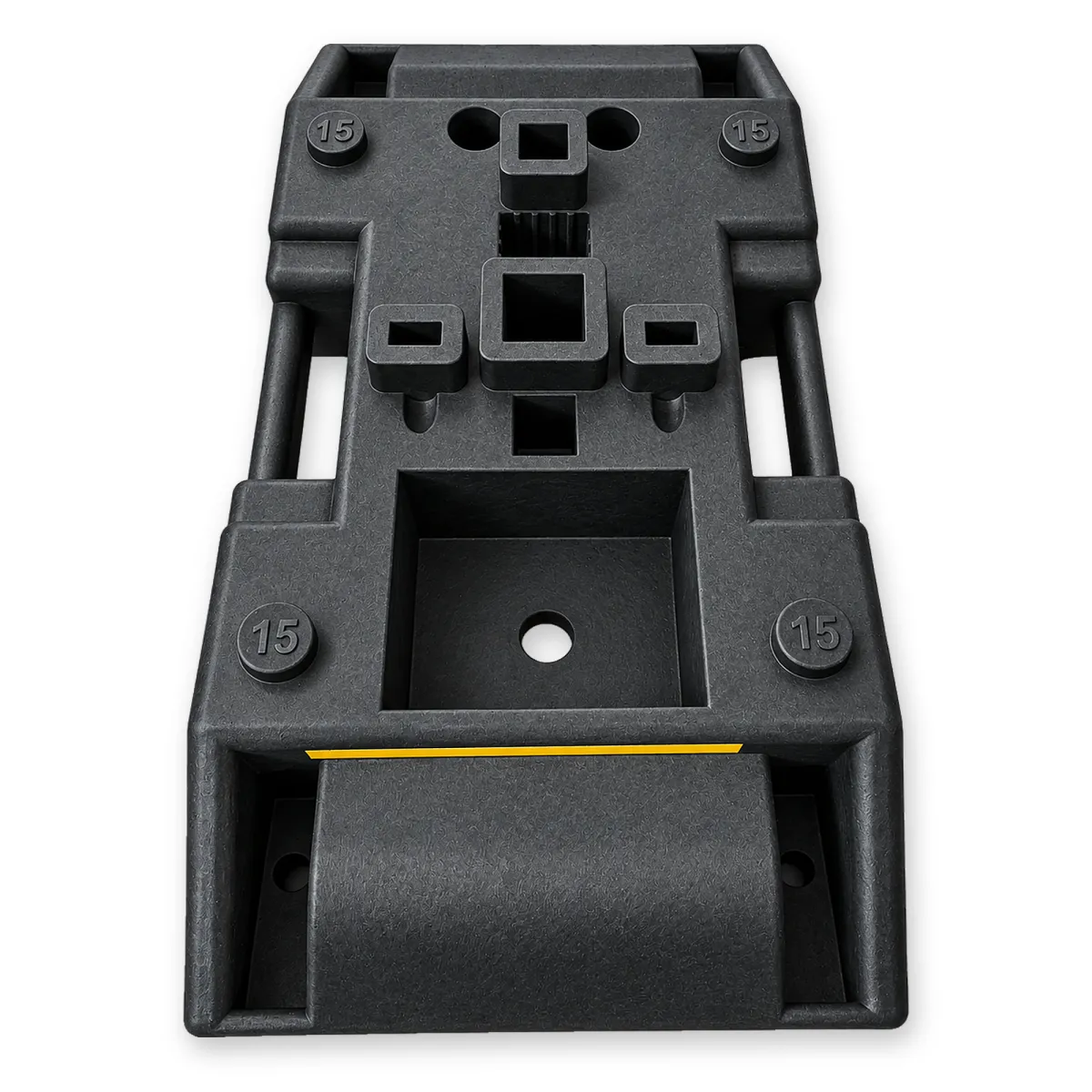
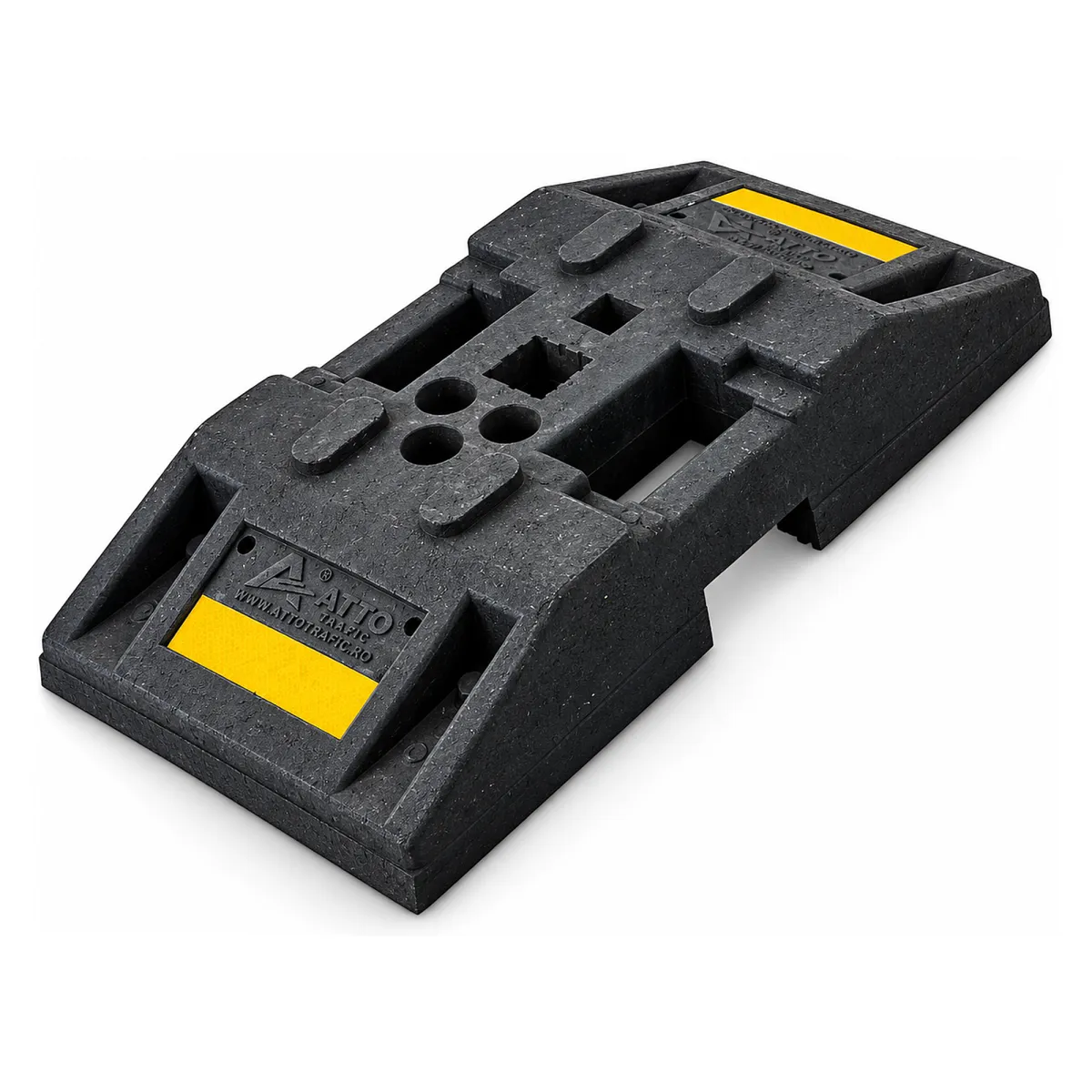
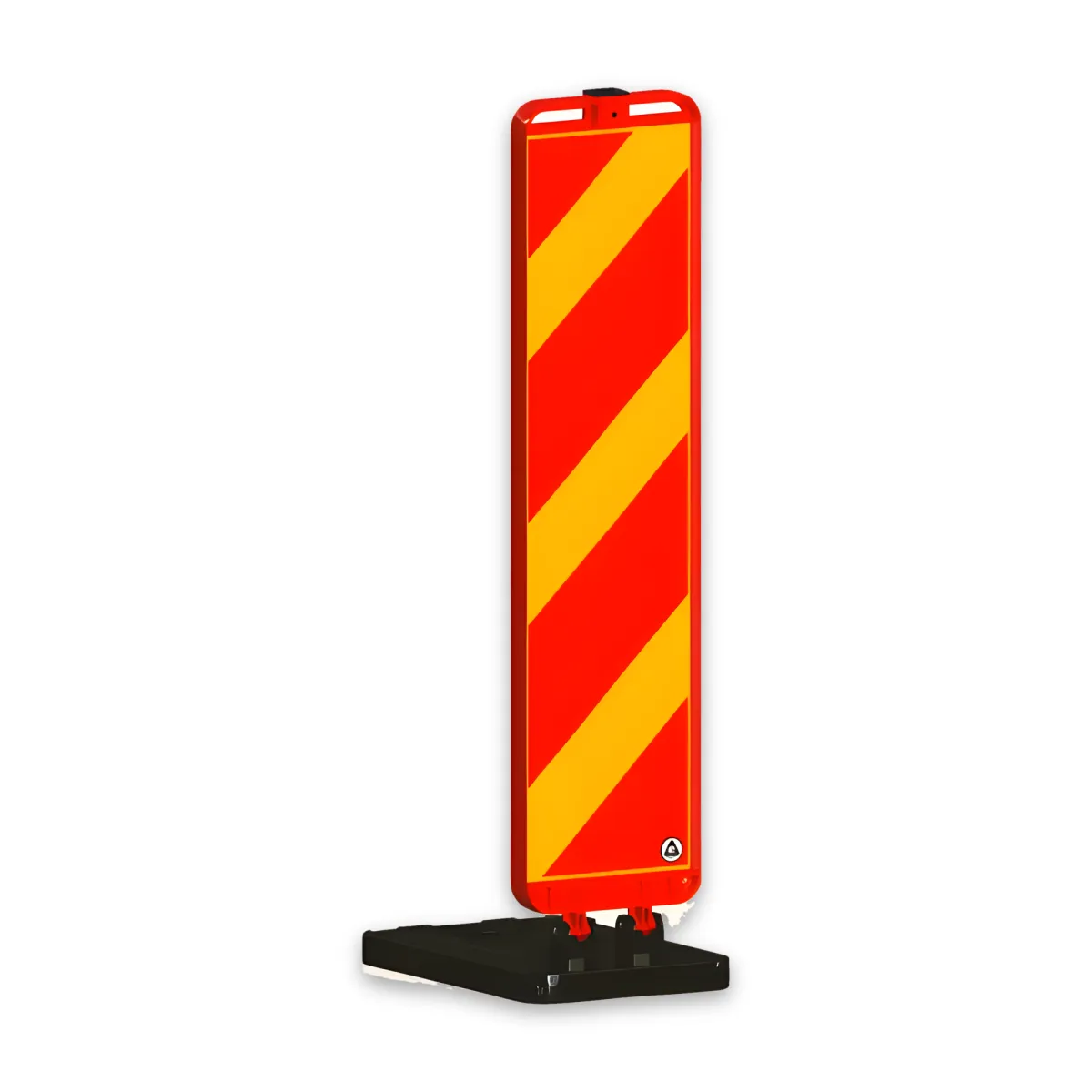
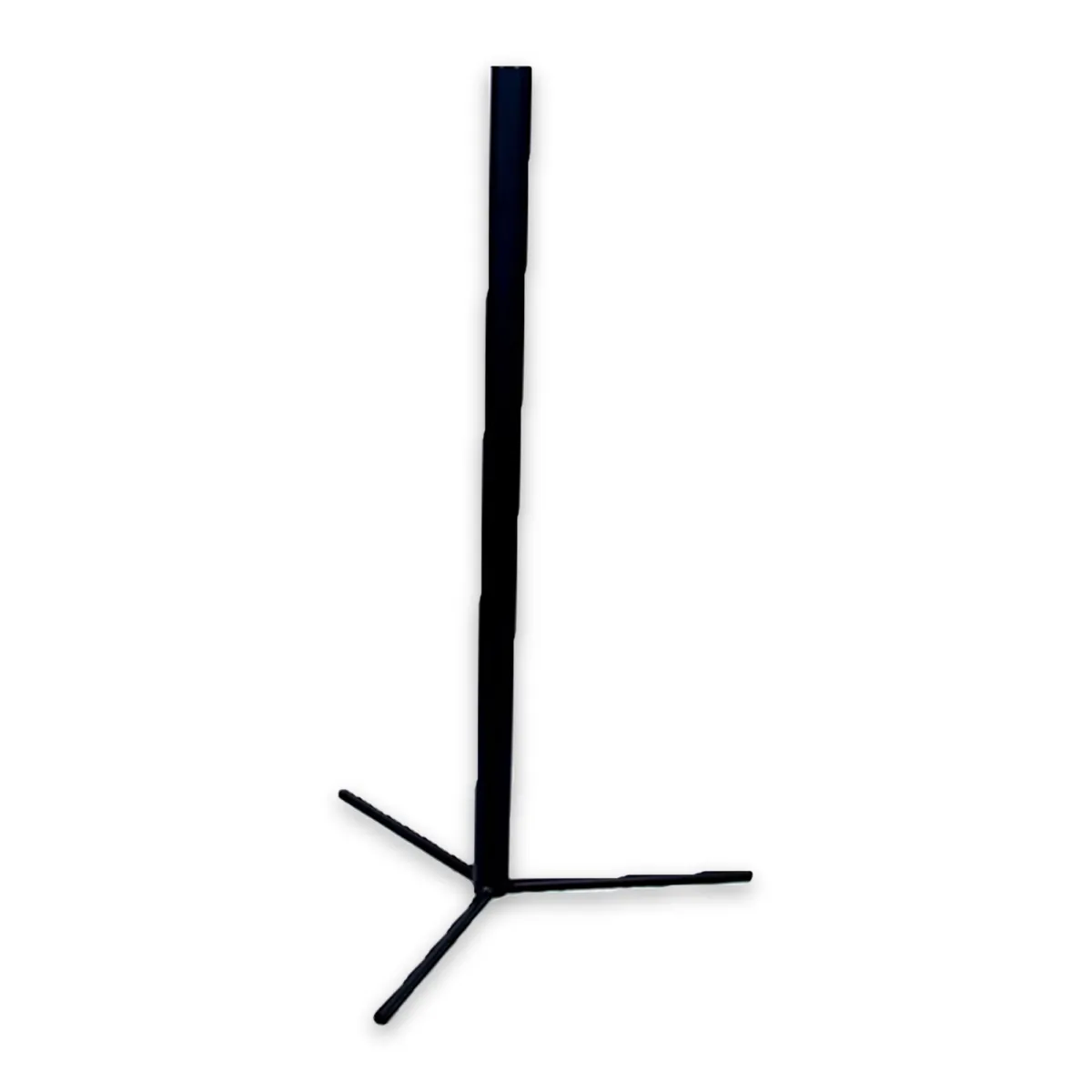
Mobile bases. The 15 kg base with reflective strips is enough for short interventions in built-up areas, sheltered from the wind. For open roads, high speeds and long exposure, the 28 kg version is the right choice. A panel blown over by the wind not only stops signing, it becomes an obstacle itself. Alternatively, a tripod post lets you mount the sign at standard height without a foundation.
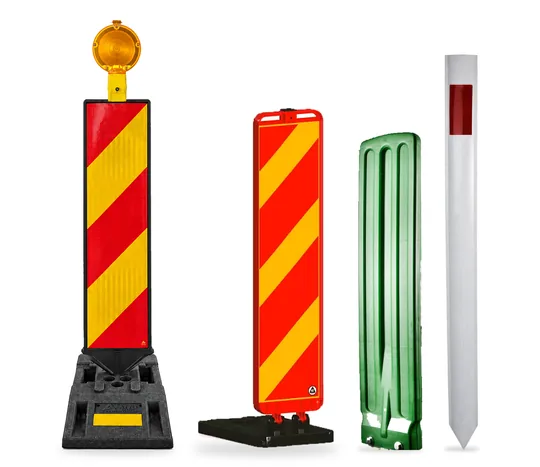
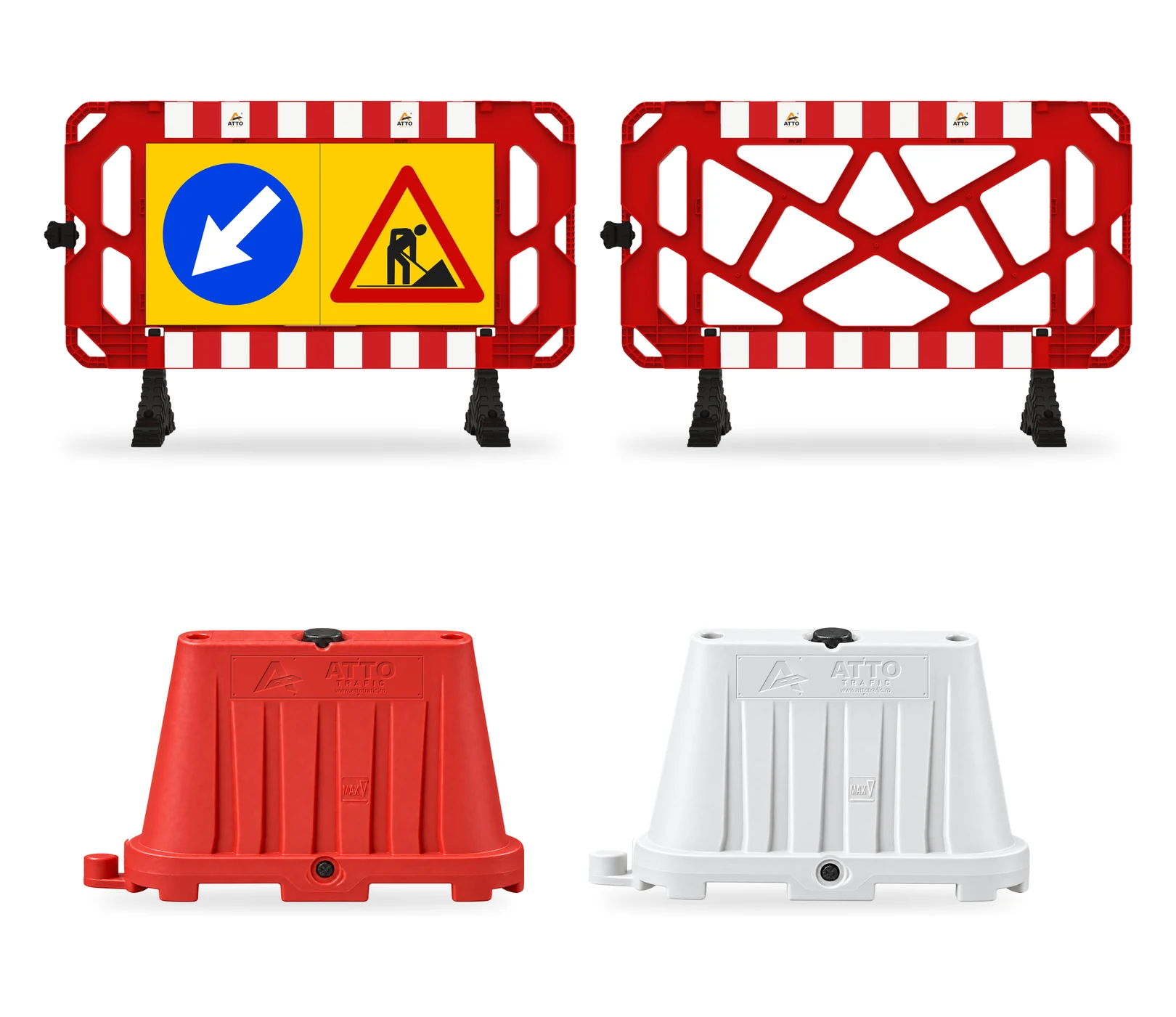
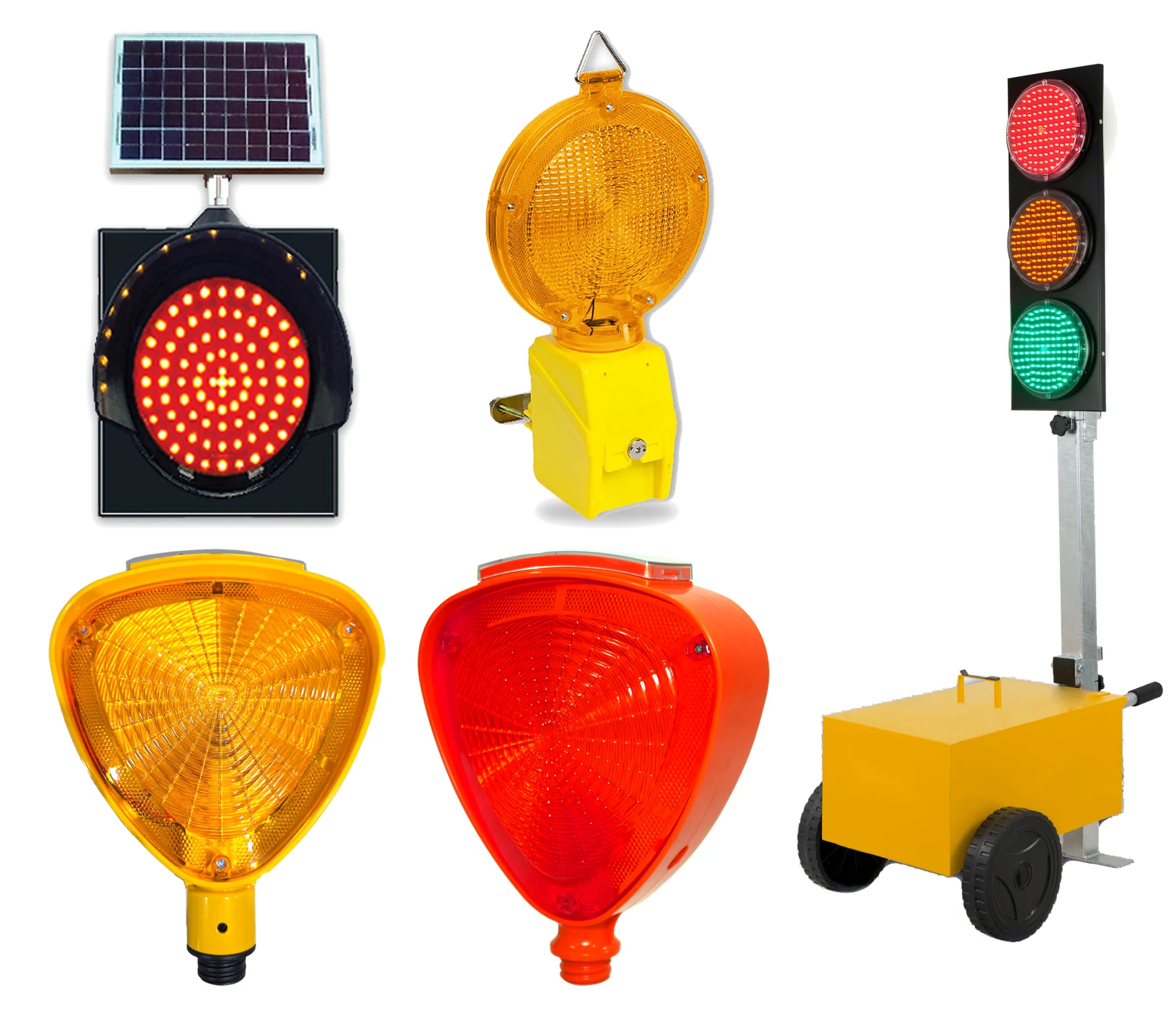
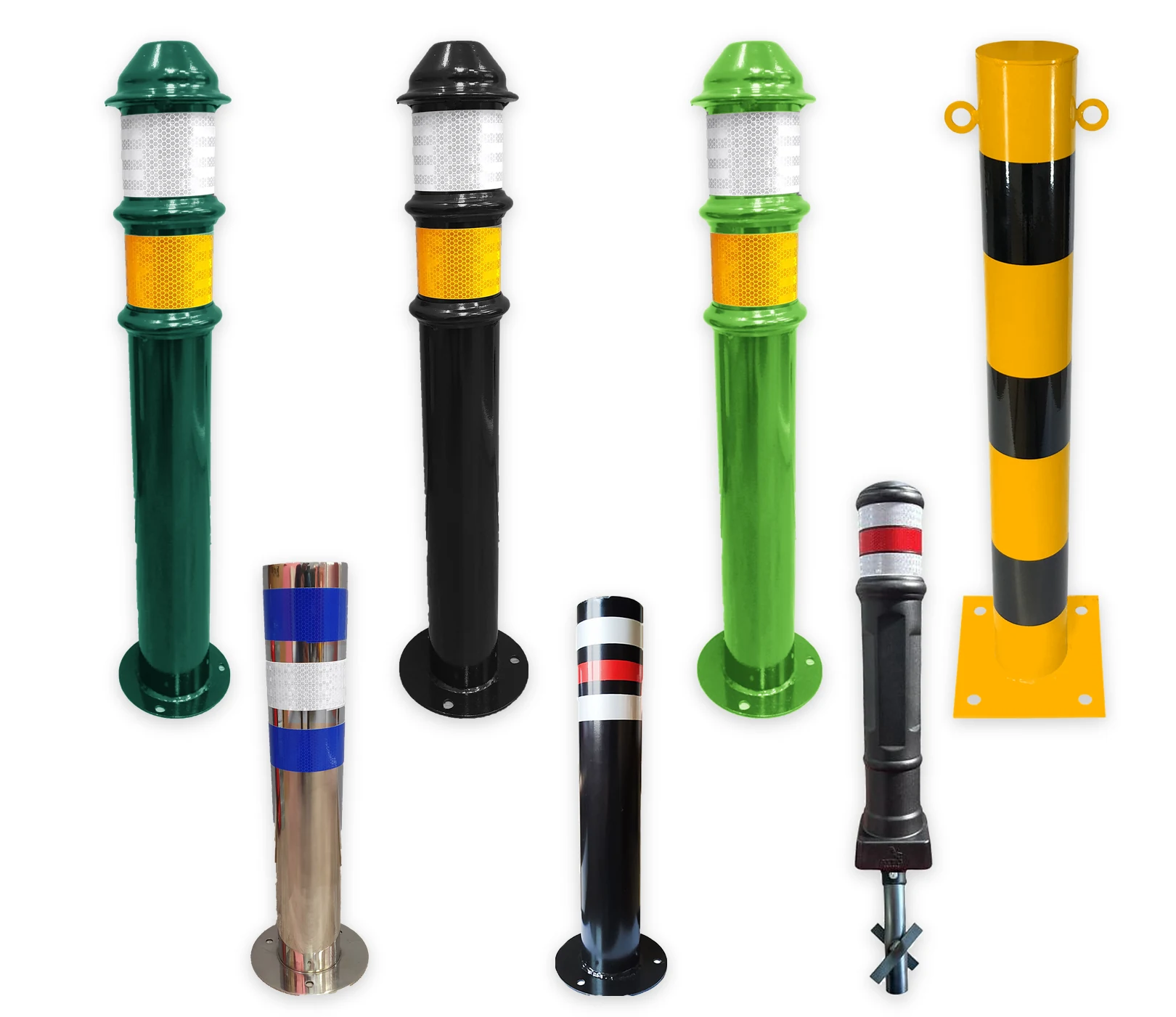
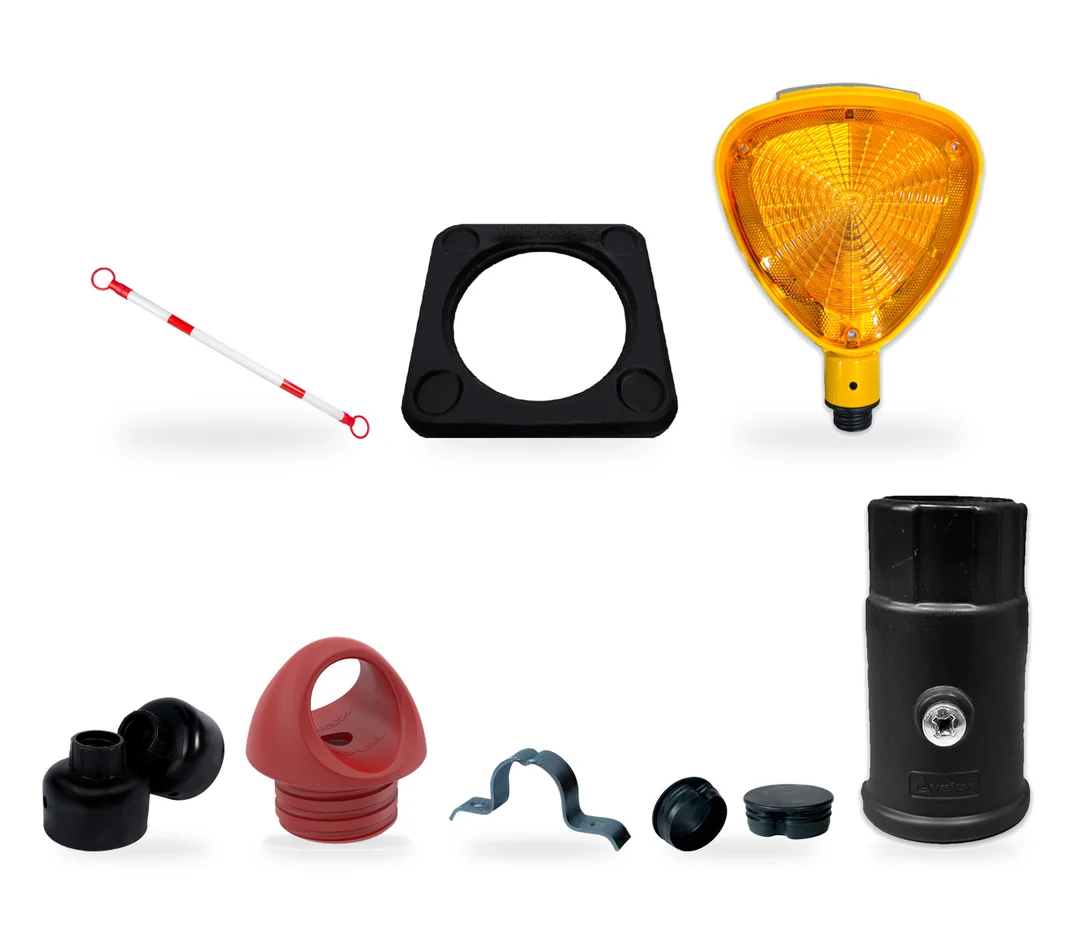
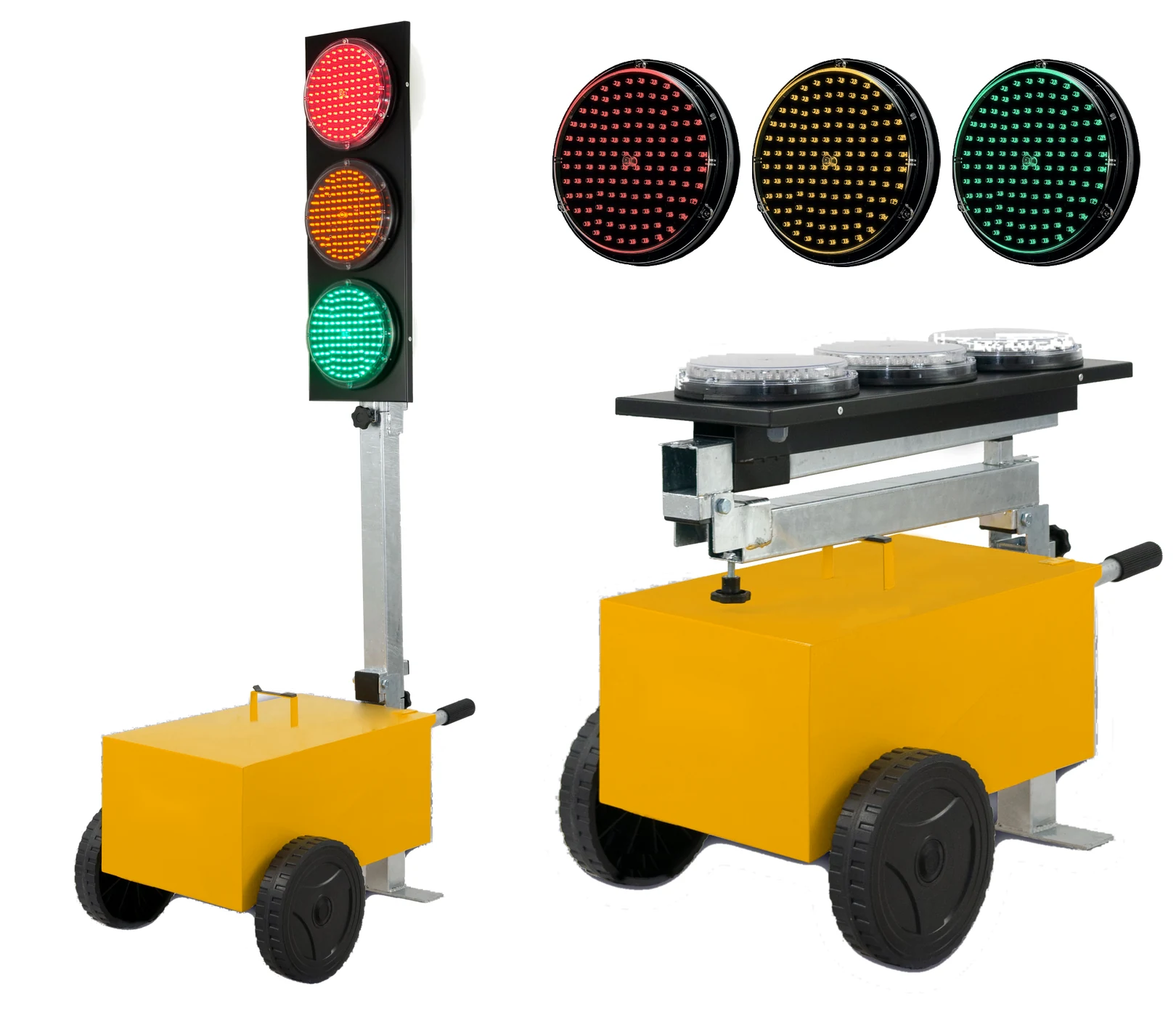
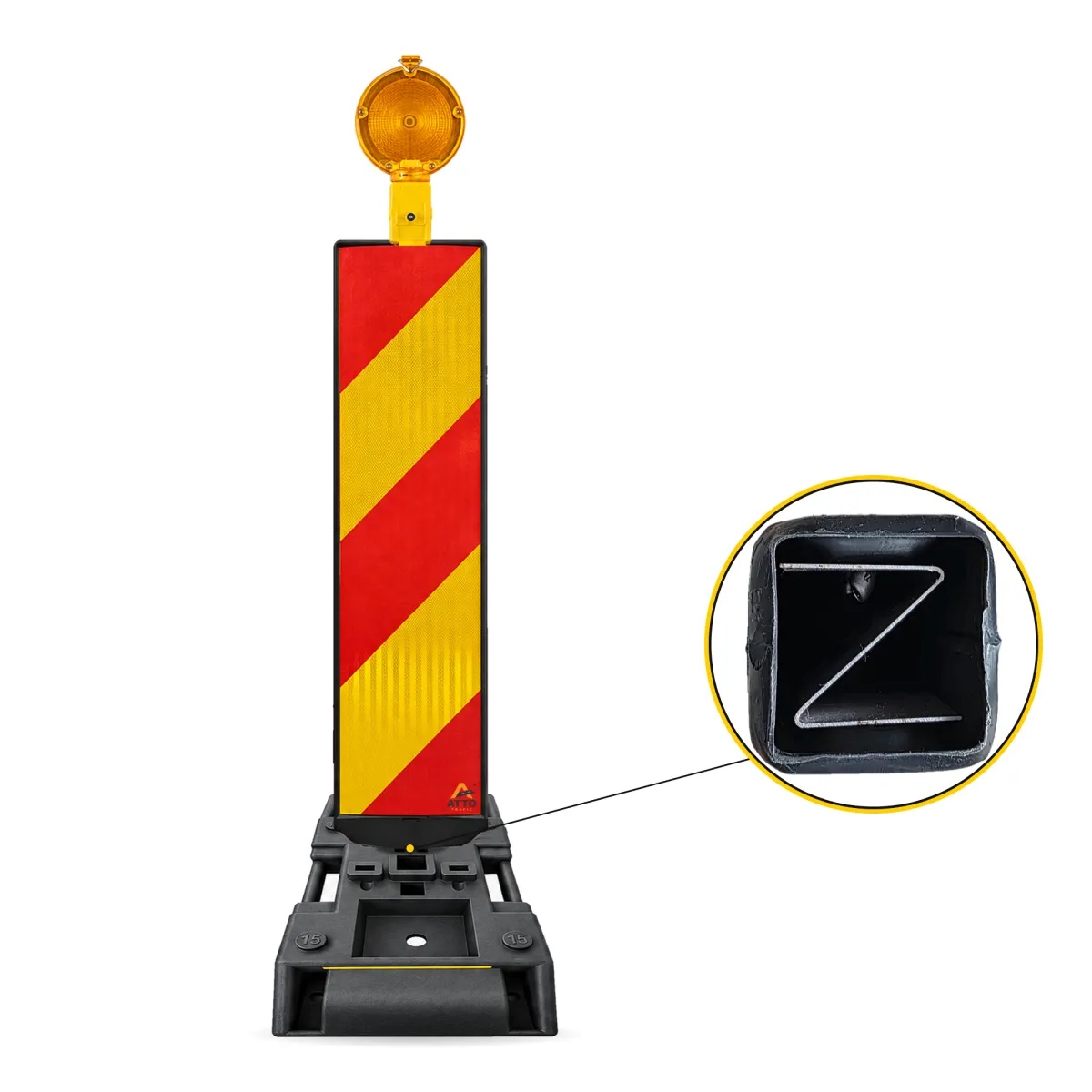
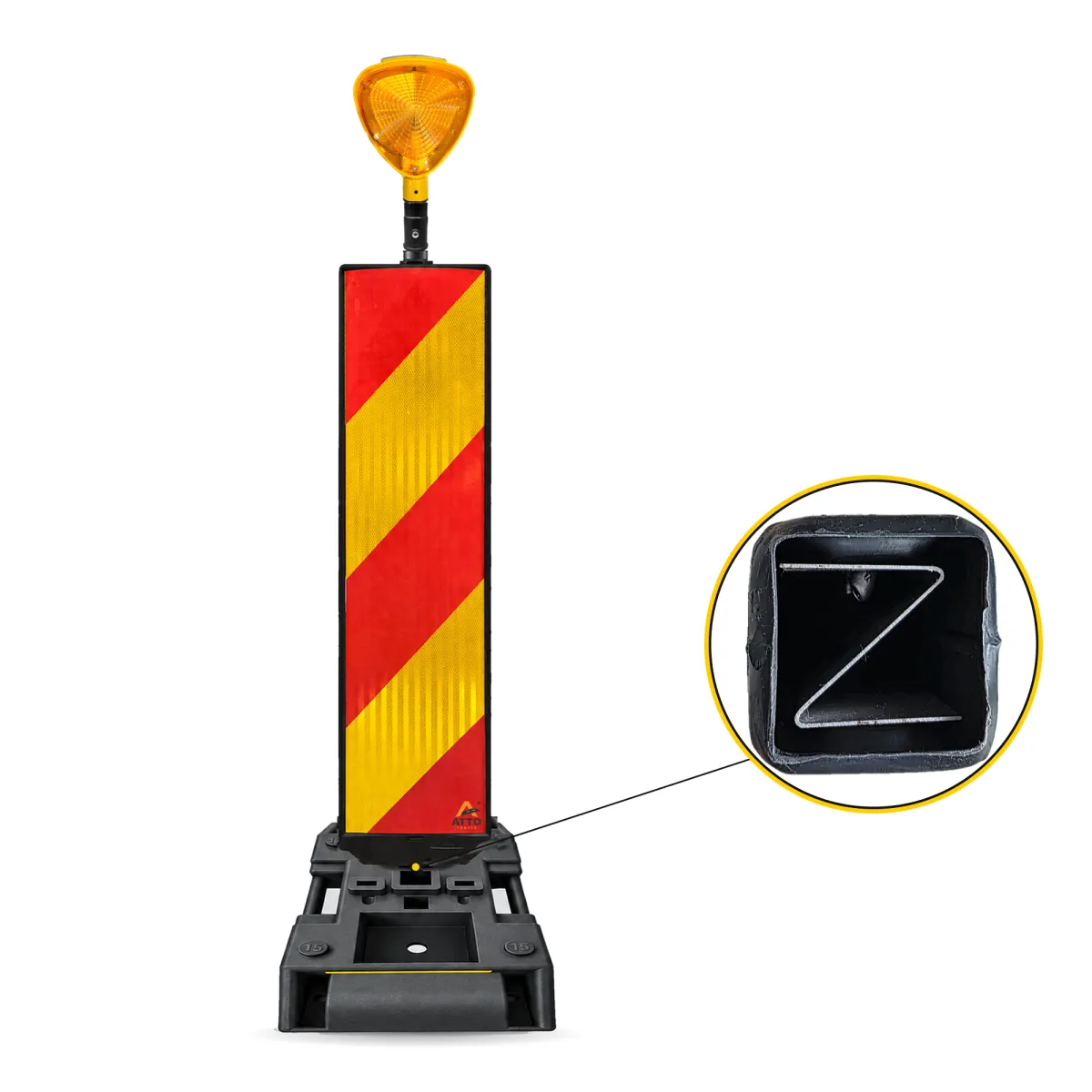
Directional beacons. They trace the route traffic must follow in the transition zone. Beacons with a flashing yellow lamp handle both marking and night visibility at once, and sets with a solar lamp remove battery maintenance on long-running works.
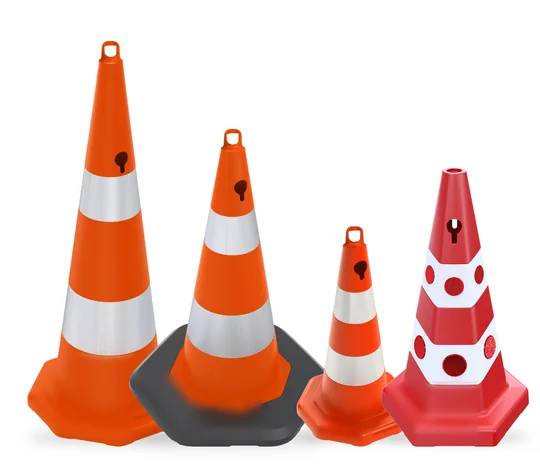
Cones and extendable bars. For detailed marking and for closing a lane quickly. Extendable cone bars link the cones together and discourage people from crossing the perimeter.
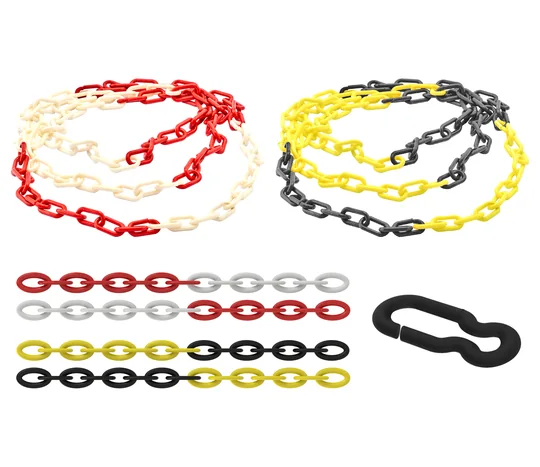
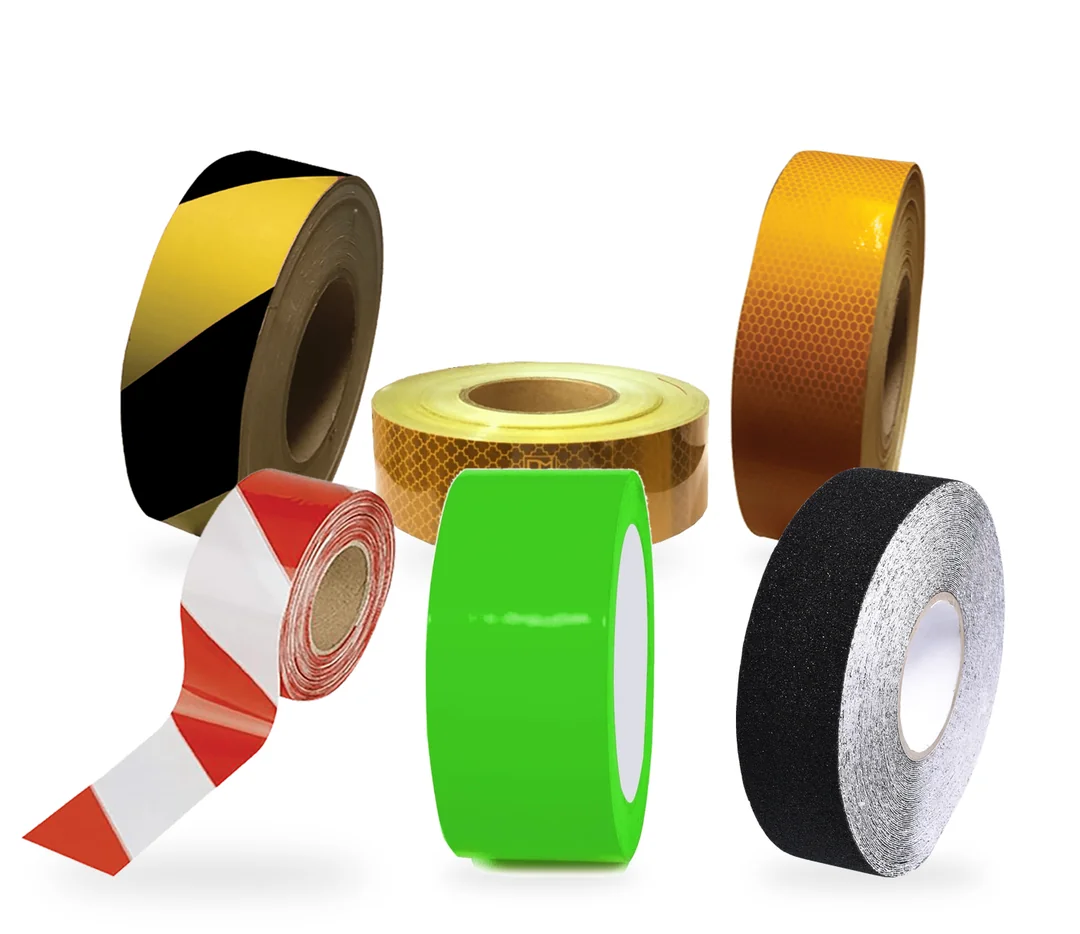
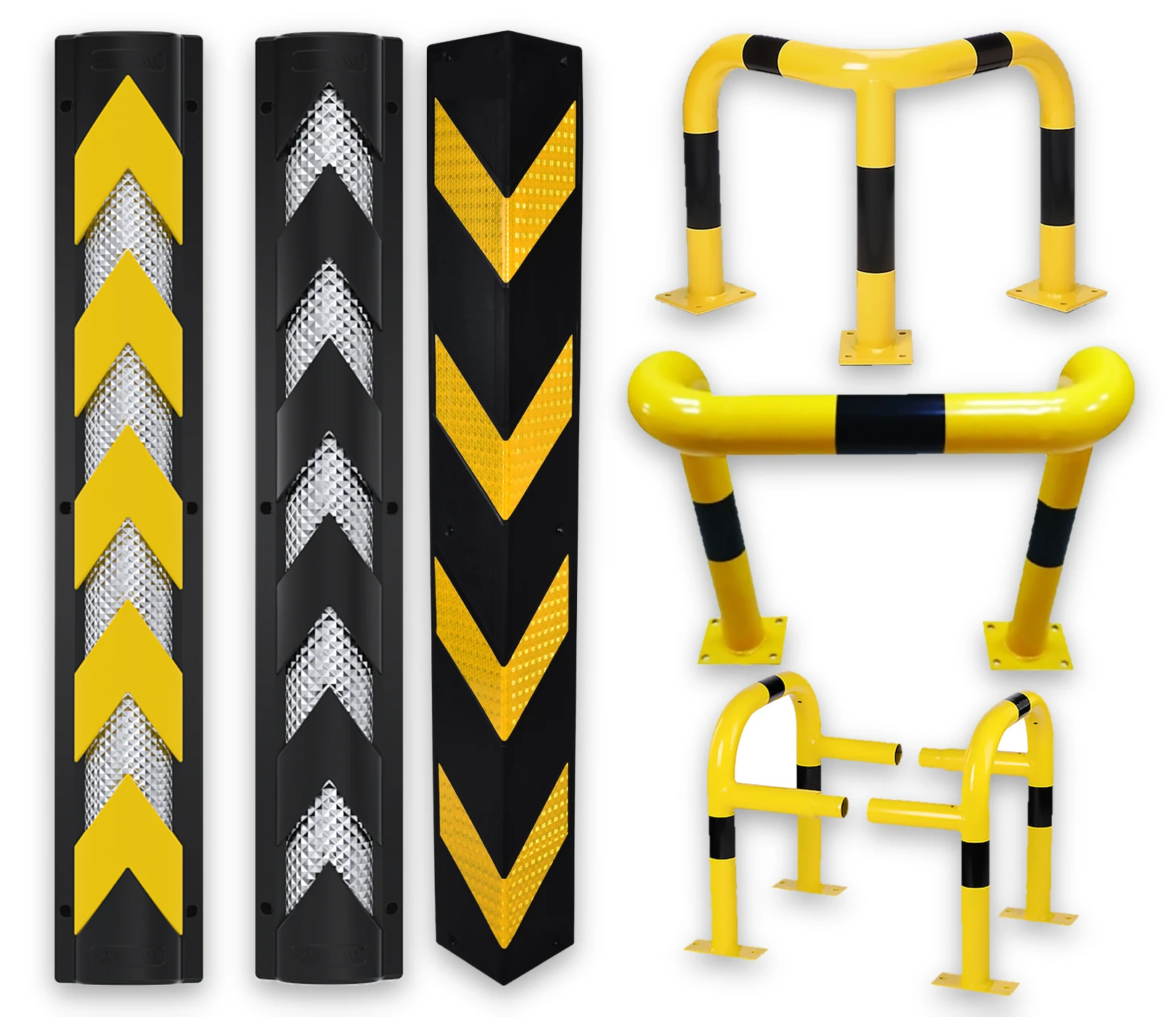
Equipment for marking out the work zone
Five mistakes we see on site again and again
Signing without advance warning. A panel put up five metres from the obstacle gives no time to react. It is the most frequent and the most dangerous fault.
Restrictions that are never cancelled. The work zone ends, but the U13 and U12 stay up. Drivers learn to ignore them and the signage loses its authority along the whole section.
Permanent signs left visible. If the temporary signage contradicts a permanent sign, the permanent one is covered for the duration of the works. Two contradictory instructions visible at the same time are a liability issue.
Nothing for the night. The retroreflection of the panels only works in the headlight beam. The perimeter itself needs warning lamps or lit beacons.
An unapproved layout. Road closures and traffic restrictions are put in place on the basis of a signage plan approved by the road administrator and with the agreement of the traffic police. Signage put up without approval is non-compliant, however correct it looks on site.
Frequently asked questions
What colour are temporary road signs in Romania?
Yellow background. The colour distinguishes them from permanent signs and tells drivers that the rule applies only for the duration of the works.
Does a temporary sign override a permanent one?
Yes. For the duration of the works the temporary signage takes precedence. Permanent signs that contradict it are covered.
What sizes are U signs?
Triangular warning signs are usually 70 cm, circular regulatory signs 60 cm in diameter, diversion panels 95x33 cm or 65x85 cm, and the large advance warning panels 120x80 cm and 180x120 cm.
Do I need approval to sign a work zone?
Yes. Traffic restrictions for works in the public road area are put in place on the basis of an approved signage plan, under the methodological rules in force.
How many signs do I need for a work site?
It depends on the road category and the type of work, but the functional minimum covers all four zones: advance warning, transition, work zone and return. In practice, even a short intervention on an urban street needs six to ten signage elements.
How we can help
We deliver from stock the full range of temporary U road signs, together with the beacons, bases and posts needed to fully equip the work zone. Public institutions can order through SEAP / SICAP. If you already have an approved signage plan and want us to tell you exactly what and how much you need, write to us and you will get a quote based on it.
Once the works are finished, permanent signage is done with metal road signs with Class I or Class II sheeting.