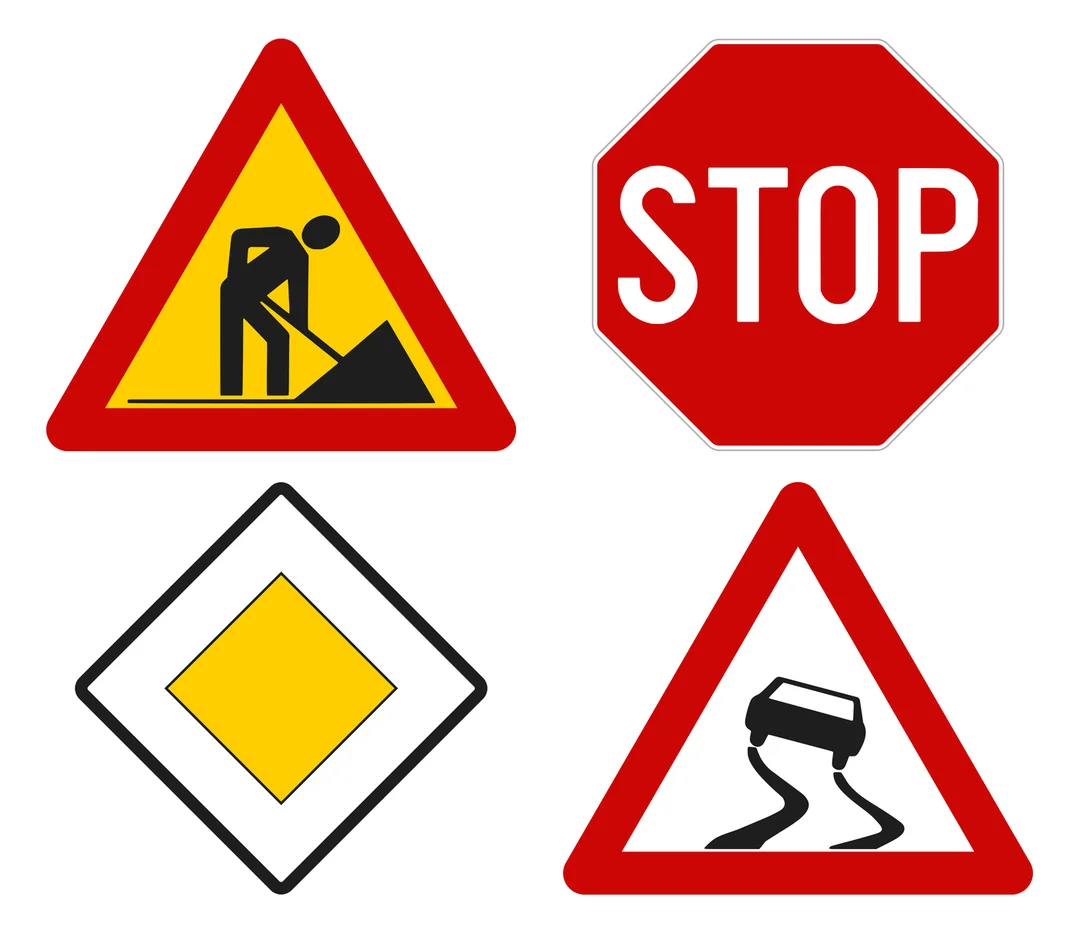
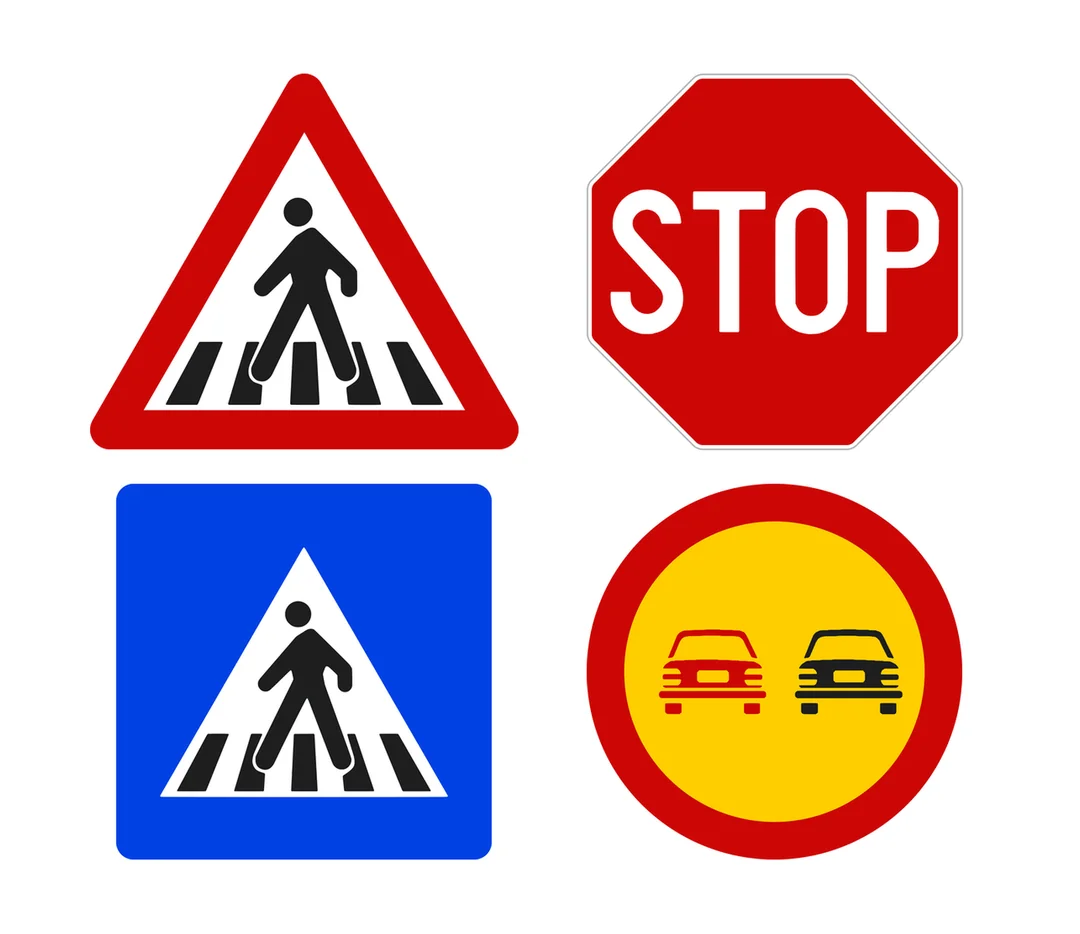

Two signs can look identical by day and be completely different at night. The difference is not in the metal plate but in the sheeting applied over it. Choosing between Class I and Class II is the technical decision with the biggest impact on the cost of a signage project and on how long it lasts. This article explains what the class of a road sign means, how big the difference in visibility really is and how to choose correctly for each type of road.
What the class of a road sign means
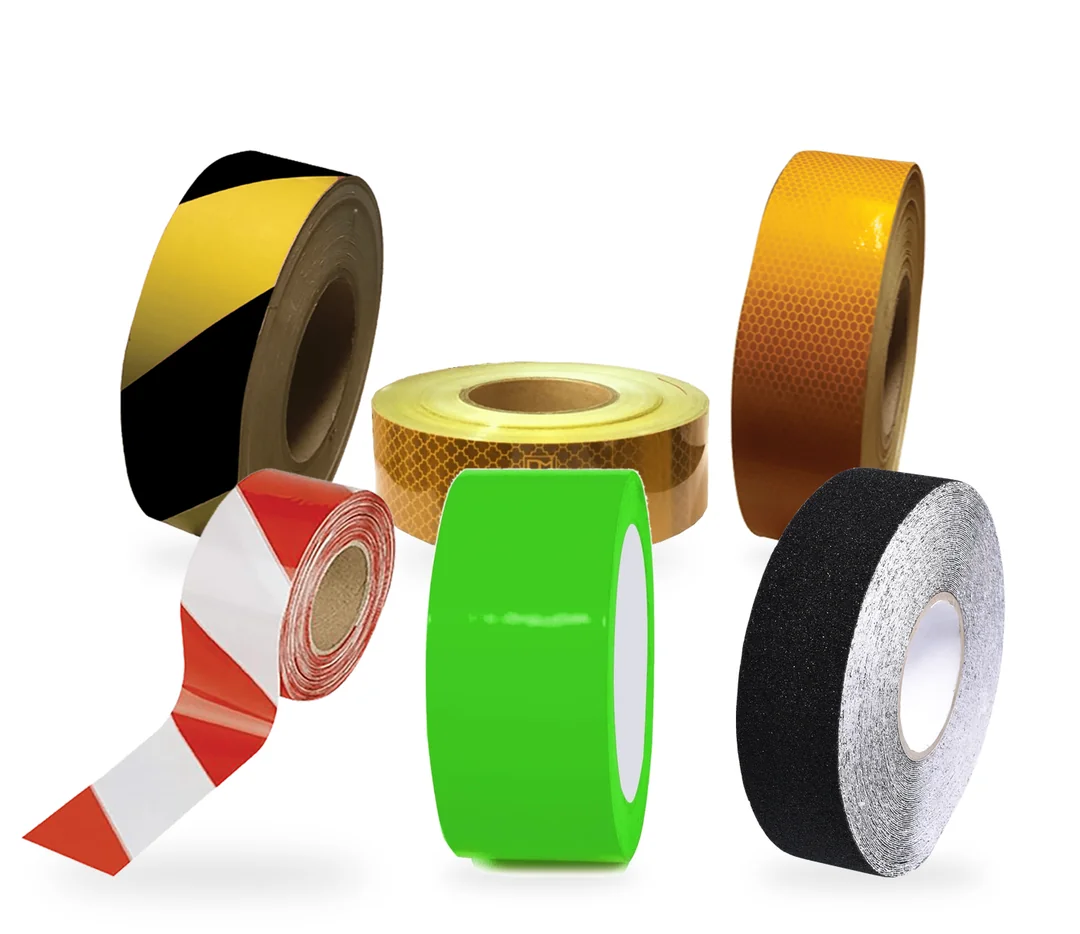
A road sign does not emit light. It returns it. The retroreflective sheeting applied to the metal plate contains glass beads or prismatic structures that send the headlight beam back towards the driver's eyes rather than in every direction. How efficiently it does this is measured by the coefficient of retroreflection, expressed in cd/lx/m², and the minimum values for each class are set by SR EN 12899-1.
Class I, also called RA1, corresponds to enclosed-bead sheeting, known commercially as engineering grade. Class II, or RA2, uses a high-performance structure that returns several times more light under the same illumination.
As an order of magnitude, for white and the reference angles in the standard, Class I starts at about 50 cd/lx/m² and Class II at about 180 cd/lx/m². The values differ by colour and observation angle, but the ratio holds: Class II returns roughly three to four times more light than Class I.
Class I and Class II compared on what matters
Night visibility. The difference is not subtle. A Class II sign becomes legible from a considerably greater distance, which means more time to react. On a road driven at 90 km/h, every few dozen extra metres of legibility count.
Difficult angles. The advantage of Class II grows exactly where conditions are poor: a sign mounted at the side far from the centre of the road, a bend, a junction approached at an angle, a tall vehicle with high-mounted headlights. At wide observation angles, Class I loses performance much faster.
Service life. Class I sheeting is usually warranted for around seven years and Class II for around ten, depending on the manufacturer and exposure. Over a ten-year horizon, the difference in purchase price becomes much less significant.
Cost. Class II costs more to buy. That is the only real argument for Class I, and it is decisive only when the sign genuinely does not need the extra performance.
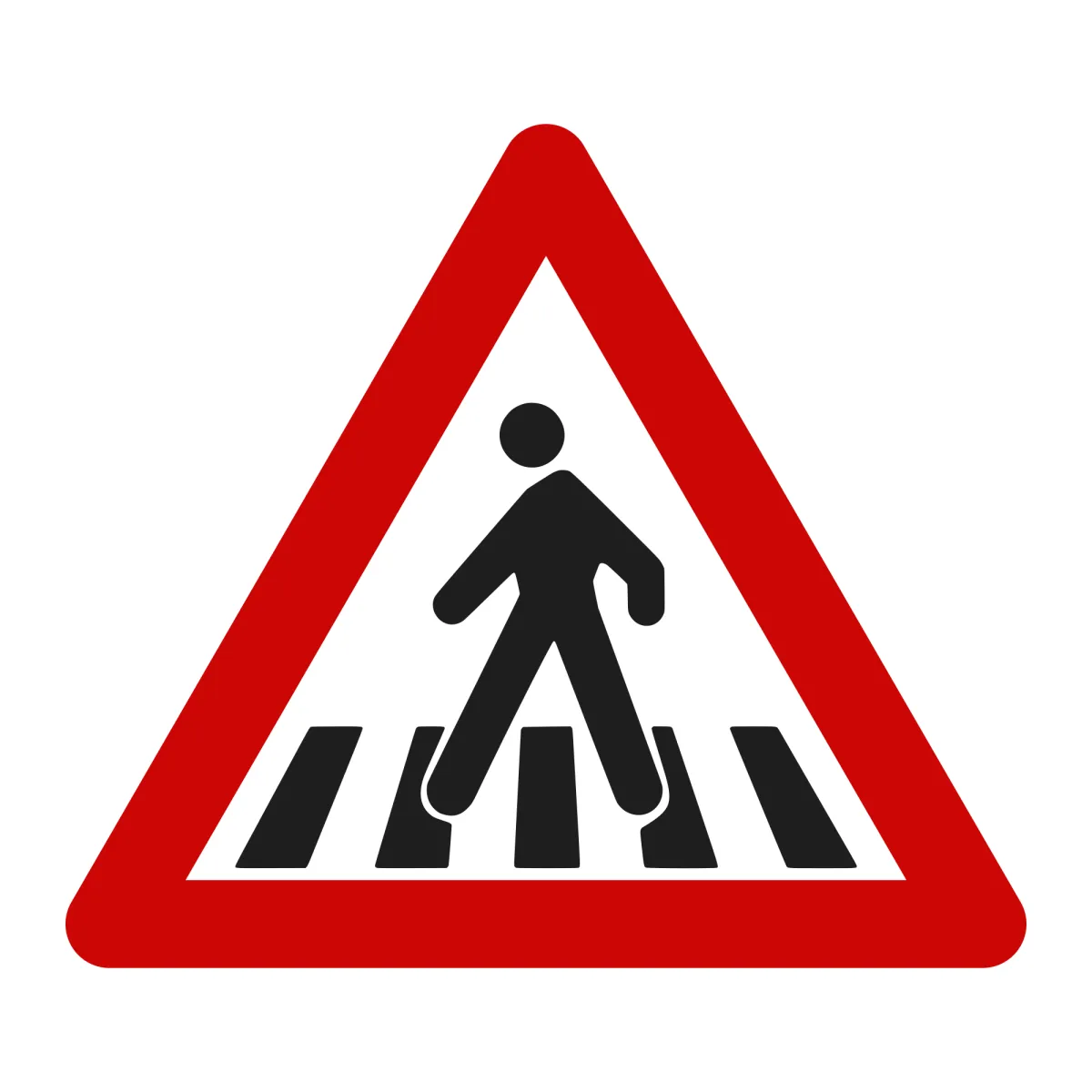
Metal road signs, Class II



How to choose by type of road
The practical rule is simple: the higher the speed, the weaker the street lighting and the more serious the consequence of a missed sign, the higher the class must be.
National roads, European routes and expressways. Class II, no question. High speeds, no street lighting and heavy traffic that dirties the panels make high retroreflection a functional requirement, not a luxury.
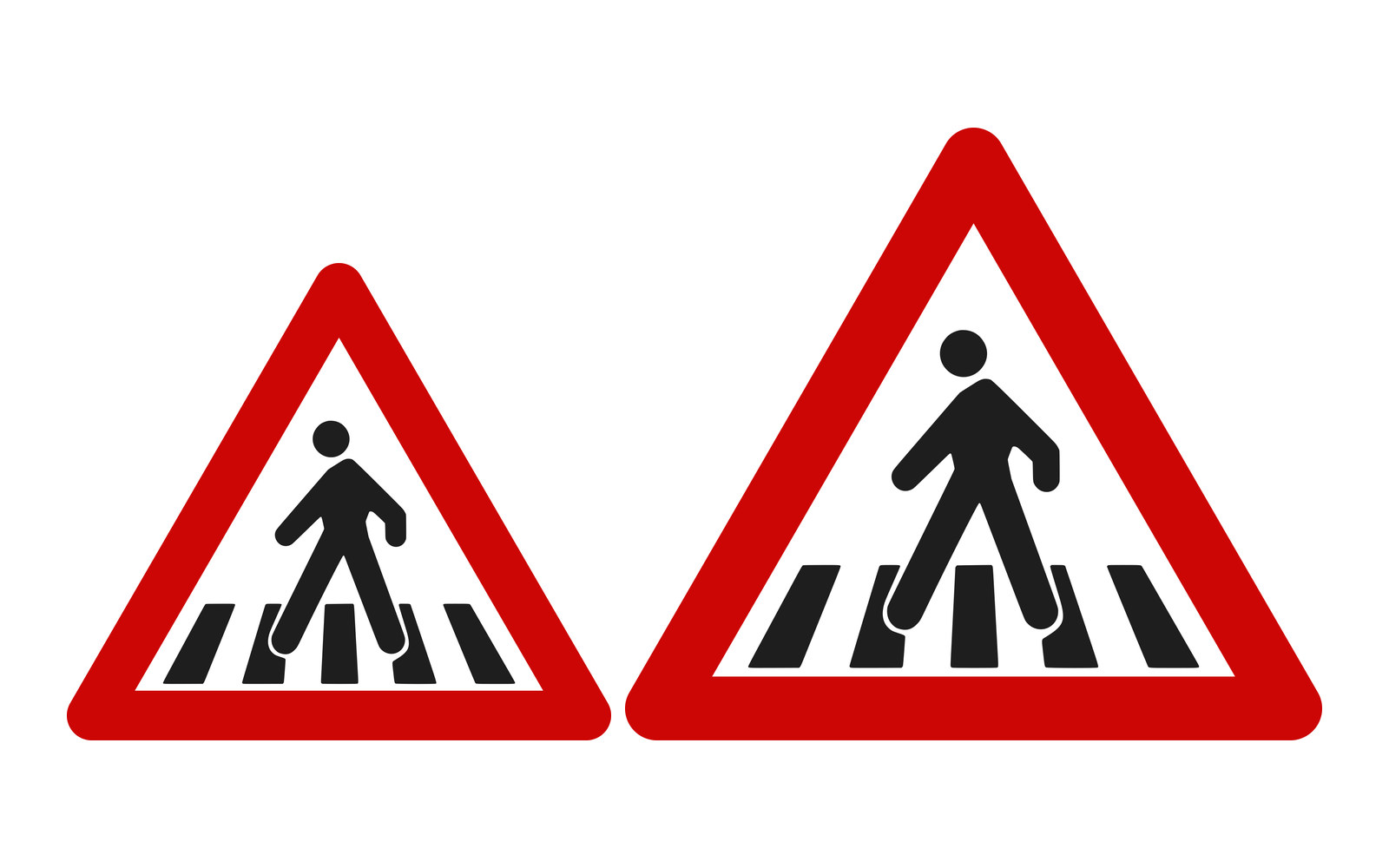
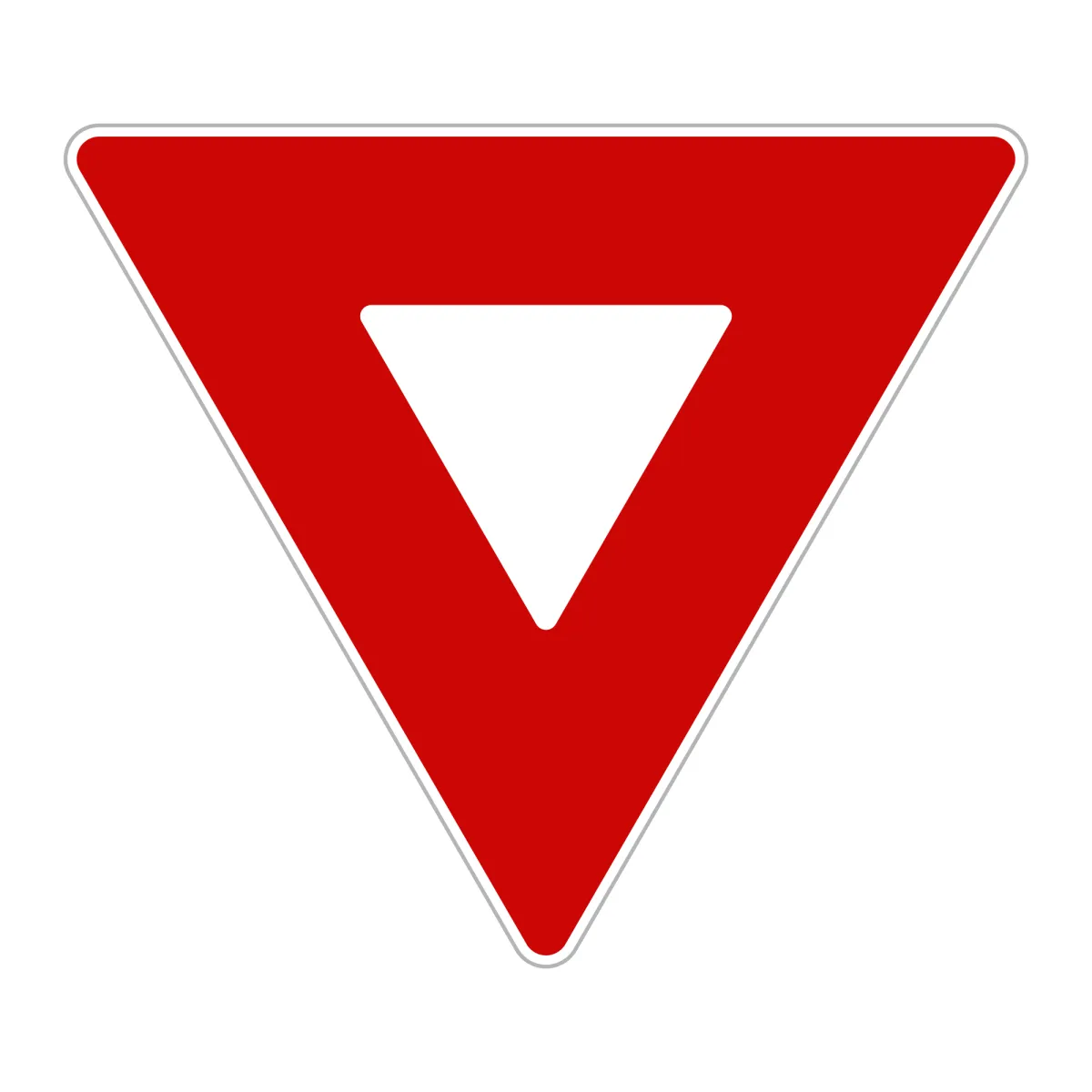
Unlit county and local roads. Class II for everything to do with priority and warning: Stop, Give way, dangerous bends, pedestrian crossings. These are the signs whose missing causes accidents.
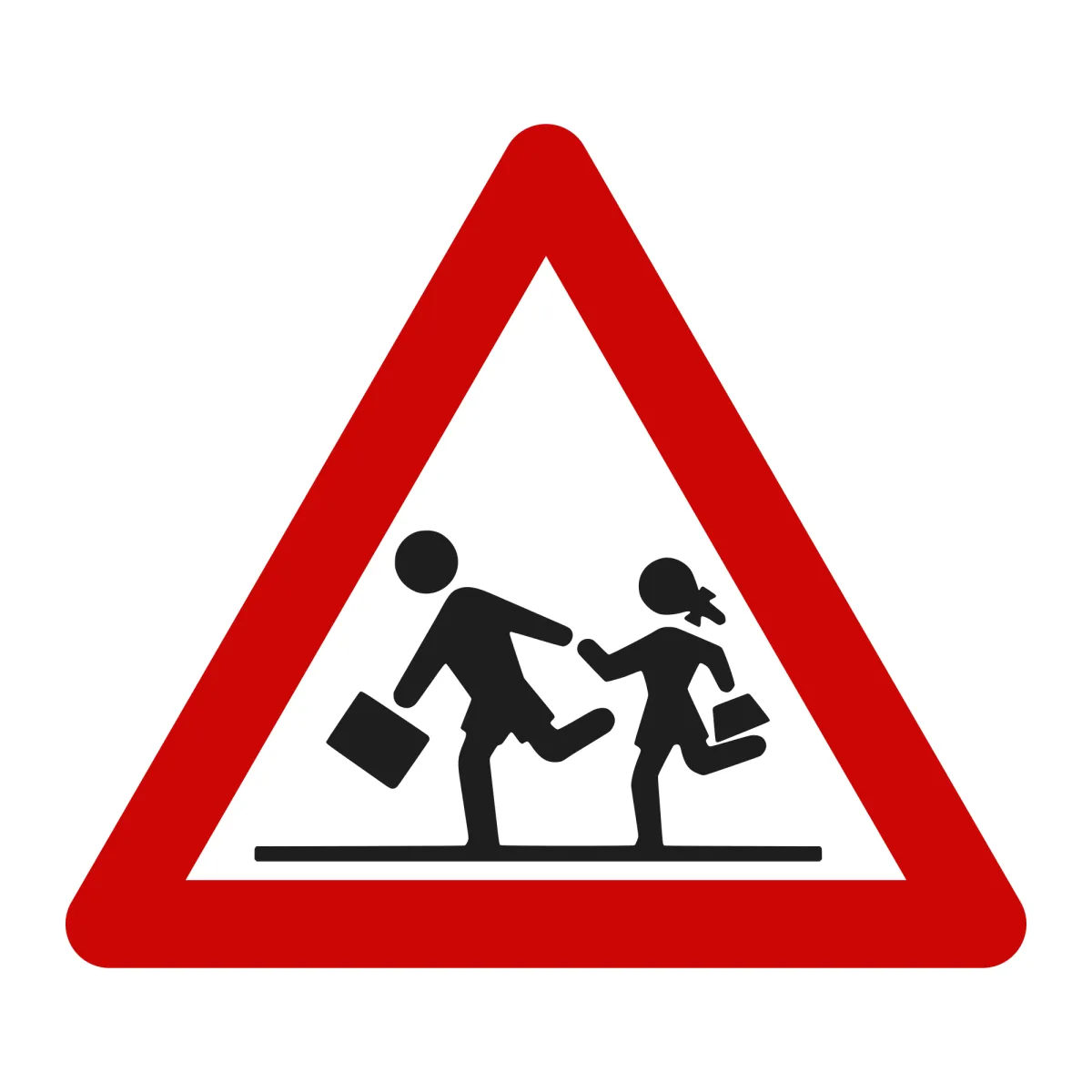
Lit urban streets. Class I is acceptable for information signs and routine regulatory signs. For pedestrian crossings, school zones and junctions with poor visibility, stay with Class II whatever the street lighting.
Private premises, car parks, warehouses, industrial yards. Class I covers the need. Speeds are low, distances short and the environment controlled.
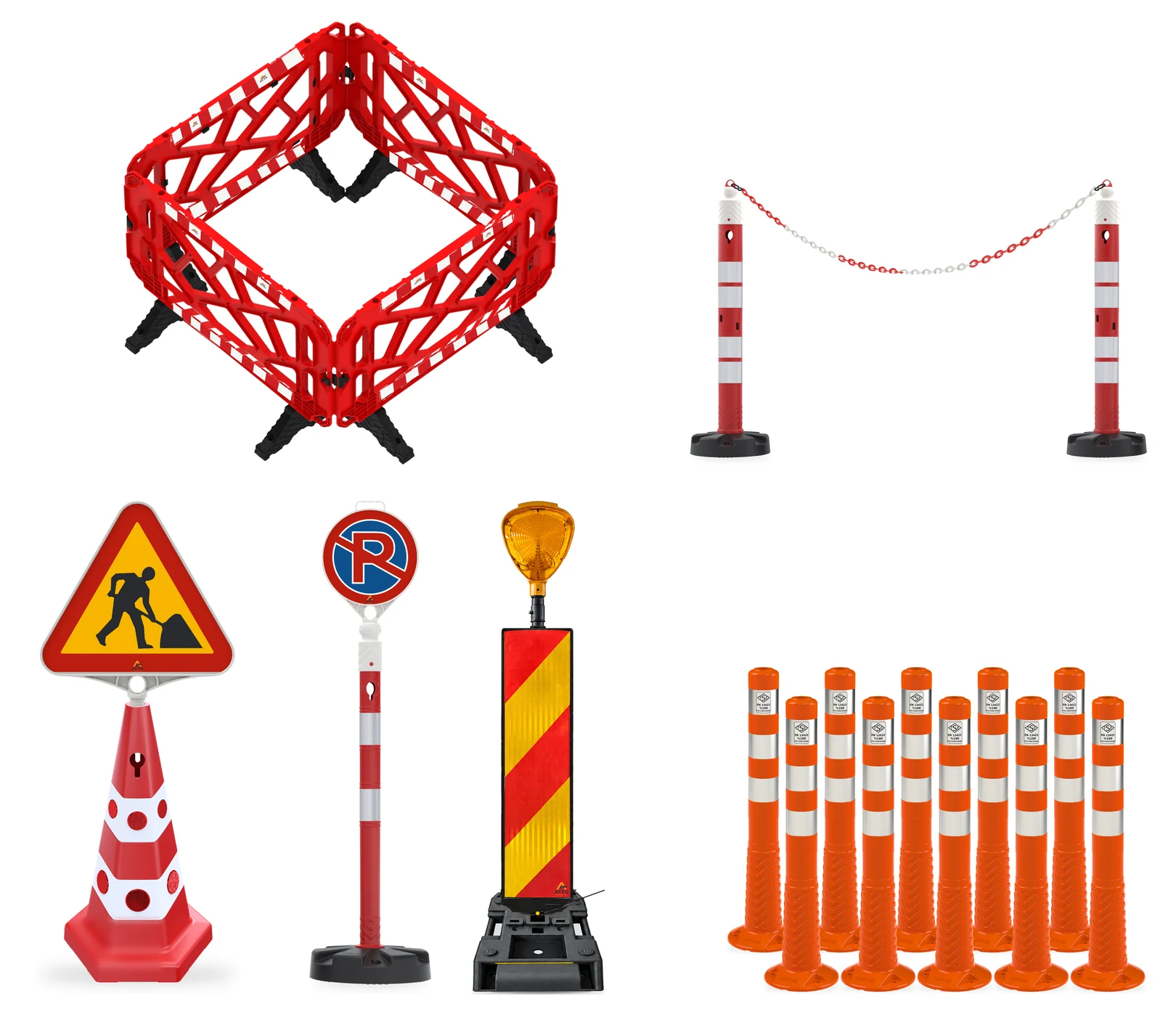
Construction sites and roadworks. Class I, because the installation is temporary. Details on signing work zones are in the guide to temporary U road signs.
Size matters as much as the sheeting
A common mistake is to pay for Class II and then choose an undersized panel. Retroreflection and size work together: there is no point in the sheeting returning the light well if the symbol is too small to be read from the distance at which it lights up.
In the Class II range, the usual sizes reflect exactly this logic. The Stop sign comes in 80 cm and 100 cm, Give way in 90 cm and 120 cm, warning signs in 90 cm and circular prohibition signs in 80 cm diameter. The large version is not a luxury: on a high-speed road or at a junction approached at speed it is the correct size, and the small one no longer does the job the sign is there for.
The size is chosen according to the road category and the design speed, in line with SR 1848-1 and the signage plan. When you have an approved plan, the sizes are already set in it.
The post is part of the decision
A Class II sign mounted on a post that turns at the first gust of wind does not do its job. If the panel is no longer perpendicular to the direction of travel, the observation angle increases and the very advantage you paid for is lost.
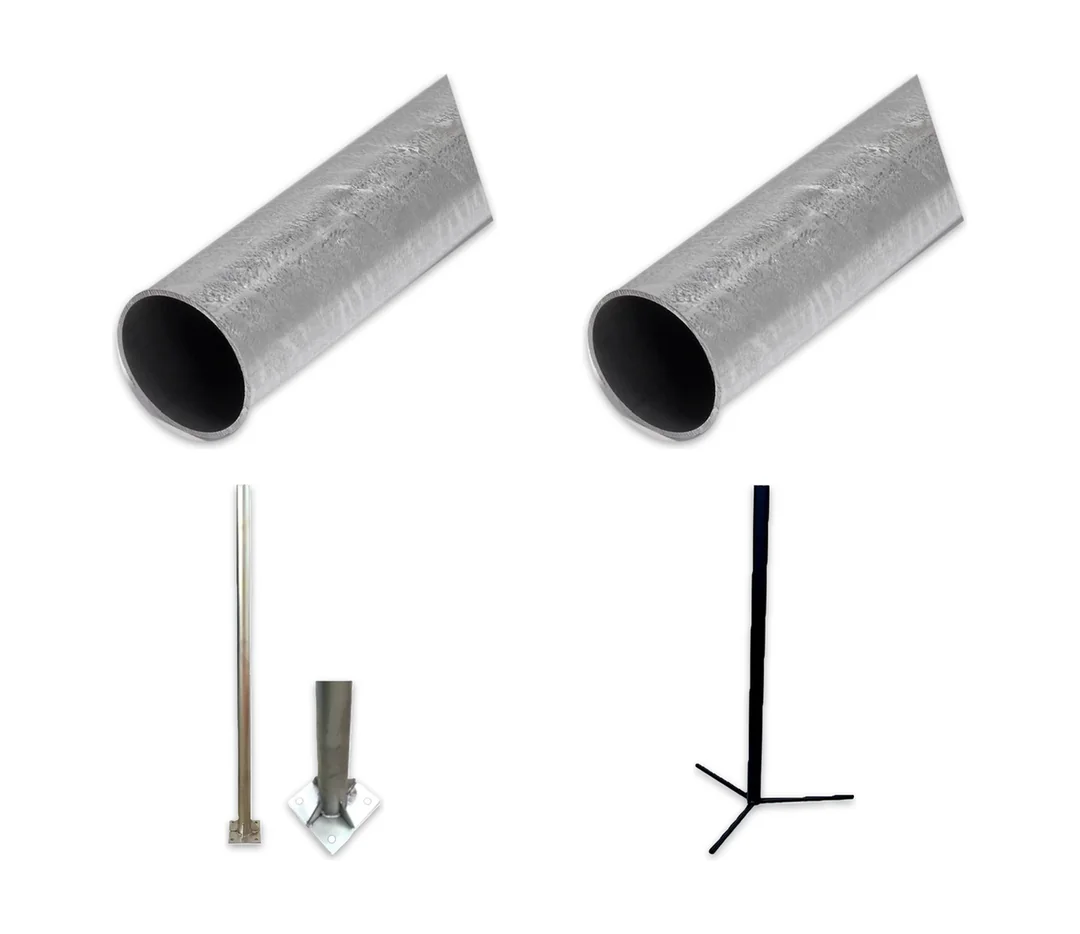
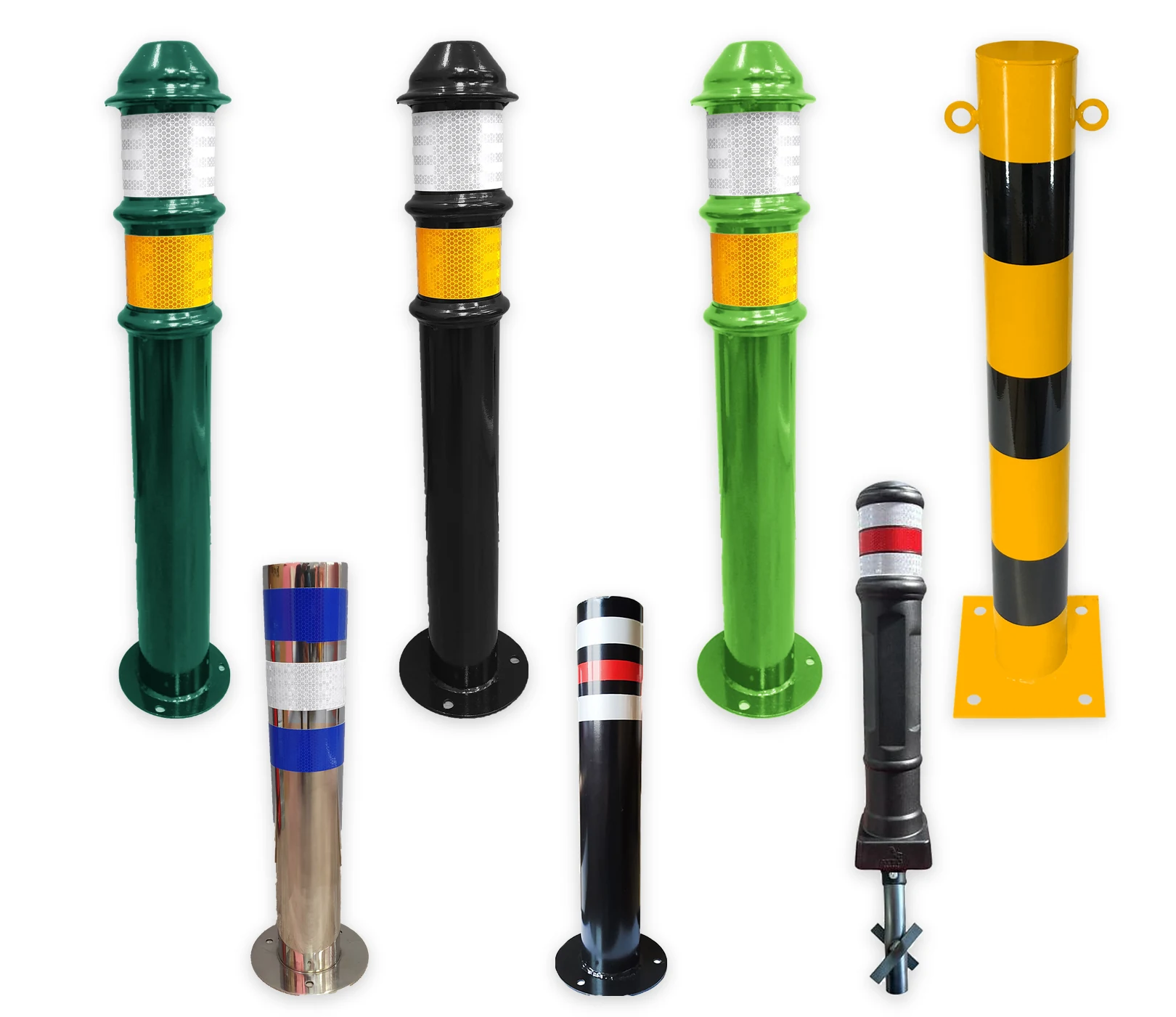
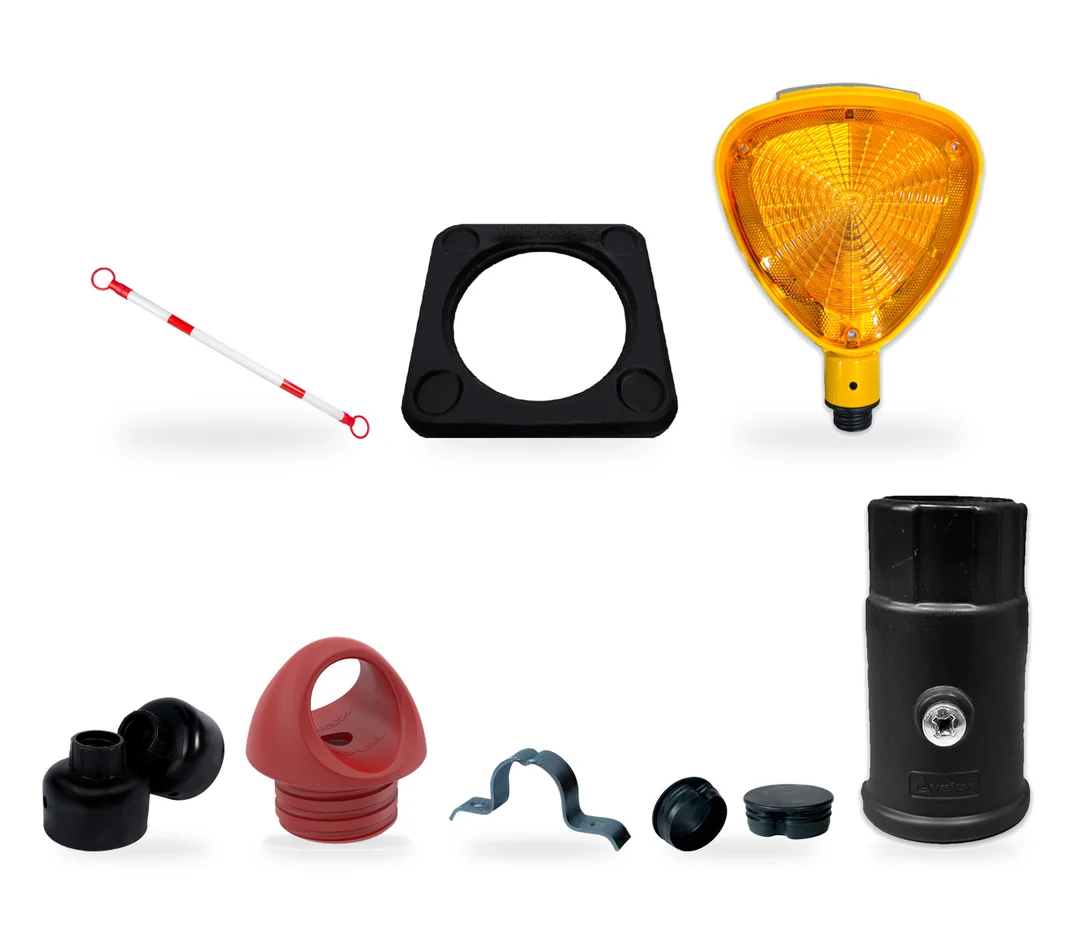
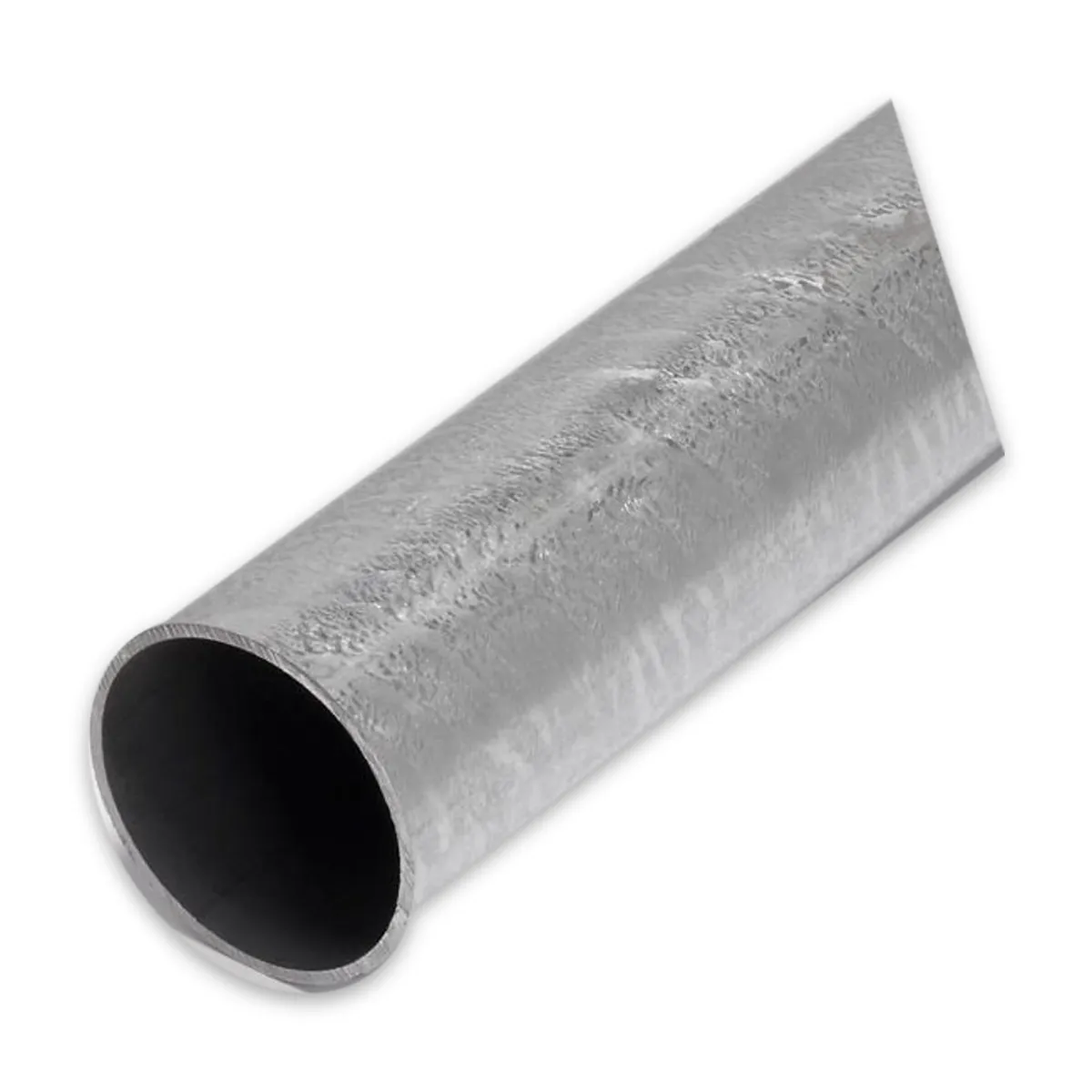
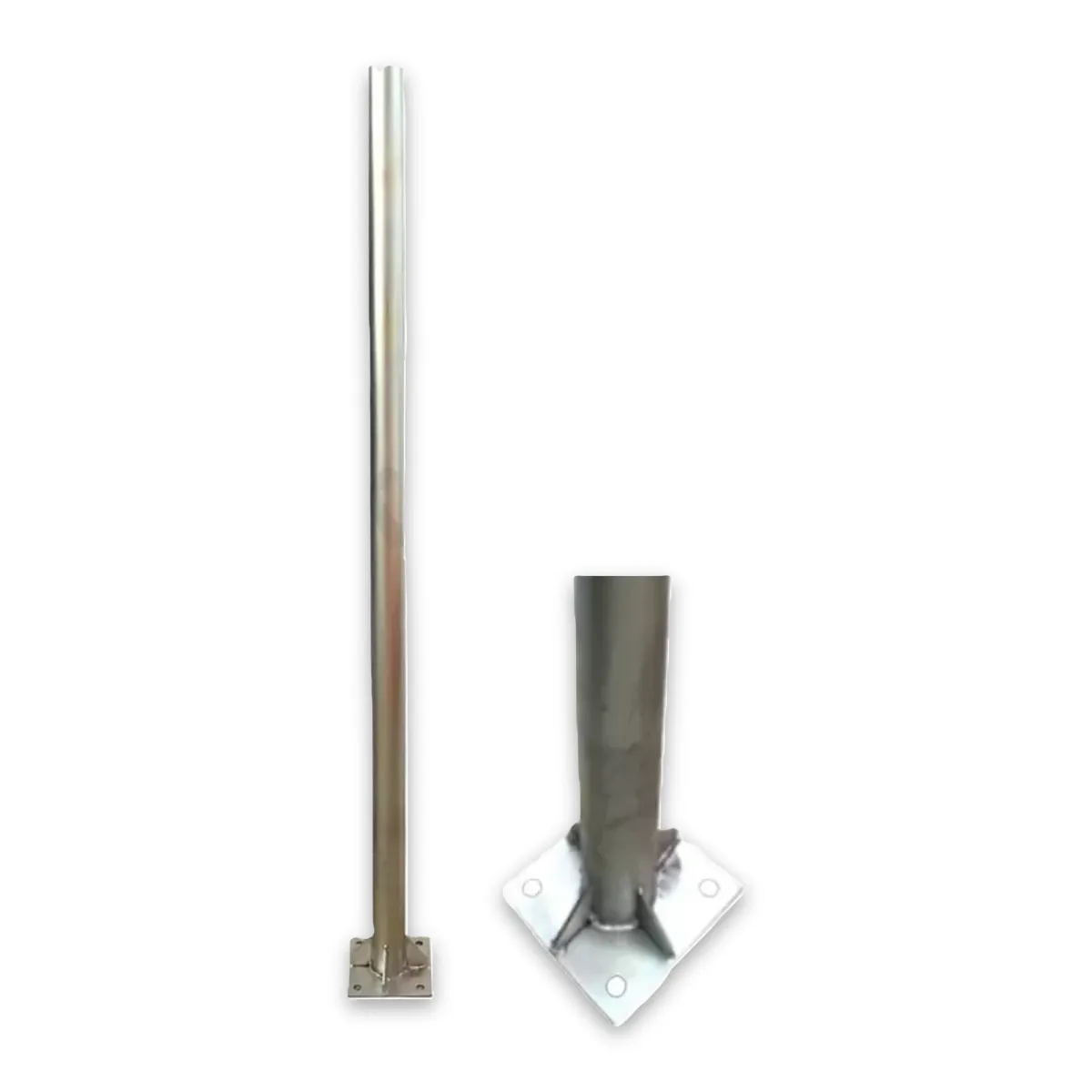
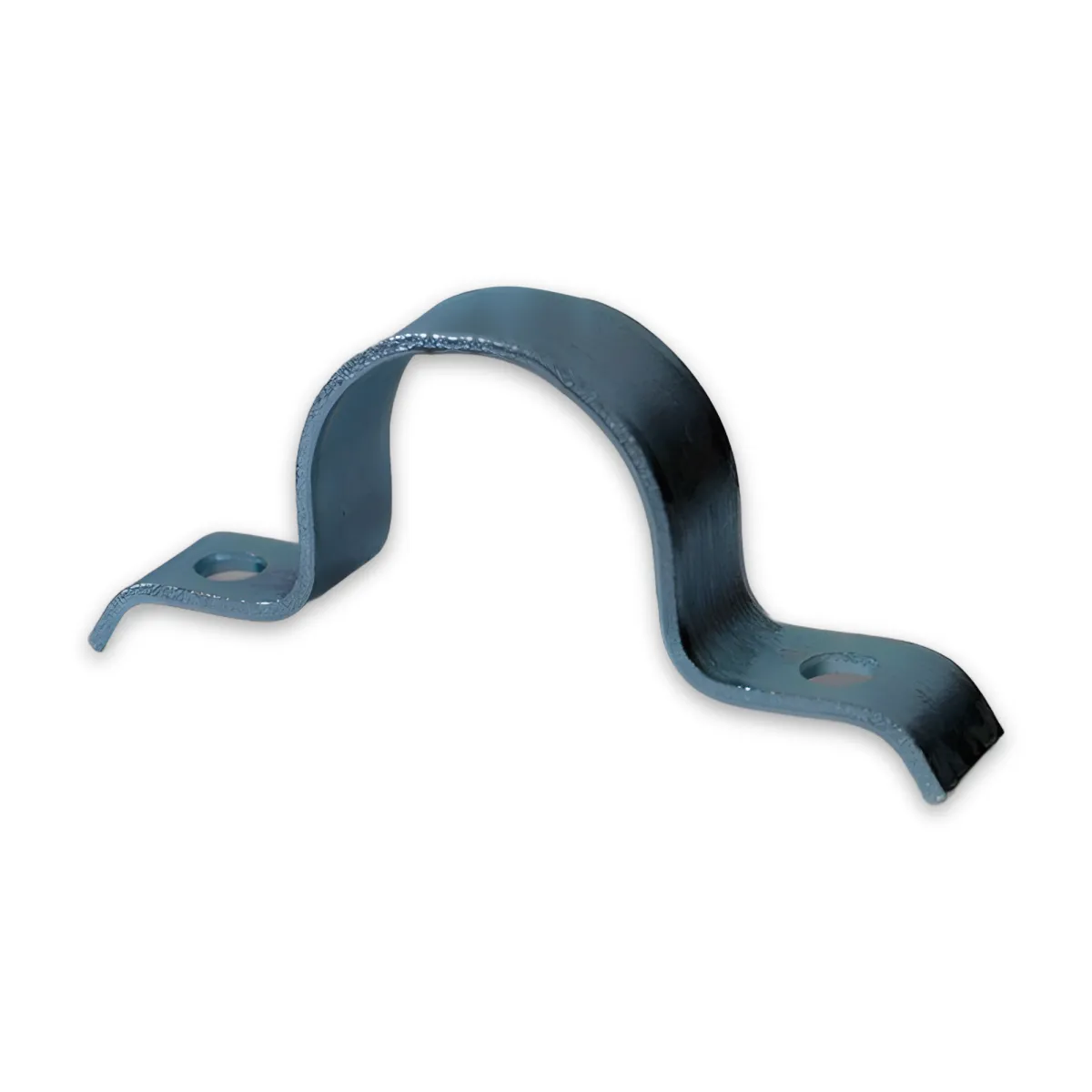
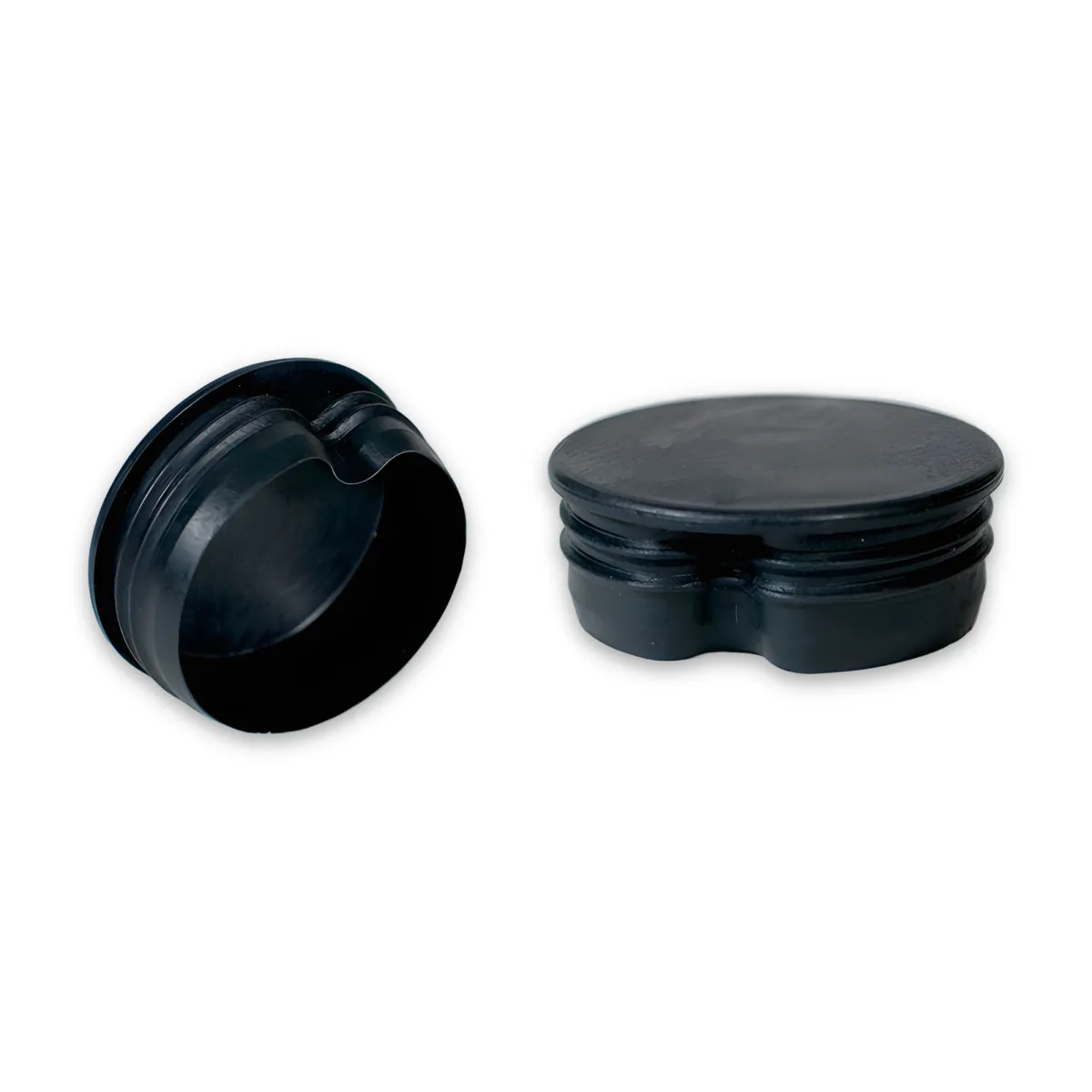
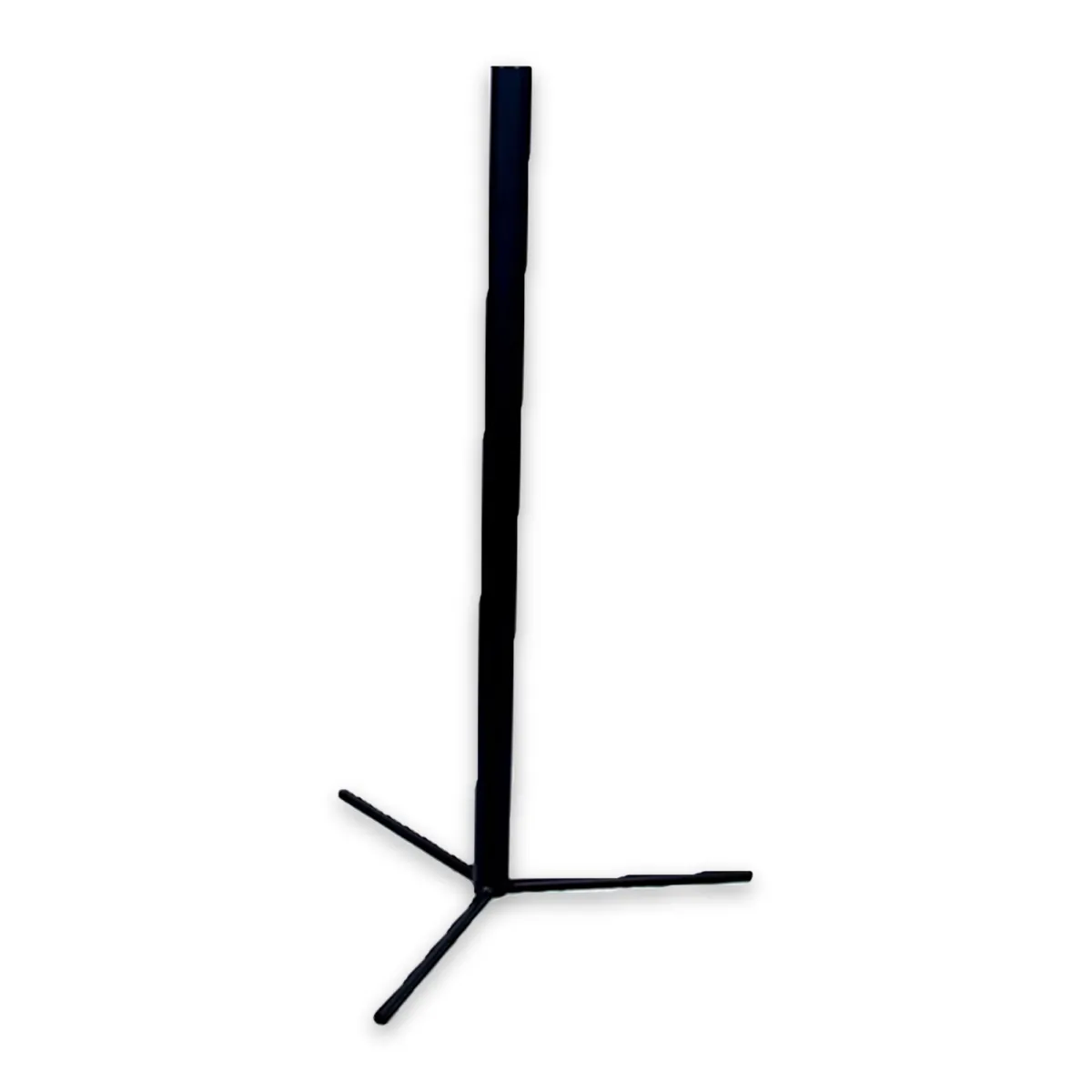
For permanent installation, the 60 mm anti-rotation post, 350 cm high, is the standard choice for large panels or panels exposed to wind. The 48 mm round version, 300 cm high, covers most urban situations. The flanged post is used when it is fixed to an existing foundation or a concrete slab, without digging. The galvanised clamp fixes the panel to the post, and the plastic cap closes the top of the post and keeps water out.
Posts and mounting accessories
When Class I is the right choice
Not everything has to be Class II. Class I is the sensible choice for signage on private premises and in car parks, for temporary site signs, for information signs in well-lit areas and for cases where the panel is replaced often anyway because of vandalism or works. Paying for Class II for a sign in an apartment block car park means spending budget with no gain in safety.
The decision test is a single question: if a driver misses this sign at night, in the rain, what happens? If the answer is an unnecessary detour, Class I is enough. If the answer involves a collision, go for Class II.
Frequently asked questions
What is the difference between Class I and Class II road signs?
The class of the retroreflective sheeting. Class II returns roughly three to four times more light than Class I, is legible from further away, performs better at difficult angles and lasts longer.
What do RA1 and RA2 mean?
They are the designations in SR EN 12899-1 for the retroreflection classes. RA1 corresponds to Class I and RA2 to Class II.
How long does a road sign last?
Usually around seven years for Class I and around ten years for Class II, depending on the manufacturer, the orientation to the sun and the degree of exposure.
Can I install Class I signs on a county road?
For information signs in lit areas, yes. For priority and warning signs on unlit roads, the firm recommendation is Class II. If the works have an approved signage plan, the class is set in it.
What size Stop sign should I choose?
80 cm for urban streets and private premises, 100 cm for high-speed roads or junctions with poor visibility.
How we can help
We stock both the Class II range and the metal signs in Class I, plus the posts and mounting accessories. For areas without a power supply where you need active visibility, the alternative is solar LED road signs. Public institutions can order through SEAP / SICAP. Send us the list of signs from your project through the contact form and you will get a quote by class and size.