
Cycle Lane Paint
Cycle lane paint
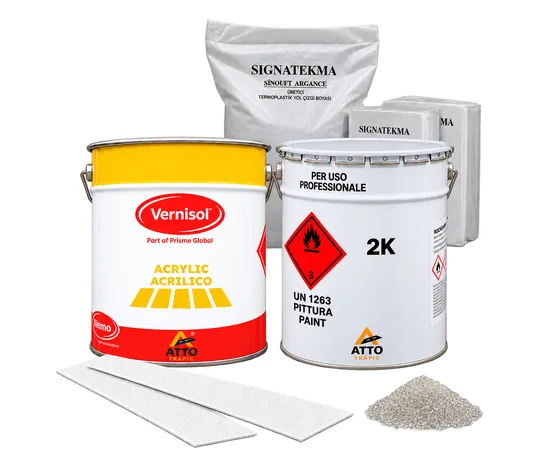
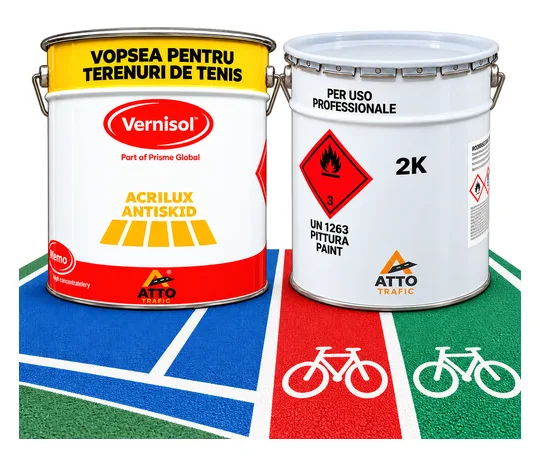
A painted cycle lane can be seen from far away, by cyclists and drivers alike. But a cycle lane is not used only by bikes: cars cross it at junctions, driveways and car park entrances, and there a thin paint wears through quickly. That is why this category holds two-component cold plastics, applied as a thick coat with a roller.
Which colours you will find
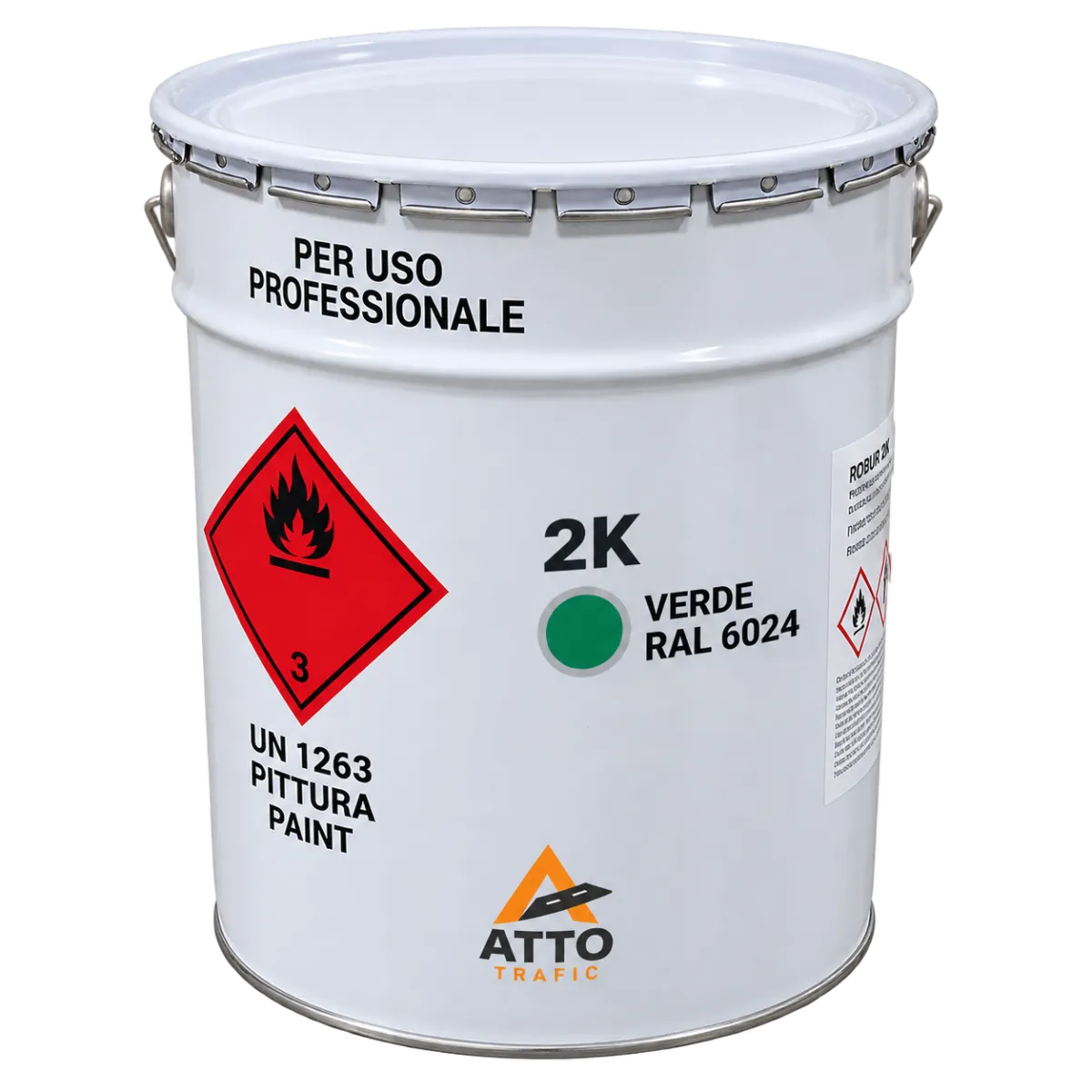
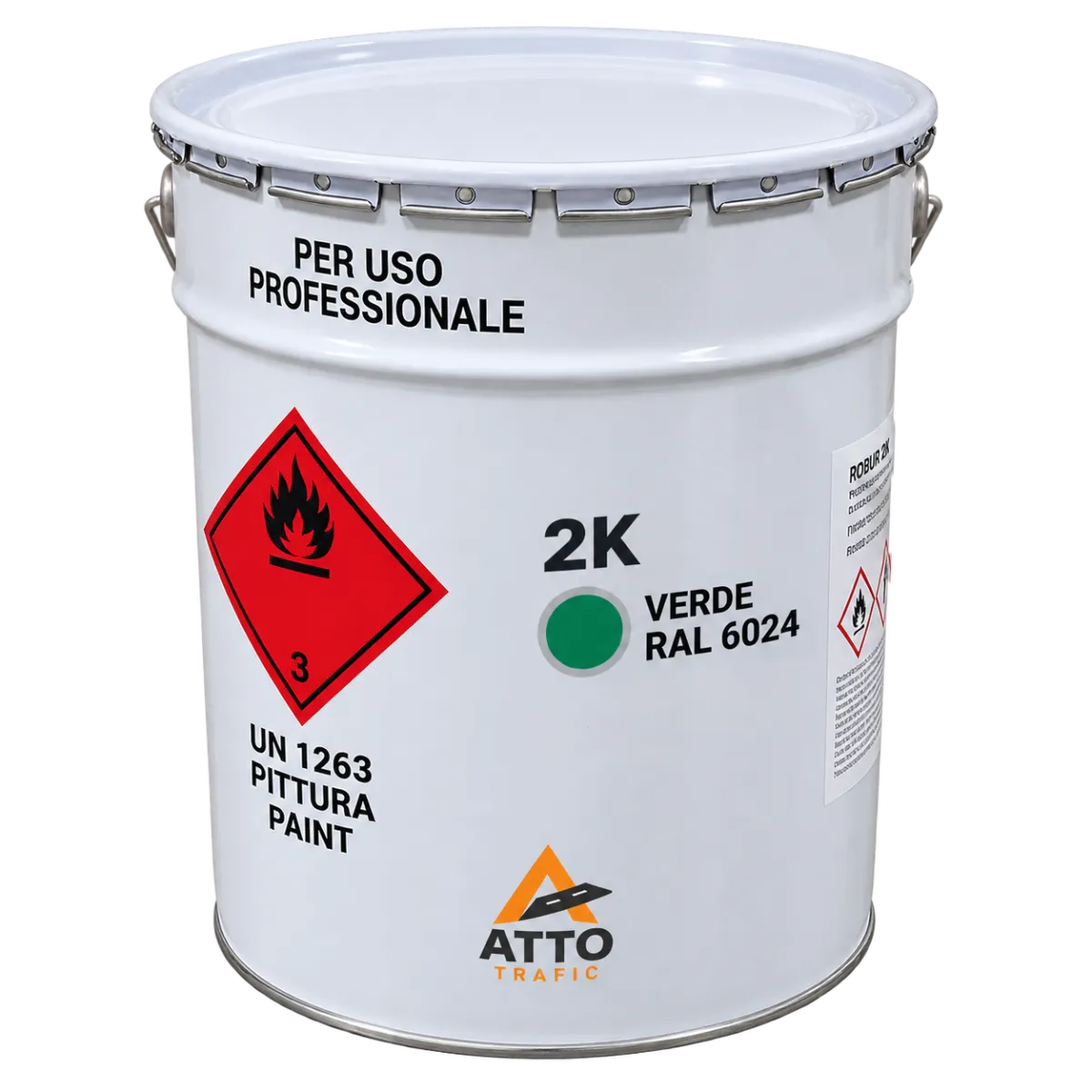
- ATP 2K-6024 – traffic green RAL 6024, 20 kg, for long stretches of lane;
- ATP 2K-6024/10 – the same green in a 10 kg pail, for repairs;
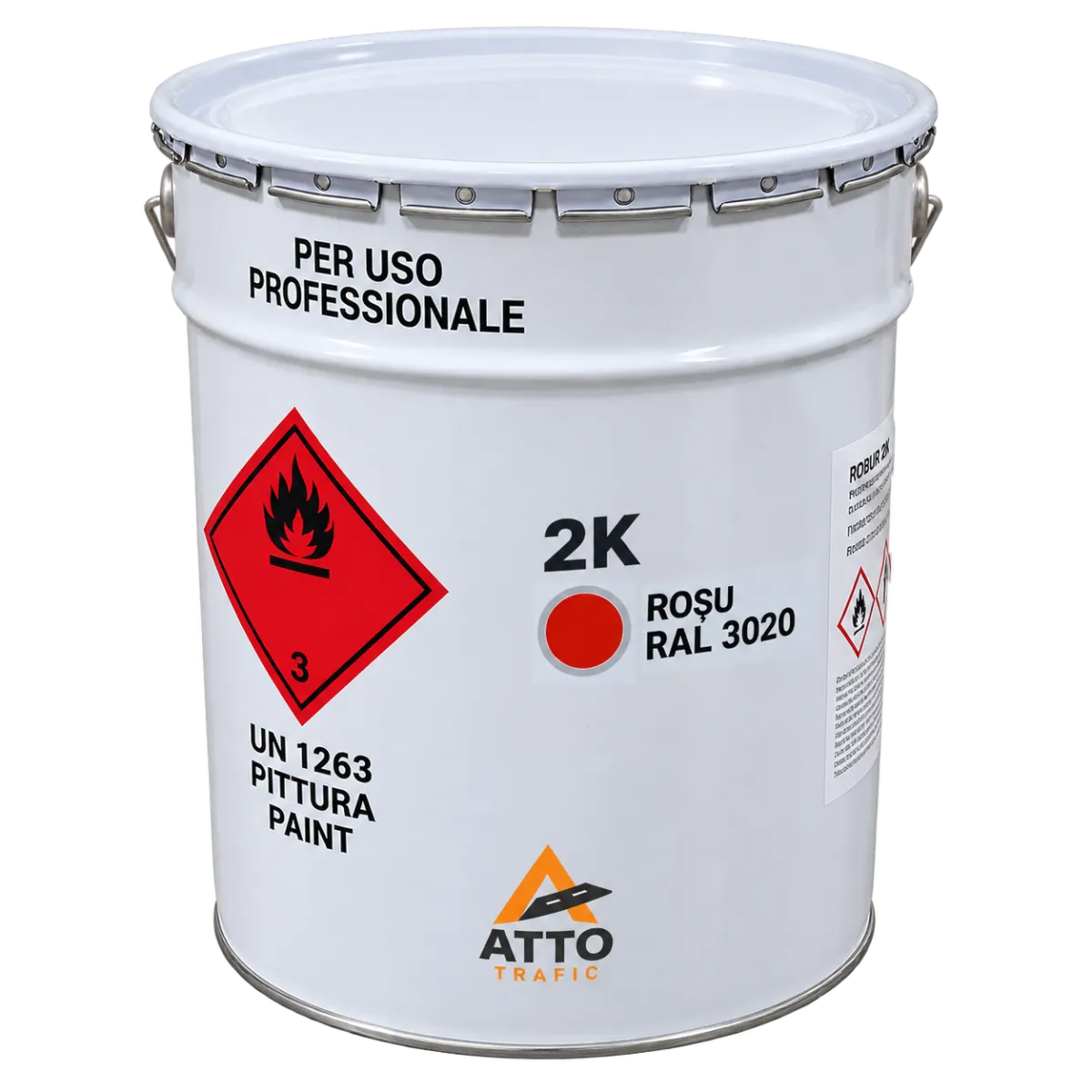
- ATP 2K-3020 – red RAL 3020, 15 kg, for the stretches you want to highlight;
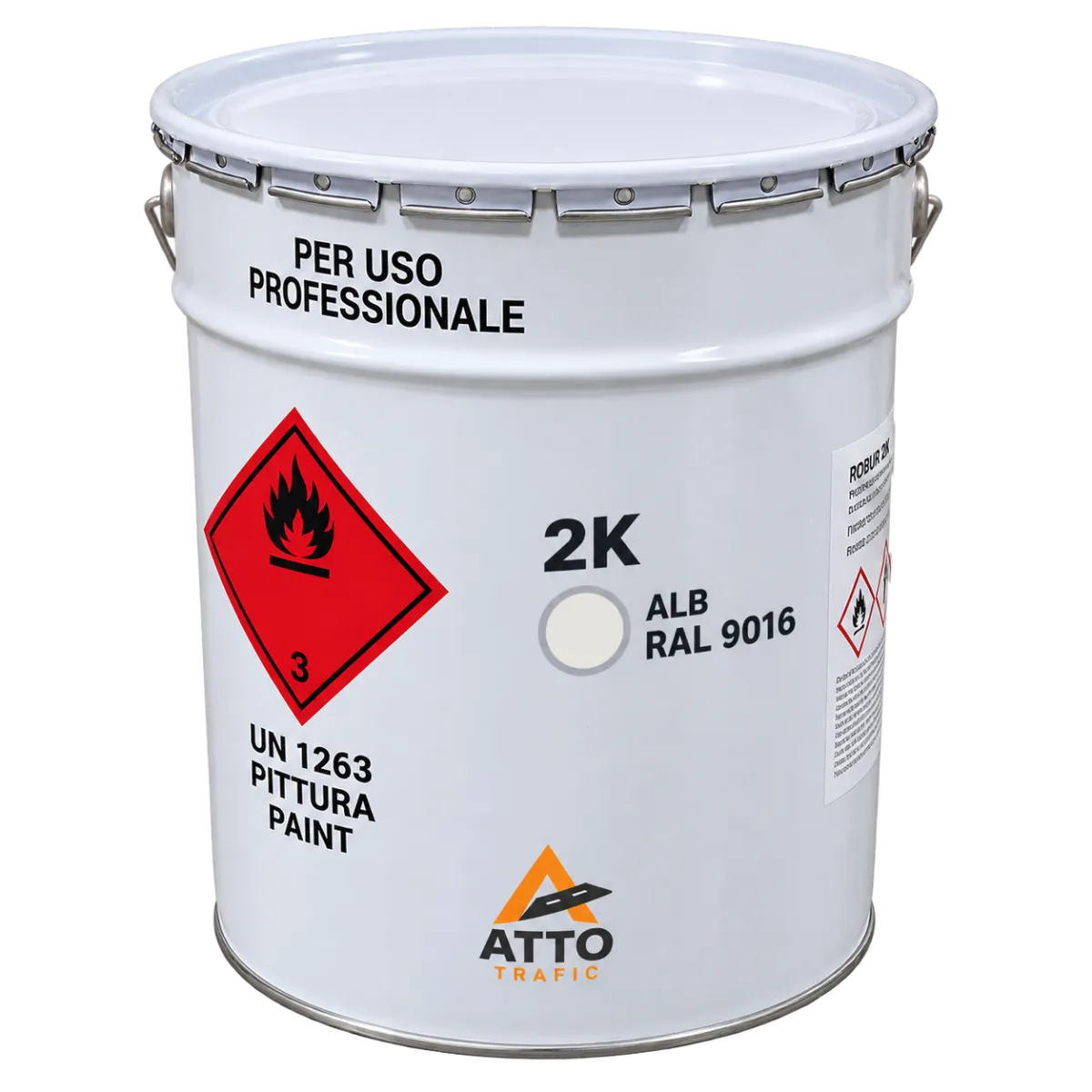
- ATP 2K-9016 – white, 15 kg, with premixed glass beads, for symbols and lines.
Why cold plastic
Methacrylic resin (MMA) contains no solvent and has 99% solids, so almost everything you apply stays on the asphalt. Consumption is 1.5-2 kg/m²: a 20 kg pail covers 10-13 m², a 10 kg pail 5-6.5 m². The coloured pigments are UV-resistant.
How it is applied
Stir the product, add the catalyst (2% at +5 °C, 1% between +10 and +30 °C) and stir for another minute. Pour the material onto the taped-off area and spread it with a rubber roller. At +20 °C you have 8 minutes of working time, and the lane can reopen after about 30 minutes.
Conditions
The surface must be dry and clean, between +5 and +30 °C, and at least 5 °C above the dew point. On new asphalt, wait 4-6 weeks, and do not apply it over old paint or thermoplastic. For grip, drop anti-skid material onto the fresh coat.
A cheaper option
For a lane with light traffic there is also the green one-component acrylic ATP 1K-6024, under one-component road marking paint. We deliver within 24-48 hours.
? Frequently asked questions
How much paint do I need for a cycle lane?
Consumption is 1.5-2 kg/m². A 10 m² stretch takes 15-20 kg, so one 20 kg pail of ATP 2K-6024 or two 10 kg pails of ATP 2K-6024/10.
How much catalyst goes in?
2% at +5 °C and 1% at +10, +20 and +30 °C, mixed in for at least one minute with a mechanical stirrer.
When can the lane be used?
Once cured: about 55 minutes at +5 °C, 40 at +10 °C, 30 at +20 °C and 20 at +30 °C.
Can I apply it over the old marking?
It is not recommended over other paints, thermoplastic or tapes. Old marking that no longer adheres must be removed, and the surface must be dry and clean.
Is the lane anti-slip?
For grip, drop anti-skid material onto the fresh coat; for night visibility, ATP AC90 glass beads, or a mix of the two.
In road safety since 1998
Atto Trafic supplies complete road signage and safety equipment — signs, traffic signs, markings, parking barriers, speed bumps, mirrors, bollards and accessories.
- Durable products, compliant with STAS and SR EN
- ISO 9001 / 14001 / 27001 / 20671 certified
- Constant stock, delivery within 24-48 hours
- Support for municipalities, contractors, private car parks