
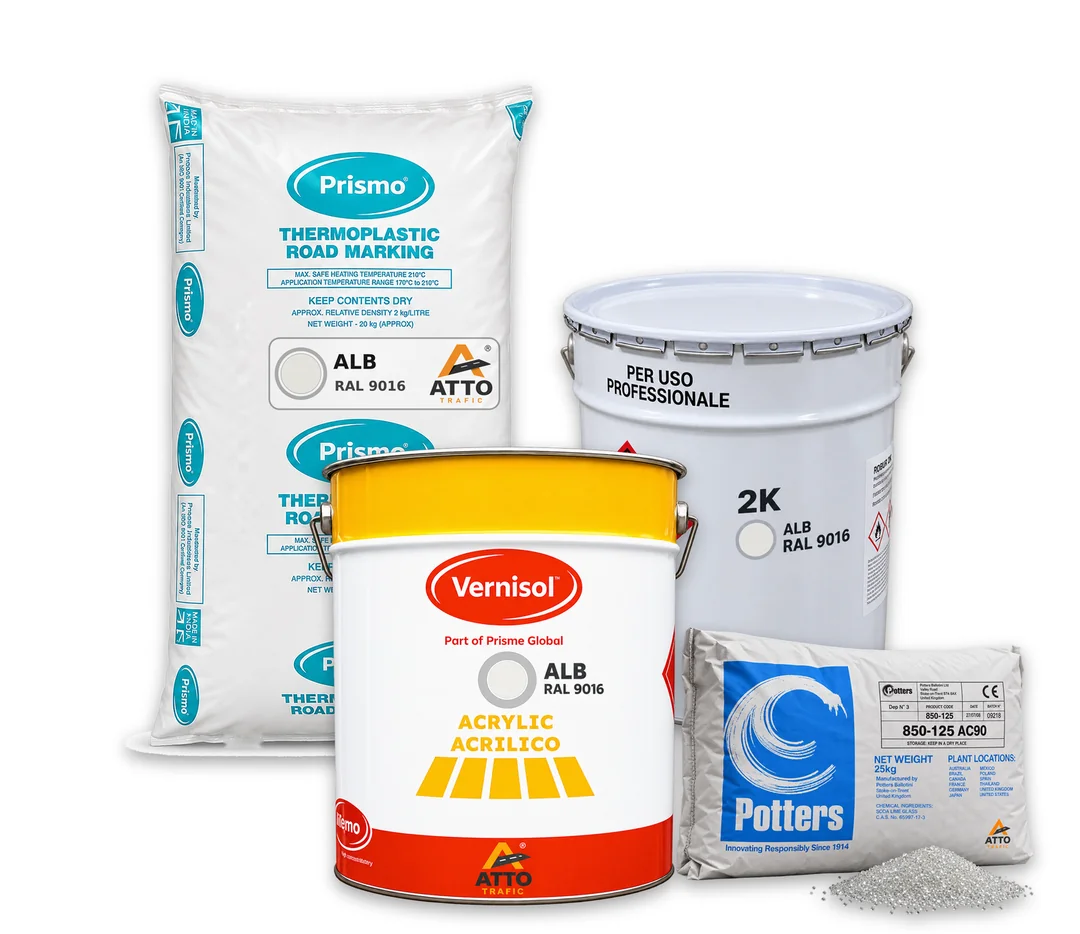
Thermoplastic Road Marking Paint
2-3 mm hot-applied thermoplastic for high-traffic roads.
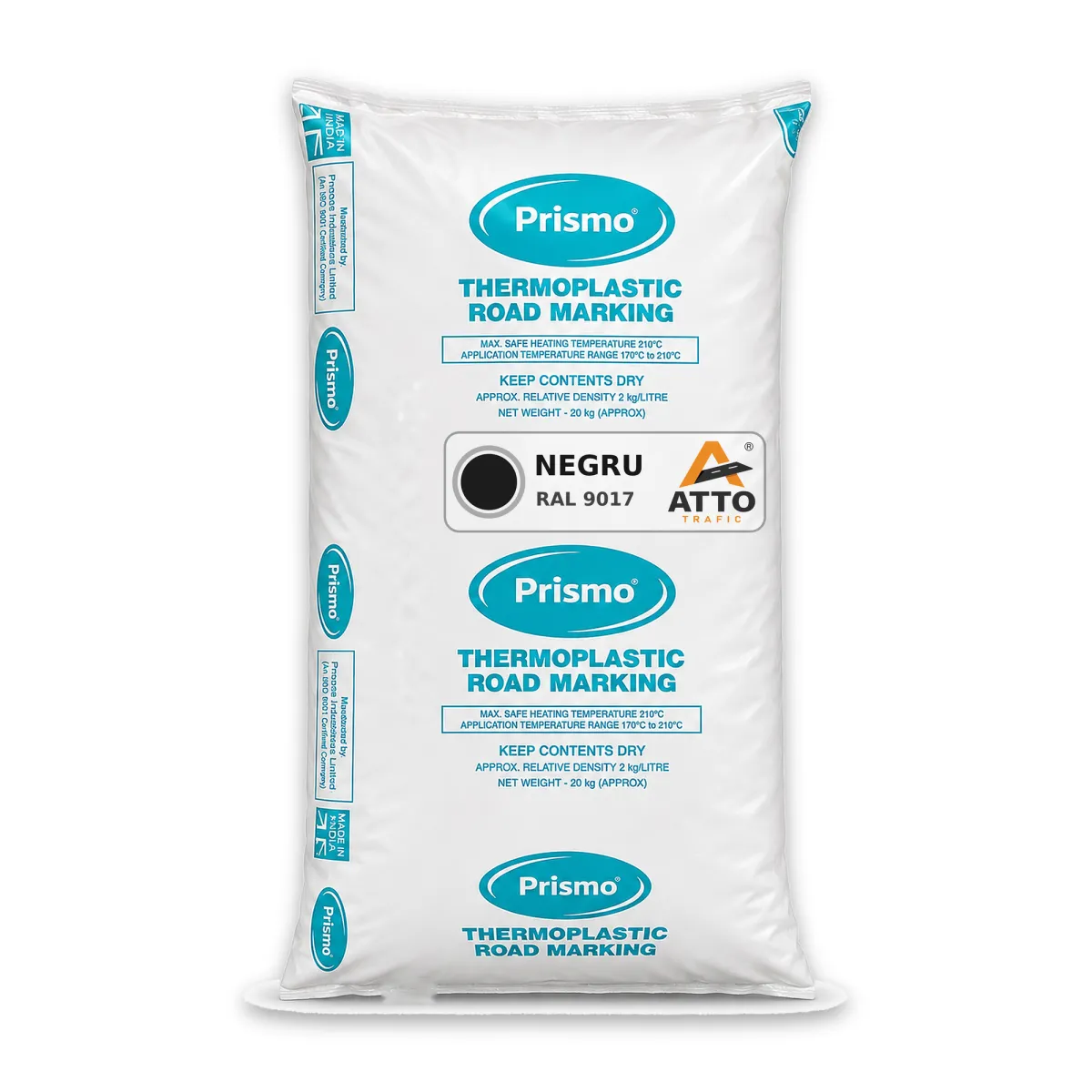
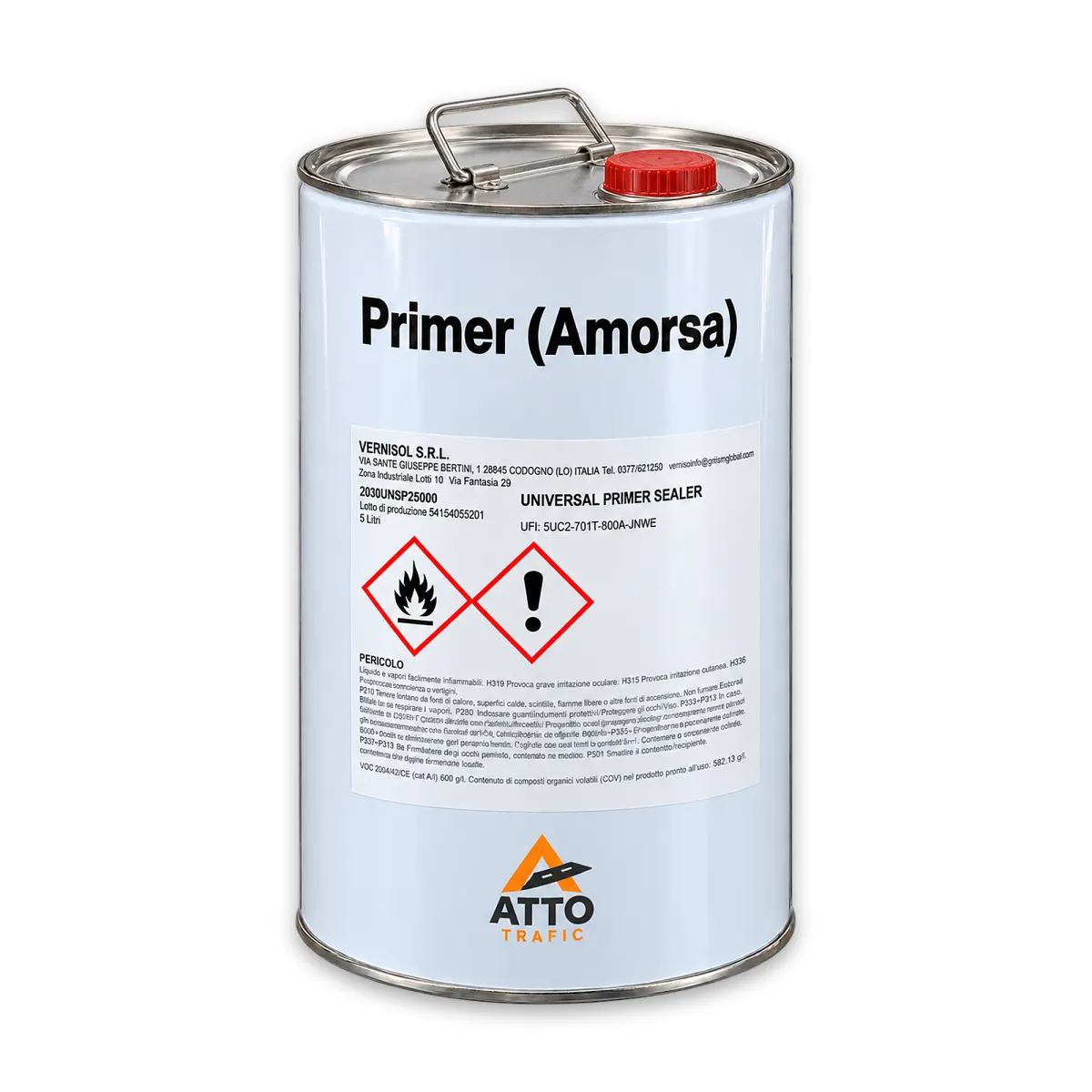
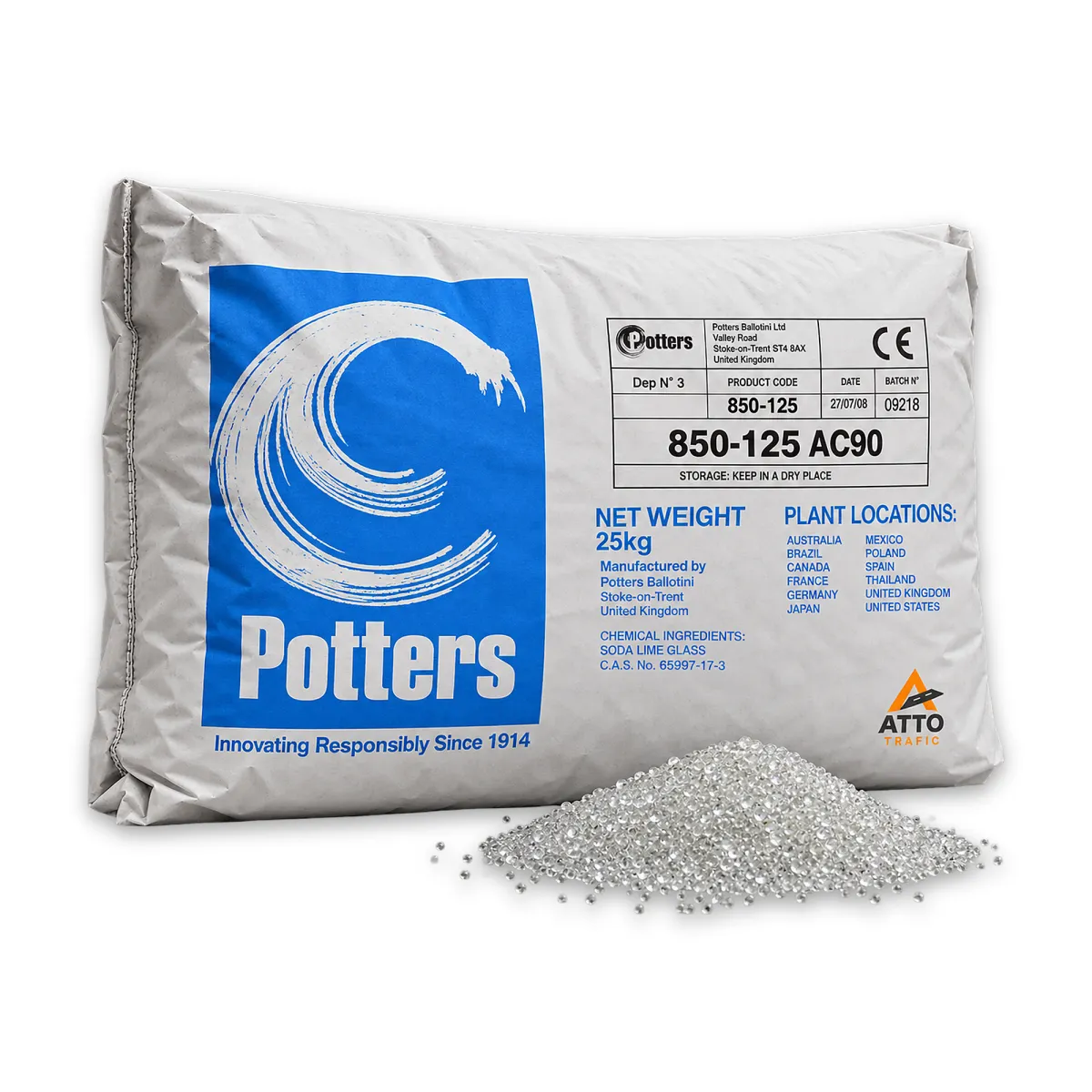
Thermoplastic road marking paint
A marking in acrylic paint is a few hundred microns thick. One in thermoplastic is 2-3 mm, several times thicker, which is why it lasts longer on high-traffic roads: motorways, main roads and major city arteries. The material comes solid, is melted at 180-210 °C and is hot-applied by machine.
Colours
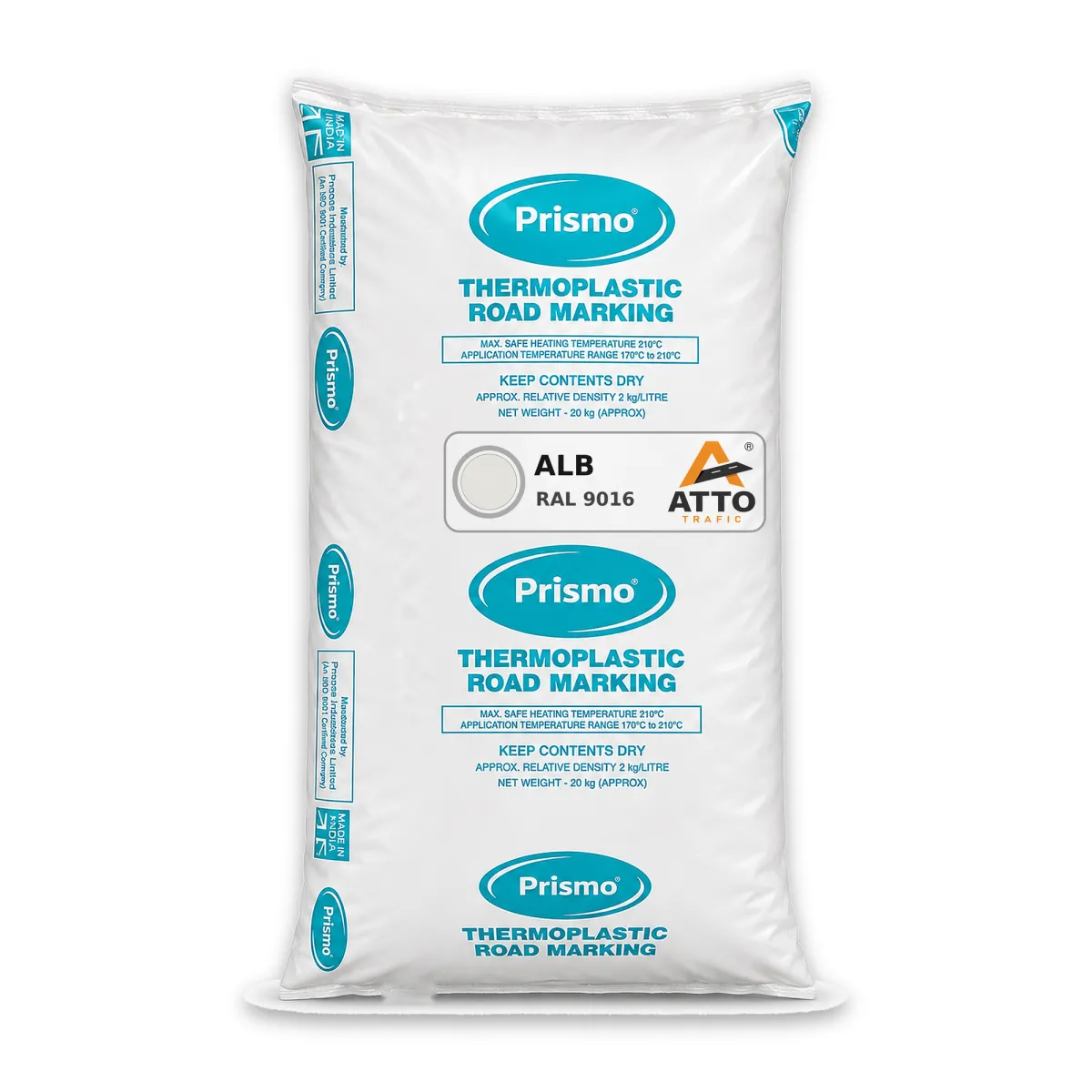
- ATA 4020 – white RAL 9016, luminance factor LF6 (β ≥ 0.80), for ordinary lines;
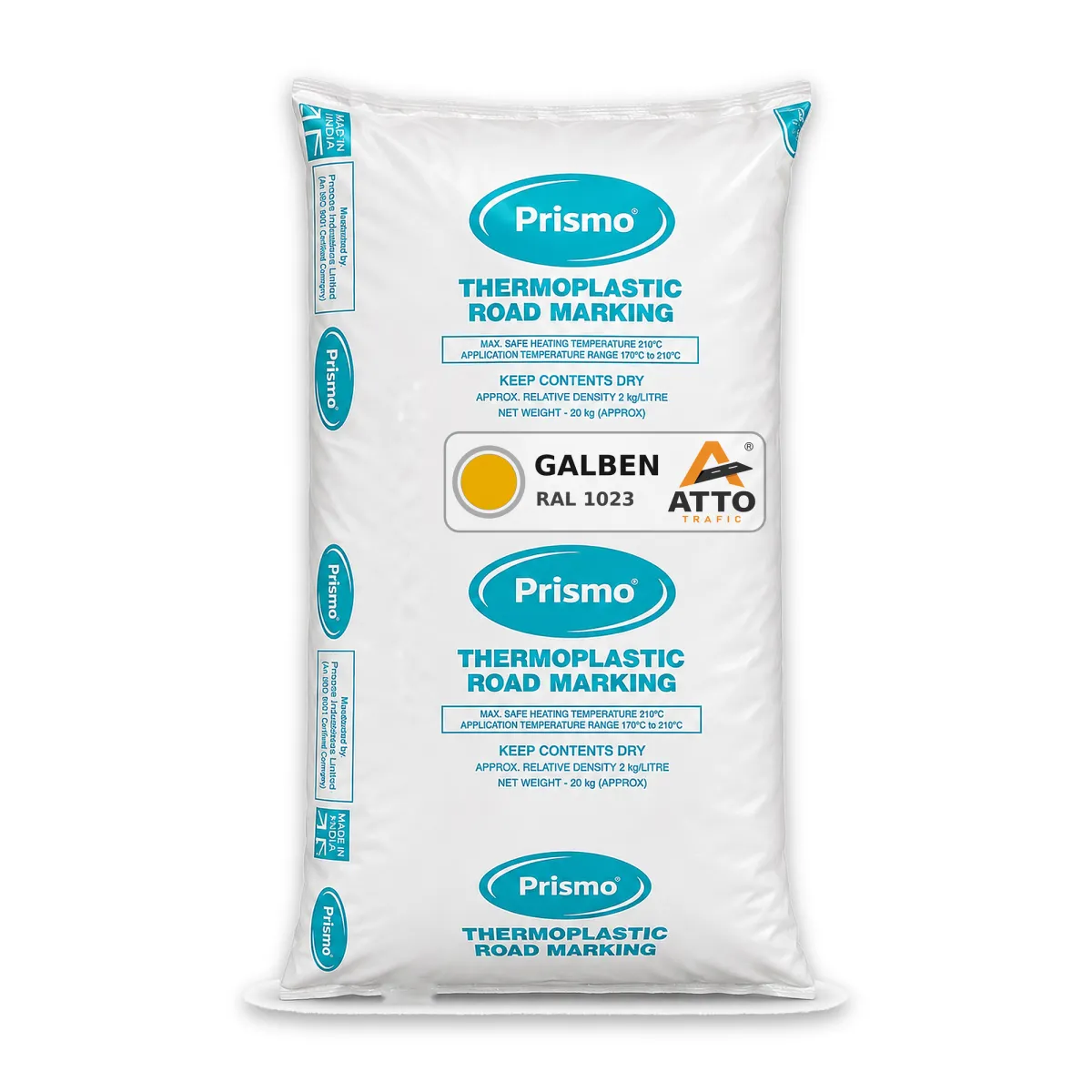
- ATA 4120 – yellow RAL 1023, for temporary markings and special zones;
- ATA 4520 – black RAL 9017, for contrast borders on light-coloured surfaces.
All three come in 20 kg packs.
How it is applied
The thermoplastic is heated in a melter and laid with an application machine that has one gun for the material and one for the glass beads. Humidity must be 80% at most. The material sets by cooling, not by a solvent evaporating, so it is ready in 2-4 minutes at 10 °C and contains no volatile compounds.
Consumption
4 kg/m² at 2 mm thickness and 6 kg/m² at 3 mm. A 20 kg pack therefore covers about 5 m² at 2 mm or 3.3 m² at 3 mm. ATP AC90 glass beads are dropped on straight away, about 400 g/m².
Durability
The softening point is at least 95 °C, so the marking does not soften on hot summer asphalt. The density is 2.00 g/ml, and the colours are in class UV1 for UV ageing.
When to choose something else
If you have no hot-application equipment, one-component road marking paint goes on with an airless sprayer or roller, and preformed road markings are melted straight onto the asphalt with a torch. We deliver within 24-48 hours.
? Frequently asked questions
What equipment do I need for thermoplastic?
A melter that brings the material to 180-210 °C and an application machine with one gun for the thermoplastic and one for the glass beads.
How much material do I need?
4 kg/m² for a 2 mm layer and 6 kg/m² for 3 mm. A 20 kg pack covers about 5 m² at 2 mm.
How soon can traffic use the marking?
The material sets by cooling in 2-4 minutes at 10 °C, so the road reopens almost straight away.
Are glass beads needed?
For retroreflection, yes: ATP AC90 beads are dropped on straight after application, about 400 g/m².
What is black thermoplastic for?
The ATA 4520 is laid as a contrast border beside white or yellow lines, on concrete or light-coloured asphalt.
In road safety since 1998
Atto Trafic supplies complete road signage and safety equipment — signs, traffic signs, markings, parking barriers, speed bumps, mirrors, bollards and accessories.
- Durable products, compliant with STAS and SR EN
- ISO 9001 / 14001 / 45001 / 27001 / 20671 certified
- Constant stock, delivery within 24-48 hours
- Support for municipalities, contractors, private car parks