


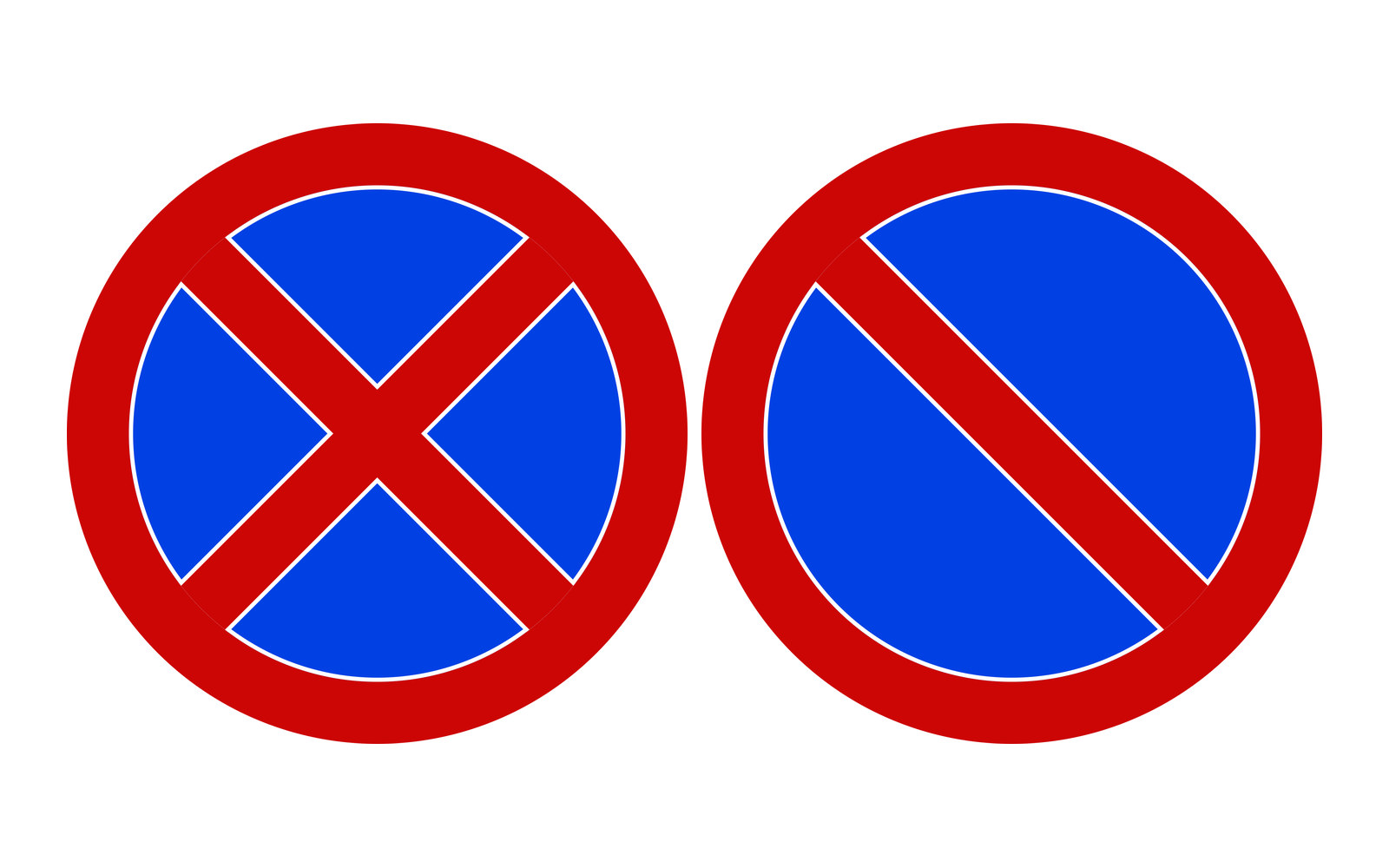
Two blue discs with a red border, almost identical from a distance. One has a single red bar, the other a red X. It decides whether you may pull up for a few minutes to let someone out, or may not stop at all. When you come to buy the sign, another question appears: why is there a sign called “No Parking” in plastic, if the Romanian standard has no sign under that name? The answers are below, along with what to use in each situation.
Stopping and parking: the line is at 5 minutes
Under the Romanian Highway Code, stopping means voluntarily keeping a vehicle still for no more than 5 minutes. Beyond that it counts as parking. The whole difference between the two signs comes from this:
- C36, no parking (Staționarea interzisă): blue disc with a red border and one red diagonal bar. It bans parking but allows a stop of up to 5 minutes.
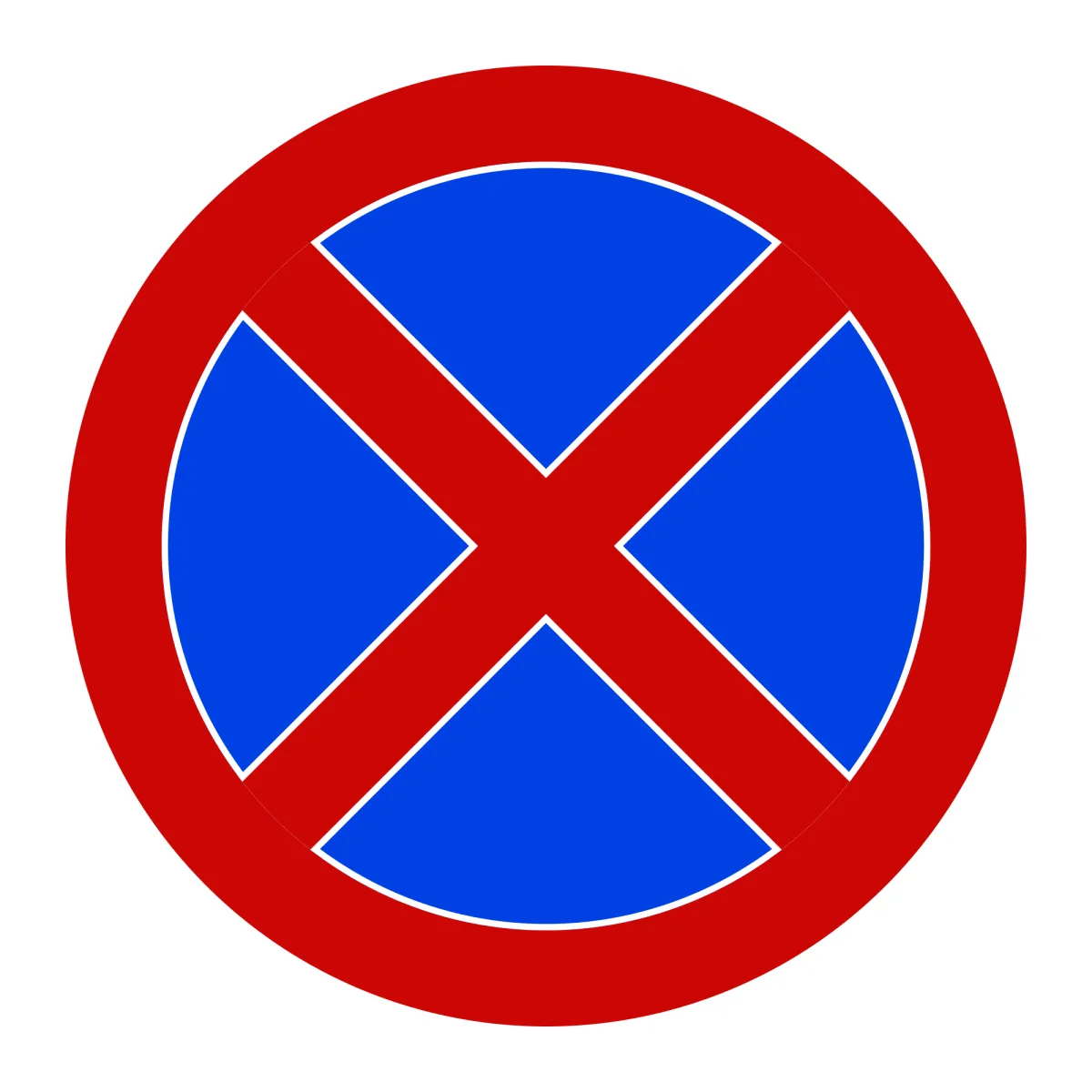
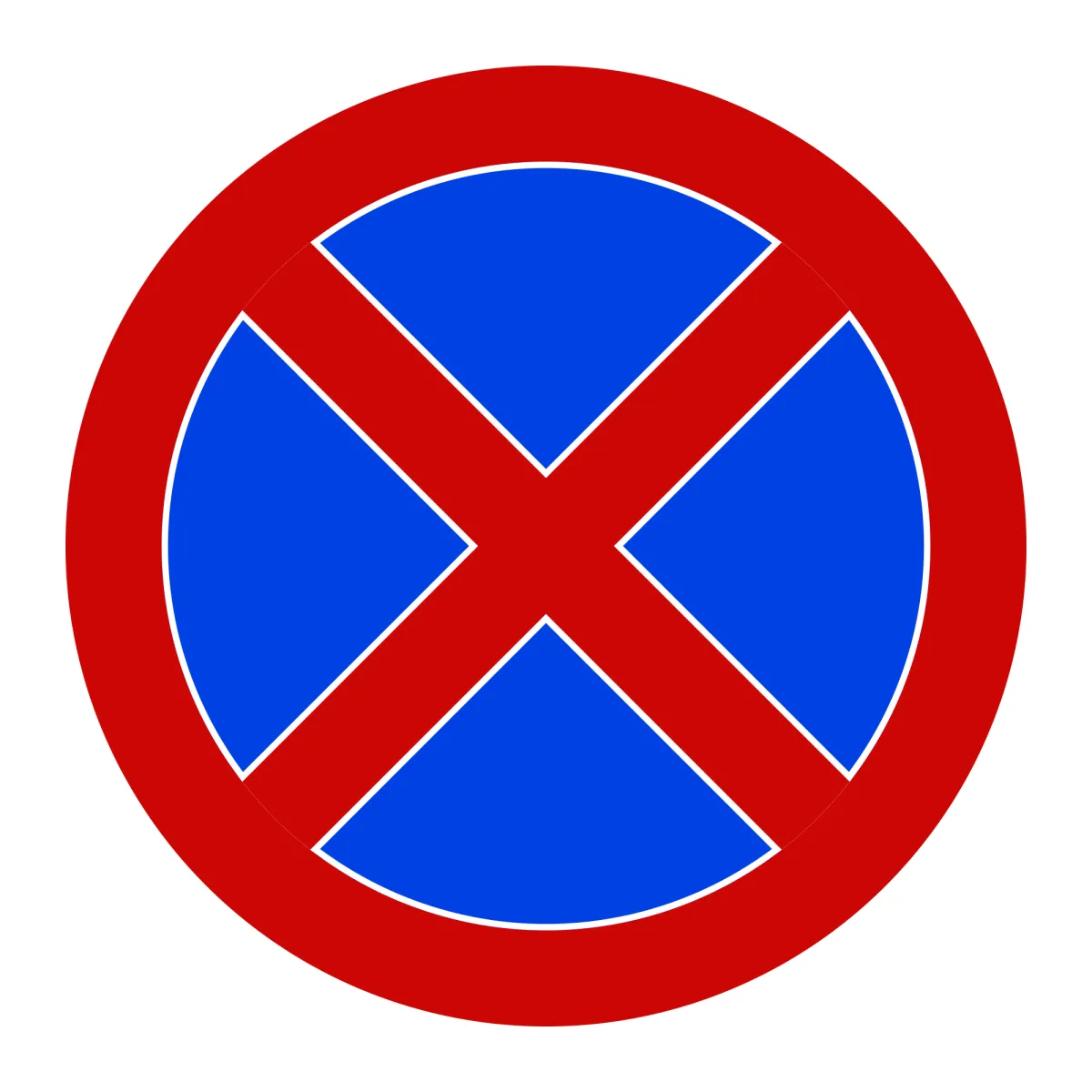
- C37, no stopping (Oprirea interzisă): blue disc with a red border and two red bars in an X. It bans stopping of any length.
An easy way to remember them: one bar leaves room for a short stop, two bars leave none. The C37 is the stricter of the two and belongs where even a few seconds cause trouble, for instance on a busy artery where any stopped car blocks a lane.
How far the ban runs and what the arrows mean
A no-stopping or no-parking sign does not apply for ever. SR 1848-1:2024 says that at the start of the section the C36 comes with an additional panel giving the start and length of the zone. Without it, the ban applies up to the first junction. For the C37, the standard refers to the same conditions.
The panels that define the section go under the disc:
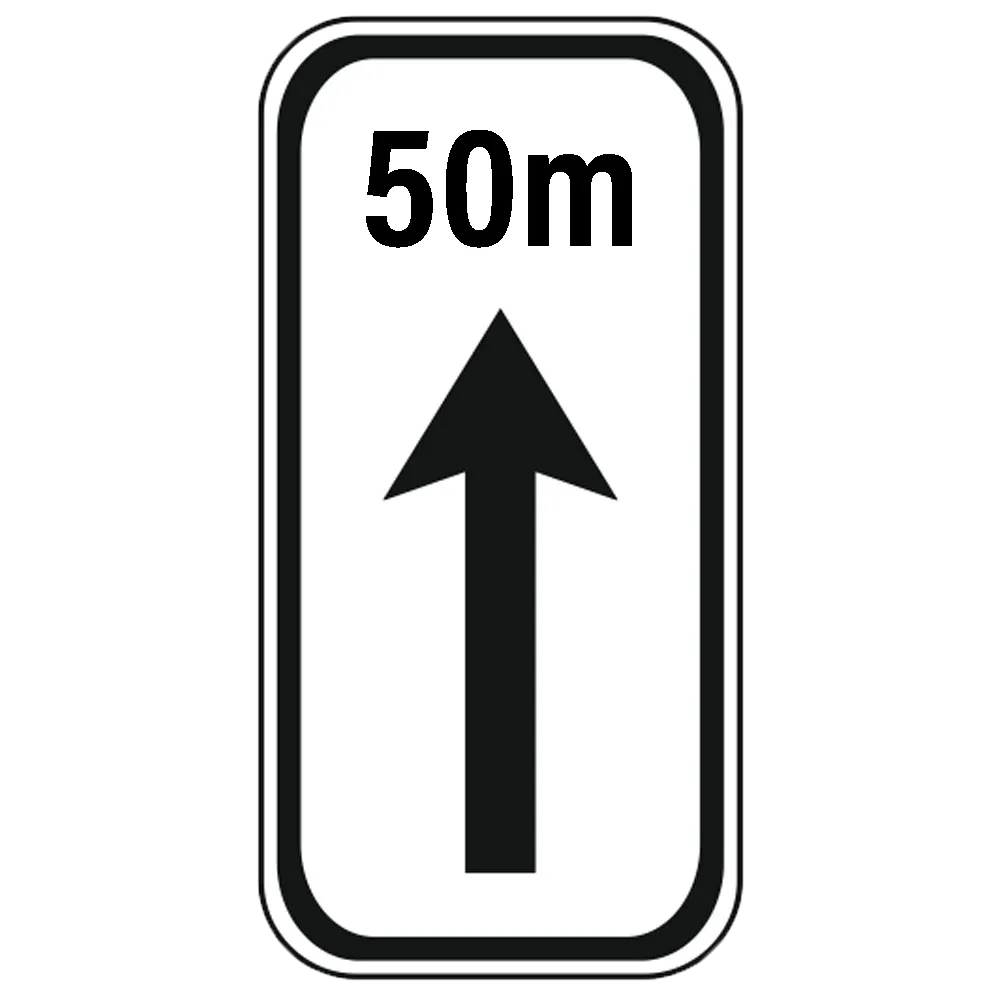
- P9, start and length of the zone, showing the distance: P9-30 for 30 m, P9-50 for 50 m, P9-100 for 100 m;
- P10, start of the zone: black arrow pointing up on a white background;
- P11, continuation of the zone: double-headed arrow, up and down. The ban continues at the sign as well;
- P12, end of the zone: arrow pointing down.
The standard also allows the P10, P11 and P12 symbols to be included directly on the C36 or C37, with the arrow applied on the disc. The meaning stays the same: the up arrow says the ban starts here, the double-headed one says you are inside the zone, and the down arrow says it ends here.
Who is exempt
Exemption panels can also go under the C36 and C37:
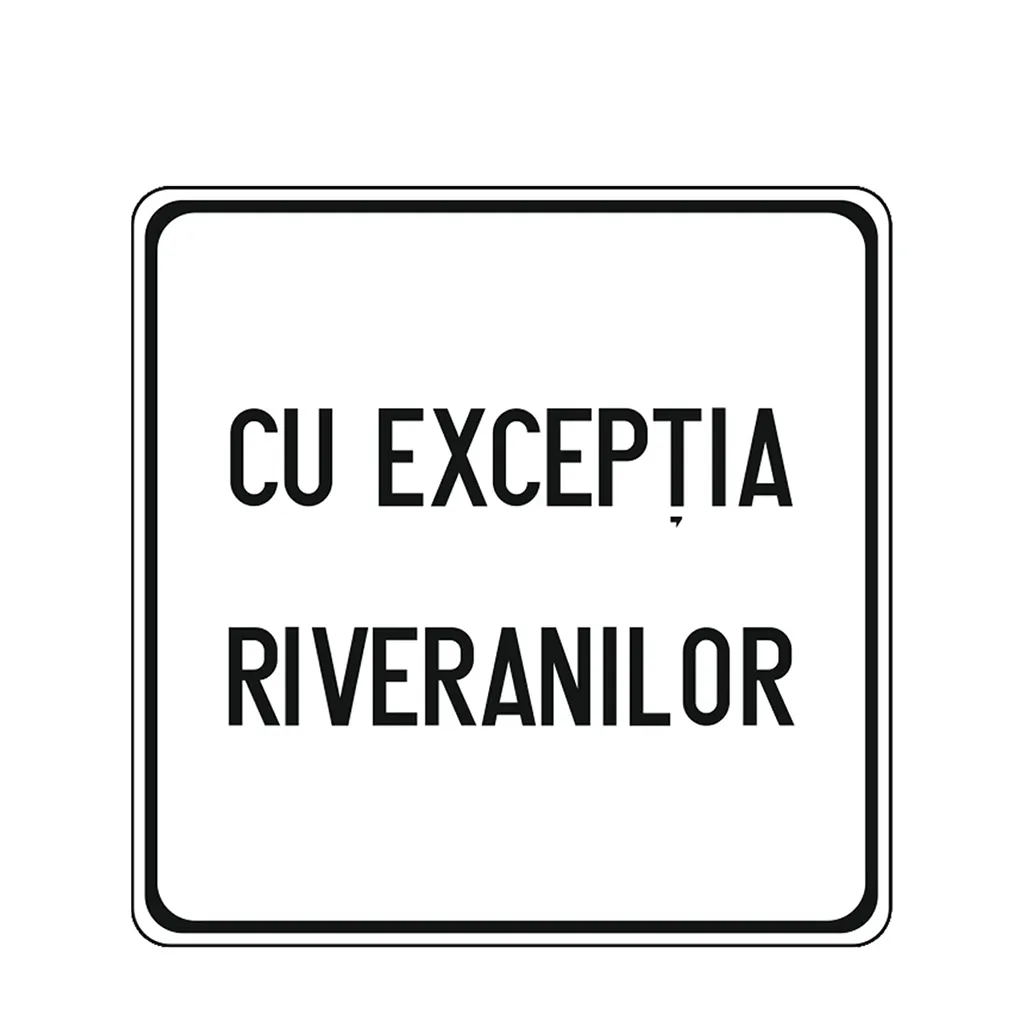
- P34, reading CU EXCEPȚIA RIVERANILOR (except local access), for people who live or own property along the road;
- P18, for vehicle categories exempt from the ban. The model we list, P18, reads CU EXCEPȚIA TRAMVAIELOR (except trams).
Alternate-side parking: C38 and C39
On some streets, parking is banned only on certain days of the month. Two paired discs handle this, and you tell them apart by their vertical white stripes:
- C38, one stripe: parking is banned on odd days (1, 3, 5, … 29, 31);
- C39, two stripes: parking is banned on even days (2, 4, 6, … 28, 30).
They go up under the same conditions as the C36 and can take the same exemption panels.

And the “No Parking” signs? Two types that are not for public roads
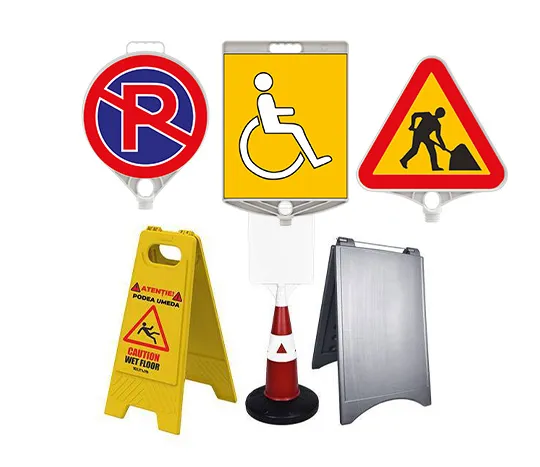
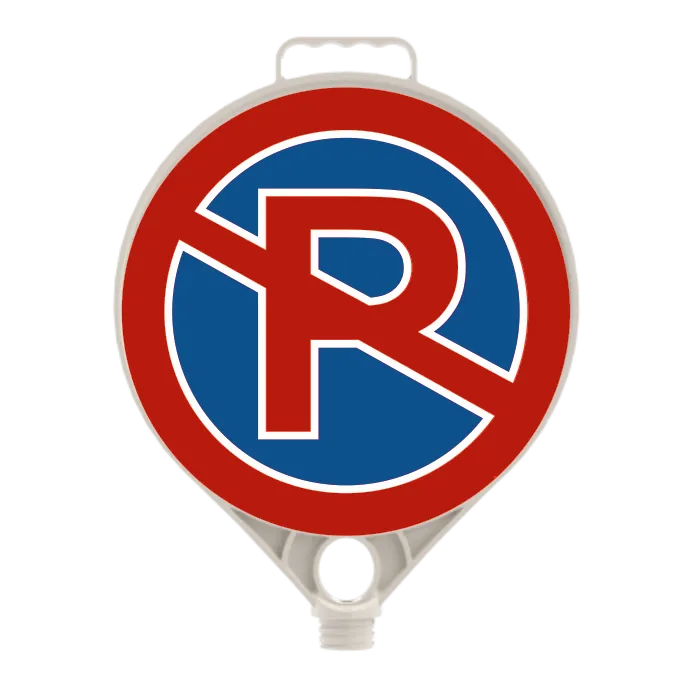
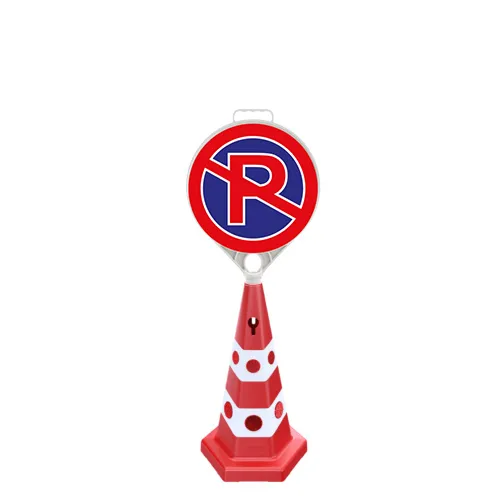
Many people search for a “no parking sign”, but SR 1848-1:2024 has no sign under the Romanian name „Parcare interzisă”. On public roads, the ban is signed with the C36 or C37. The signs named “no parking” in our range solve a different problem: a spot you want kept free in a space that you manage yourself.
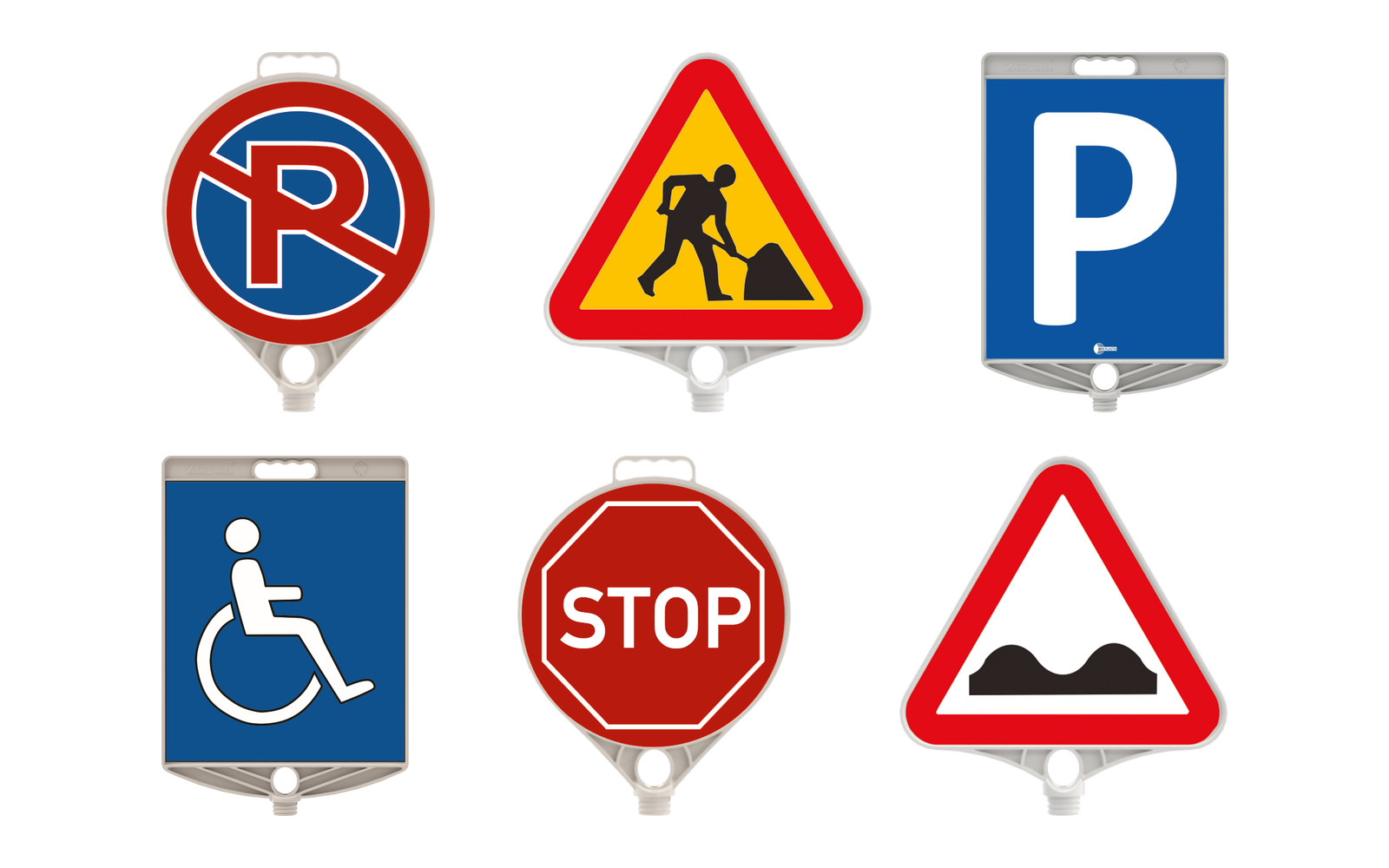
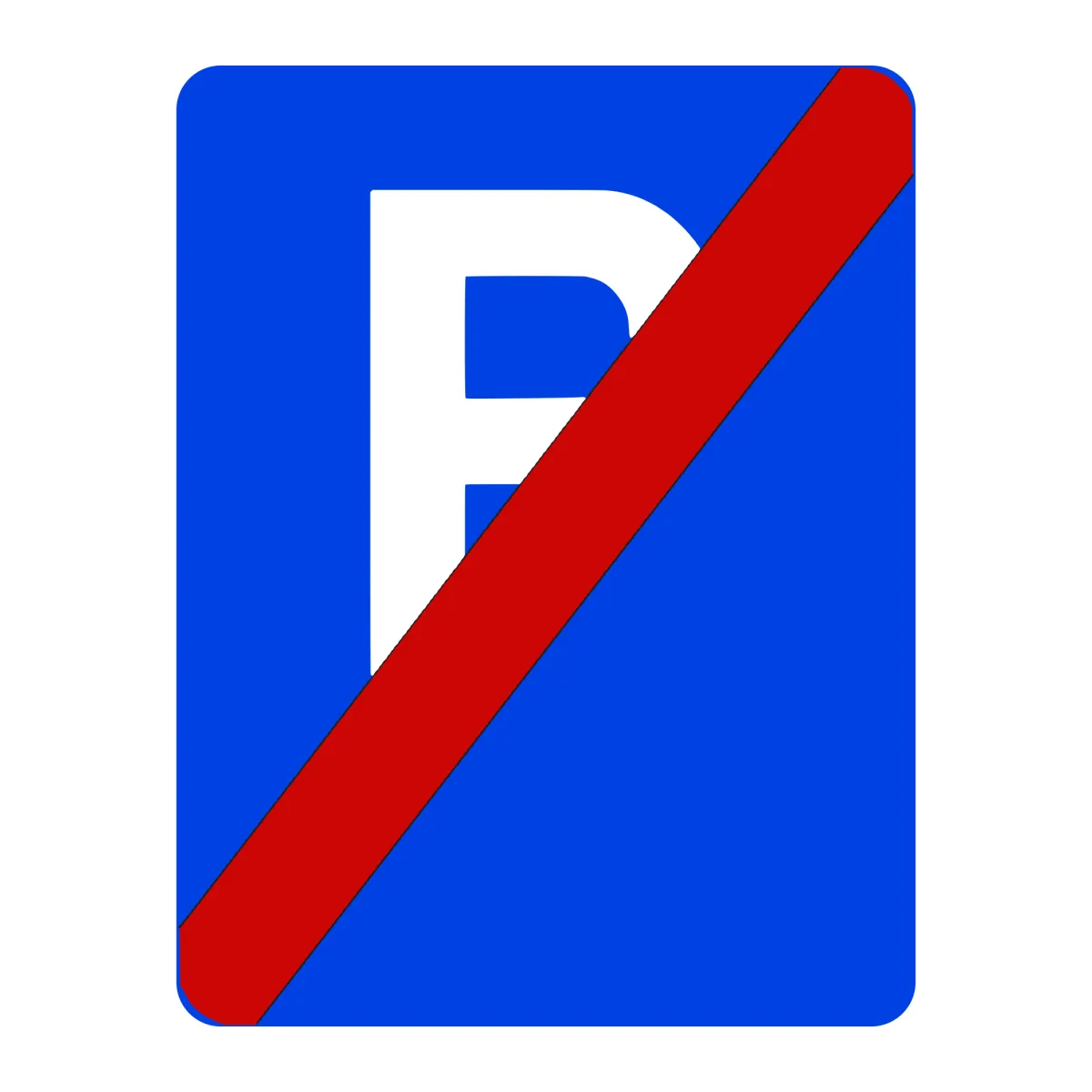
- G31i: blue 50 x 65 cm panel, with the letter P crossed by a red bar. It is not a sign from the standard. It is used on private premises and in private car parks, and goes at the entrance to the area where the owner does not allow parking, in plain view of those coming in.
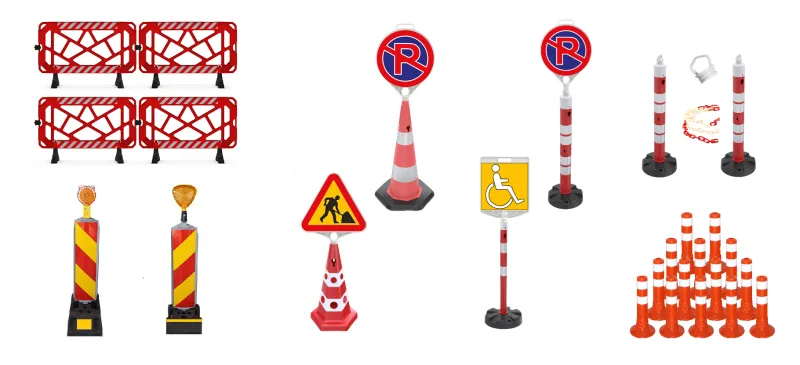
- ATZ 545 (Ø28 cm) and ATZ 645 (Ø38 cm): threaded plastic discs that you place exactly where the spot must stay free and move when no longer needed. The Ø38 cm one is easier to read from the driver’s seat, from the end of an alley or across a yard.
The plastic discs do not replace permanent signs on public roads. They are for private spaces and temporary signing; every model is in the guide to plastic signs.
Ready-assembled sets
The Ø28 cm disc also comes paired with a cone or a mobile post:
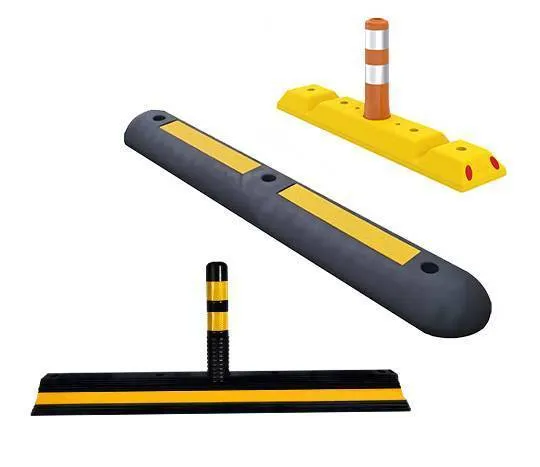
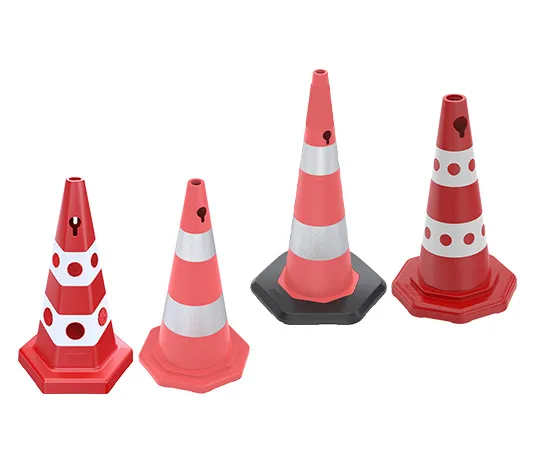
- ATS 3060-545: 60 cm parking cone with the sign screwed straight into the top, 6.5 kg;
- ATS 3271-545 and ATS 3291-545: 70 cm and 90 cm cones with a weighted base, visible over the bonnets of parked cars;
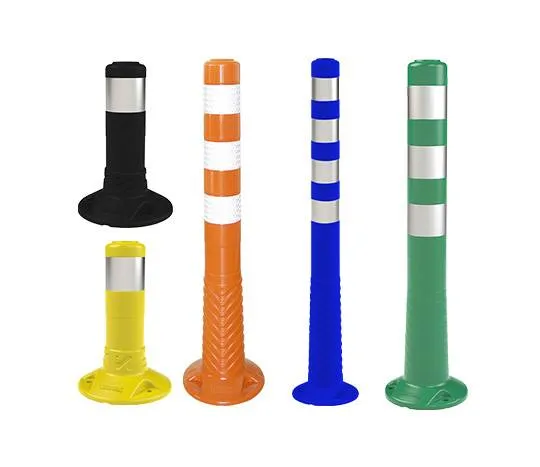
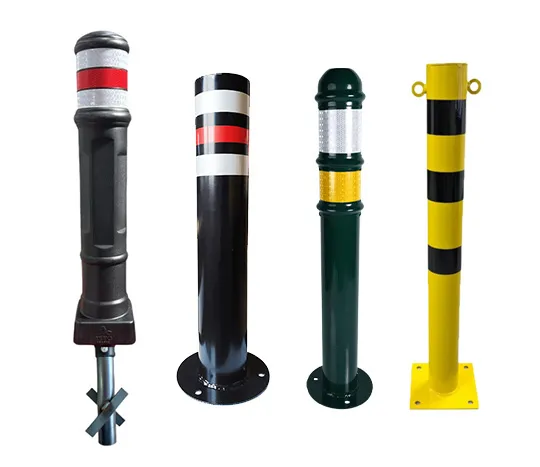
- ATS 63315-545: Ø6.3 x 100 cm mobile post, 6 kg, the easiest to move often;
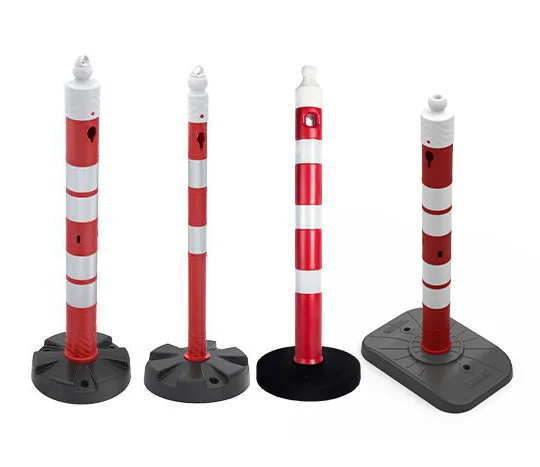
- ATS 11015-545: Ø11 x 120 cm mobile post, 7 kg, with holes for a chain.
If you are deciding between a cone and a post, the guide to traffic cones helps with height and base.
What to use, situation by situation
- A public street or road where nobody may stay longer than 5 minutes: C36, with P9 or with P10, P11 and P12, so the start and end are clear.
- A section where even a short stop is unacceptable: C37, on a national road in the large format with class II sheeting, which is the C37_II (Ø80 cm).
- A street where parking is banned only on odd days or only on even days: the C38 or the C39.
- A ban with an exemption for people who live on the street: C36 or C37, with P34 below.
- Part of a private car park or premises, permanently: G31i on a post. To show who the car park belongs to, the G31p reads PARCARE PRIVATA (private parking) under the letter P.
- A gate, ramp, service entrance or hydrant in your own yard: a cone or mobile post set with a plastic disc.
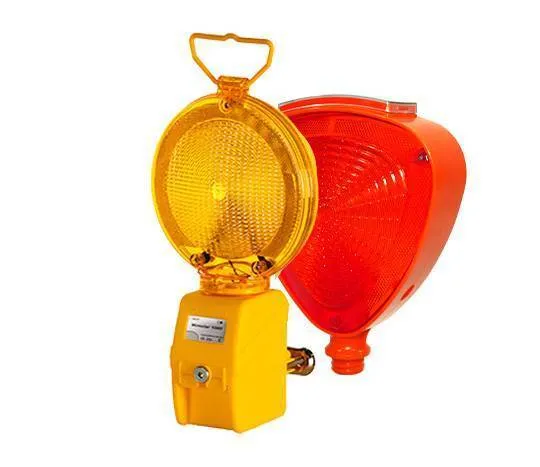
- A spot held for a few hours, for a delivery or a move: a light set, put out in the morning and picked up when no longer needed.
A sign announces, but it does not keep a car away. If your parking space is taken again and again, a parking lock, with a key (ATZ M601A) or a padlock (ATZ M602A), does a different job; the differences between models are in the guide to parking locks.
Who installs the sign on a public road
If cars block your gate on a public street, you do not put up a C36 on the pavement yourself. On public roads, buying, installing and maintaining signs generally falls to the road administrator, so that is who to contact. The exceptions include information signs for service businesses and signs for access to social and economic sites, which are explained in the guide to metal signs. When a restriction comes from road works, the approved scheme sets the order and the positions, as described in the guide to road works signs.
Which size and which sheeting
SR 1848-2 ties the disc format to the road category and forbids a format smaller than the one required:
- Ø60 cm, normal format: county and local roads, streets, private roads open to public traffic;
- Ø80 cm, large format: national roads;
- Ø100 cm, very large format: motorways.
As for sheeting, class I (RA1) returns 70 cd/(lx·m²) for white and has a 7-year service life. It suits places where the sign does not compete with other lights: local, minor and private roads, and streets without strong lighting. Where there is street lighting, shop windows and advertising, SR 1848-2 requires prismatic class 2 or 3 sheeting, because a class I sign gets lost against the background. Class II (RA2) returns three to four times more light and has a 10-year service life. The full comparison is in the article on class I and class II.
In our range, the C36, C38 and C39 are Ø60 cm, class I, and the C37 also comes at Ø80 cm, class II. If your road calls for a different combination, write to us before you order.
How it is installed
- Height: the bottom edge of the sign sits 1.50–2.50 m above the road or the kerb of the pavement.
- Distance from the road: the edge nearest the road sits 0.50–2.0 m from the road platform.
- Visibility: the sign must be visible from at least 50 m in built-up areas and 100 m outside them.
- Fixings: the disc comes with 2 clamps for Ø48 mm posts and 4 bolts with nuts. Clamps for Ø60 mm are supplied on request.
- Panels: they go under the disc.
The post is ordered separately and depends on the ground:
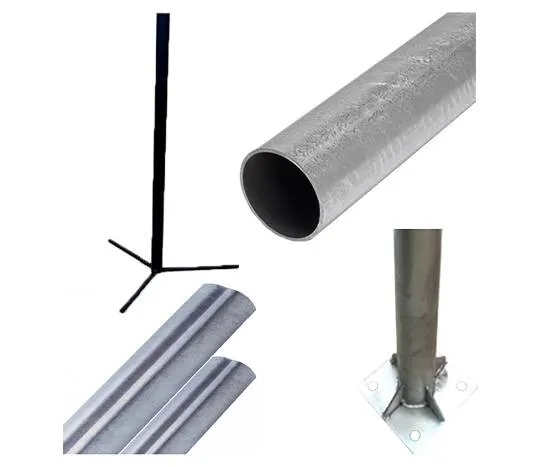
- ATT 48x2_3: Ø48 mm galvanised post, 300 cm, for fixed installation with a concrete foundation;
- ATZ M12048: Ø48 mm tripod post, 120 cm, for temporary installation without a foundation;
- ATZ M300: Ø60 mm flanged post, 300 cm, for concrete or paving where you cannot dig. Ask for the Ø60 mm clamps when you order.
There is more on diameters and foundations in the guide to sign posts.
Frequently asked questions
What is the difference between stopping and parking?
Duration. Stopping is voluntarily keeping a vehicle still for no more than 5 minutes; beyond that it counts as parking.
Can I stop for 2 minutes under a C37?
No. The C37 bans stopping of any length. A stop of up to 5 minutes is allowed under the C36, which bans only parking.
How far does the sign apply if it has no panel below it?
Under SR 1848-1:2024, without the panel giving the start and length of the zone, the ban applies up to the first junction.
What does the arrow on a no-stopping sign mean?
The up arrow shows where the zone starts, the double-headed one confirms the zone continues, and the down arrow shows where it ends. They can be on the P10, P11 and P12 panels or directly on the disc.
What does “cu excepția riveranilor” under a sign mean?
The P34 panel exempts people who live or own property along the road.
Which sign do I put in front of the gate in my yard?
A plastic “No Parking” disc on a cone or mobile post if you want to move it, or a G31i on a post if it is long term. On a public road, permanent signing uses metal signs and goes through the road administrator.
How we can help
The stopping and parking discs are in the prohibition and restriction signs category, and the panels with zone length, arrows and exemptions are in additional panels. For yards and private car parks, see the plastic signs and sign posts. Tell us what kind of road or space the sign is for and we will help you choose the disc, the panel and the post.