

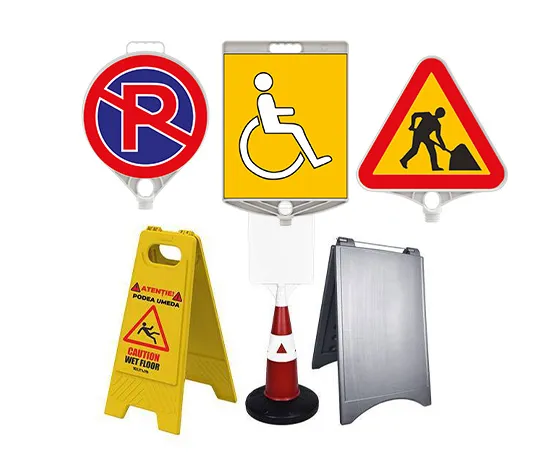
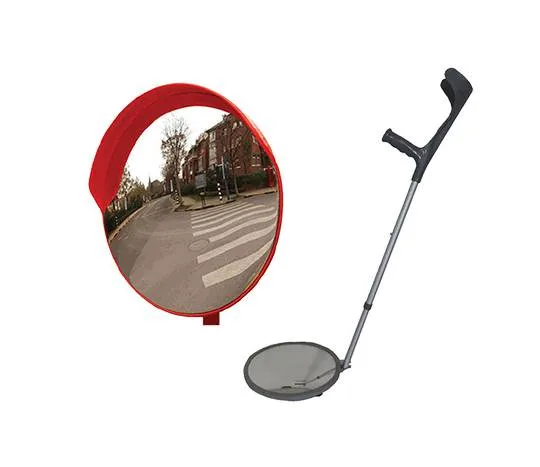


A road sign only does its job if it stands straight, at the right height and facing the drivers, year after year. That depends on the post as much as on the sign: on the diameter of the pipe, its length, the way it is fixed in the ground or on concrete, and the clamps that hold the sign to it. This guide explains which posts there are, how to pick the right one, which parts go with it and how to install it.
Which posts we mean
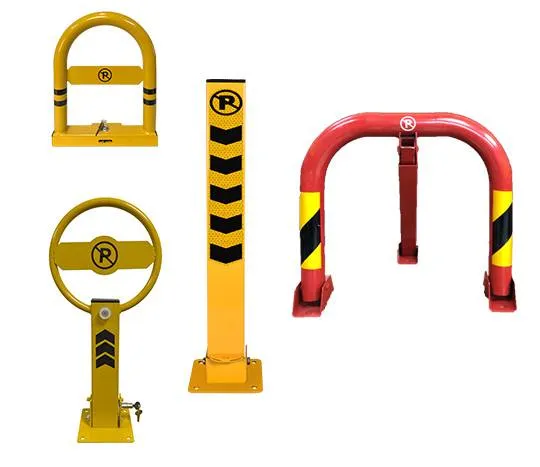
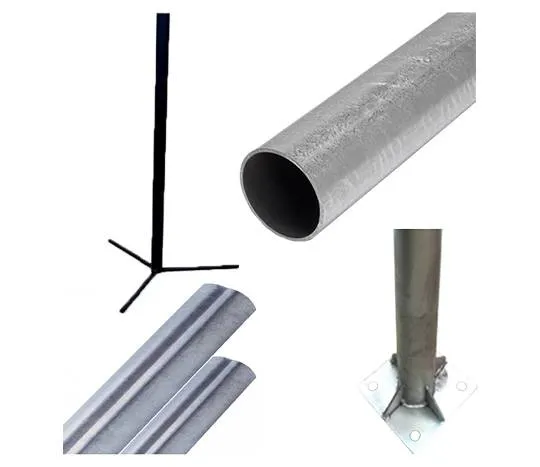
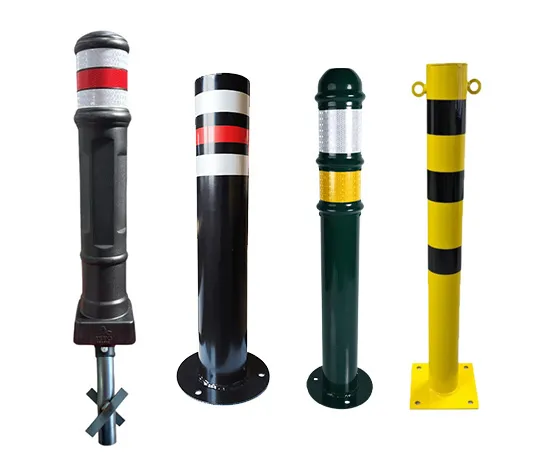
This is about the posts that carry road signs and traffic mirrors: metal pipes, galvanised or painted, Ø48 or Ø60 mm, set in a foundation, bolted to concrete or standing on a tripod. If you were looking for bollards or delineator posts for a car park or a pavement, those are a different product: they do not carry signs, they separate lanes and keep cars off the pavement, and they are not covered here. A no-parking sign on a post at the entrance to a yard, on the other hand, is exactly the subject of this guide.
The types of sign posts
The standard post, Ø48 mm and 300 cm
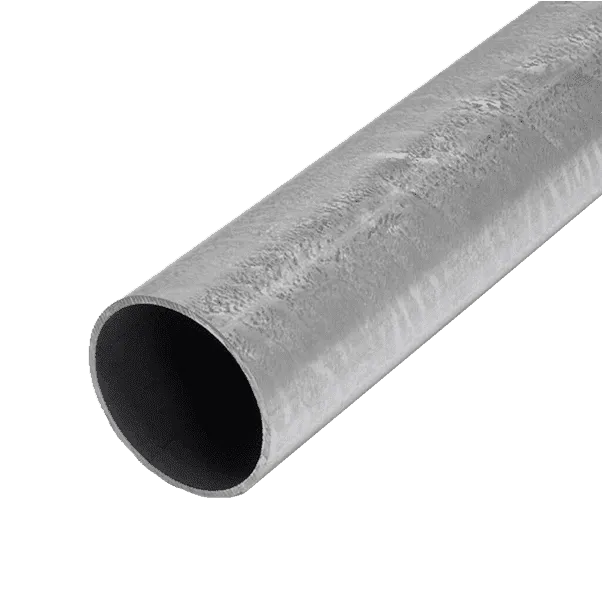
The ATT 48x2_3 is the usual post for roadside signs. Its code describes it quite well: 48x2 is the diameter and wall of the pipe, and 3 is the length in metres. It is set in the ground, in a concrete foundation:
- galvanised pipe, Ø48.3 mm, 2 mm wall;
- 300 cm long, 8.5 kg;
- plastic cap at the top, which keeps water out of the pipe and stops the post rusting from the inside;
- matching clamp: ATT 48c; spare cap: ATT 48d.
It carries warning, priority, prohibition, mandatory or information signs, and traffic mirrors too. You see it on public roads, on streets and lanes, in car parks, at the entrances to industrial yards and in residential developments.
The heavy post, Ø60 mm and 350 cm
A large sign catches the wind like a sail. For a sign like that, or for two signs one above the other, a thicker post than the standard one is the safer choice. The ATT 60x2_3.5 has:
- galvanised pipe, Ø60 mm, 2 mm wall;
- 350 cm long, 10 kg;
- plastic cap at the top;
- matching clamp: ATT 60c; spare cap: ATT 60d.
The extra 50 cm over the standard post give you a choice: either a deeper foundation or two signs stacked on the same post, for example a sign with a supplementary plate underneath. It is also set in a concrete foundation and is used on public roads and streets, at junctions and in places exposed to the wind.
The flanged post, for concrete and paving
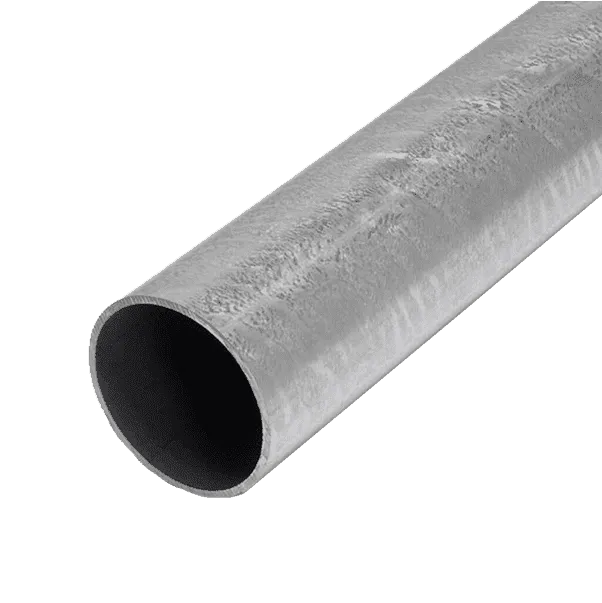
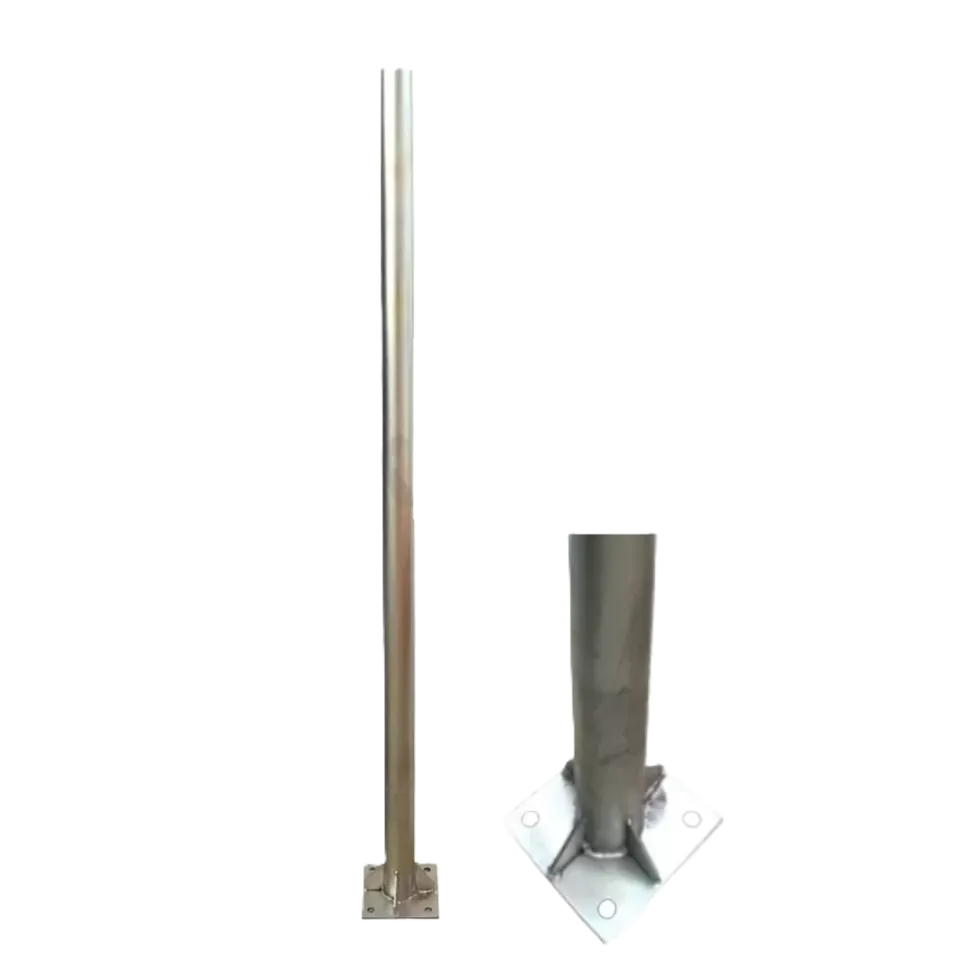
You cannot dig a hole everywhere: on a concrete platform, on a ramp, on a paved pavement or on a slab with cables underneath. The ATZ M300 has a square 15 x 15 cm base plate, welded on and stiffened with ribs, with 4 holes through which it is bolted straight to concrete. The fixing kit is included.
- galvanised pipe, Ø60 mm, 2 mm wall;
- 300 cm long, 10 kg;
- 15 x 15 cm base plate with 4 holes and stiffening ribs;
- plastic cap at the top; clamp ATT 60c, spare cap ATT 60d.
It is used in surface and underground car parks, on industrial platforms, at warehouse entrances, on pavements and in concrete yards, and on public roads where a foundation cannot be poured. Anyone looking for a flanged post that needs “no holes” should know one thing: the flange spares you the foundation pit, not the holes. The plate is fixed into the concrete through its 4 holes, so the only marks left on the surface are the bolt holes.
The tripod stand, for signs that stay a few days
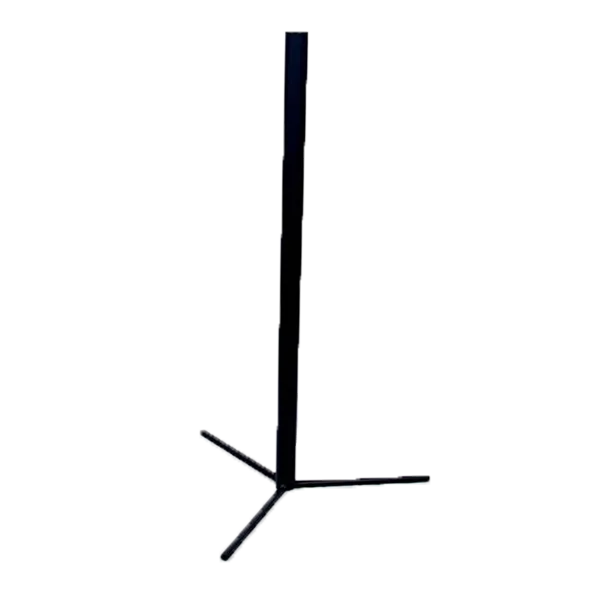
When a sign is needed for only a few days, at road works or an event, there is no point pouring concrete. The ATZ M12048 is a mobile stand made of painted Ø48 mm pipe with a 2 mm wall, 120 cm tall, with three legs at the base and a weight of 3 kg. It stands on its own on asphalt, on a pavement or on compacted ground and can be moved in a few minutes.
It carries a temporary sign or a safety barrier. Because the pipe is Ø48 mm, the sign is fixed with the same clamps as on the standard post, the ATT 48c, 2 for a normal-sized sign. If the sign is large or the spot is exposed, put weights on the tripod legs so it does not tip over. Use it for works on the road or the pavement, for diversions around a closed area, at the entrance to a building site, in car parks and at events. Which temporary signs a work site needs, and in what order, is covered in our guide to signing road works with U signs.
Clamps and caps: the small parts that hold the sign
Clamps with an anti-rotation pin
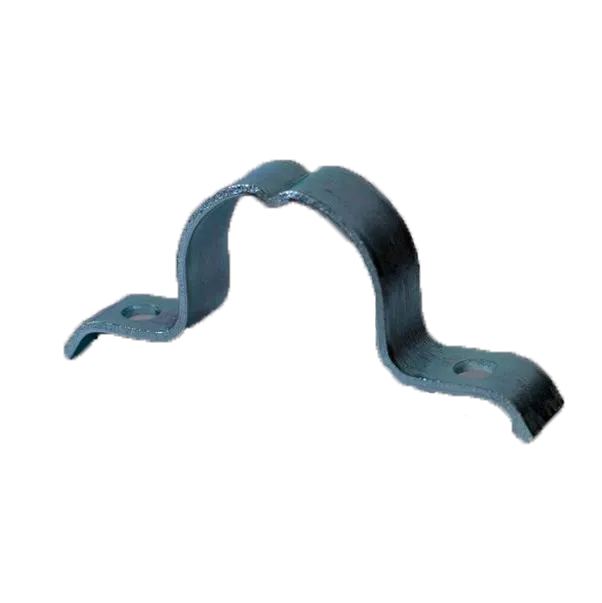
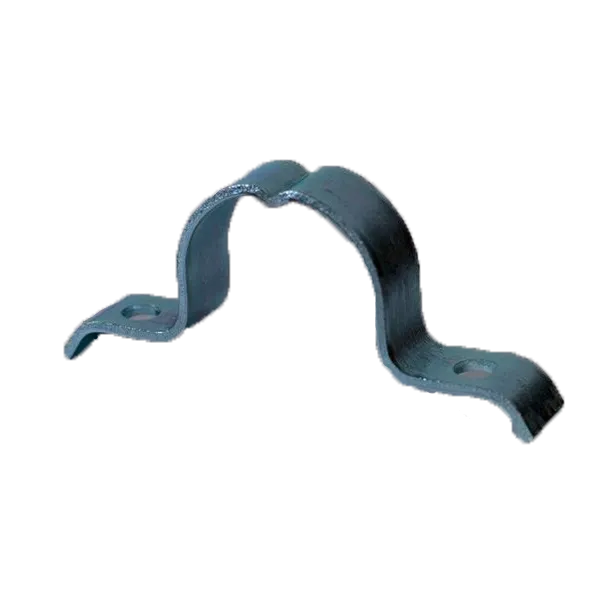
A sign held only by a plain bracket ends up, after a few gusts of wind, turning on the post and pointing the wrong way. The ATT 48c and ATT 60c clamps have an anti-rotation pin that prevents this, so the sign keeps facing the drivers. Both are made of galvanised metal, weigh 0.1 kg and come with the bolts and nuts in the pack.
The clamp is omega-shaped, with two drilled lugs: it wraps around the post, and the lugs are bolted to the back of the sign. A normal-sized sign takes 2 clamps, one at the top and one at the bottom. The clamp is chosen strictly by the post diameter: on a Ø60 mm pipe, the Ø48 mm clamp will not close.
Caps for the top of the post
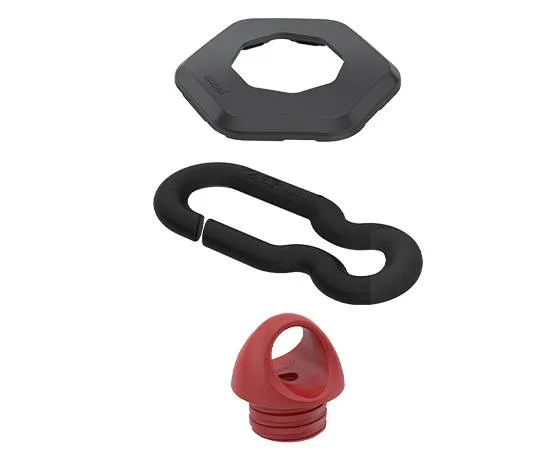
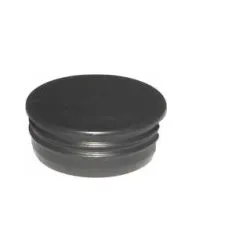
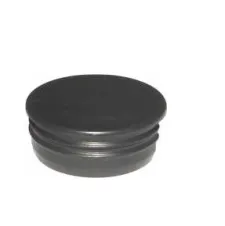
A post left open at the top fills with rainwater and rusts from the inside, where nobody can see it, until it gives way. The posts come with a cap, but the cap spends years in sun and frost and sooner or later it cracks or goes missing. For replacement there is the ATT 48d for Ø48 mm posts and the ATT 60d for Ø60 mm posts. They have a ribbed body: you push it into the end of the pipe all the way, with no glue and no tools. It takes a few seconds and can be done before or after the sign is fixed.
What comes with the sign
Class I metal road signs come with clamps for a Ø48 mm post, and the fixings are included unless the product name says otherwise. So for a standard post you do not need to buy clamps separately. If you mount the sign on a Ø60 mm post, the ATT 60x2_3.5 or the ATZ M300, ask for Ø60 mm clamps when you order the sign or buy the ATT 60c separately. Clamps sold by the piece are still useful for replacing old, rusted ones and for signs that came without fixings.
How well a sign shows up at night depends on its sheeting, not on the post. The difference between Class I and Class II sheeting is explained in our guide to Class I and Class II road signs.
How to choose: four questions
How big is the sign and how many go on the post?
For an ordinary sign, the ATT 48x2_3 is enough. For a large sign, a windy spot or two signs on the same post, choose the ATT 60x2_3.5.
Can you dig a hole for a foundation?
If so, a galvanised post set in a concrete foundation is the usual option. If the spot is concrete, paved or has cables underneath, take the ATZ M300 flanged post.
Does the sign stay, or does it leave in a few days?
For a permanent sign, a post in a foundation or a flanged post. For road works, an event or a closure of a few days, the ATZ M12048 tripod, which you pick up and take elsewhere when the job is done.
What are you mounting on the post?
Signs are fixed with clamps that match the diameter, and traffic mirrors have brackets for posts from Ø48 to Ø85 mm, so they fit both diameters. The parts, in short:
- Ø48 mm post (ATT 48x2_3, ATZ M12048): clamp ATT 48c, cap ATT 48d;
- Ø60 mm post (ATT 60x2_3.5, ATZ M300): clamp ATT 60c, cap ATT 60d.
How high and how far from the road
The standard mounting distances, from our site, are two:
- the bottom edge of the sign sits 1.50-2.50 m above the road or the kerb;
- the edge of the sign nearest the road sits 0.50-2.0 m from the carriageway.
That is where you start when choosing the post length. The part above ground has to bring the bottom edge of the sign to the chosen height and still leave room for the sign itself, plus a supplementary plate if you add one. The rest of the post goes into the foundation. How deep the foundation is and how much concrete you pour depend on the ground and on the size of the sign, and they are decided by whoever does the installation. If you need both the height for two signs and a deeper foundation, the 350 cm post leaves you more margin than the 300 cm one.
How to install
A post in a foundation
- Choose the spot, keeping to the distance from the carriageway, and check that no cables or pipes run there.
- Dig the hole, stand the post in it, pour the concrete and check with a level that the post is perfectly vertical while the concrete is still soft.
- Once the concrete has set, fix the sign with 2 clamps, one at the top and one at the bottom, facing oncoming drivers.
- Finally, check that the cap is in place at the top.
A flanged post
- Stand the ATZ M300 on the concrete surface and mark the 4 holes of the plate.
- Drill the holes and tighten the bolts from the fixing kit.
- Fix the sign with 2 ATT 60c clamps.
The tripod
Stand the ATZ M12048 on a stable surface, fix the sign with 2 ATT 48c clamps and, if it is windy or the sign is large, put weights on the legs.
Maintenance
When you pass your signs, look at three things: whether the sign still faces the right way, whether the clamps have started to rust and whether the cap is still in place. A sign that has turned on its post usually points to a clamp without a pin or one that has worked loose; replace it with the ATT 48c or the ATT 60c, depending on the diameter. A cracked or missing cap is replaced on the spot with the ATT 48d or the ATT 60d, before water gets into the pipe.
Frequently asked questions
What diameter is a road sign post?
The standard post is Ø48 mm, or more precisely Ø48.3 mm on the ATT 48x2_3. For large signs or for two signs on the same post, Ø60 mm is used, as on the ATT 60x2_3.5.
How many clamps do I need for one sign?
Two for a normal-sized sign, one at the top and one at the bottom. Class I metal signs already come with clamps for a Ø48 mm post.
Can I use the Ø48 mm clamp on a Ø60 mm post?
No, the Ø48 mm clamp will not close on a Ø60 mm pipe. For Ø60 mm posts, use the ATT 60c.
Can a post be installed without a foundation?
Yes, in two ways. On concrete, the ATZ M300 flanged post is bolted down through its 15 x 15 cm plate. For a few days, the ATZ M12048 tripod stands on its own on asphalt, a pavement or compacted ground.
Can I put two signs on the same post?
Yes. The 350 cm ATT 60x2_3.5 is made for that too, for example a sign with a supplementary plate underneath. Each normal-sized sign takes 2 ATT 60c clamps.
How high is a sign mounted?
The bottom edge of the sign sits 1.50-2.50 m above the road or the kerb, and the edge nearest the road sits 0.50-2.0 m from the carriageway.
Can I mount a traffic mirror on the post?
Yes. Traffic mirrors have brackets for posts from Ø48 to Ø85 mm, so they fit both the ATT 48x2_3 and the Ø60 mm posts.
How we can help
All posts, clamps and caps are under road sign posts. If you are planning an installation and are not sure what to take, tell us how many signs you are putting up, what size they are, how many go on each post and whether the spot is soil or concrete, and we will put the list together for you, clamps and caps included. If you are also buying the signs from us, tell us the post diameter so you get the right clamps.