


A road that crosses a railway needs several signs, set out in order at fixed distances. Mayors, road administrators and companies with their own rail siding often ask us the same thing: which sign goes at a crossing with barriers, what changes when there are none, and why an industrial railway does not get the St Andrew’s cross. The answers below come from the Romanian standard SR 1848-1:2024 and from the specifications of the signs we supply.
Three situations, three sets of signs
Before you order anything, work out which case you are in. The set of signs depends on it:
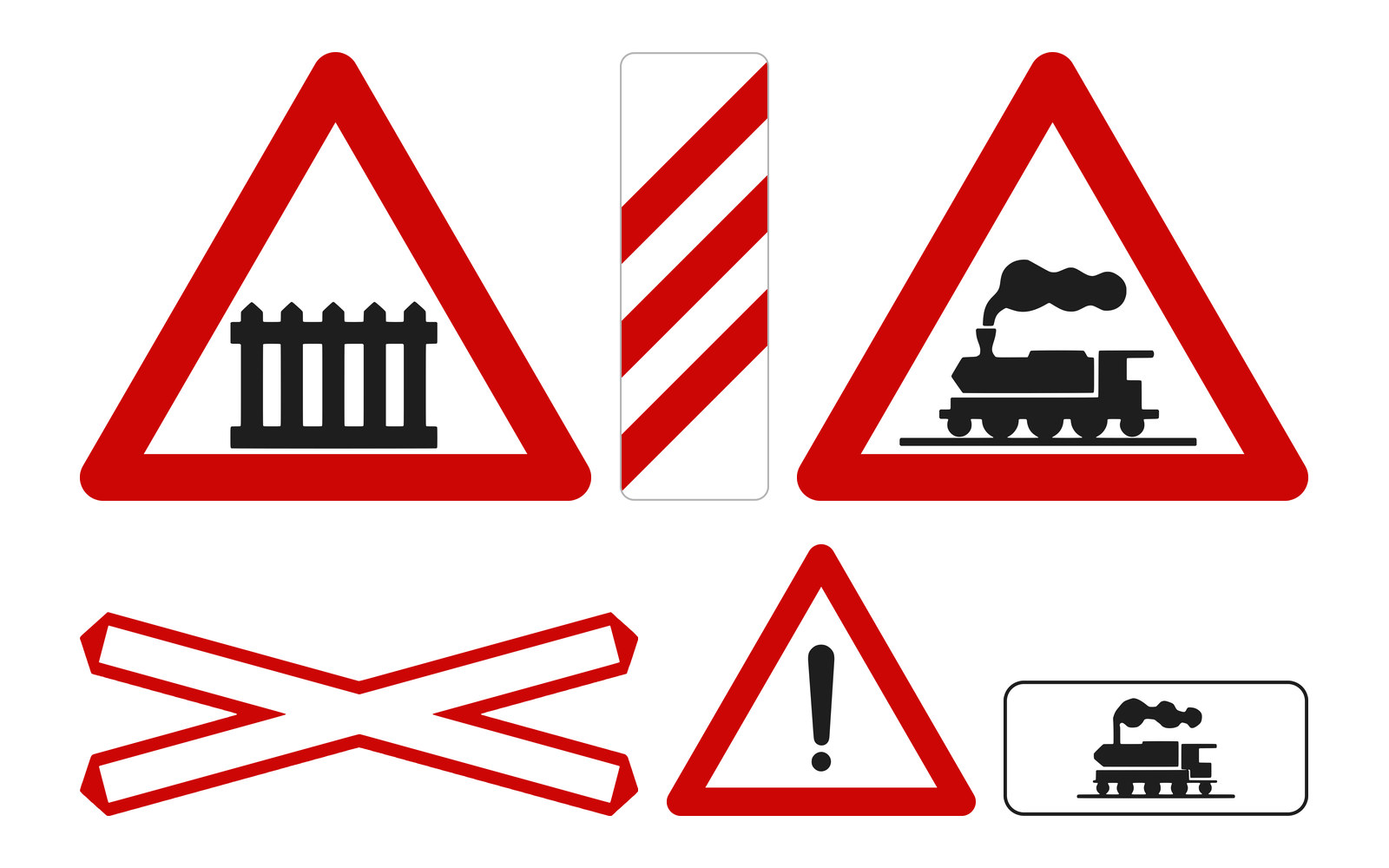
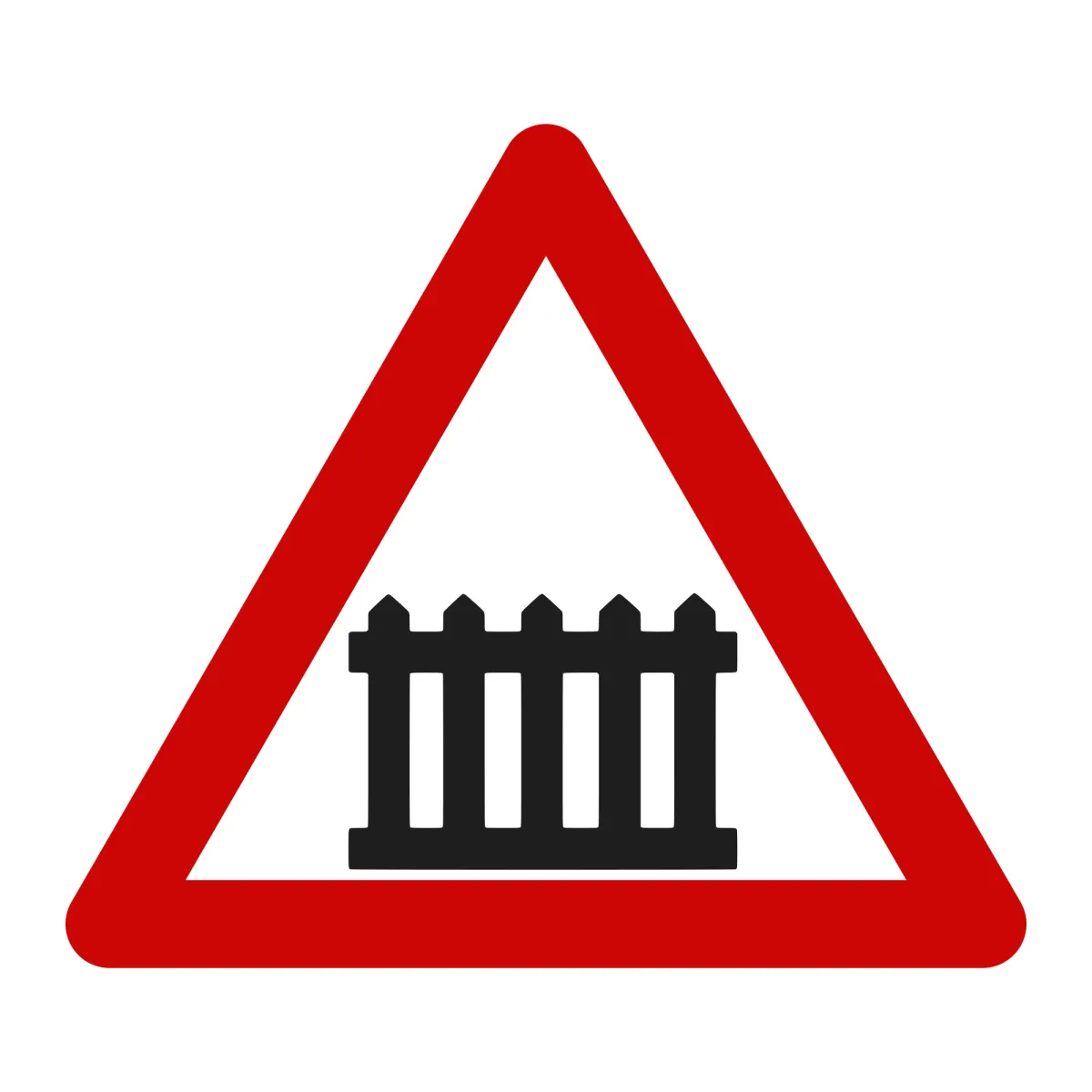
- Crossing with barriers or half-barriers: the A39 sign, with the barrier symbol, plus the A42 panels that count down the distance.
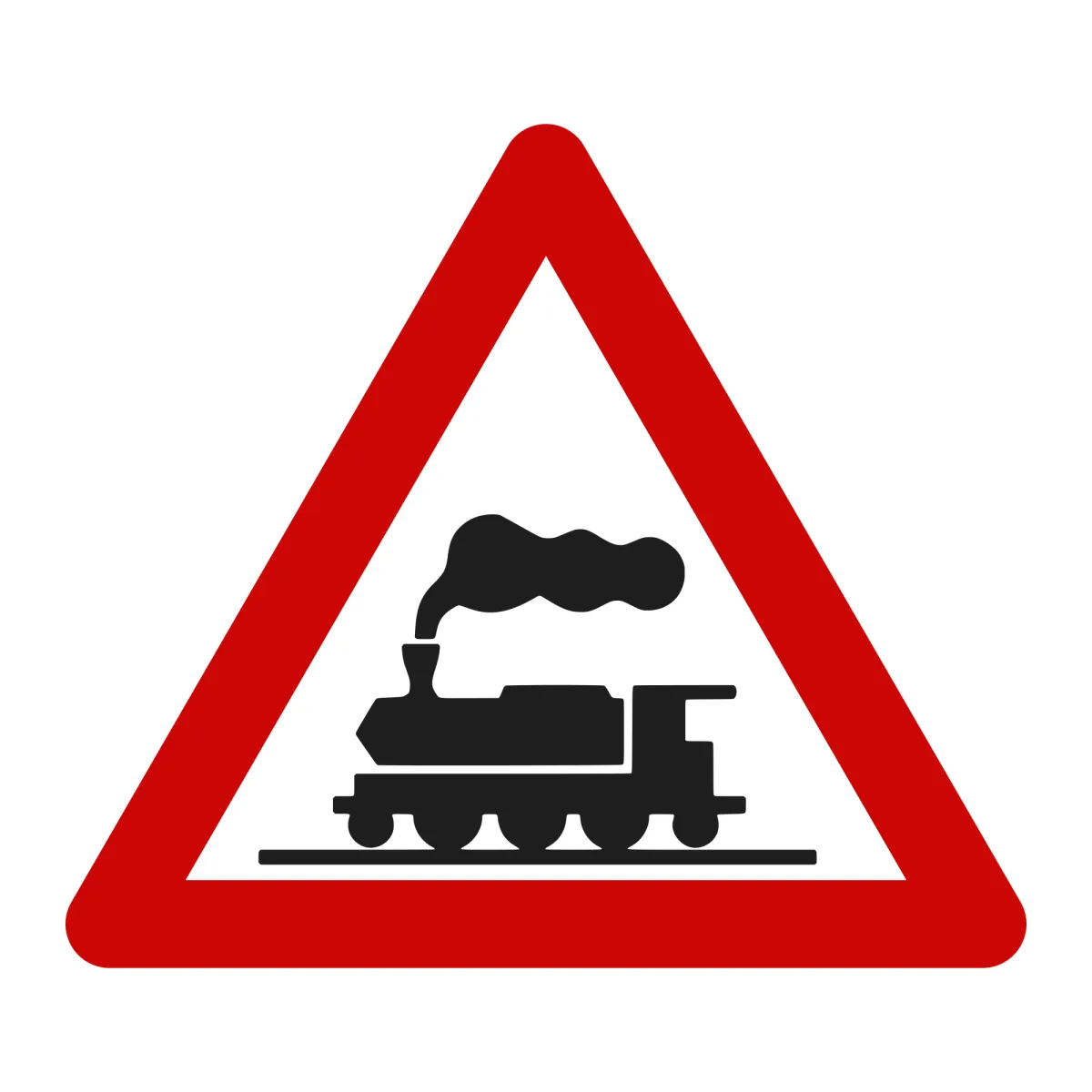
- Crossing without barriers: the A40 sign, with the steam locomotive, plus the A42 panels, and right by the rails the St Andrew’s cross together with a STOP sign.
- Crossing with an industrial railway without barriers: the A31 “other dangers” sign, with the P7 additional panel underneath. Neither the A42 panels nor the cross are used here.
Do not confuse these with the A41, which warns of a level crossing with tram lines, not a railway.
Advance warning: A39 or A40 and the A42 panels
Drivers need to know well in advance that a level crossing is coming and how far away it is. That is the job of a warning triangle and three panels with slanted red bands.
Where the triangle goes
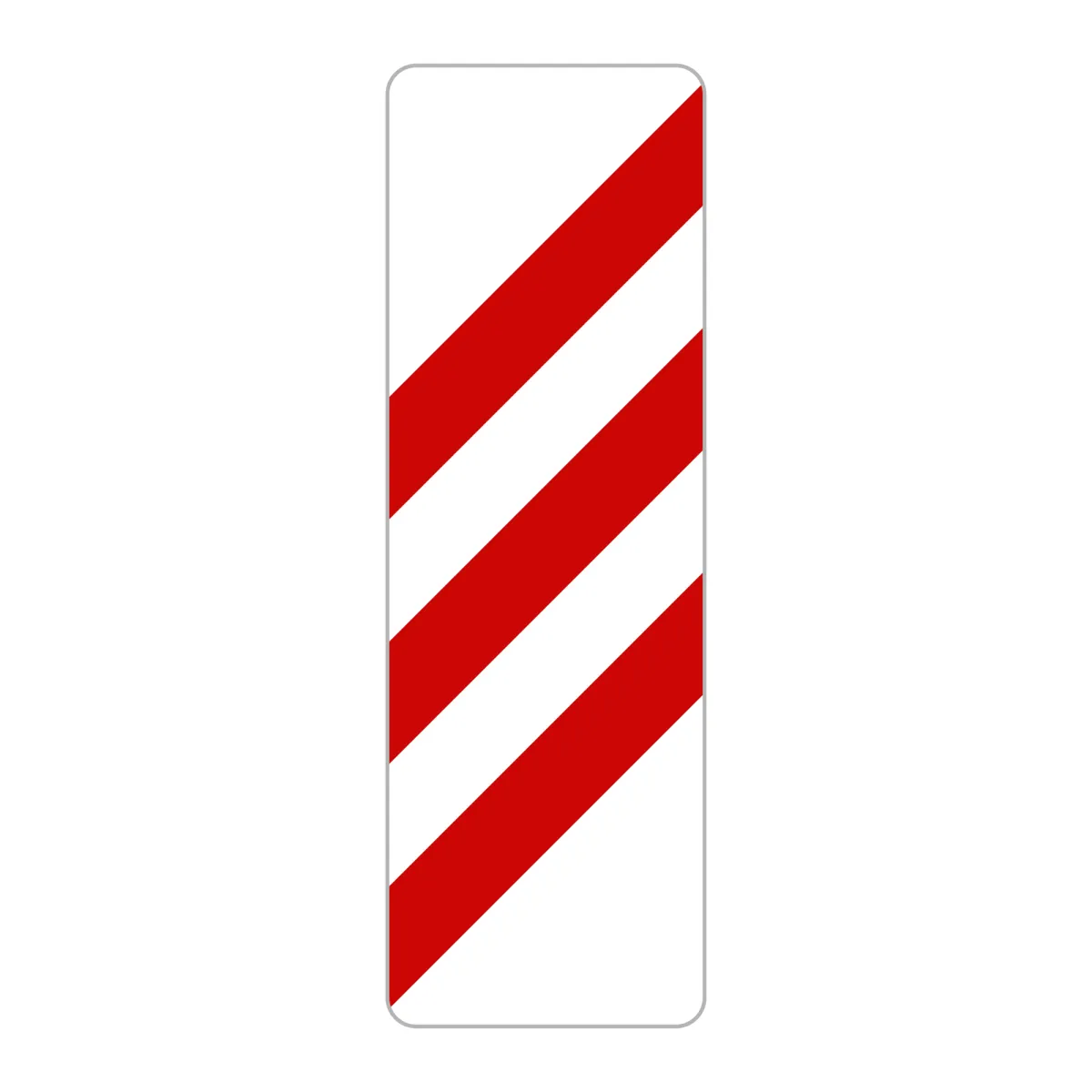
- Outside built-up areas: the A39 or A40 goes 150 m before the barrier or, if there is no barrier, before the nearest rail, above the A42-III three-band panel.
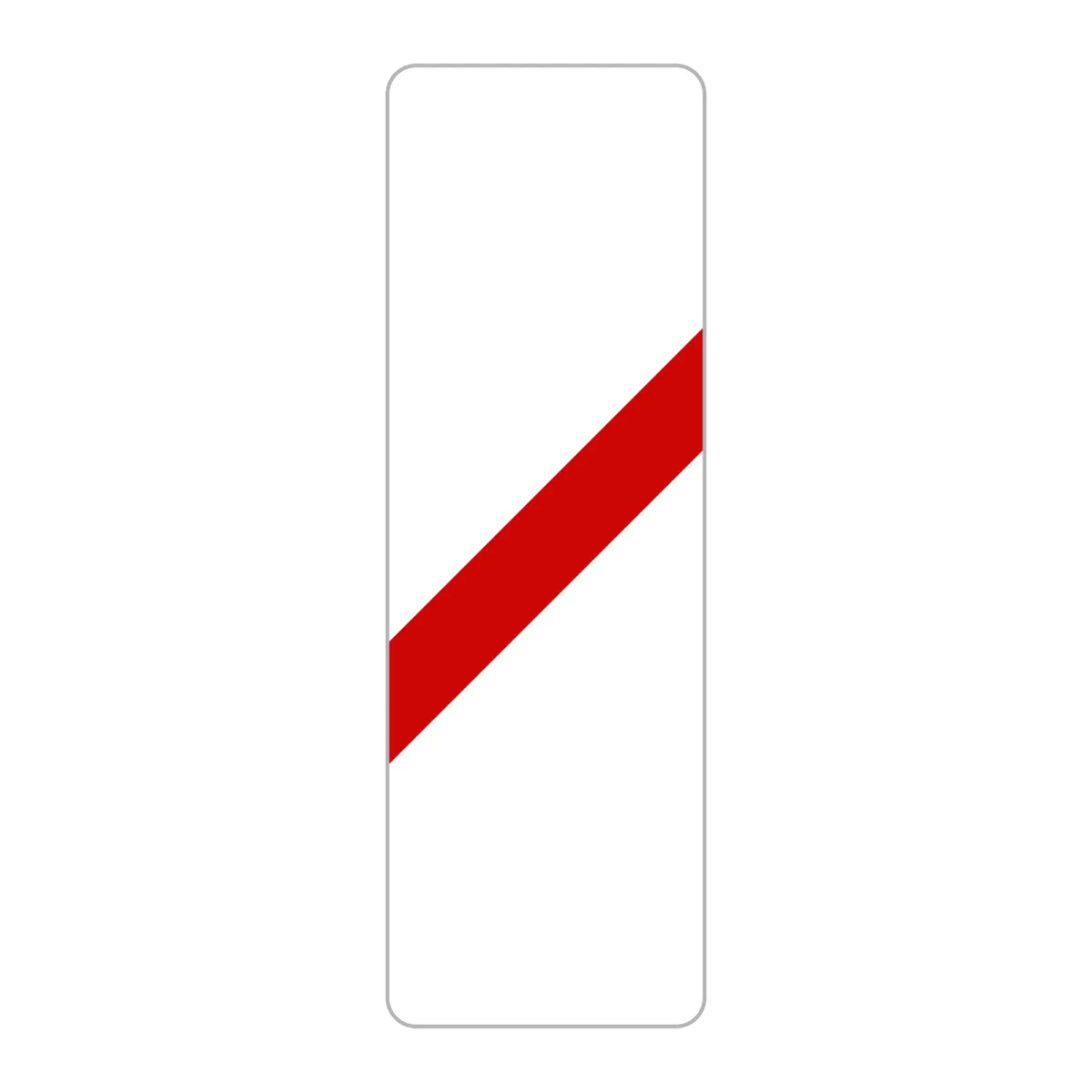
- In built-up areas: at 50 m, above the A42-I one-band panel.
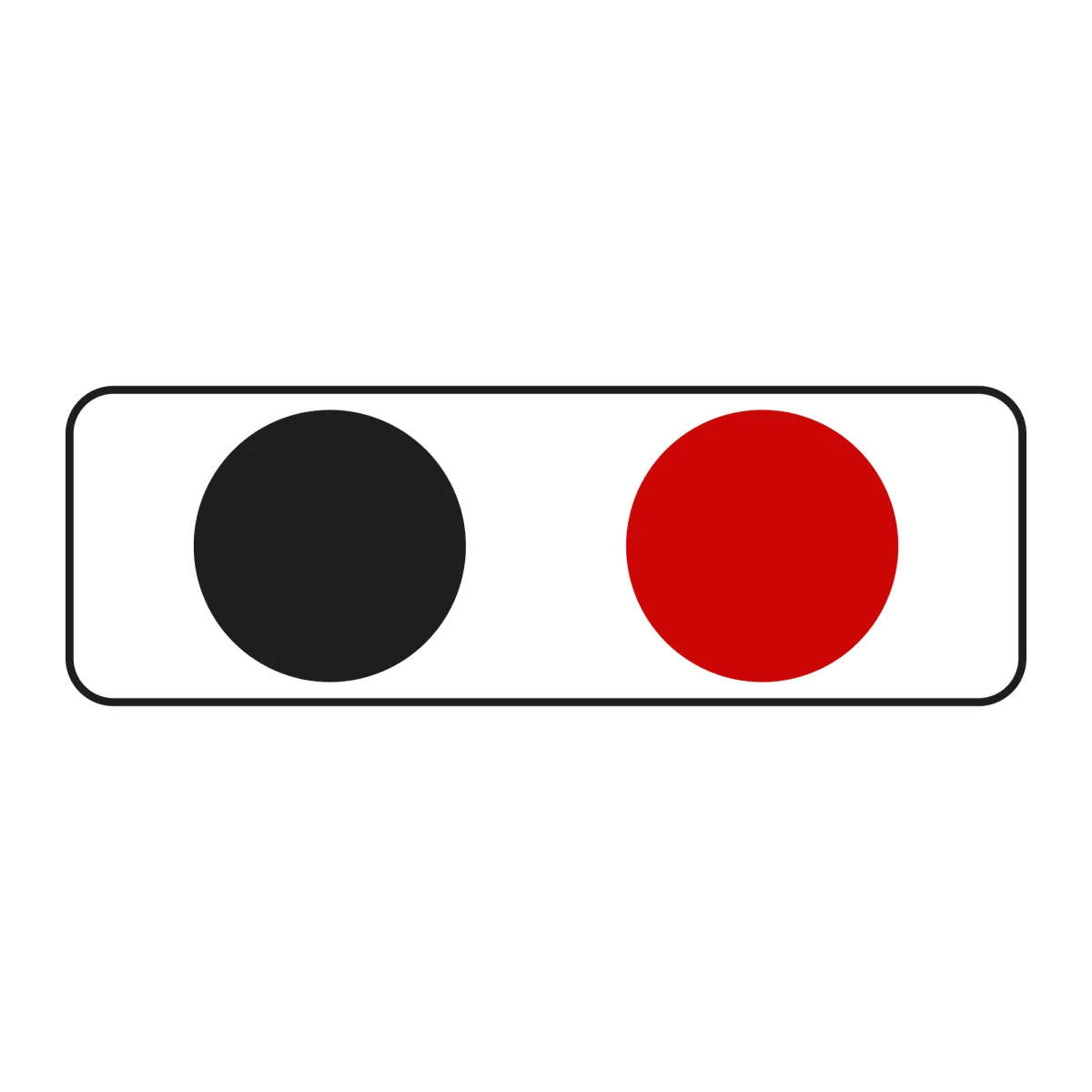
- With automatic light signals: if the crossing has lights that warn of an approaching train, the P24 panel goes under the A39 or A40. It shows a black and a red circle, like the lights of the installation.
How the A42 panels count the distance
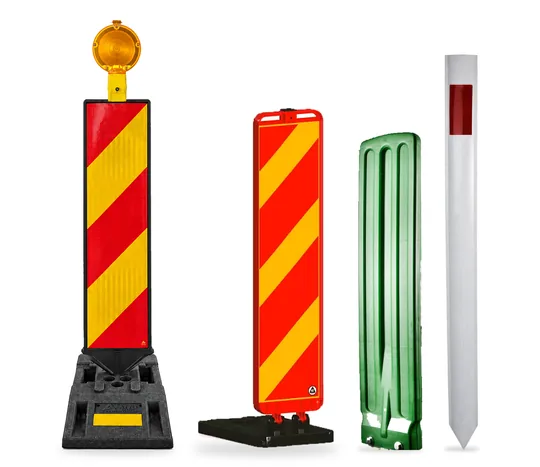
The A42 panels measure 33 x 100 cm, with a white background and slanted red bands. Each band stands for 50 m:
- 3 bands at 150 m from the barrier or nearest rail: A42-III;
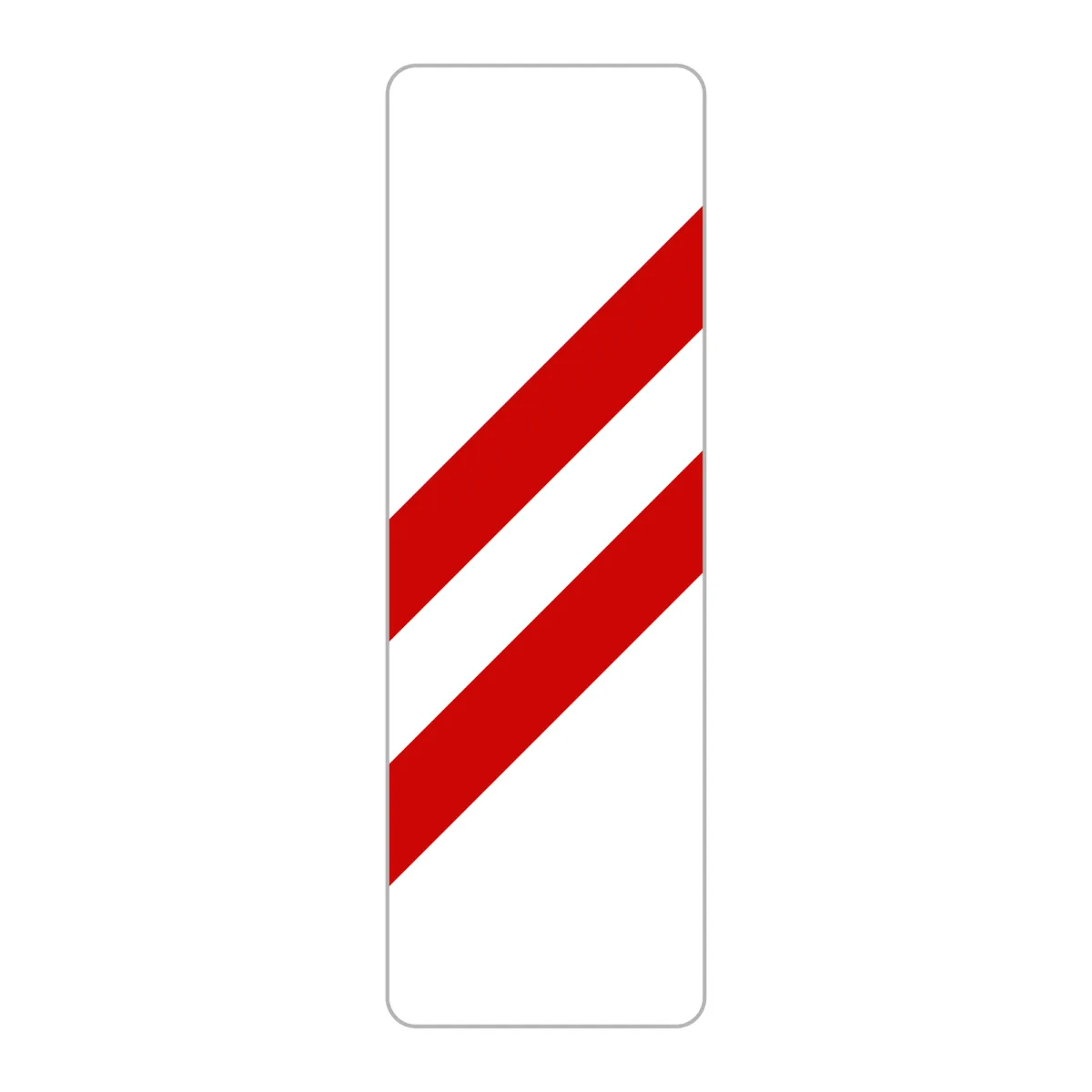
- 2 bands at 100 m: A42-II;
- 1 band at 50 m: A42-I.
Two details are often missed on site. First, whichever side of the road the panels stand on, the slanted bands slope down towards the carriageway. Second, if a panel would end up on the inside of a bend or in a spot with poor visibility, the set is repeated on the left-hand side as well, together with the A39 or A40.
The A42 panels are mounted lower than other signs: the bottom edge sits 0.75 m above the edge of the carriageway, as SR 1848-2 requires. They are not used for industrial railways.
At the crossing: the St Andrew’s cross and STOP
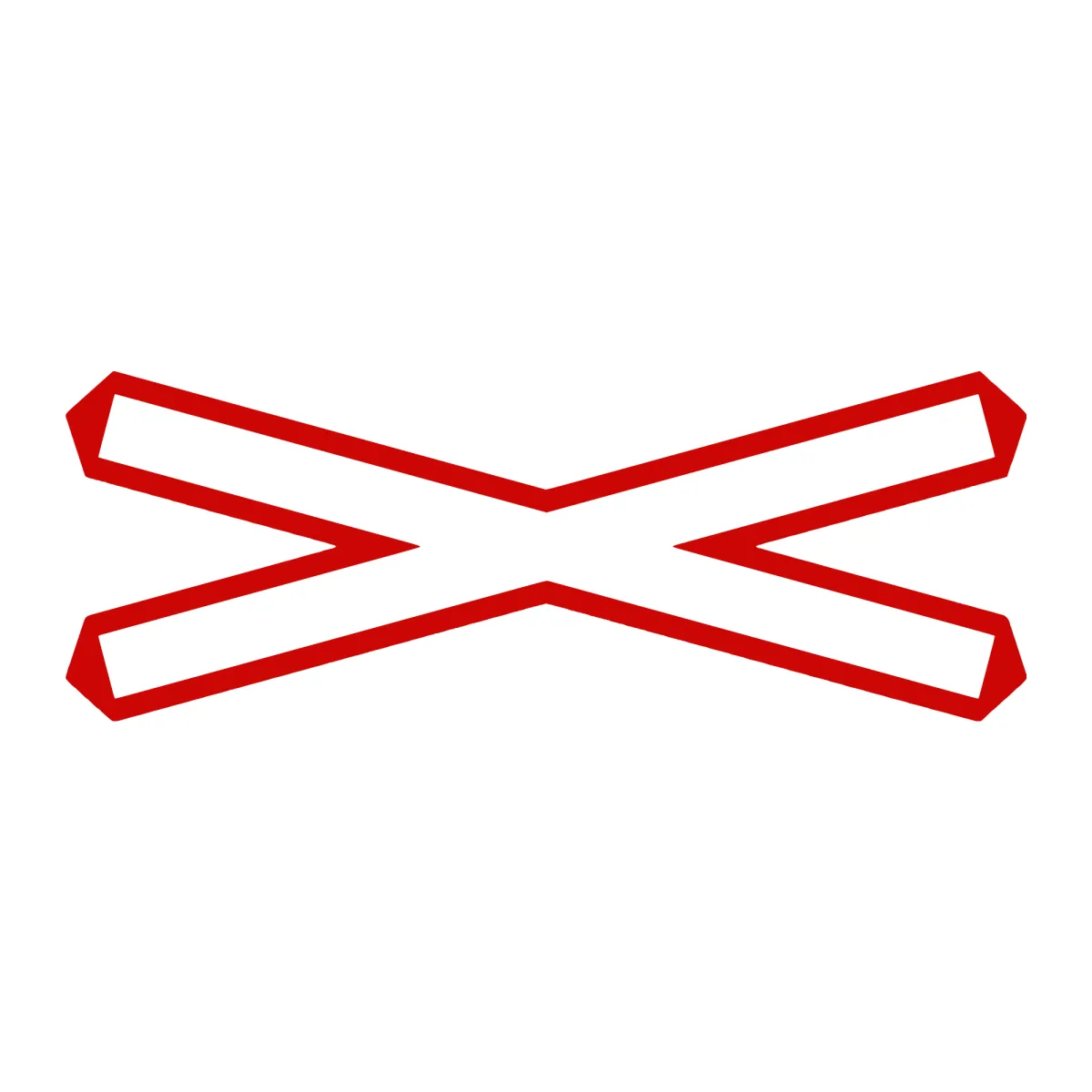
At crossings without barriers, the last sign before the rails is the St Andrew’s cross, with white arms and a red border:
- A47 for a single-track railway;
- A48 for a double-track railway. It has an extra bar, because one train may be followed straight away by another on the other track.
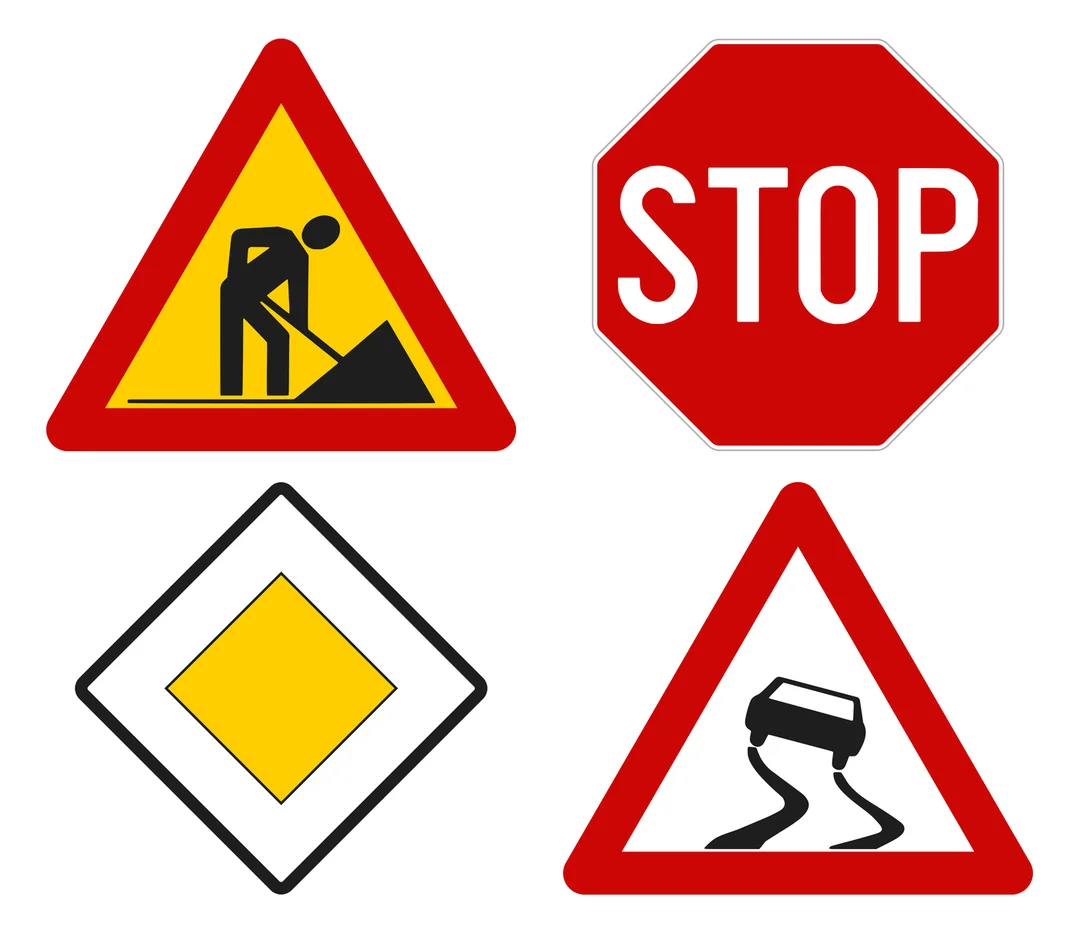
The cross goes 6–10 m before the nearest rail or the gauge gate of an electrified line, and it must be installed together with the B2 STOP sign. STOP means a full stop, even if the line looks clear. There is more in the article on the STOP sign.
Neither the cross nor the STOP sign that goes with it is used for industrial railways.
Industrial railways: A31 with the P7 panel
An industrial railway is a line serving a factory, a warehouse, a quarry or a port. At crossings with such lines without barriers, SR 1848-1:2024 does not use the A40 but the general danger sign:
- A31, other dangers: an exclamation mark on a white background, used for any danger that has no warning sign of its own;
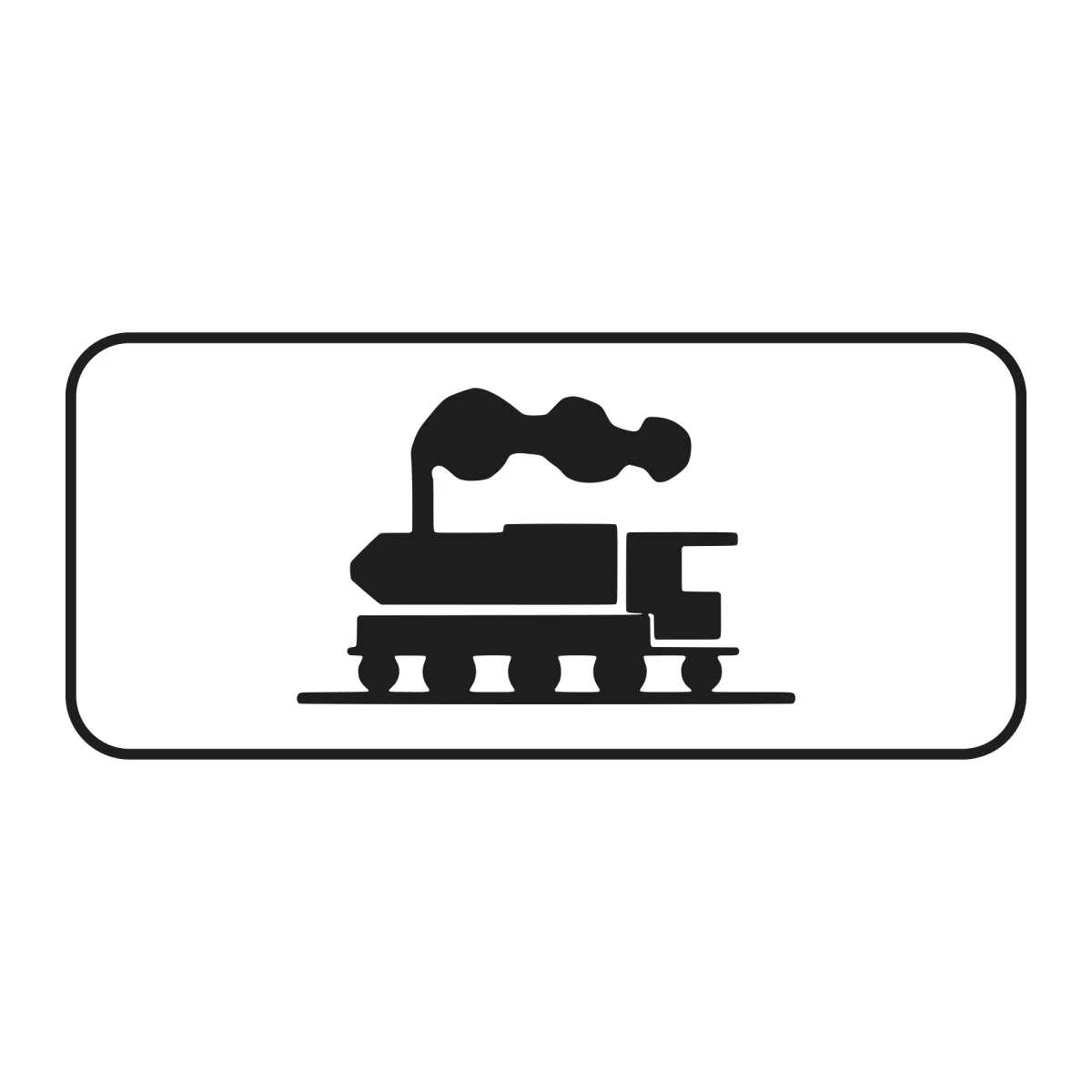
- P7, level crossing with an industrial railway: the 45 x 20 cm panel with a steam locomotive, fitted on the same post right under the A31, which says what kind of danger lies ahead.
The distance from the crossing follows the A31 rule: in built-up areas, no more than 50 m; outside them, between 100 and 250 m. The P7 never stands alone on a post, because additional panels always go under the sign they complete.
If you have seen the A31 + P7 pair on the road and wondered what it means, in short: a general danger, and the panel underneath tells you the danger is a railway line without barriers. Slow down and check that nothing is coming along the rails.
Who installs each sign
Two administrators work at a level crossing, and each has their own share:
- The railway administrator: under SR 1848-1:2024, the A47–A50 signs, like the A31 with the P7, are its responsibility.
- The road administrator: the general rule in SR 1848-1:2024 gives it the buying, installing and maintaining of signs on the road, with the type and location set together with the traffic police. That covers the advance warning: the A39 or A40, the A42 panels and the P24.
For a company with its own industrial line, this means the A31 and P7 at its crossing are usually its own order. For a town hall, the advance-warning set on local roads and streets is its own.
Installation: height, post and fixings
Height
- A39, A40, A31, P7, P24 and B2: the bottom edge of the sign or assembly sits 1.50–2.50 m above the road or kerb, and the edge nearest the road 0.50–2.0 m from the road platform.
- A42 panels: bottom edge 0.75 m above the edge of the carriageway.
- Visibility: choose the spot so the sign can be seen from 50 m in built-up areas and from 100 m on roads outside them.
Which post to choose
The post is ordered separately. For a single sign, the options are:
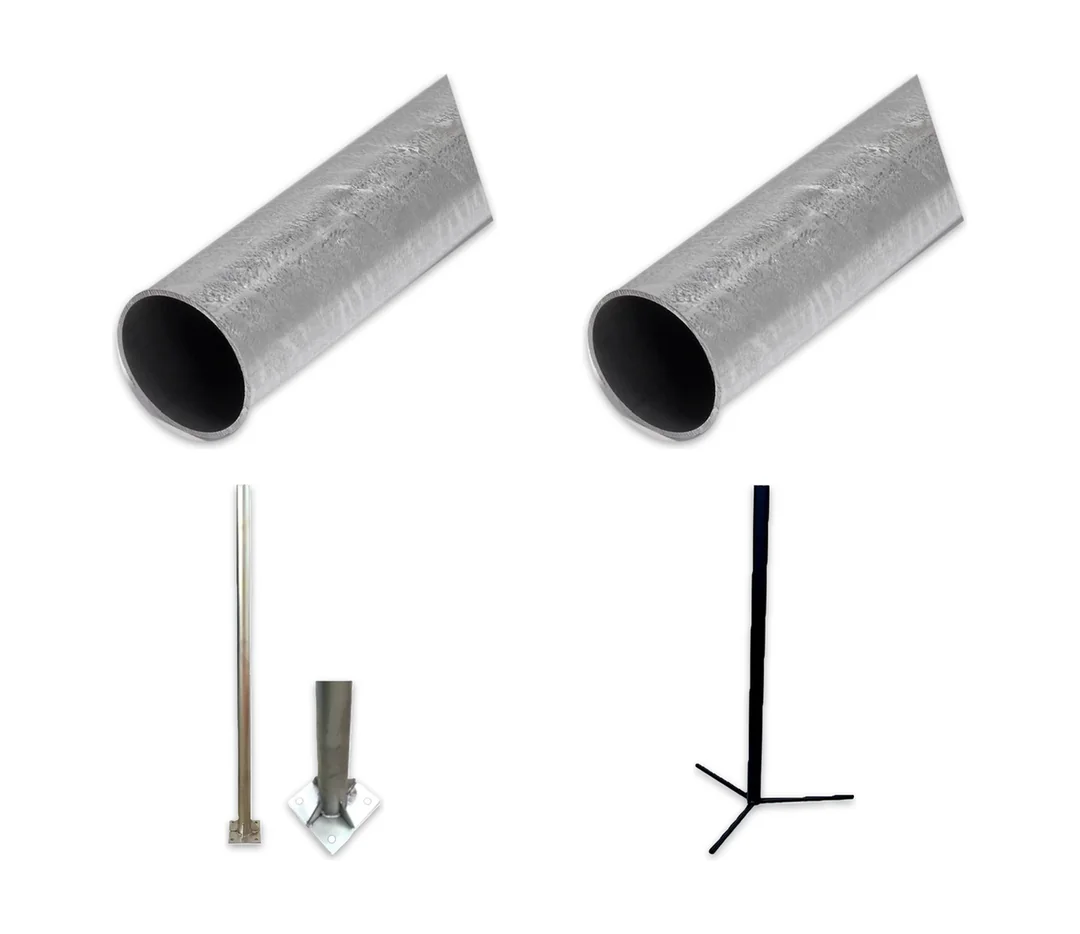
- ATT 48x2_3: Ø48 mm galvanised post, 300 cm, in a concrete foundation;
- ATZ M300: Ø60 mm flanged post, 300 cm, bolted to concrete or paving where you cannot dig;
- ATZ M12048: Ø48 mm tripod post, 120 cm, for temporary use without a foundation.
When the triangle sits above an A42 panel, do the sums before you order. The panel is 100 cm tall and starts at 0.75 m, and a 70 cm triangle is about 61 cm high, so the assembly rises to at least 2.35 m. For that, take the longer ATT 60x2_3.5 post, Ø60 mm and 350 cm, meant for two stacked pieces.
Fixings
The A31, A39 and A40 triangles and the A42 panels come with 2 clamps for Ø48 mm posts and 4 bolts with nuts. The P7 and P24 come with one clamp and 2 bolts, and the A47 and A48 crosses with their own clamps and bolts. For Ø60 mm posts, ask for the matching clamps when you order or buy the ATT 60c separately. The remaining details are in the guide to sign posts.
Which size and which sheeting
The A31, A39 and A40 triangles we list have 70 cm sides, the normal format in SR 1848-2 for county and local roads, streets and private roads open to public traffic. National roads need 90 cm triangles, and motorways 120 cm.
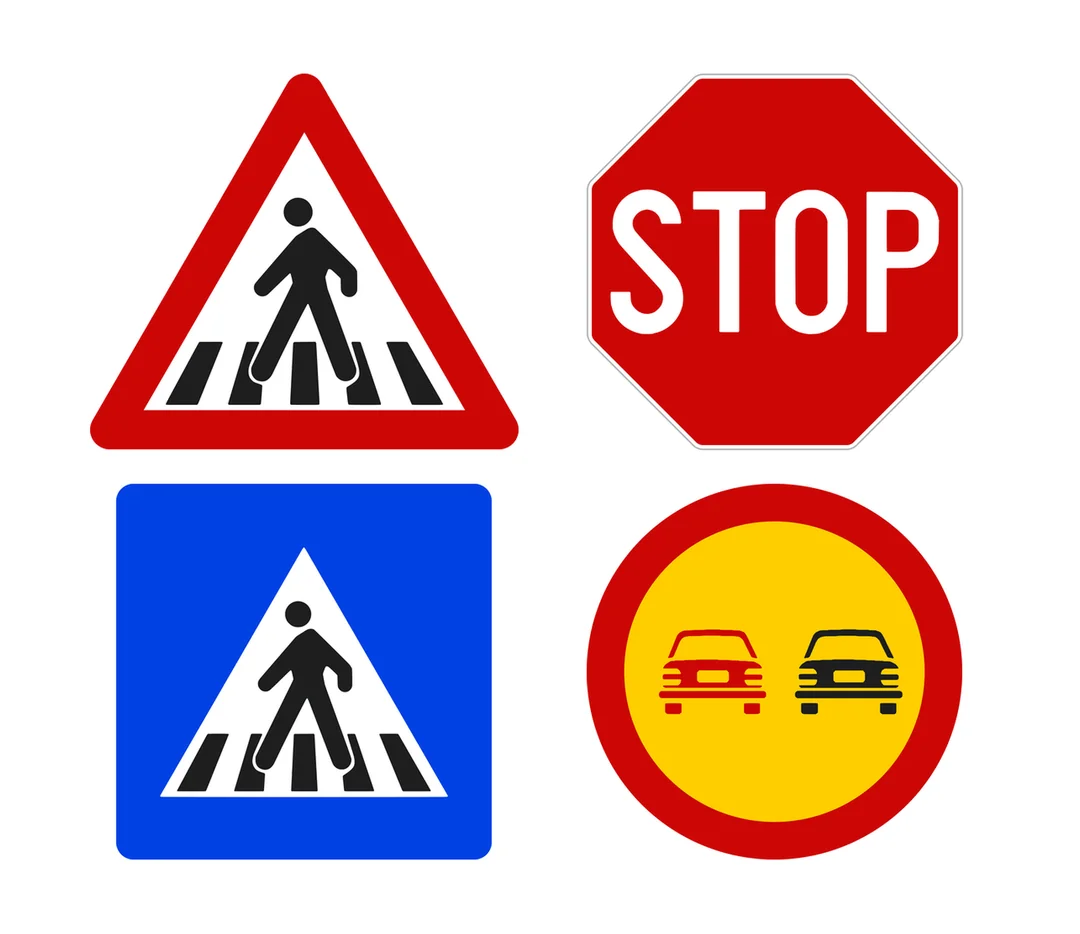
For STOP, the normal format on the same roads is 80 cm: the B2_80_I or B2_80_II. The 60 cm B2 is the small format, for minor roads with little traffic and private premises.
The level crossing signs have class I (RA1) sheeting, with 70 cd/(lx·m²) for white and a 7-year service life. They suit roads and streets without strong lighting. Where there is street lighting, shop windows or advertising, SR 1848-2 requires prismatic class 2 or 3 sheeting. The STOP sign also comes in class II: the B2_80_II and the 100 cm B2_II, with a 10-year service life. The differences are explained in the article on class I and class II.
All carry the CE mark and comply with SR EN 12899-1:2007, SR 1848-1:2024, SR 1848-2:2011 and SR 1848-3:2011.
Frequently asked questions
What does the sign with an exclamation mark and a locomotive underneath mean?
It is the A31 “other dangers” sign with the P7 panel, level crossing with an industrial railway. An industrial railway line without barriers is ahead, so slow down and check before you cross.
What is the difference between the A39 and the A40?
The A39, with the barrier symbol, warns of a crossing with barriers or half-barriers. The A40, with the steam locomotive, warns of a crossing without barriers, where drivers must check for themselves that no train is coming.
How far away do the red-band panels go?
The three-band panel at 150 m, the two-band panel at 100 m and the one-band panel at 50 m, measured from the barrier or, if there is none, from the nearest rail.
Why does an industrial railway not get the St Andrew’s cross?
SR 1848-1:2024 keeps the A47 and A48 crosses for ordinary railway crossings without barriers. For industrial lines it provides the A31 with the P7 panel.
Who pays for and installs the cross at the crossing?
The railway administrator. Under SR 1848-1:2024, the A47–A50 and the A31 with the P7 are its responsibility. The advance warning on the road is down to the road administrator.
What do I add if the crossing has warning lights?
The P24 panel, level crossing with automatic light signals, 60 x 20 cm, goes under the A39 or A40.
How we can help
The A31, A39 and A40 triangles, the A42 panels and the A47 and A48 crosses are in the warning signs category, the P7 and P24 in additional panels, STOP in priority signs, and the posts and clamps in sign posts. Tell us whether the crossing has barriers, whether the line is industrial and what kind of road it is on, and we will put together the full list: signs, panels, posts and clamps. Delivery takes 24-48 hours.