

C26 Prohibition Sign – No Overtaking by Goods Vehicles, Ø60 cm, Class I
- Prohibition or restriction sign C26 “No overtaking by goods vehicles”, to SR 1848-1:2024.
- 60 cm diameter disc, normal format, in 1 mm galvanised steel sheet.
- Class I retroreflective sheeting, 7-year service life.
- Fixings included: 2 clamps for Ø48 mm posts and 4 bolts with nuts.
- CE marked; sheeting and paint resistant to UV and weathering.
Complementary products
General features
| SR 1848-1 code | C26 |
|---|---|
| Name in the standard | No overtaking by goods vehicles |
| Type | Prohibition or restriction road sign |
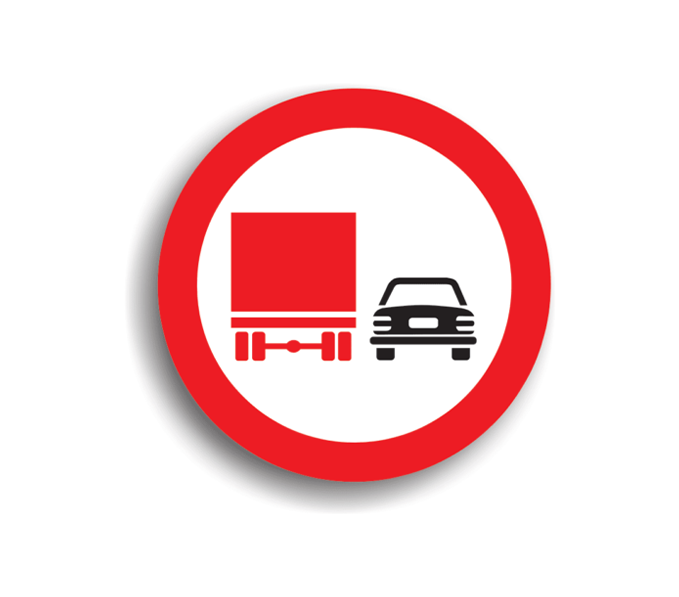
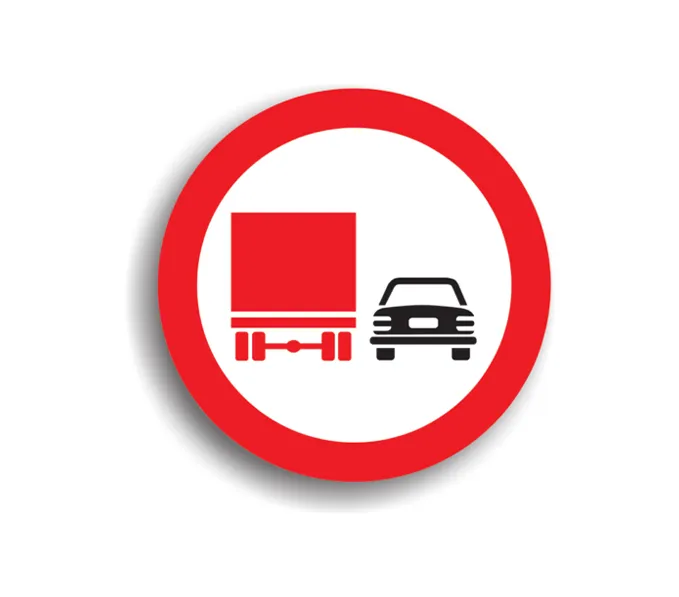
| Shape and colours | White disc with a red border, with a red lorry on the left and a black car on the right |
| Size | 60 cm diameter |
| Format (SR 1848-2) | Normal |
| Red border | 60 mm |
| Material | Galvanised steel sheet, 1 mm |
| Construction | Pressed edges, no sharp edges |
| Painting | Electrostatic, UV-resistant paint |
| Retroreflective sheeting | Class I (RA1), UV-resistant |
| Retroreflection (white, 0.2°/5°) | 70 cd/(lx·m²) |
| Sheeting service life | 7 years |
| Weight | 3 kg |
| Fixings included | 2 clamps, 4 bolts with nuts |
| Post diameter | Ø48 mm (Ø60 mm on request) |
| Standards | SR EN 12899-1:2007, SR 1848-1:2024, SR 1848-2:2011, SR 1848-3:2011 |
| Marking | CE |
| Height | 60 cm |
Product description
C26 Prohibition Sign – No Overtaking by Goods Vehicles, Ø60 cm, Class I
The C26 bans overtaking by lorries only: a red lorry on the left beside a black car. Cars may still overtake, but goods vehicles stay in their lane.
When class I is used
Class I means RA1 retroreflective sheeting, with 70 cd/(lx·m²) for white and a 7-year service life. It suits places where the sign does not compete with other lights: roads and streets without strong lighting, local, minor and private roads. In areas with many light sources, such as streets with public lighting, shop windows and advertising, SR 1848-2 requires prismatic class 2 or 3 sheeting, because a class I sign gets lost against the background there.
Where it goes, under SR 1848-1:2024
It goes at the start of a section where goods vehicles may not overtake any motor vehicle except motorcycles without sidecars and mopeds. The end of the section is signed with the C35. On motorways and expressways it is installed with the P6 additional panel showing the hours when it applies.
Like all prohibition signs, it goes right after the junction before the restricted place, so drivers can go round without turning back, and it is repeated after every junction on the section. Exemptions for residents or certain vehicle categories are shown on the P34 and P18 additional panels.
Technical data
- 60 cm diameter disc (normal format, SR 1848-2): white with a red border, with a red lorry on the left and a black car on the right;
- 1 mm galvanised steel sheet, with pressed edges, no sharp edges;
- electrostatically painted with UV-resistant paint;
- class I retroreflective sheeting (RA1), resistant to UV and weathering, with a 7-year service life;
- weight: 3 kg;
- fixings included: 2 clamps for Ø48 mm posts and 4 bolts with nuts;
- CE marked; compliant with SR EN 12899-1:2007, SR 1848-1:2024, SR 1848-2:2011 and SR 1848-3:2011.
Mounting and size
Fixings for the post are included: 2 clamps for Ø48 mm posts and 4 bolts with nuts; clamps for Ø60 mm posts are available on request. The bottom edge of the sign goes 1.50–2.50 m above the road or kerb, and the edge nearest the road 0.50–2.0 m from the road platform. The sign must be visible from at least 50 m in built-up areas and 100 m outside them.
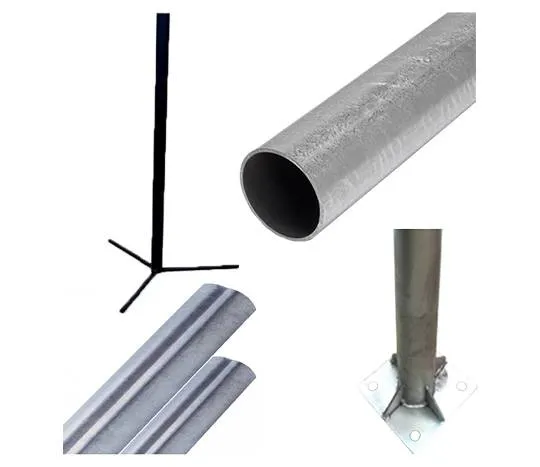
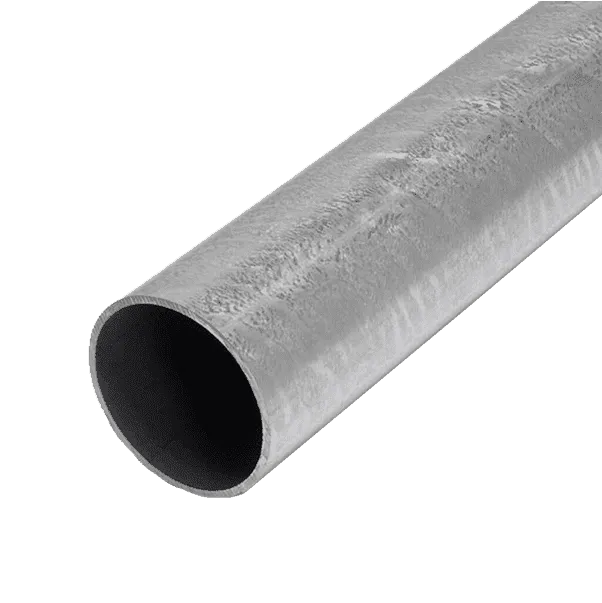
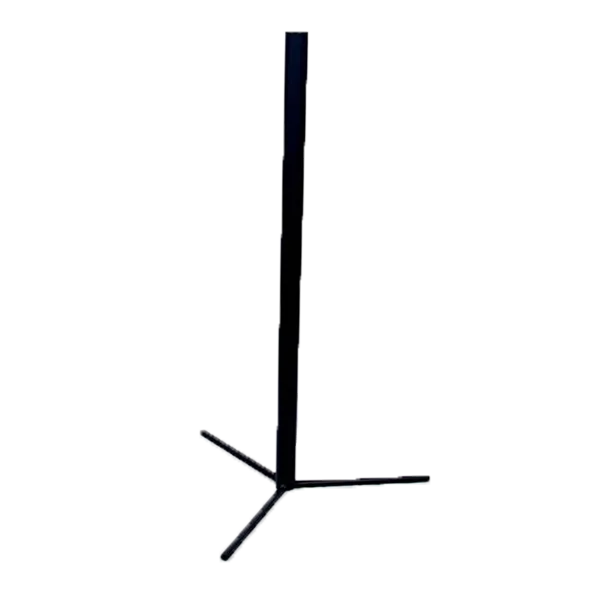
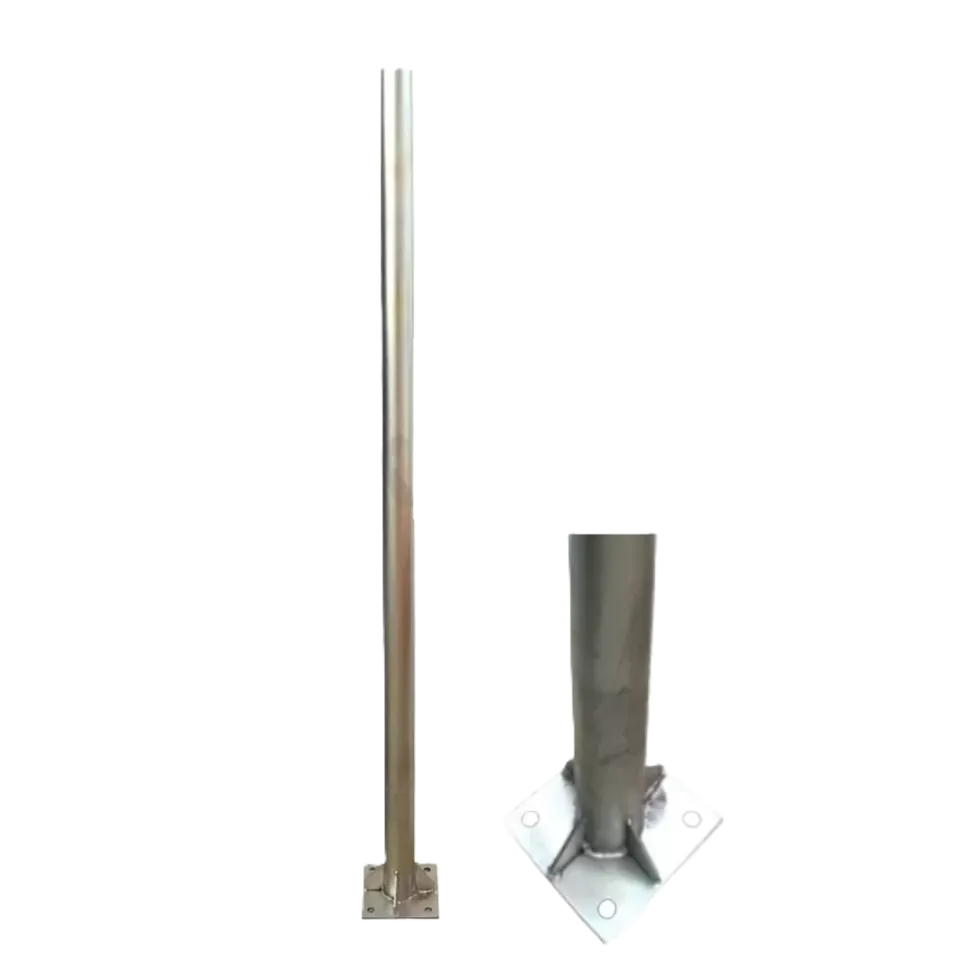
The post is ordered separately. For a fixed installation in a concrete foundation: the galvanised Ø48 mm post, 300 cm. For temporary use, with no foundation: the Ø48 mm tripod post, 120 cm. On concrete or paving, where you cannot dig: the Ø60 mm flange post, 300 cm, bolted down; for it, ask for the Ø60 mm clamps when you order.
The 60 cm diameter is the normal format in SR 1848-2, for county and local roads, streets and private roads open to public traffic. National roads call for the large Ø80 cm format and motorways for the very large Ø100 cm one; the standard forbids using a smaller format than the road category requires.
? Frequently asked questions
Where does the C26 “No Overtaking by Goods Vehicles” sign go?
It goes at the start of a section where goods vehicles may not overtake any motor vehicle except motorcycles without sidecars and mopeds. The end of the section is signed with the C35. On motorways and expressways it is installed with the P6 additional panel showing the hours when it applies.
Is the Ø60 cm disc right for a national road?
No. Ø60 cm is the normal format in SR 1848-2, for county and local roads, streets and private roads open to public traffic. National roads call for the large Ø80 cm format, and motorways for the very large Ø100 cm one.
On a motorway, does the C26 need an additional panel?
Yes. On motorways and expressways, SR 1848-1:2024 requires the P6 panel with the hours when the ban applies.
How high is it mounted and which fixings come with it?
The bottom edge goes 1.50–2.50 m above the road or kerb, and the inner edge 0.50–2.0 m from the road platform. The pack holds 2 clamps for Ø48 mm posts and 4 bolts with nuts; clamps for Ø60 mm posts are available on request.
When is class I sheeting used?
Where the sign does not compete with other lights: on roads and streets without strong lighting, on local, minor or private roads. In areas with many light sources (street lighting, shop windows, advertising), SR 1848-2 requires prismatic class 2 or 3 sheeting.
Must the sign be repeated after junctions?
Yes. SR 1848-1:2024 requires prohibition and restriction signs to be repeated after every junction on the restricted section, so that they also apply to drivers joining from side roads.
How long does the reflective sheeting last?
The sheeting is class I (RA1), with a 7-year service life. Under SR 1848-2, during that time retroreflection stays at no less than 80% of the initial minimum value and the sheeting stays bonded over at least 95% of the surface.
Is the sign CE marked?
Yes. It is CE marked and complies with SR EN 12899-1:2007, the European standard for vertical road signs, and with SR 1848-1:2024, SR 1848-2:2011 and SR 1848-3:2011. The sheeting and the paint resist UV and weathering.
Ordering and delivery
Can I order as a private individual?
Yes. You order directly on the site, as an individual or a company, and pay by card or cash on delivery.
Do I get an invoice?
Yes. Every order comes with a tax invoice, issued to an individual or a company.
Can I buy through SEAP / SICAP?
Yes. Public institutions find us in SICAP as S.C. ATTO REGAL S.R.L. Our company details are on the Purchase through SEAP / SICAP page.
How long does delivery take?
We deliver by courier within 24-48 hours.
Can I return the product?
Yes. As a private individual you can return the product within 14 days of receiving it, as the law provides, and you get your money back within 14 days of telling us. Return shipping is paid by the customer. The full terms are on the Return policy page.
Other similar models
Get a personalised offer, transport included.
Sending this form is not an order.
 C26 Prohibition Sign – No Overtaking by Goods Vehicles, Ø60 cm, Class I (C26)
We will send you the offer, transport included, as soon as possible by email or phone.
In road safety since 1998
Atto Trafic supplies complete road signage and safety equipment — signs, traffic signs, markings, parking barriers, speed bumps, mirrors, bollards and accessories.
- Durable products, compliant with STAS and SR EN
- ISO 9001 / 14001 / 27001 / 20671 certified
- Constant stock, delivery within 24-48 hours
- Support for municipalities, contractors, private car parks