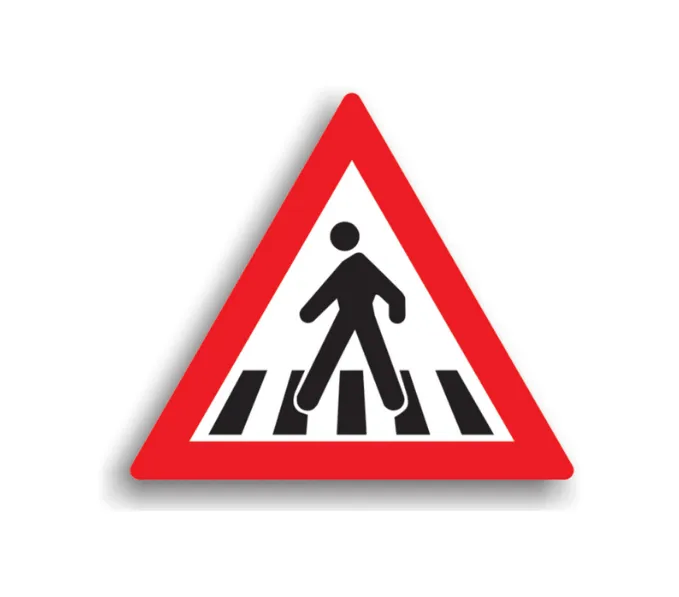
L8 Special Situation Panel – Pedestrian Crossing, Fluorescent Border, 85x85 cm, Class I
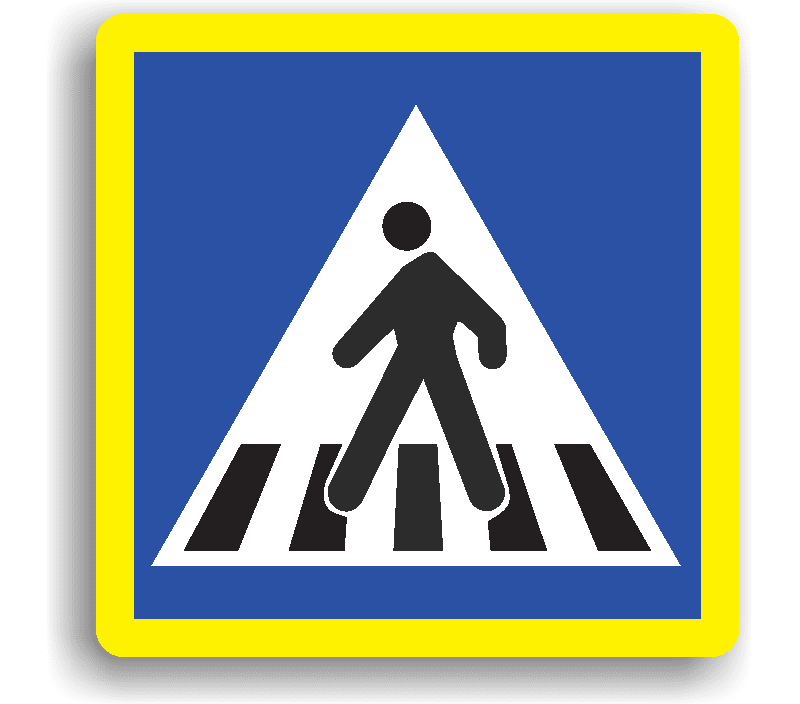
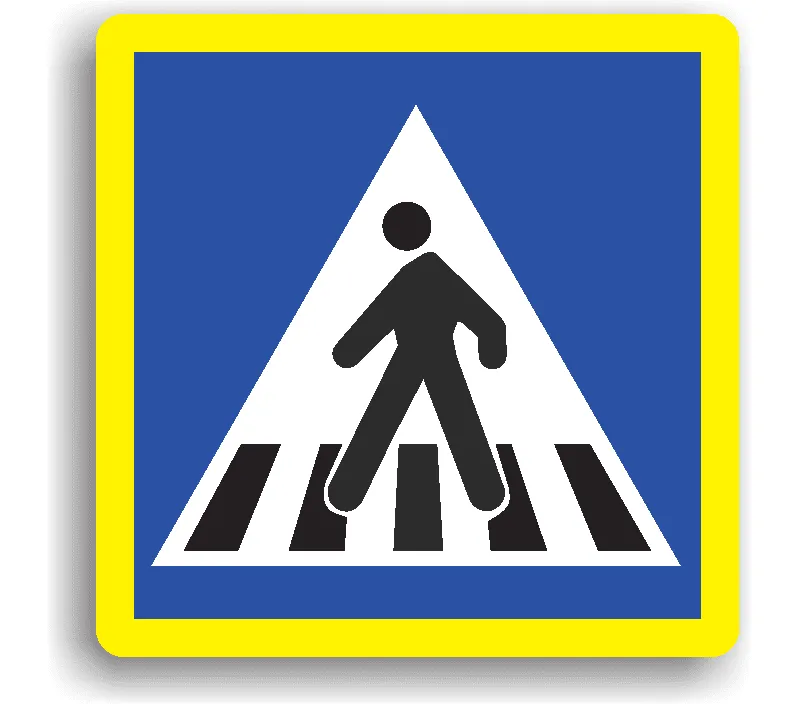
- Special situation panel L8 “Pedestrian Crossing, Fluorescent Border”, to SR 1848-1:2024.
- Blue square, 85 x 85 cm, in 1 mm galvanised steel sheet.
- Class I retroreflective sheeting, 7-year service life.
- Fixings included: 2 clamps for Ø48 mm posts and 4 bolts with nuts.
- CE marked; sheeting and paint resistant to UV and weathering.
Complementary products
General features
| SR 1848-1 code | L8 |
|---|---|
| Name in the standard | Pedestrian crossing |
| Type | Panel for signing special situations |
| Shape and colours | Blue square with a white triangle and a pedestrian on a crossing, with a fluorescent yellow-green border |
| Size | 85 x 85 cm |
| Fluorescent yellow-green border | 10 cm |
| Material | Galvanised steel sheet, 1 mm |
| Construction | Rounded corners, pressed edges, no sharp edges |
| Painting | Electrostatic, UV-resistant paint |
| Retroreflective sheeting | Class I (RA1), UV-resistant |
| Retroreflection (white, 0.2°/5°) | 70 cd/(lx·m²) |
| Sheeting service life | 7 years |
| Weight | 6.5 kg |
| Fixings included | 2 clamps, 4 bolts with nuts |
| Post diameter | Ø48 mm (Ø60 mm on request) |
| Standards | SR EN 12899-1:2007, SR 1848-1:2024, SR 1848-2:2011, SR 1848-3:2011 |
| Marking | CE |
| Length | 85 cm |
| Height | 85 cm |
Product description
L8 Special Situation Panel – Pedestrian Crossing, Fluorescent Border, 85x85 cm, Class I
The L8 is the G1 (pedestrian crossing) set on a panel with a fluorescent yellow-green border: the same blue square with a pedestrian on the zebra, but visible from much further away, by day and at night.
When class I is used
The sign has class I (RA1) retroreflective sheeting: 70 cd/(lx·m²) for white and a 7-year service life. It is the economical choice for places without many light sources, such as local, minor and private roads or streets without strong lighting. Where there is street lighting, shop windows or advertising, SR 1848-2 requires prismatic class 2 or 3 sheeting, which stands out better against a lit background. The class II version is the L8_II (85x85 cm).
Where it goes, under SR 1848-1:2024
It goes under conditions similar to the G1 (pedestrian crossing), where extra safety is wanted, because, according to SR 1848-1:2024, the fluorescent yellow-green border gives better visibility by day and at night. The standard calls for care: L panels are used only where the danger is particular, because using them too often makes them commonplace, and too many intense reflective surfaces tire drivers at night.
Group L panels sign places of particular danger. SR 1848-1:2024 requires a fluorescent yellow-green class 3 retroreflective background for them, so they stand out clearly from ordinary signs.
Technical data
- 85 x 85 cm panel: blue square with a white triangle and a pedestrian on a crossing, with a fluorescent yellow-green border;
- 1 mm galvanised steel sheet, with rounded corners and pressed edges, no sharp edges;
- electrostatically painted with UV-resistant paint;
- class I retroreflective sheeting (RA1), resistant to UV and weathering, with a 7-year service life;
- weight: 6.5 kg;
- fixings included: 2 clamps for Ø48 mm posts and 4 bolts with nuts;
- CE marked; compliant with SR EN 12899-1:2007, SR 1848-1:2024, SR 1848-2:2011 and SR 1848-3:2011.
Mounting and size
Fixings for the post are included: 2 clamps for Ø48 mm posts and 4 bolts with nuts; clamps for Ø60 mm posts are available on request. The bottom edge of the sign goes 1.50–2.50 m above the road or kerb, and the edge nearest the road 0.50–2.0 m from the road platform. The sign must be visible from at least 50 m in built-up areas and 100 m outside them.
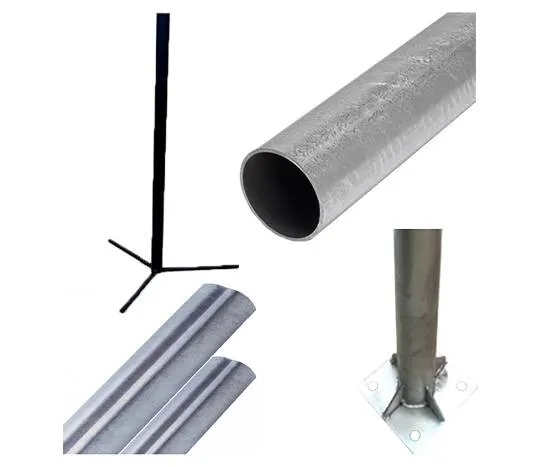
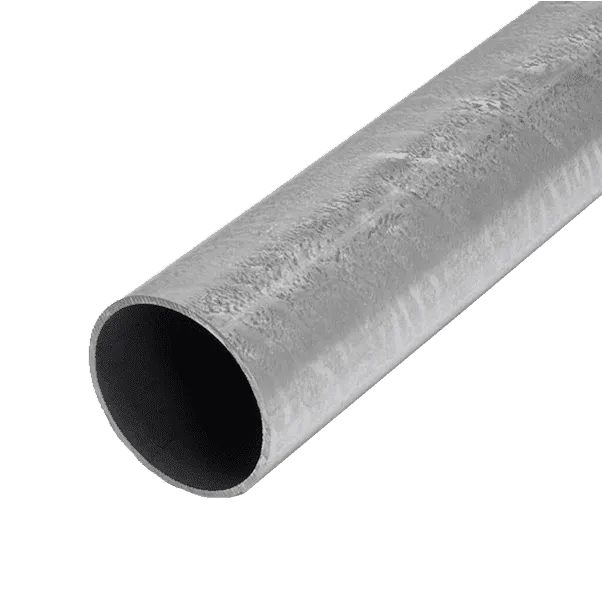
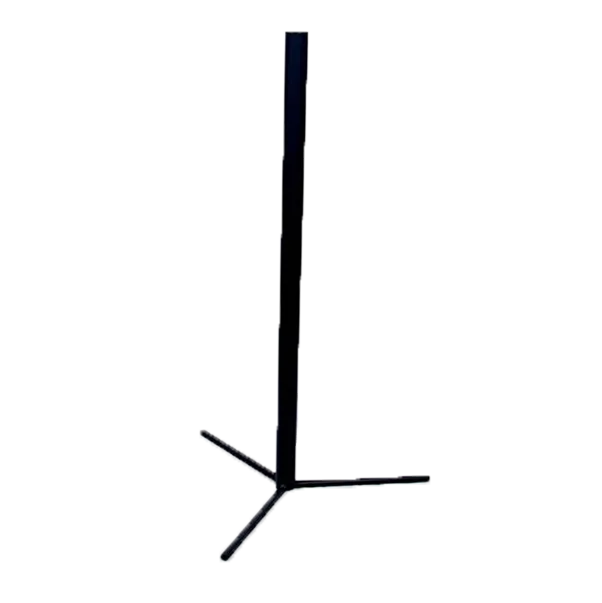
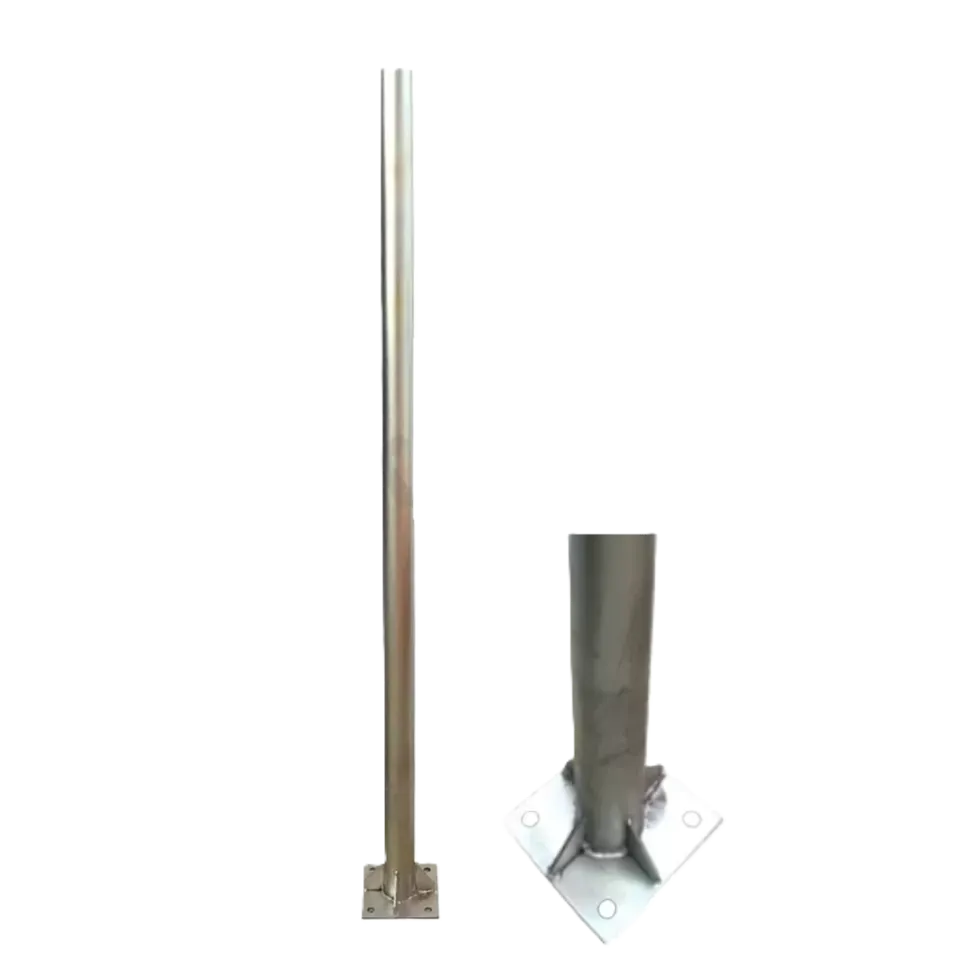
The post is ordered separately. For a fixed installation in a concrete foundation: the galvanised Ø48 mm post, 300 cm. For temporary use, with no foundation: the Ø48 mm tripod post, 120 cm. On concrete or paving, where you cannot dig: the Ø60 mm flange post, 300 cm, bolted down; for it, ask for the Ø60 mm clamps when you order.
The panel measures 85 x 85 cm, fluorescent yellow-green border 10 cm. These are the dimensions SR 1848-2 sets for this sign.
The class II sheeting version is the L8_II.
? Frequently asked questions
Where does the L8 “Pedestrian Crossing, Fluorescent Border” sign go?
It goes under conditions similar to the G1 (pedestrian crossing), where extra safety is wanted, because, according to SR 1848-1:2024, the fluorescent yellow-green border gives better visibility by day and at night. The standard calls for care: L panels are used only where the danger is particular, because using them too often makes them commonplace, and too many intense reflective surfaces tire drivers at night.
Why does it have a yellow-green border?
SR 1848-1:2024 requires particularly dangerous places to be signed with panels with a fluorescent yellow-green class 3 retroreflective background, which is far easier to see by day, at dusk and at night than an ordinary sign.
How does the L8 differ from the G1?
It has the same symbol, but the fluorescent yellow-green border makes it visible from further away. It is used at crossings where extra safety is wanted, for example near schools or on fast roads.
How high is it mounted and which fixings come with it?
The bottom edge goes 1.50–2.50 m above the road or kerb, and the inner edge 0.50–2.0 m from the road platform. The pack holds 2 clamps for Ø48 mm posts and 4 bolts with nuts; clamps for Ø60 mm posts are available on request.
When is class I sheeting used?
Where the sign does not compete with other lights: on roads and streets without strong lighting, on local, minor or private roads. In areas with many light sources (street lighting, shop windows, advertising), SR 1848-2 requires prismatic class 2 or 3 sheeting.
Is there a class II version?
Yes: the L8_II (85x85 cm), with prismatic class II (RA2) sheeting, which returns about three to four times more light from the headlights and has a 10-year service life, against 7 years for class I.
How long does the reflective sheeting last?
The sheeting is class I (RA1), with a 7-year service life. Under SR 1848-2, during that time retroreflection stays at no less than 80% of the initial minimum value and the sheeting stays bonded over at least 95% of the surface.
Is the sign CE marked?
Yes. It is CE marked and complies with SR EN 12899-1:2007, the European standard for vertical road signs, and with SR 1848-1:2024, SR 1848-2:2011 and SR 1848-3:2011. The sheeting and the paint resist UV and weathering.
Ordering and delivery
Can I order as a private individual?
Yes. You order directly on the site, as an individual or a company, and pay by card or cash on delivery.
Do I get an invoice?
Yes. Every order comes with a tax invoice, issued to an individual or a company.
Can I buy through SEAP / SICAP?
Yes. Public institutions find us in SICAP as S.C. ATTO REGAL S.R.L. Our company details are on the Purchase through SEAP / SICAP page.
How long does delivery take?
We deliver by courier within 24-48 hours.
Can I return the product?
Yes. As a private individual you can return the product within 14 days of receiving it, as the law provides, and you get your money back within 14 days of telling us. Return shipping is paid by the customer. The full terms are on the Return policy page.
Other similar models
Get a personalised offer, transport included.
Sending this form is not an order.
 L8 Special Situation Panel – Pedestrian Crossing, Fluorescent Border, 85x85 cm, Class I (L8)
We will send you the offer, transport included, as soon as possible by email or phone.
In road safety since 1998
Atto Trafic supplies complete road signage and safety equipment — signs, traffic signs, markings, parking barriers, speed bumps, mirrors, bollards and accessories.
- Durable products, compliant with STAS and SR EN
- ISO 9001 / 14001 / 45001 / 27001 / 20671 certified
- Constant stock, delivery within 24-48 hours
- Support for municipalities, contractors, private car parks