

Mandatory Signs (D)
Group D of SR 1848-1:2024: mandatory directions, passing sides, paths and minimum speed.

 Product code: D2a
D2 Mandatory Sign – Compulsory Turn Right, Ø60 cm, Class I
135,00 lei VAT included










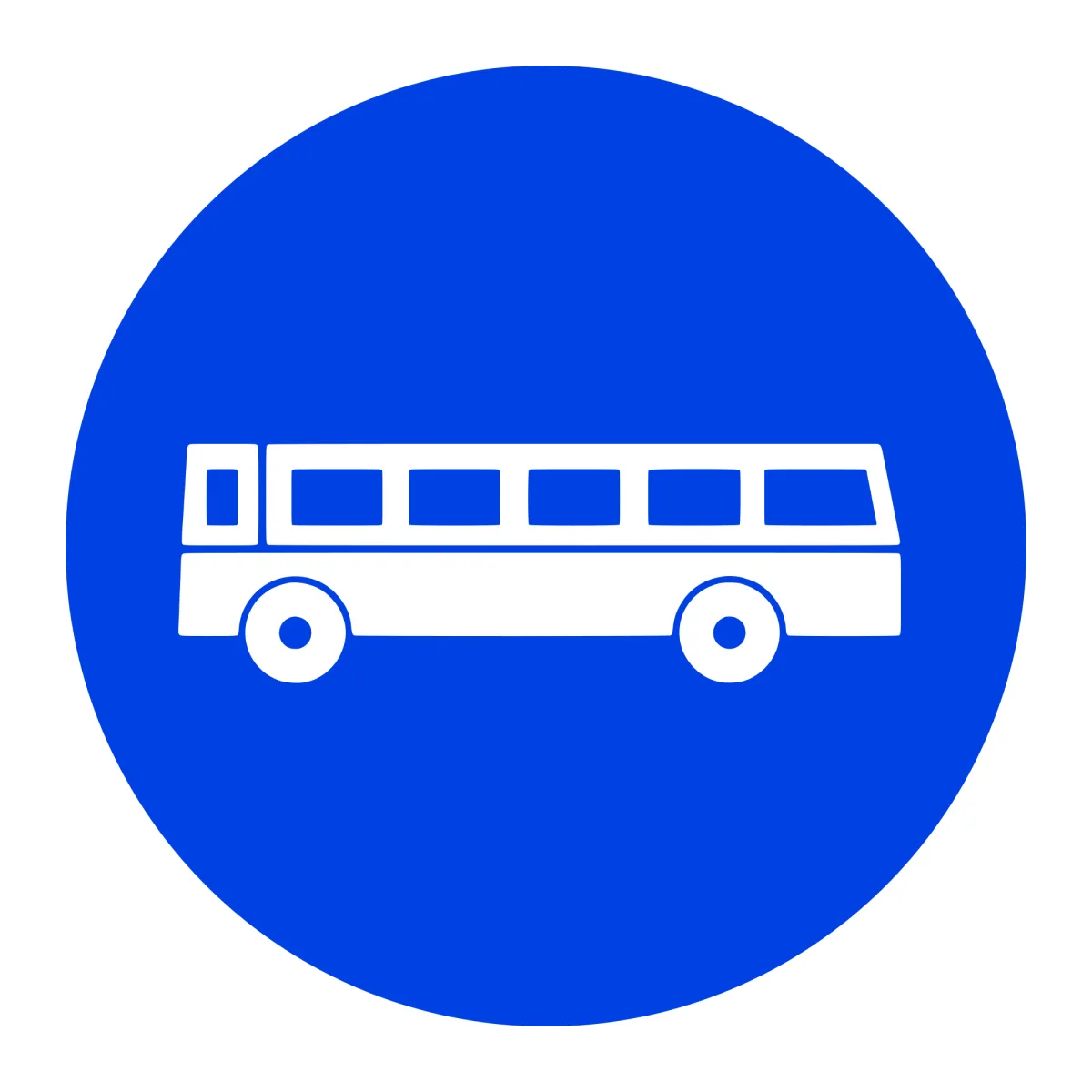
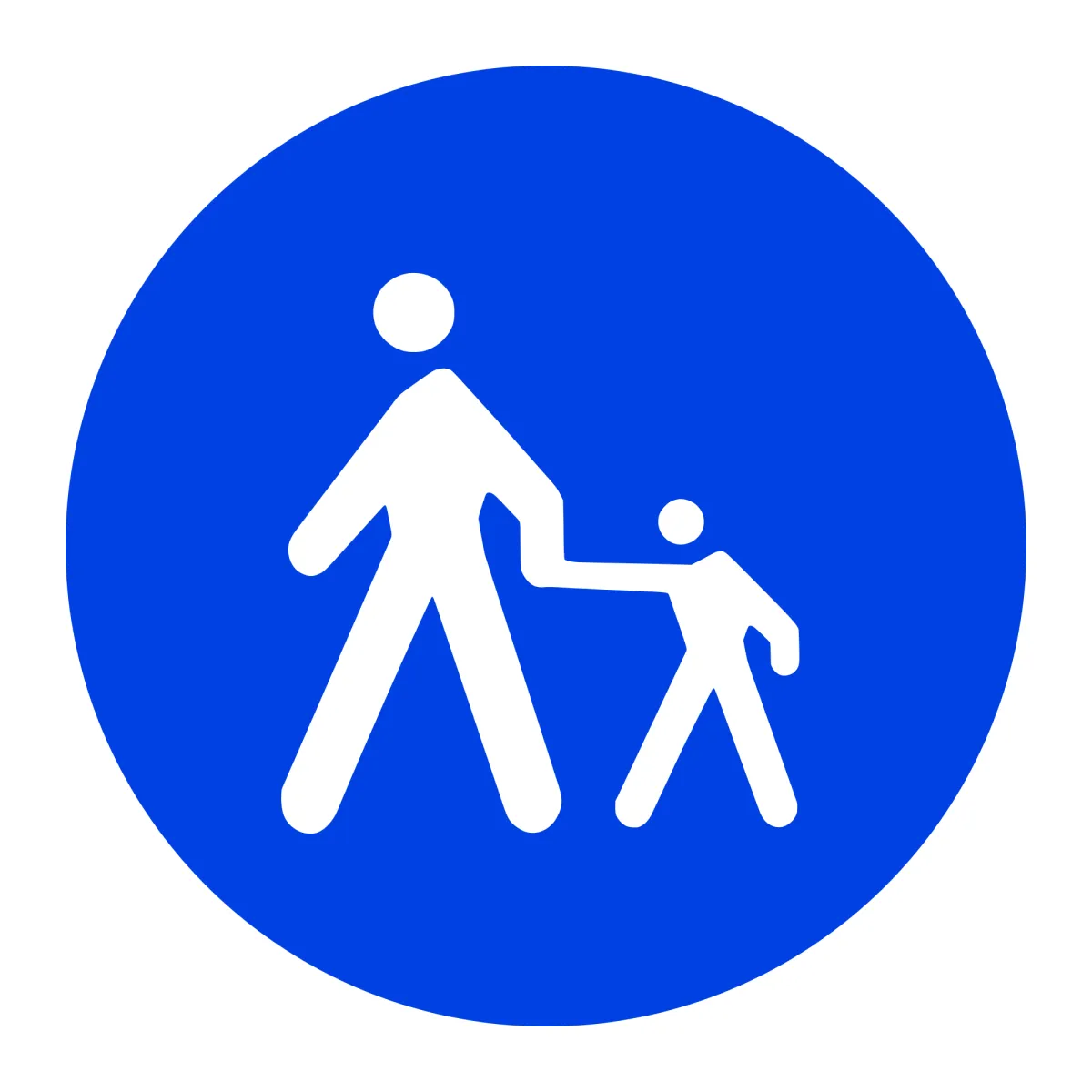
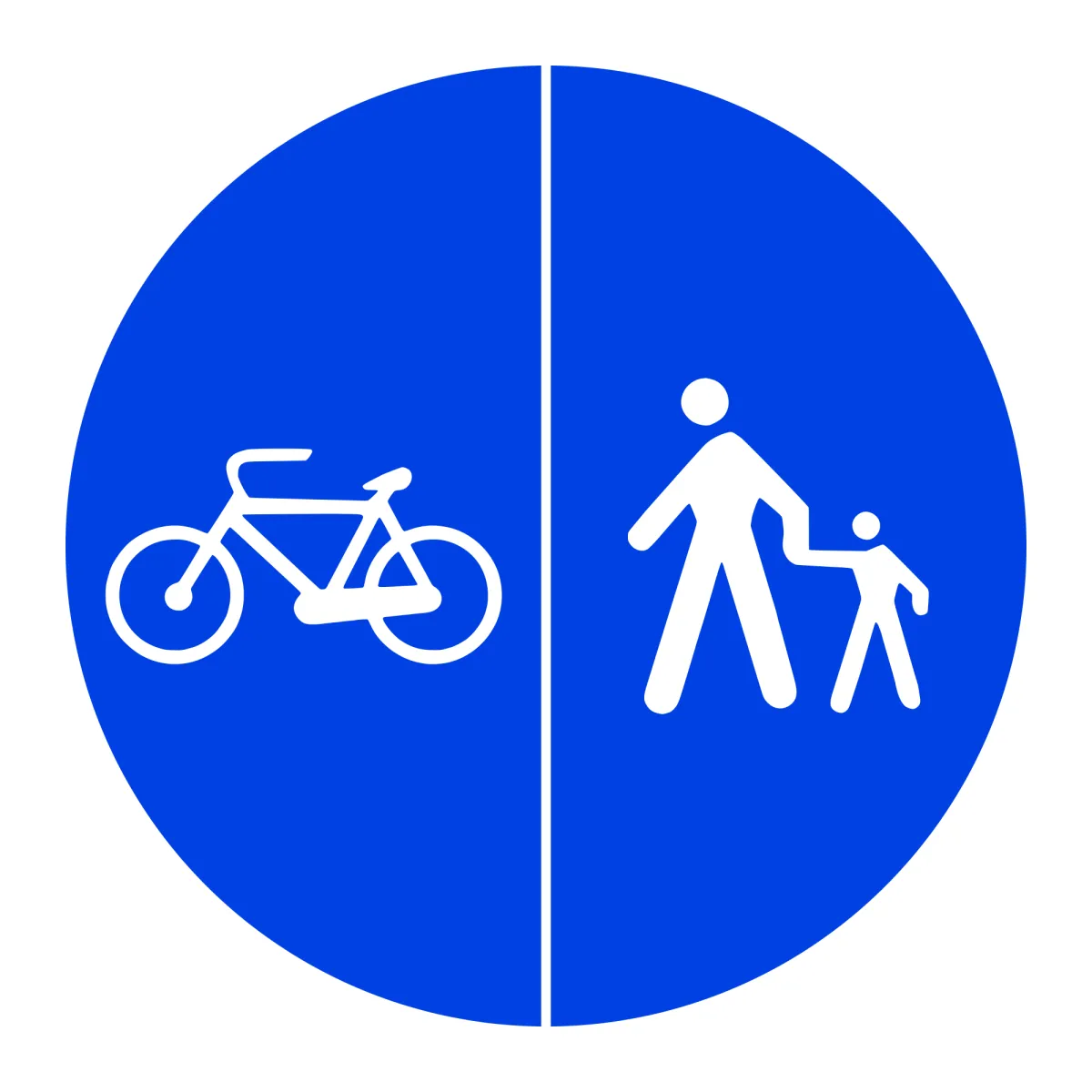
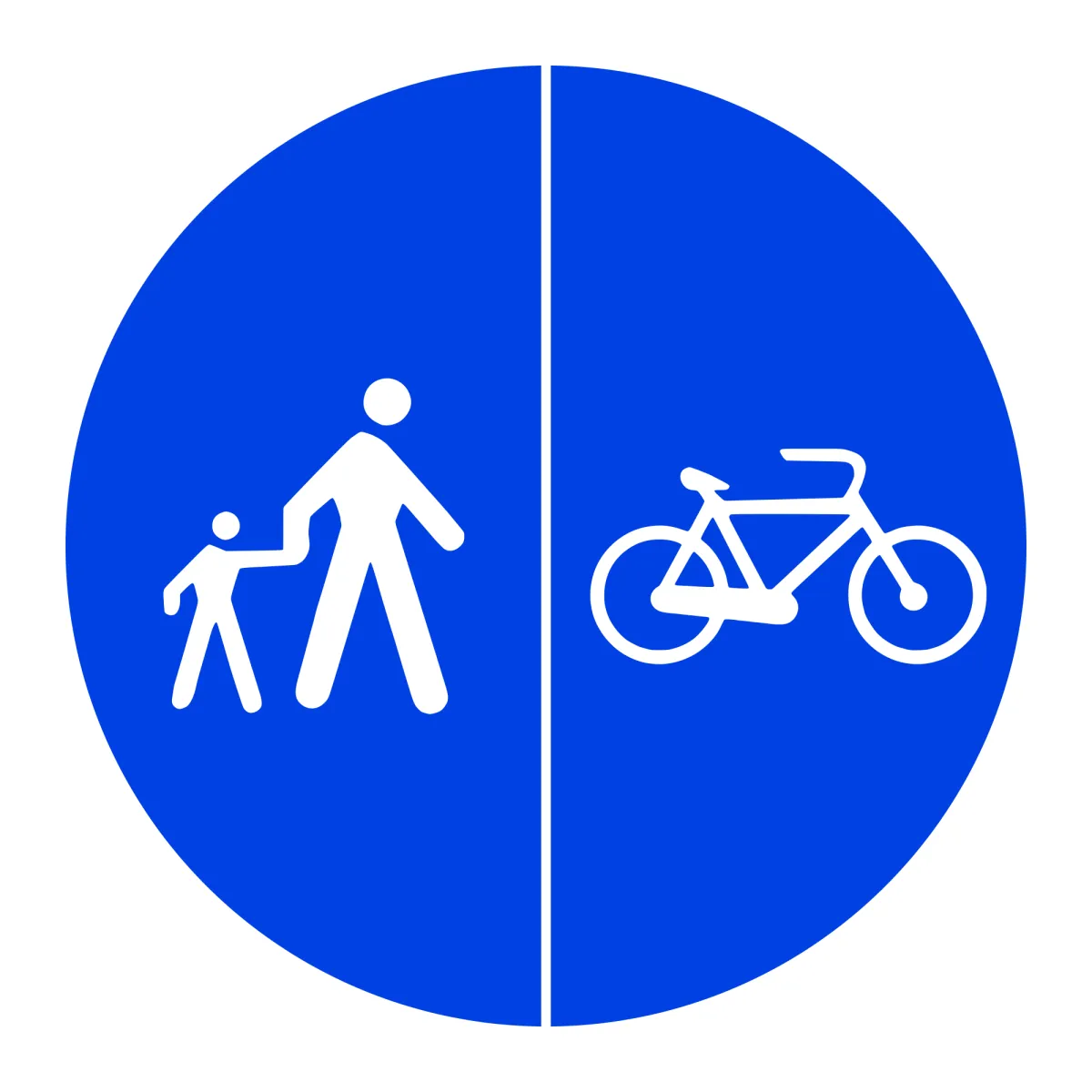
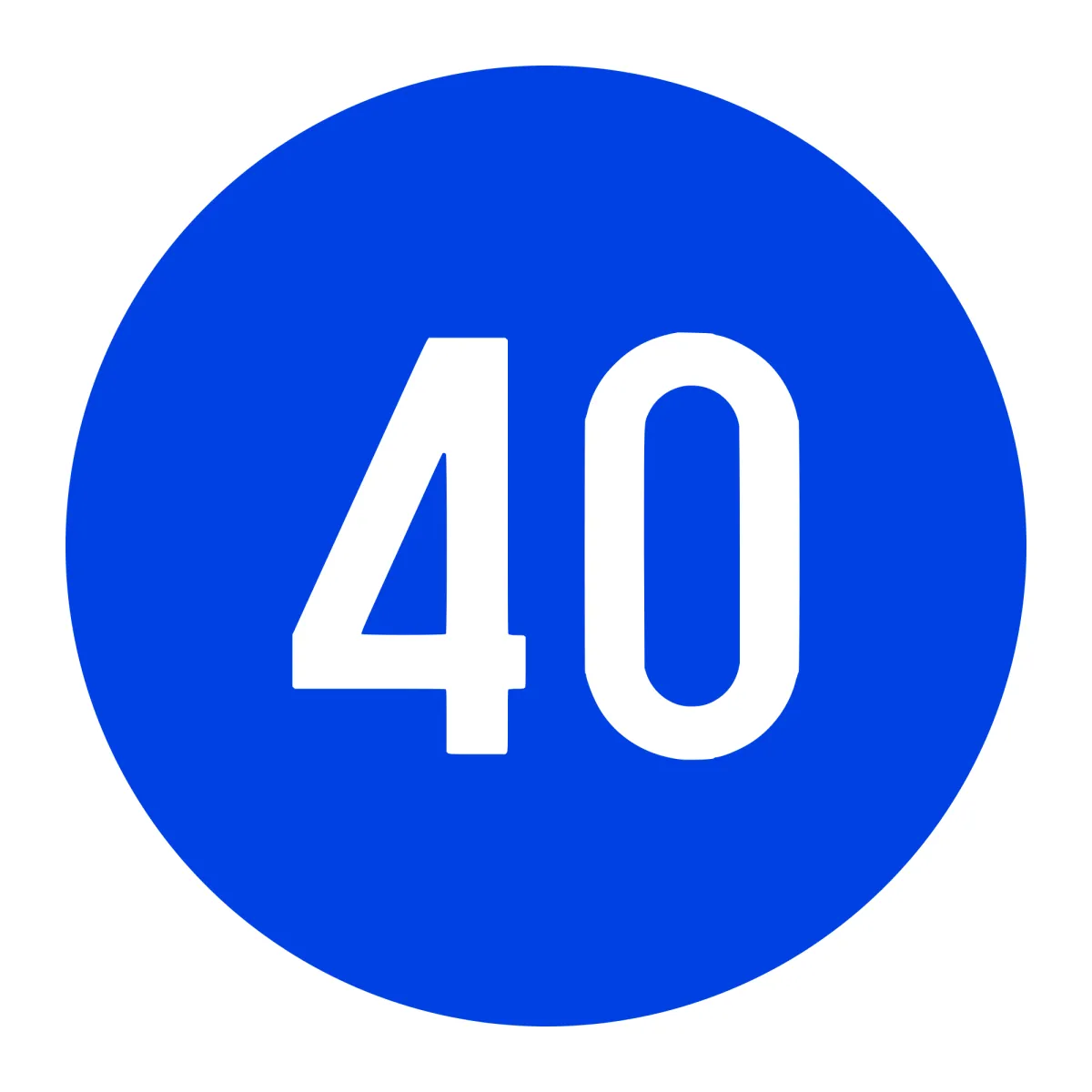
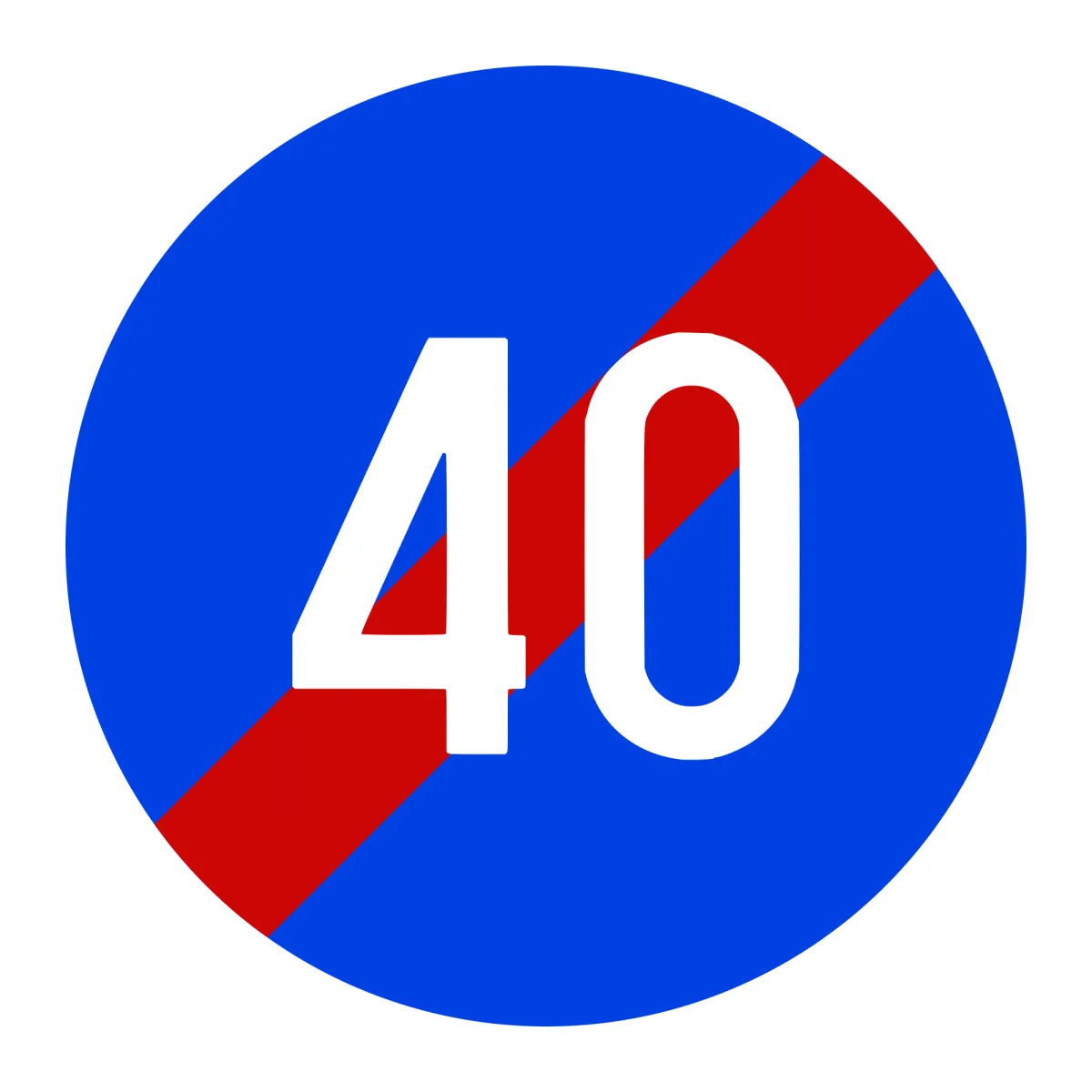
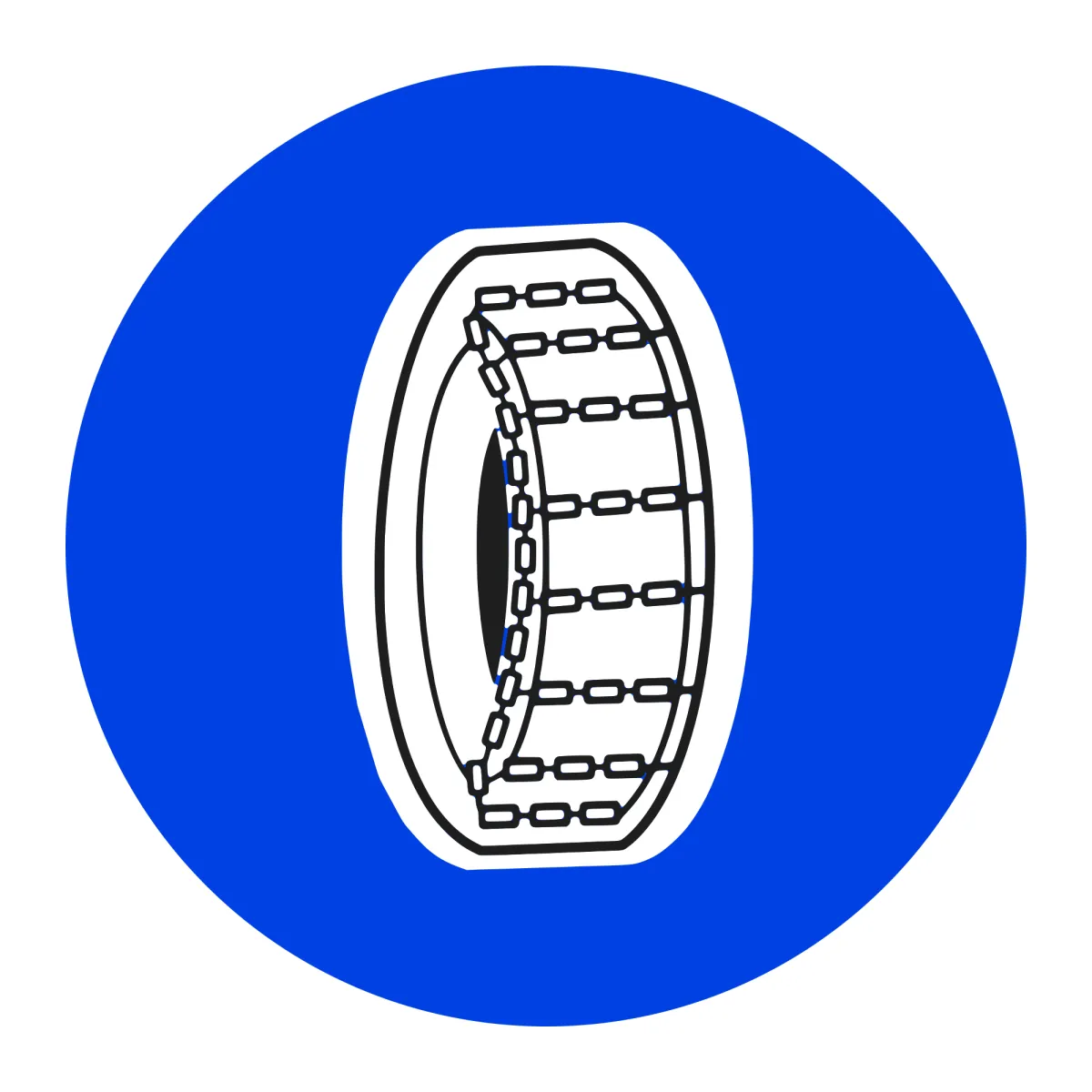
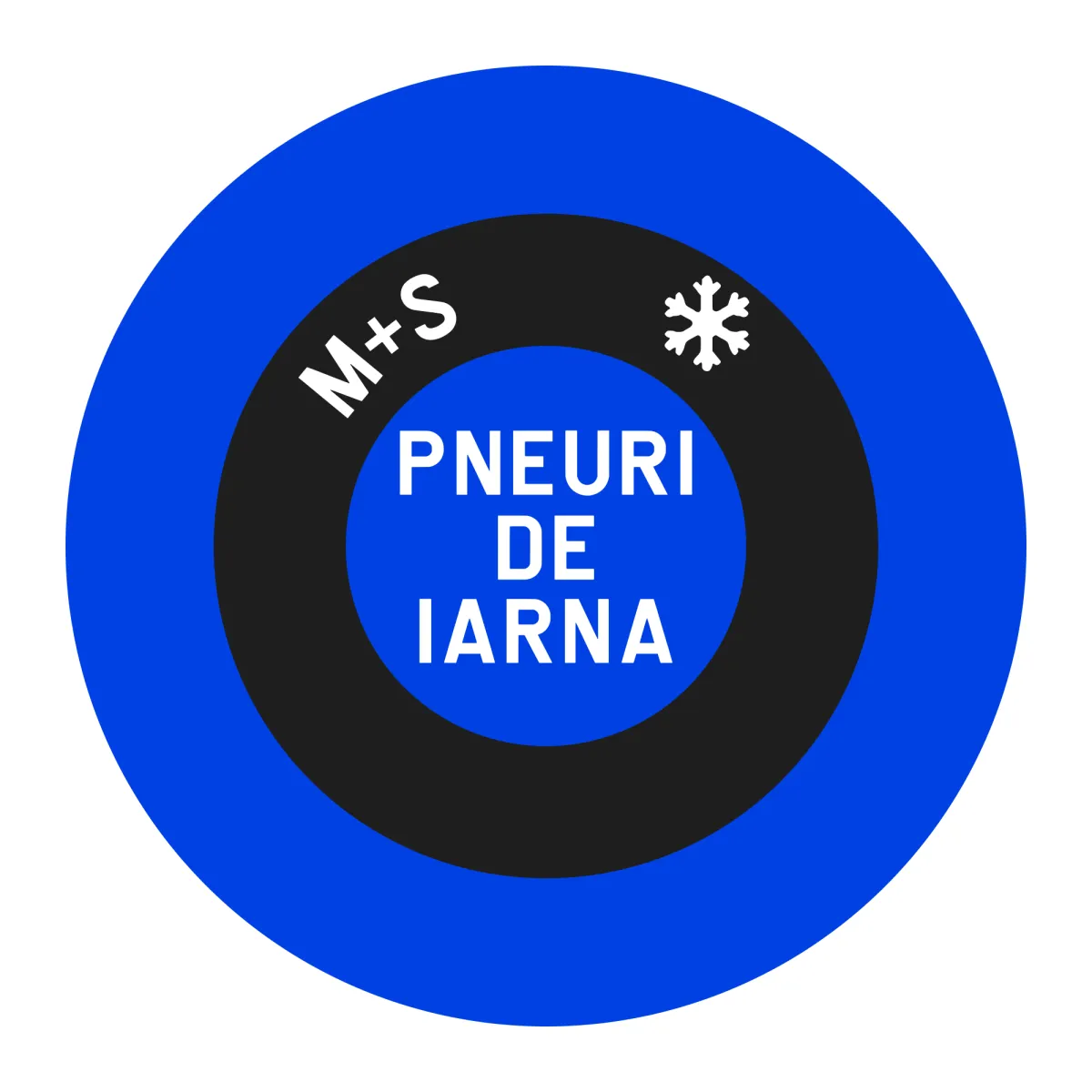
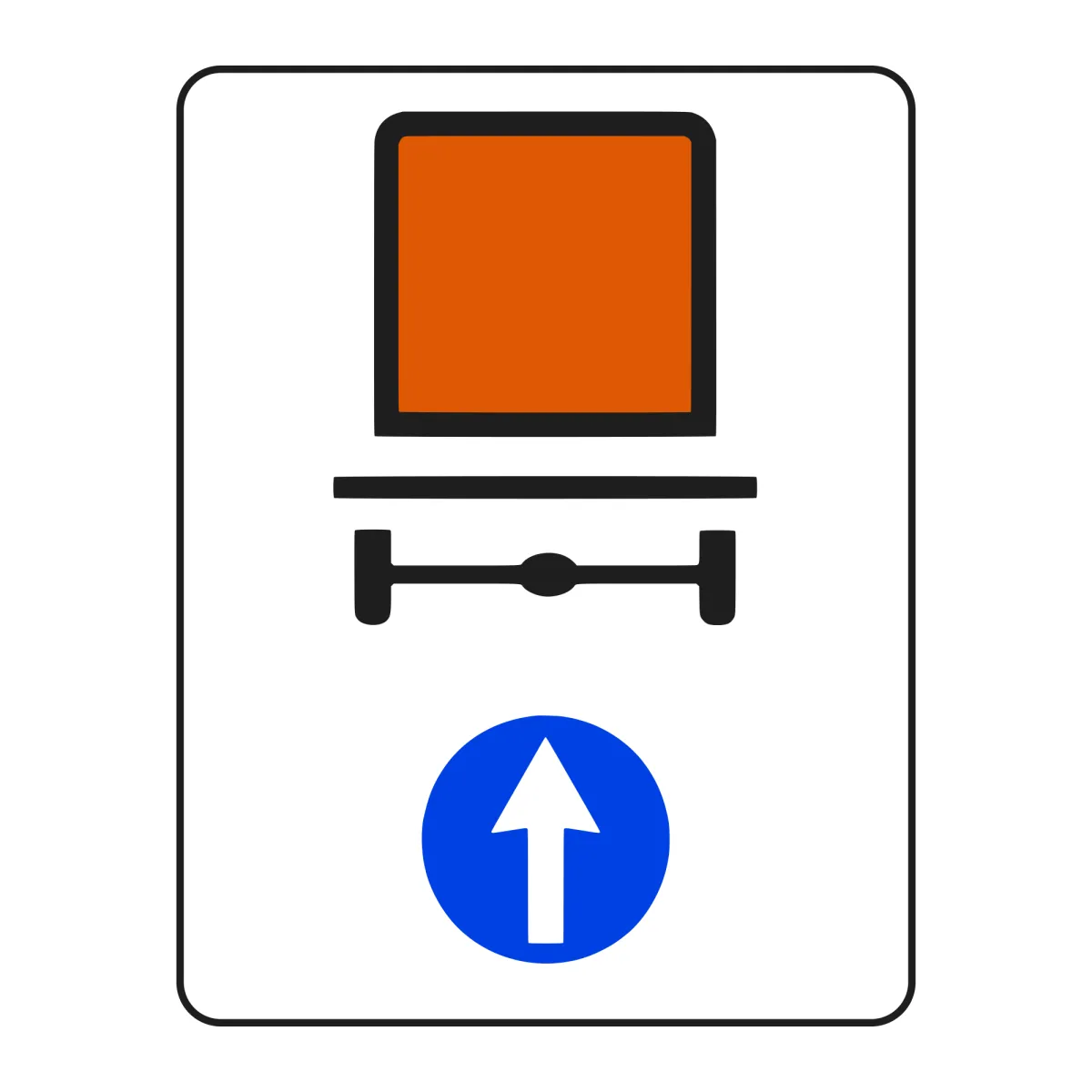
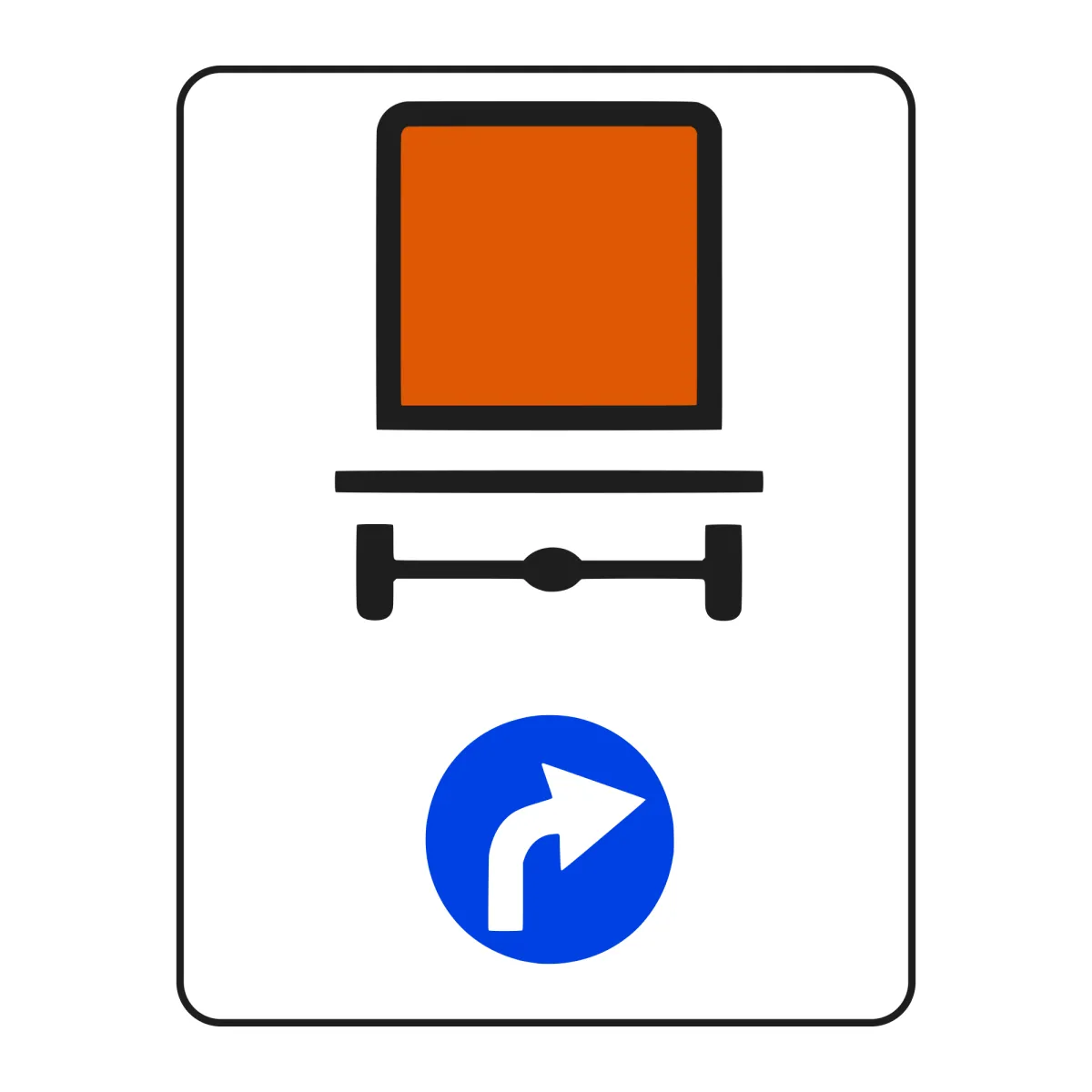
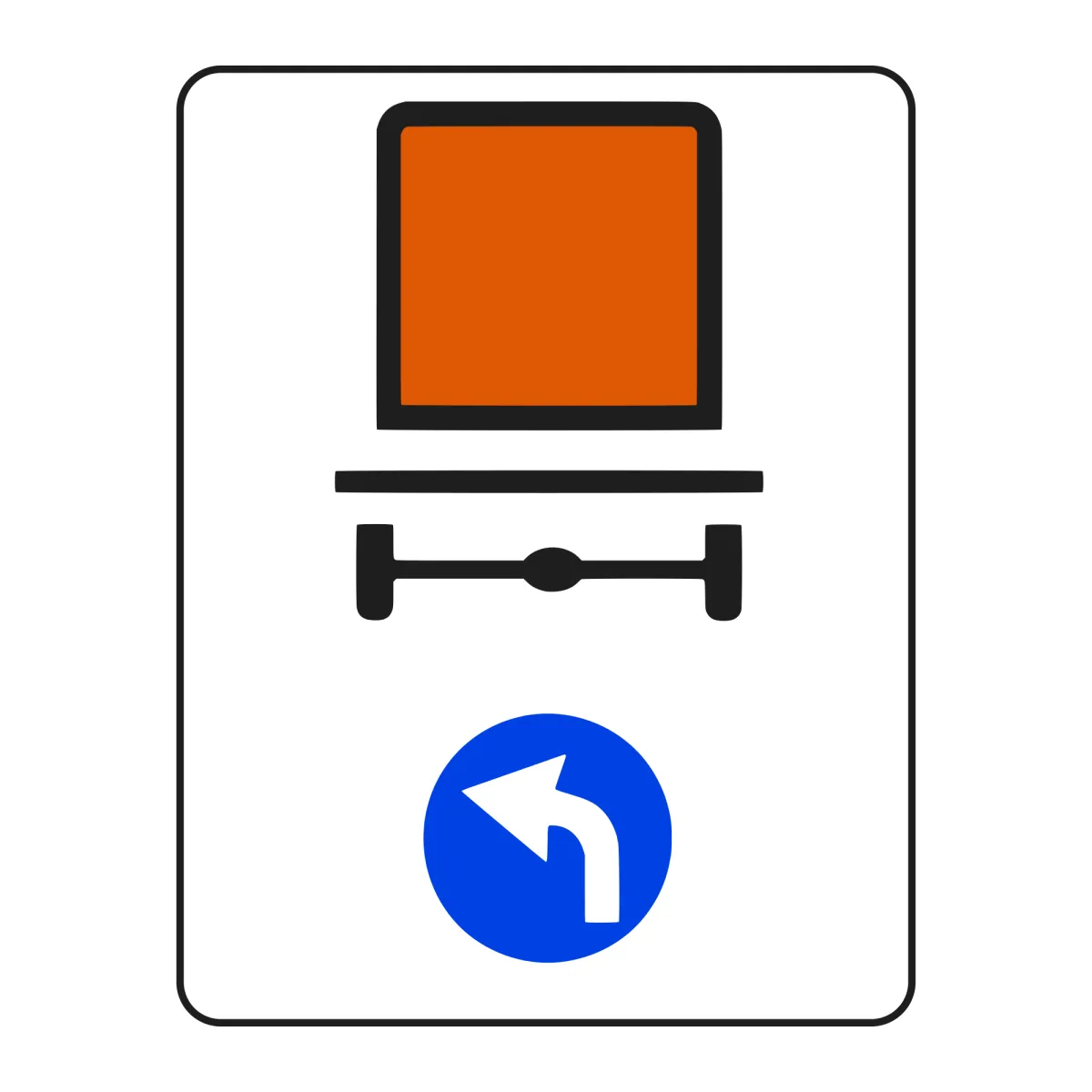
Mandatory signs
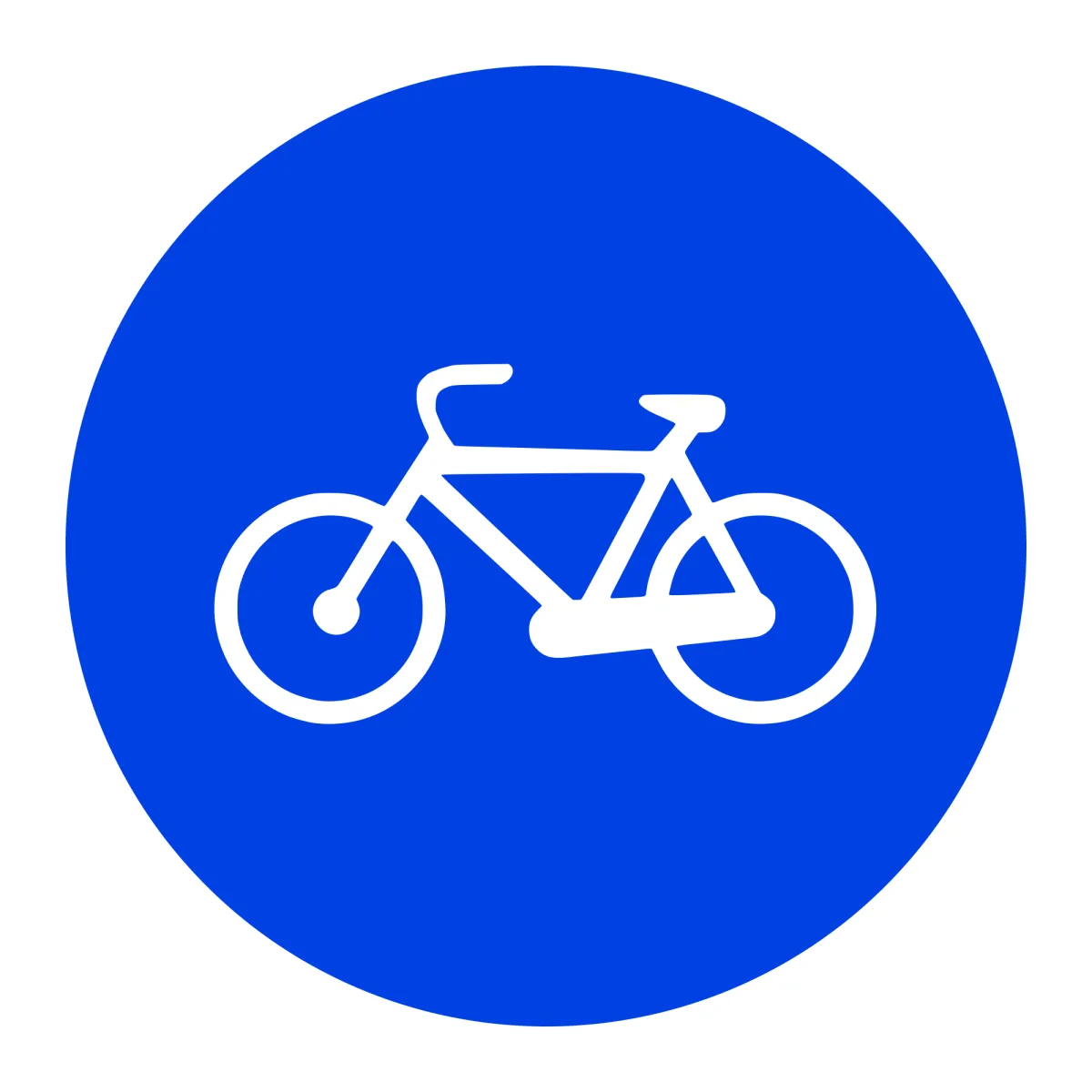
The signs in group D of SR 1848-1:2024 say what you must do: which way to go, which side to pass an obstacle on, which path to use or what minimum speed to keep. Here you will find the signs from the D1 (straight ahead) to the D19 (compulsory direction for vehicles carrying dangerous goods), with right and left versions where the standard allows them.
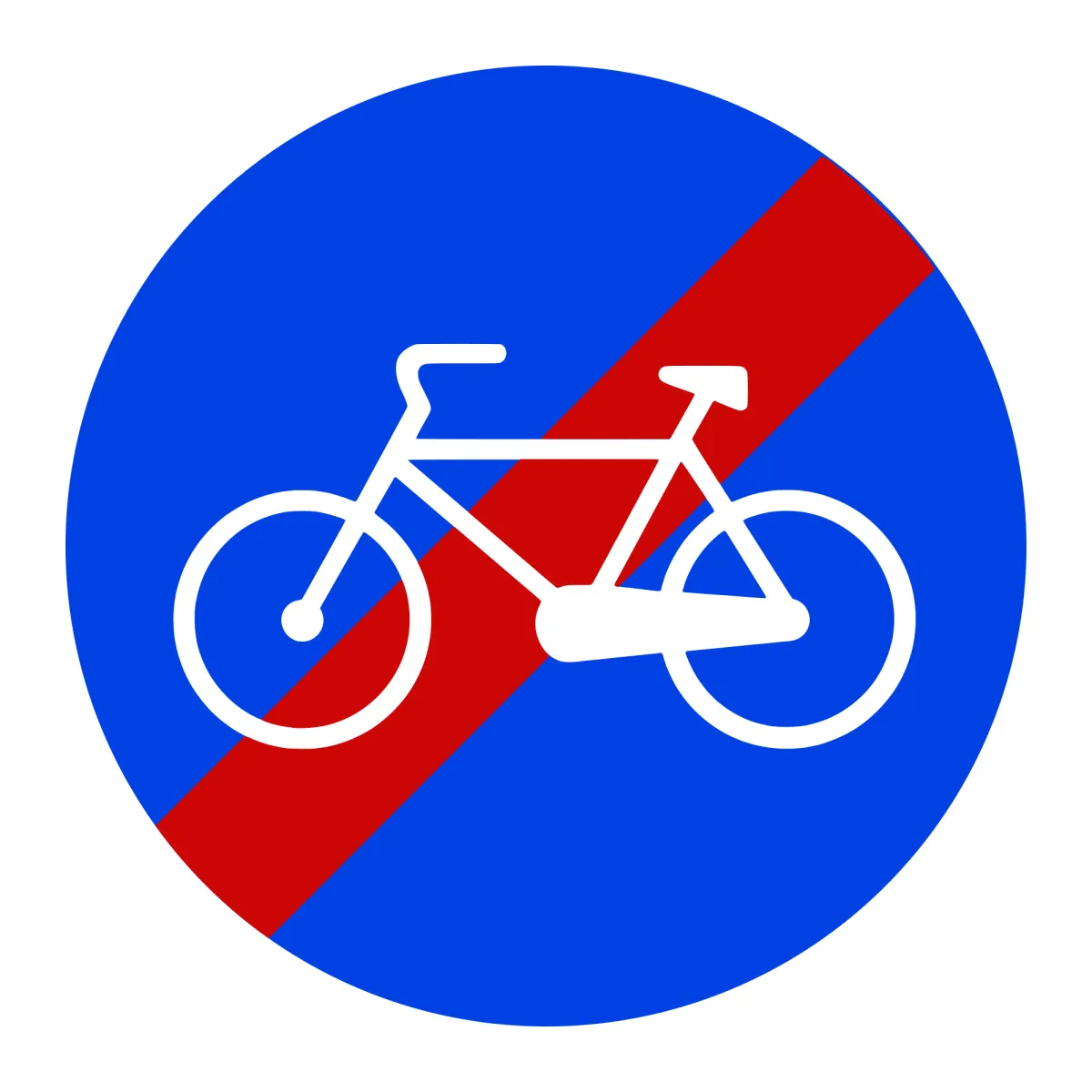
Almost all are blue discs with a white symbol. The signs that end an obligation, the D9 and the D15, also have a red diagonal bar, while the D17 to D19 are 50 x 65 cm white panels with a lorry carrying the dangerous goods plate and a blue disc with the direction arrow.
How they are made
They are made of 1 mm galvanised steel sheet with pressed edges and no sharp edges, electrostatically painted with UV-resistant paint. The face has class I retroreflective sheeting with a 7-year service life. The Ø60 cm disc weighs 3 kg and the 50 x 65 cm panel 3.2 kg, and each comes with 2 clamps for Ø48 mm posts and 4 bolts with nuts; clamps for Ø60 mm posts are available on request. The signs are CE marked and comply with SR EN 12899-1:2007, SR 1848-1:2024, SR 1848-2:2011 and SR 1848-3:2011.
Which size to choose
SR 1848-2 sets four formats for round signs: small (Ø40 cm), normal (Ø60 cm), large (Ø80 cm) and very large (Ø100 cm). The normal format is for county and local roads, streets and private roads open to public traffic; national roads call for large signs and motorways for very large ones. For the D5 and D6, the standard allows small signs where there is no room, for example at tram-stop islands. The D3, D5, D6 and D7 also come in Ø80 cm with class II sheeting, in the Metal Road Signs (Class II) category.
Where they go
The obligation of a D sign applies in the immediate vicinity of the place where it stands, before or after it. The D1 and the dangerous goods signs go no more than 15 m before the junction. The D2 stands on the far side of the junction and you turn before it, while with the D3 and D4 you turn after passing the sign. The D7 goes on the same support as the B1 (give way). The bottom edge sits 1.50–2.50 m above the road, 0.50–2.0 m from the road platform.
Posts and public procurement
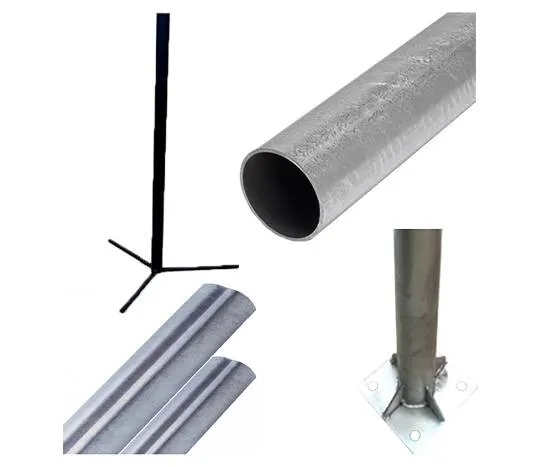
Posts for mounting are in the Road Sign Posts category. Public institutions can also buy the signs through SEAP / SICAP.
? Frequently asked questions
Where does a mandatory sign go?
The obligation applies in the immediate vicinity of the sign. The D1 and the dangerous goods signs go no more than 15 m before the junction, the D2 on the far side of the junction, and the D3 and D4 before the junction, with the turn made after passing the sign.
How does the D2 differ from the D3?
The D2 stands on the far side of the junction and you turn before reaching it. The D3 stands before the junction and you turn after passing it.
Which size do I need?
The Ø60 cm disc, the normal format, is for county and local roads, streets and private roads open to public traffic. National roads call for Ø80 cm and motorways for Ø100 cm.
How does a cycle path or a minimum speed end?
A cycle and e-scooter path ends with the D9, and a minimum speed with the D15, which shows the same value as the D14.
Which signs are used in winter?
Are the mounting clamps included?
Yes. Every sign comes with 2 clamps for Ø48 mm posts and 4 bolts with nuts; clamps for Ø60 mm posts are available on request. Posts are sold separately.
What does class I sheeting mean?
It is the basic retroreflective sheeting in SR 1848-2, with a guaranteed 7-year service life. In areas with many light sources, such as streets with public lighting, shop windows and advertising, the standard requires prismatic class 2 or 3 sheeting.
In road safety since 1998
Atto Trafic supplies complete road signage and safety equipment — signs, traffic signs, markings, parking barriers, speed bumps, mirrors, bollards and accessories.
- Durable products, compliant with STAS and SR EN
- ISO 9001 / 14001 / 45001 / 27001 / 20671 certified
- Constant stock, delivery within 24-48 hours
- Support for municipalities, contractors, private car parks