
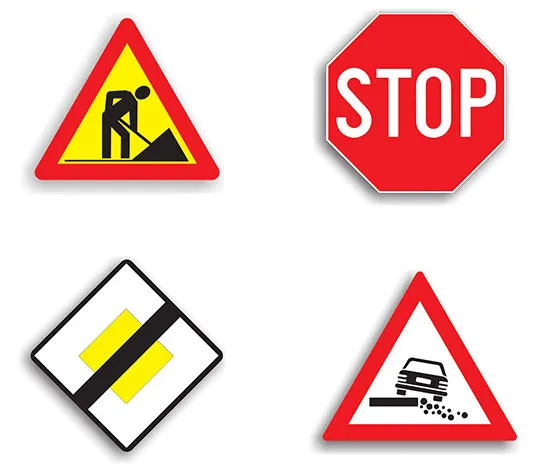




U8 Temporary Sign – Roadworks, 90 cm, Class II
- Temporary road sign U8 “Roadworks”, to SR 1848-1:2024.
- Triangle with a 90 cm side, in 1 mm galvanised steel sheet.
- Class II (RA2) prismatic sheeting, guaranteed 10-year service life.
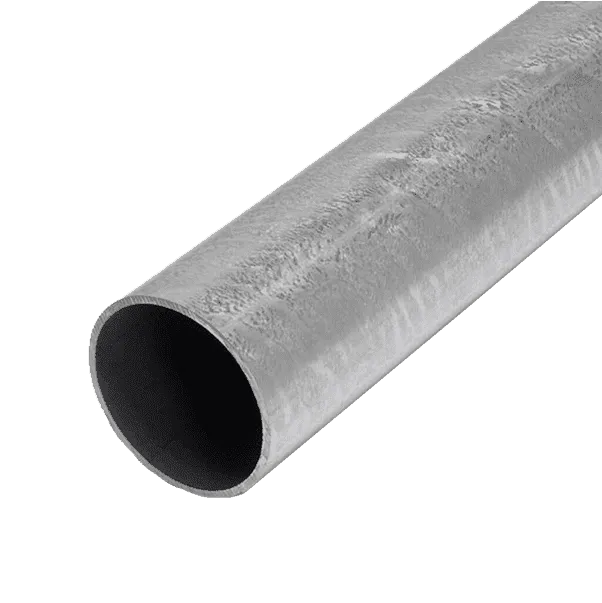
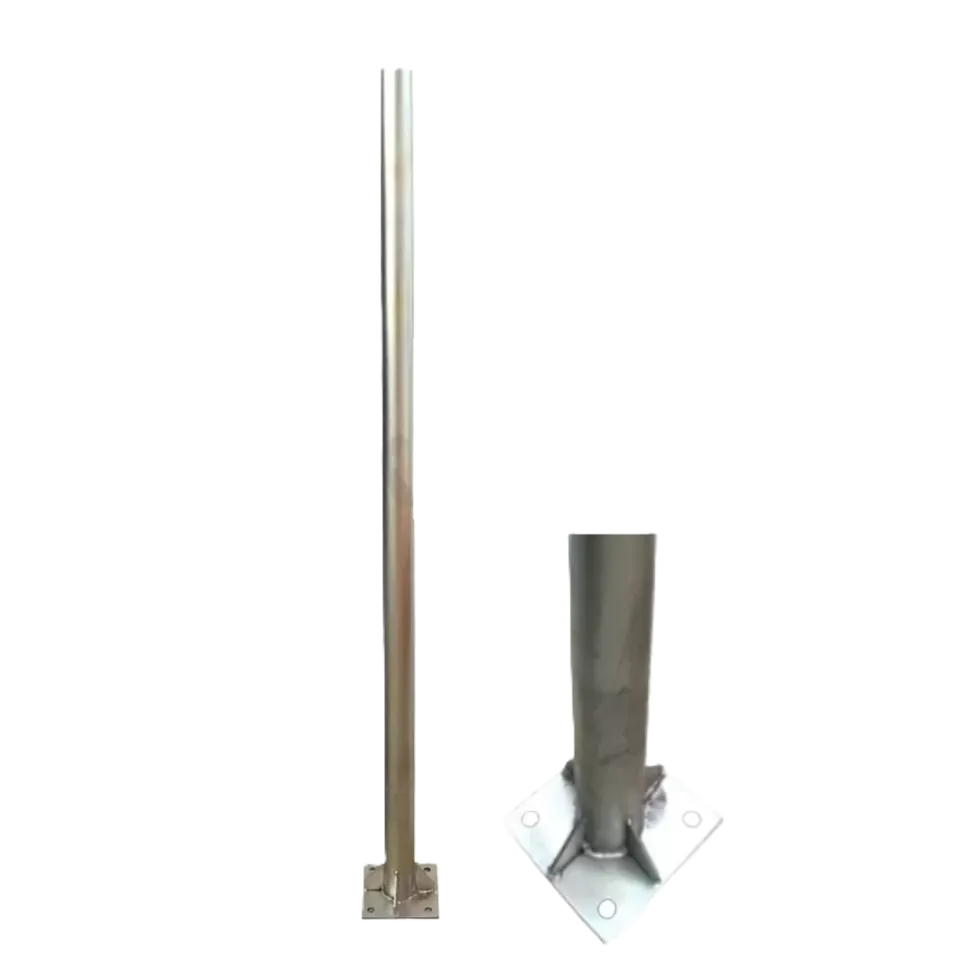
- Fixings included: 2 clamps for Ø48 mm posts and 4 bolts with nuts.
Complementary products
General features
| SR 1848-1 code | U8 |
|---|---|
| Name in the standard | Roadworks |
| Type | Temporary road sign |
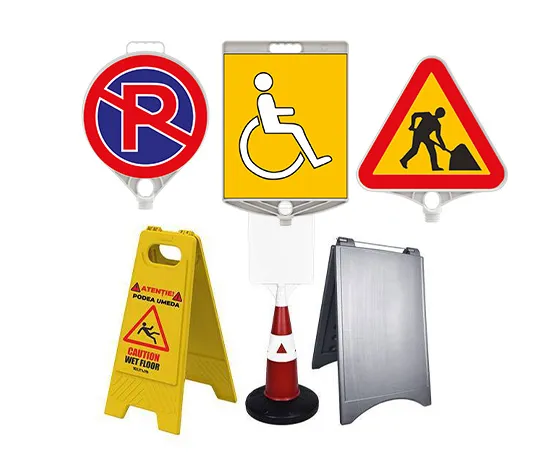
| Shape and colours | Triangle with a 90 cm side, red border and yellow background, with the worker-with-shovel symbol |
| Size | 90 cm |
| Format (SR 1848-2) | Large |
| Material | Galvanised steel sheet, 1 mm |
| Construction | Rounded corners, pressed edges, no sharp edges |
| Painting | Electrostatic, UV-resistant paint |
| Retroreflective sheeting | Class II (RA2), prismatic, UV-resistant |
| Retroreflection (white, 0.2°/5°) | 250 cd/(lx·m²) |
| Sheeting service life | 10 years (SR 1848-2) |
| Fixings included | 2 clamps, 4 bolts with nuts |
| Post diameter | Ø48 mm (Ø60 mm on request) |
| Standards | SR EN 12899-1:2007, SR 1848-1:2024, SR 1848-2:2011, SR 1848-3:2011 |
| Marking | CE |
| Weight | 3,5 kg |
| Height | 90 cm |
Product description
U8 Temporary Sign – Roadworks, 90 cm, Class II
The most widely used work-site sign, in the large 90 cm format with class II prismatic sheeting. It announces works from far away, and the brighter sheeting makes it stand out at night, among beacons and plant lights.
Why class II
On national roads and lit streets, permanent signing is often class II, and SR 1848-2 requires temporary signs on the same section to have at least the same class. Class II (RA2) prismatic sheeting returns three to four times more light than class I and has a guaranteed 10-year service life, so the sign can be used on one site after another.
Where it goes, under SR 1848-1:2024
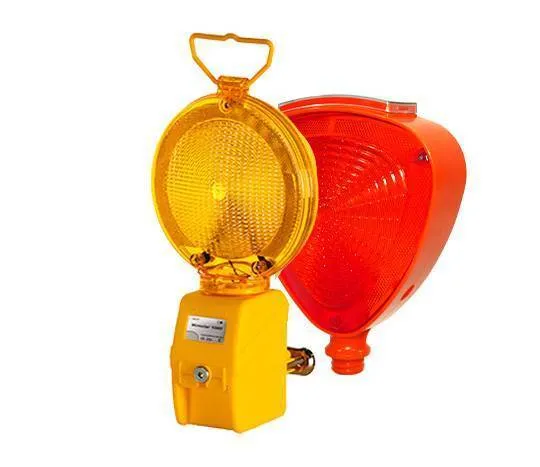
It warns of a road section where works are being carried out. It is installed following the signing layout of the works, under the technical regulations in force. SR 1848-1:2024 allows flashing amber lamps, such as the V8-Y, to be mounted at the corners of the sign.
What the roadworks rules require (Order 1112/411/2000)
The sign belongs to the advance signing, which is installed first, ahead of the work zone in the direction of travel, with at least 50 cm of clear space outside the carriageway. The rules require signs to be stood on the ground first, to check that they are clearly visible, and only then fixed to a support; no more than two signs go on the same support or side by side, and on one-way roads or bends they can be repeated on the left side or above the road.
On public roads, works are signed under the methodological rules approved by Order MI/MT no. 1112/411/2000. The road closure or traffic restriction is approved by the road authority, with the traffic police's agreement, on the basis of a signing layout endorsed as final, a copy of which the contractor keeps at the work site. The contractor installs, completes and maintains the signing for the whole job, removes it at the end and restores the original signing; accidents caused by incomplete or missing temporary signing are entirely the contractor's responsibility.
At night, if the existing signing on the road is retroreflective, the temporary signing must be retroreflective too and can be supplemented with flashing or sequential (“cascade”) amber lamps; on main and connecting streets in towns, retroreflective temporary signs are supplemented with flashing amber lamps.
Technical data
- triangle with a 90 cm side, red border and yellow background, with the worker-with-shovel symbol;
- 1 mm galvanised steel sheet, with rounded corners and pressed edges, no sharp edges;
- electrostatically painted;
- class II (RA2) prismatic retroreflective sheeting, with a guaranteed 10-year service life;
- fixings included: 2 clamps for Ø48 mm posts and 4 bolts with nuts;
- compliant with SR EN 12899-1:2007, SR 1848-1:2024, SR 1848-2:2011 and SR 1848-3:2011.
Mounting and size
Fixings for the post are included: 2 clamps for Ø48 mm posts and 4 bolts with nuts; clamps for Ø60 mm posts are available on request. The bottom edge of the sign goes 1.50–2.50 m above the road or kerb, and the edge nearest the road 0.50–2.0 m from the road platform. Temporary signs can also be mounted on mobile supports (SR 1848-2), such as the V2-15 or V2-28.
As with permanent signs, the 90 cm triangle is the large format in SR 1848-2, required on national roads; the normal 70 cm format is for county and local roads and streets. The 70 cm version with class I sheeting is the U8.
? Frequently asked questions
Where does it go?
It warns of a road section where works are being carried out. It is installed following the signing layout of the works, under the technical regulations in force. SR 1848-1:2024 allows flashing amber lamps, such as the V8-Y, to be mounted at the corners of the sign.
In what order is the work-zone signing installed?
First the advance signing (which this sign belongs to), then the signing that marks the works (barrier boards, markers, cones) and finally the end-of-restriction signing. Signs are first stood on the ground to check visibility, then fixed to a support, with at least 50 cm of clear space outside the carriageway.
How does it differ from the class I sheeting version?
It is larger than the U8: 90 cm instead of 70 cm, and the class II (RA2) prismatic sheeting returns three to four times more light, with a guaranteed 10-year service life instead of 7.
When must class II sheeting be used for temporary signing?
SR 1848-2 requires temporary signs to have at least the retroreflection class of the permanent signing on that section. If the existing signs are class II, the temporary ones must be at least class II too. In areas with many light sources (street lighting, shop windows, advertising), the standard requires prismatic class 2 or 3 sheeting anyway.
Why does it have a yellow background?
SR 1848-2 requires temporary signs that have a permanent counterpart to keep the same symbols and sizes but use a yellow background instead of white, so roadworks signing stands out at once from permanent signing.
Which fixings come with it?
The pack holds 2 clamps for Ø48 mm posts and 4 bolts with nuts. Clamps for Ø60 mm posts are available on request.
Can it go on a mobile support?
Ordering and delivery
Can I order as a private individual?
Yes. You order directly on the site, as an individual or a company, and pay by card or cash on delivery.
Do I get an invoice?
Yes. Every order comes with a tax invoice, issued to an individual or a company.
Can I buy through SEAP / SICAP?
Yes. Public institutions find us in SICAP as S.C. ATTO REGAL S.R.L. Our company details are on the Purchase through SEAP / SICAP page.
How long does delivery take?
We deliver by courier within 24-48 hours.
Can I return the product?
Yes. As a private individual you can return the product within 14 days of receiving it, as the law provides, and you get your money back within 14 days of telling us. Return shipping is paid by the customer. The full terms are on the Return policy page.
Other similar models



Get a personalised offer, transport included.
Sending this form is not an order.
 U8 Temporary Sign – Roadworks, 90 cm, Class II (U8_II)
We will send you the offer, transport included, as soon as possible by email or phone.
In road safety since 1998
Atto Trafic supplies complete road signage and safety equipment — signs, traffic signs, markings, parking barriers, speed bumps, mirrors, bollards and accessories.
- Durable products, compliant with STAS and SR EN
- ISO 9001 / 14001 / 27001 / 20671 certified
- Constant stock, delivery within 24-48 hours
- Support for municipalities, contractors, private car parks