










U38 Temporary Sign – Works in the Middle Lane, 65x85 cm, Class I
- Temporary road sign U38 “Works in the middle lane”, to SR 1848-1:2024.
- 65x85 cm yellow panel with a black border, in 1 mm galvanised steel sheet.
- Class I (RA1) retroreflective sheeting, 7-year service life.
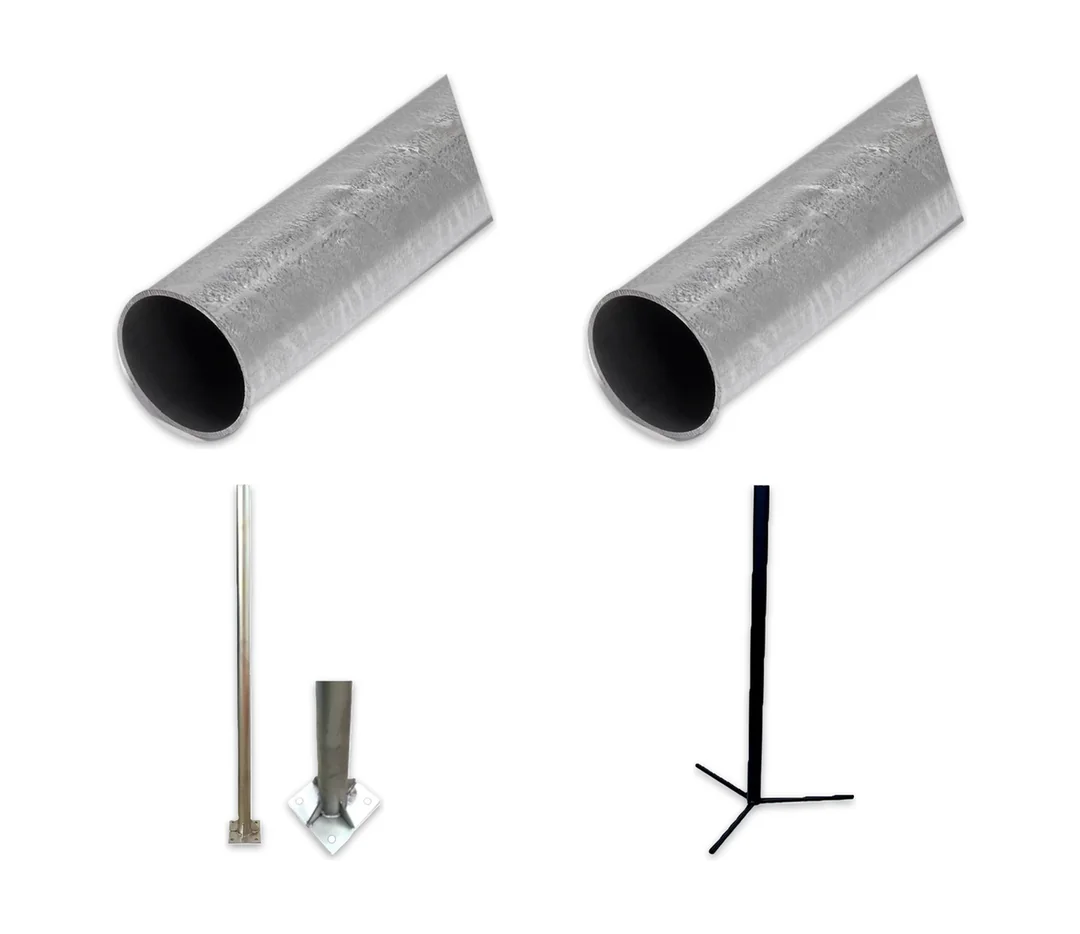
- Fixings included: 2 clamps for Ø48 mm posts and 4 bolts with nuts.
Complementary products
General features
| SR 1848-1 code | U38 |
|---|---|
| Name in the standard | Works in the middle lane |
| Type | Temporary road sign |
| Shape and colours | 65x85 cm yellow panel with a black border, the works triangle and the middle lane splitting towards the side lanes |
| Size | 65x85 cm |
| Material | Galvanised steel sheet, 1 mm |
| Construction | Rounded corners, pressed edges, no sharp edges |
| Painting | Electrostatic |
| Retroreflective sheeting | Class I (RA1) |
| Retroreflection (white, 0.2°/5°) | 70 cd/(lx·m²) |
| Sheeting service life | 7 years (SR 1848-2) |
| Fixings included | 2 clamps, 4 bolts with nuts |
| Post diameter | Ø48 mm (Ø60 mm on request) |
| Standards | SR EN 12899-1:2007, SR 1848-1:2024, SR 1848-2:2011, SR 1848-3:2011 |
| Weight | 5 kg |
| Length | 65 cm |
| Height | 85 cm |
Product description
U38 Temporary Sign – Works in the Middle Lane, 65x85 cm, Class I
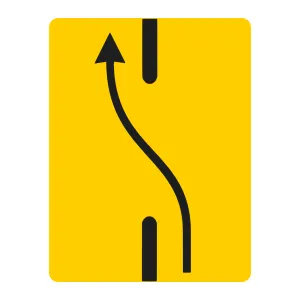
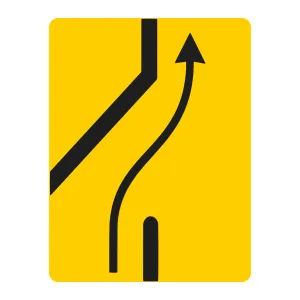
The 65x85 cm yellow panel with a black border announcing work in the middle lane of a road with three lanes per direction, with class I retroreflective sheeting. Below the works triangle the middle lane line splits to the left and to the right, and the black arrows show that traffic carries on in the side lanes.
When class I is used
The class I version is the economical choice for work sites on local roads: RA1 retroreflective sheeting with a 7-year service life. The SR 1848-2 rule is simple: a temporary sign must have at least the class of the existing signing on the section, and areas with many light sources call for prismatic class 2 or 3 sheeting.
Where it goes, under SR 1848-1:2024
It goes on road sections with three lanes per direction where work is being done in the middle lane. SR 1848-1:2024 sets no specific distance for this sign: it is installed under the technical regulations in force for signing roadworks, following the signing layout of the works. Like any sign, it normally goes on the right-hand side of the direction of travel, so that it can be seen from at least 50 m in built-up areas and at least 100 m outside them (SR 1848-2).
What the roadworks rules require (Order 1112/411/2000)
The sign belongs to the advance signing, which is installed first, ahead of the work zone in the direction of travel, with at least 50 cm of clear space outside the carriageway. The rules require signs to be stood on the ground first, to check that they are clearly visible, and only then fixed to a support; no more than two signs go on the same support or side by side, and on one-way roads or bends they can be repeated on the left side or above the road.
On public roads, works are signed under the methodological rules approved by Order MI/MT no. 1112/411/2000. The road closure or traffic restriction is approved by the road authority, with the traffic police's agreement, on the basis of a signing layout endorsed as final, a copy of which the contractor keeps at the work site. The contractor installs, completes and maintains the signing for the whole job, removes it at the end and restores the original signing; accidents caused by incomplete or missing temporary signing are entirely the contractor's responsibility.
At night, if the existing signing on the road is retroreflective, the temporary signing must be retroreflective too and can be supplemented with flashing or sequential (“cascade”) amber lamps; on main and connecting streets in towns, retroreflective temporary signs are supplemented with flashing amber lamps.
Technical data
- 65x85 cm yellow panel with a black border, the works triangle and the middle lane splitting towards the side lanes;
- 1 mm galvanised steel sheet, with rounded corners and pressed edges, no sharp edges;
- electrostatically painted;
- class I retroreflective sheeting (RA1), with a 7-year service life;
- fixings included: 2 clamps for Ø48 mm posts and 4 bolts with nuts;
- compliant with SR EN 12899-1:2007, SR 1848-1:2024, SR 1848-2:2011 and SR 1848-3:2011.
Mounting and size
Fixings for the post are included: 2 clamps for Ø48 mm posts and 4 bolts with nuts; clamps for Ø60 mm posts are available on request. The bottom edge of the sign goes 1.50–2.50 m above the road or kerb, and the edge nearest the road 0.50–2.0 m from the road platform.
The U38 is a new sign, introduced by SR 1848-1:2024, and SR 1848-2:2011 has no size for it yet. The panel is 65x85 cm, the size of the rectangular temporary signs for streets and other roads; for the other temporary signs SR 1848-2 calls for 80x120 cm on national roads and 120x180 cm on motorways.
? Frequently asked questions
Where does it go?
On road sections with three lanes per direction where work is being done in the middle lane, following the signing layout approved by the road authority. SR 1848-1:2024 sets no specific distance for this sign.
In what order is the work-zone signing installed?
First the advance signing (which this sign belongs to), then the signing that marks the works (barrier boards, markers, cones) and finally the end-of-restriction signing. Signs are first stood on the ground to check visibility, then fixed to a support, with at least 50 cm of clear space outside the carriageway.
When can class I sheeting be used for roadworks?
Where the permanent signing on the section is class I too and there are few light sources. SR 1848-2 requires temporary signs to have at least the class of the existing signing, and in areas with street lighting, shop windows or advertising it requires prismatic class 2 or 3 sheeting.
Which fixings come with it?
The pack holds 2 clamps for Ø48 mm posts and 4 bolts with nuts. Clamps for Ø60 mm posts are available on request.
Who is responsible for the work-zone signing?
The contractor. Under Order MI/MT no. 1112/411/2000, the contractor installs the signing to the layout approved by the road authority with the traffic police's agreement, keeps a copy of the approval and the layout at the work site, maintains and completes the signing for the whole job and removes it at the end. Accidents caused by incomplete or missing temporary signing are entirely the contractor's responsibility.
Ordering and delivery
Can I order as a private individual?
Yes. You order directly on the site, as an individual or a company, and pay by card or cash on delivery.
Do I get an invoice?
Yes. Every order comes with a tax invoice, issued to an individual or a company.
Can I buy through SEAP / SICAP?
Yes. Public institutions find us in SICAP as S.C. ATTO REGAL S.R.L. Our company details are on the Purchase through SEAP / SICAP page.
How long does delivery take?
We deliver by courier within 24-48 hours.
Can I return the product?
Yes. As a private individual you can return the product within 14 days of receiving it, as the law provides, and you get your money back within 14 days of telling us. Return shipping is paid by the customer. The full terms are on the Return policy page.
Other similar models


Get a personalised offer, transport included.
Sending this form is not an order.
 U38 Temporary Sign – Works in the Middle Lane, 65x85 cm, Class I (U38)
We will send you the offer, transport included, as soon as possible by email or phone.
In road safety since 1998
Atto Trafic supplies complete road signage and safety equipment — signs, traffic signs, markings, parking barriers, speed bumps, mirrors, bollards and accessories.
- Durable products, compliant with STAS and SR EN
- ISO 9001 / 14001 / 45001 / 27001 / 20671 certified
- Constant stock, delivery within 24-48 hours
- Support for municipalities, contractors, private car parks