


A parking space without a wheel stop relies on the driver’s eye alone. In a tight garage, or on a space facing a wall, a fence or a shop window, a few centimetres too far means a scratched bumper or a pavement nobody can walk along any more. A wheel stop solves this simply: the wheel reaches it and the car stops in the same place every time. This guide explains the lengths and materials available, how many pieces go on one space and how to fix them into concrete or asphalt.
What a wheel stop is
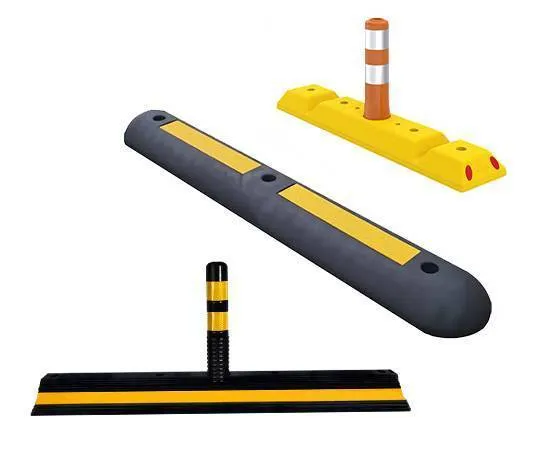
A wheel stop, also called a parking stop, car stop or parking curb, is a low piece, 10 or 12 cm tall, fixed to the ground at the end of a parking space. It does not block the space and it is not a barrier: it shows the driver where to stop. The front wheel reaches the stop, and the car stays clear of the wall, the fence or the pavement. All six of our models come with the fixing dowels and screws in the pack.
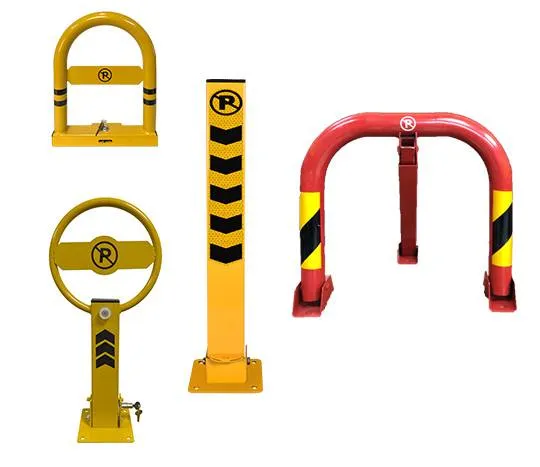
We mean the stops fitted on a parking space, not door or gate stops. And if you want nobody else to park in your space, you need a parking blocker, covered in full in our guide to parking blockers.
Two lengths: one per wheel or one for the whole space
The first choice is not the material but the length. Our stops are either 60 cm long or between 180 and 190 cm, and that also decides how many pieces you need per space.
60 cm stops: two on each space
A 60 cm stop holds a single wheel. On an ordinary space you fit two, one in line with each front wheel. The advantage is that you set the distance between them exactly to the car you usually park there. They suit a home garage, a bay in an underground car park, a rented space next to a block of flats or a company yard.
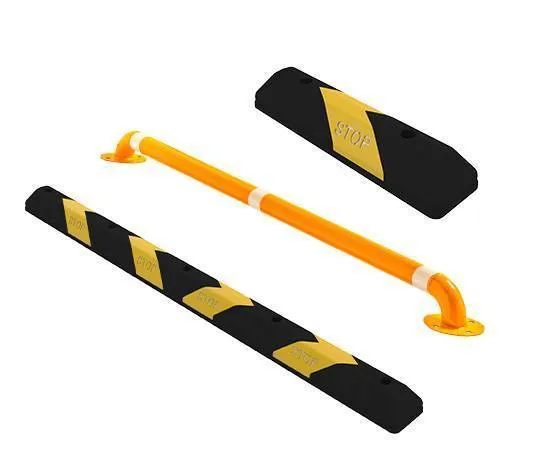
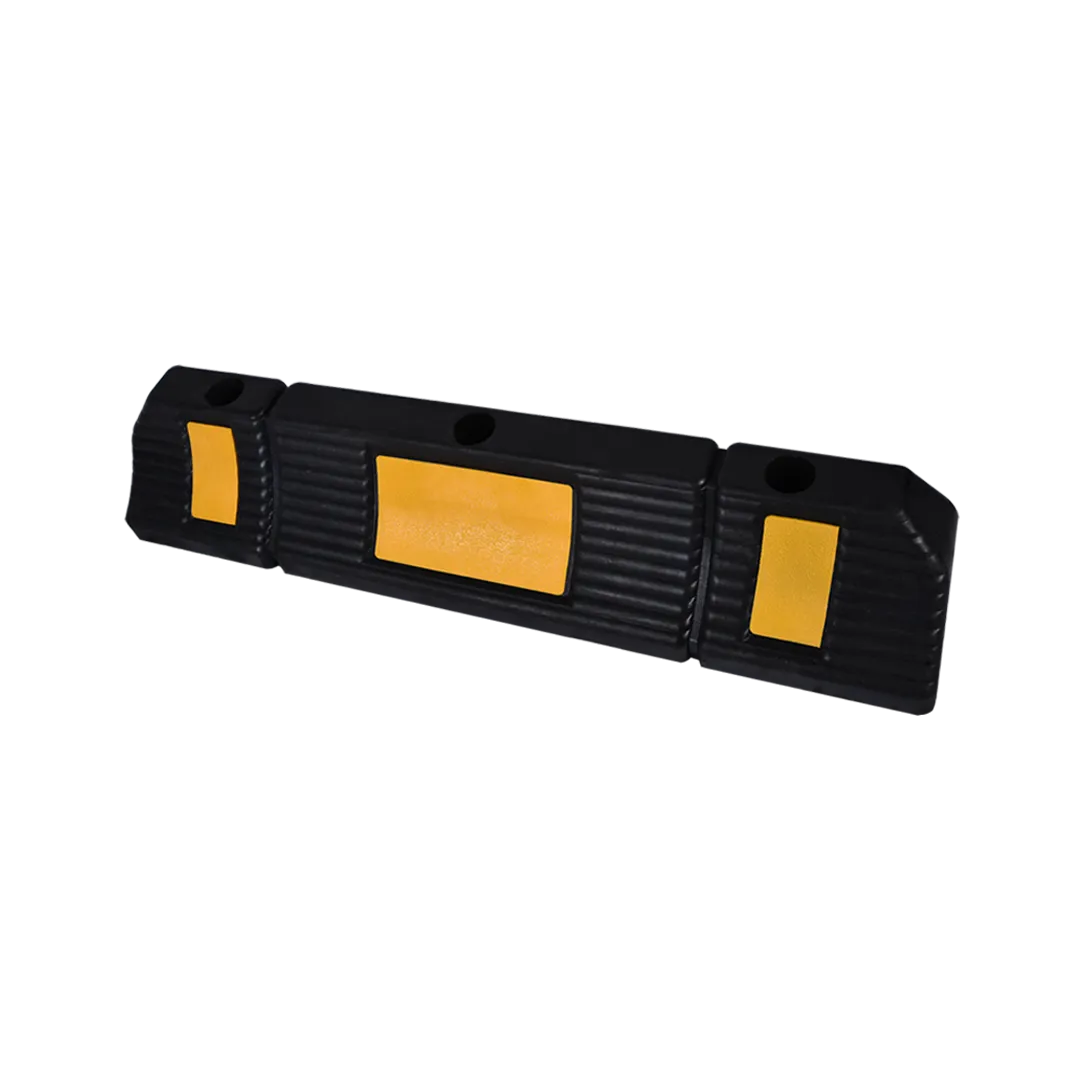
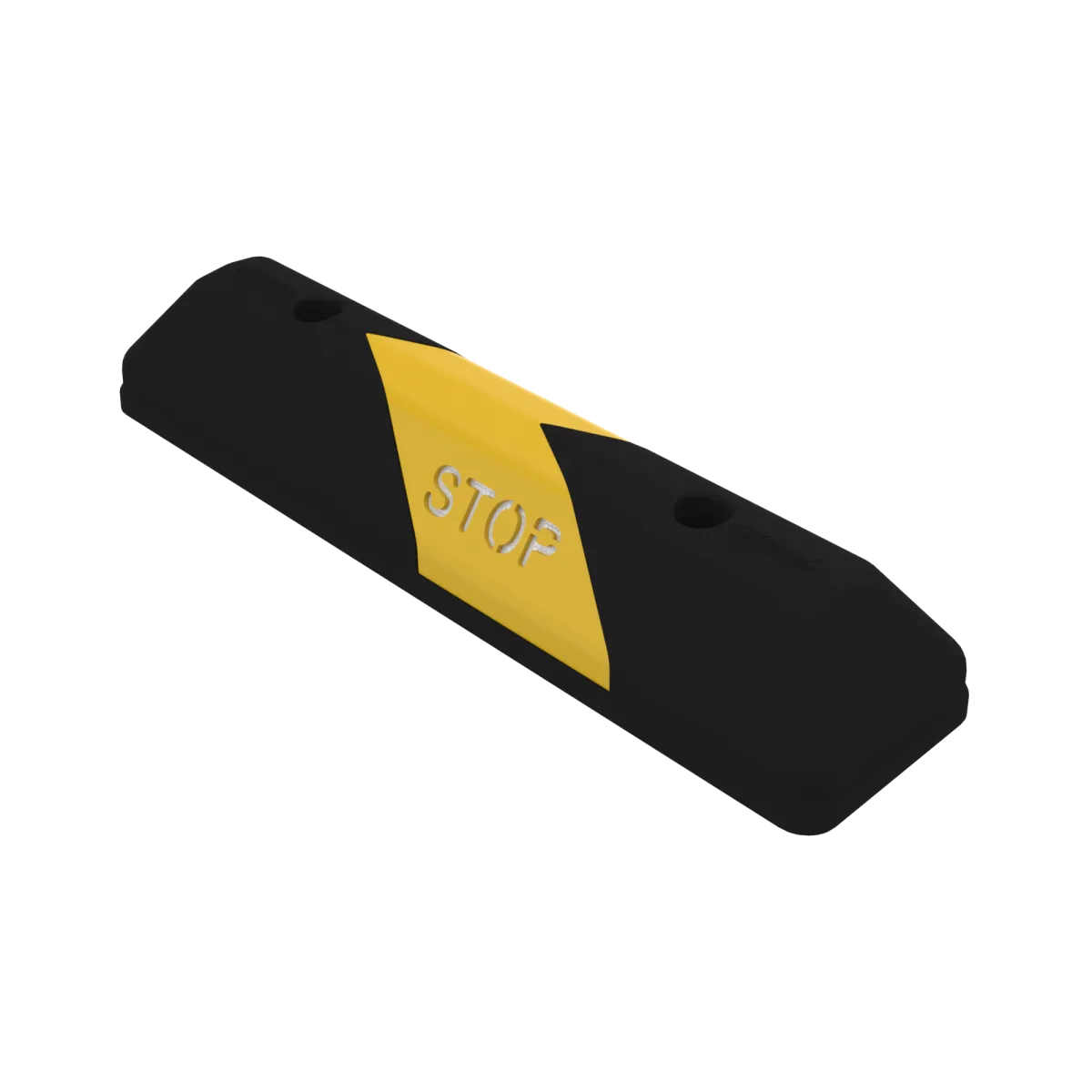
- ATO 6060: black rubber, 60 x 12 x 10 cm, 4.5 kg; on the face towards the car it has three yellow reflective zones, a wide one in the middle and two narrow ones at the ends; fixed at 3 points;
- ATZ 1560: black PPC, 60 x 15 x 10 cm, only 2 kg, the lightest stop in the range; in the middle it has a yellow insert with the word STOP in honeycomb reflective sheeting; fixed at 2 points.
180–190 cm stops: a single one per space
A long stop holds both front wheels in one piece. You no longer measure the distance between two pieces, and the wheels reach it even if the car comes in slightly crooked. That is why they are the usual choice in car parks at blocks of flats, offices and shops, and in shared garages, where you want every car to stop at the same line.
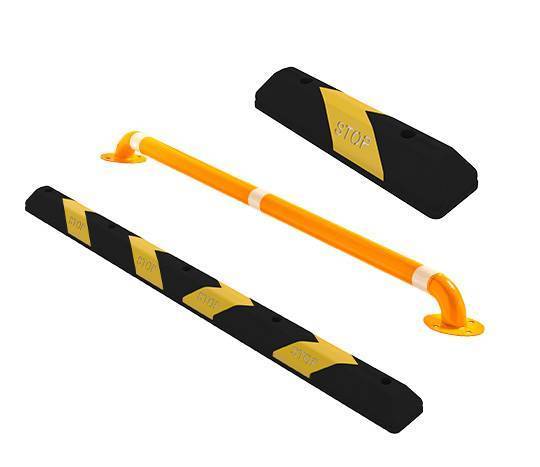
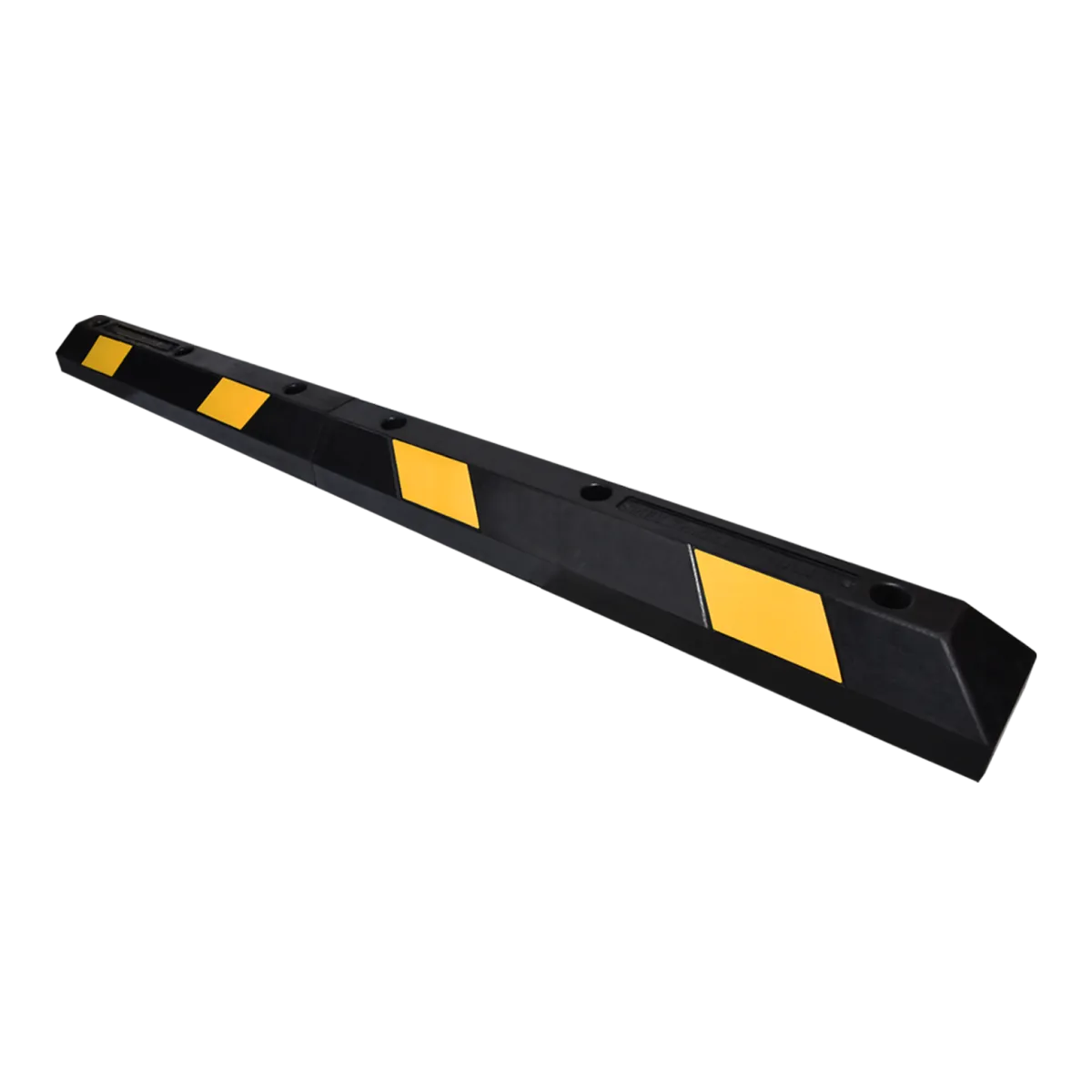
- ATZ R18015: black rubber, 183 x 15 x 12 cm, 16 kg, the heaviest in the range; along its length it has diagonal yellow reflective strips; fixed at 6 points;
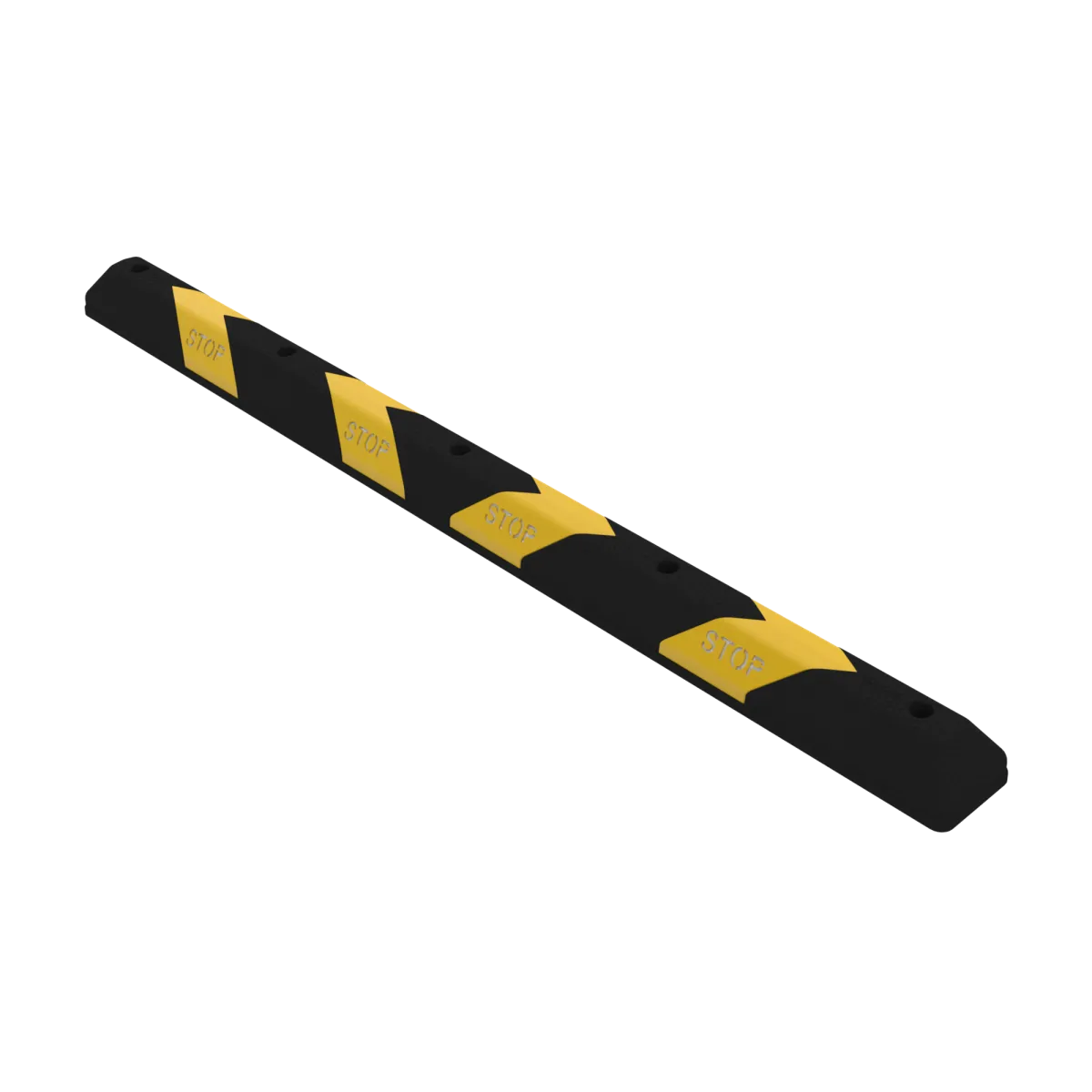
- ATZ 15190: black PPC, 190 x 15 x 10 cm, 6.5 kg; it has four yellow inserts with STOP in honeycomb sheeting; fixed at 5 points;
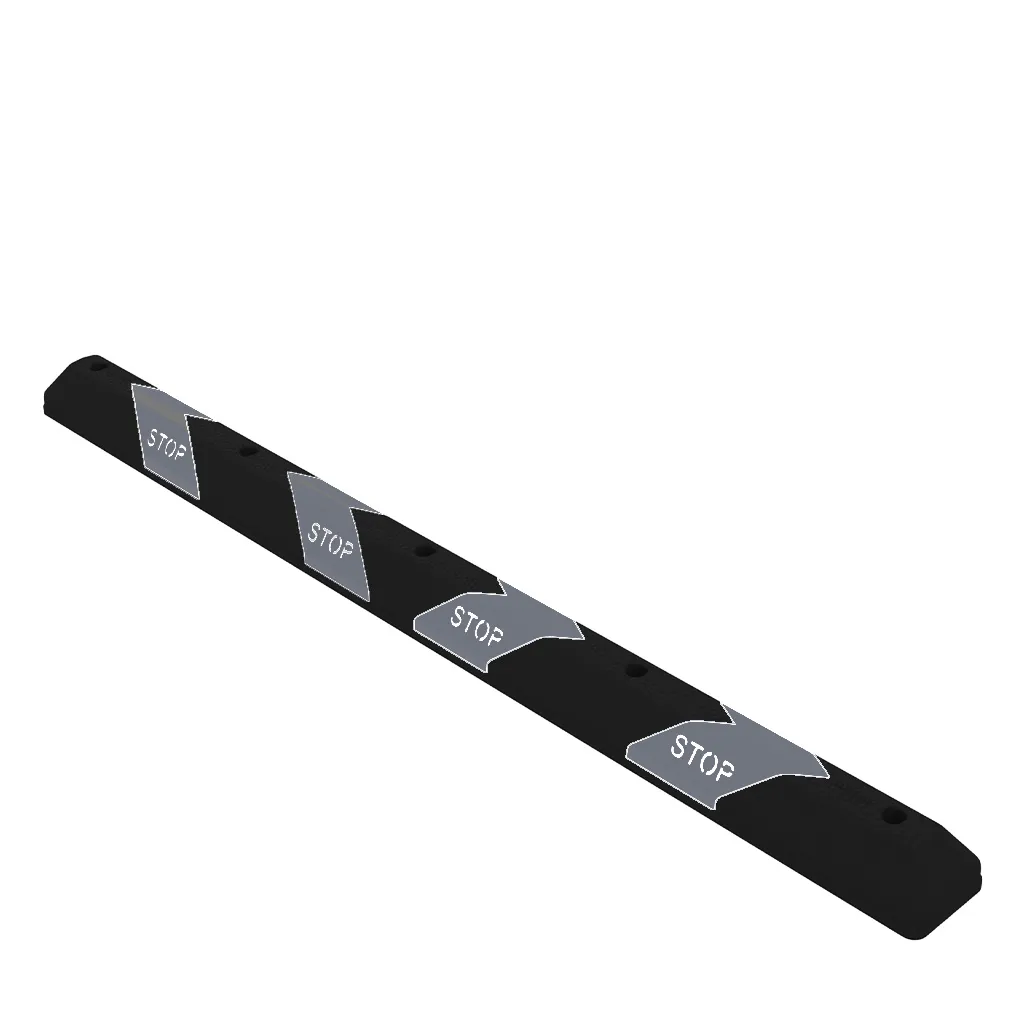
- ATZ 15190R: black compound/rubber, 190 x 15 x 10 cm, 9.5 kg, with bevelled edges; it has 8 honeycomb reflectors with STOP along its length; fixed at 5 points;
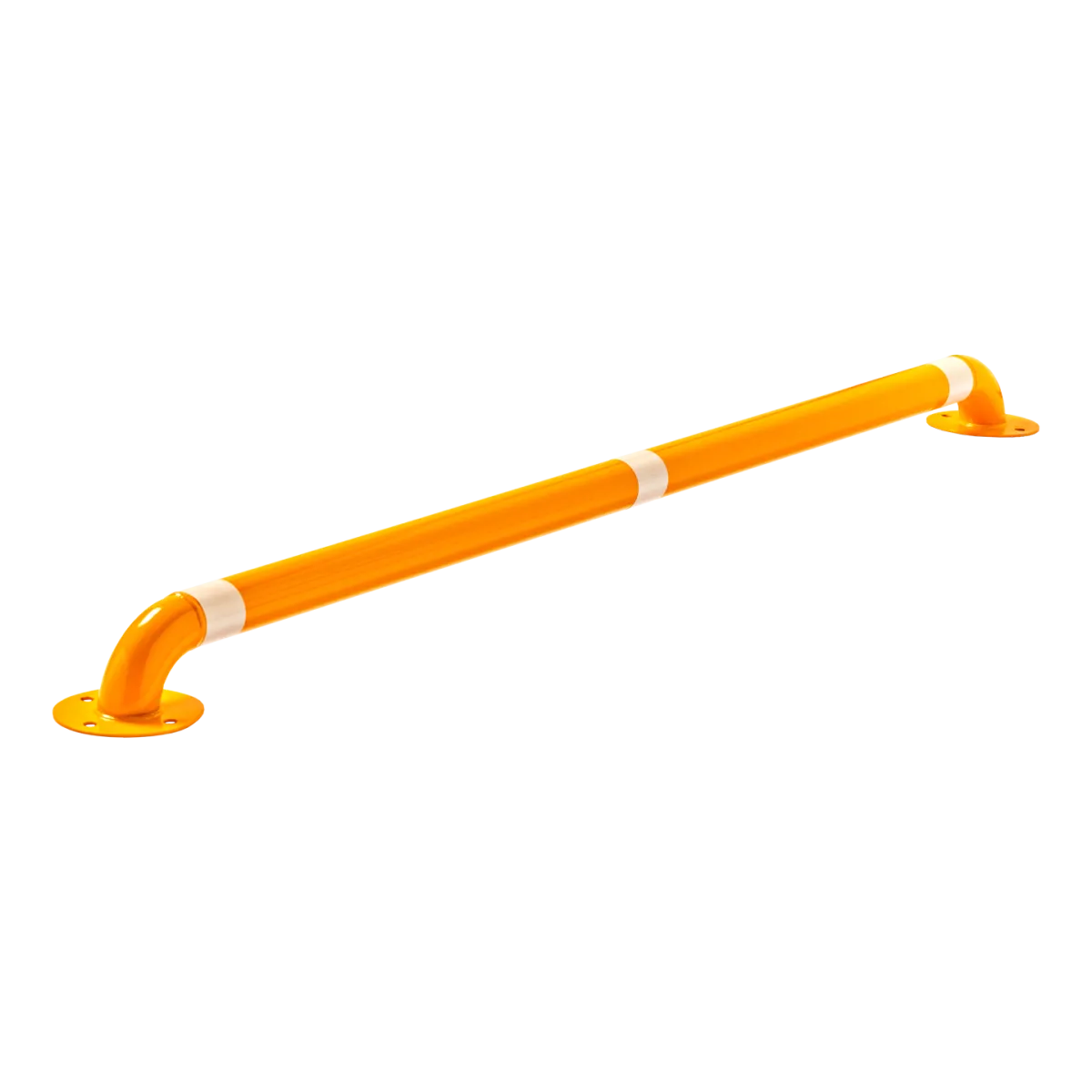
- ATZ M18012: iron tube painted yellow RAL 1023, 180 x 15 x 12 cm, 5 kg; it has three white honeycomb reflective strips; fixed at 6 points.
The ATZ 15190 and the ATZ 15190R have exactly the same dimensions and differ in material and weight: 6.5 kg in PPC against 9.5 kg in compound/rubber. The metal stop looks different from the others: the tube is bent at the ends and stands on two round plates, through which it is fixed to the ground, so it does not rest on the asphalt along its whole length.
Rubber, PPC or metal
Anyone looking for a rubber wheel stop usually wants a heavy piece that will not budge. But the material changes more than the weight:
- Rubber (ATO 6060, ATZ R18015) is the heaviest at the same size and stays put. At 60 cm, the ATO 6060 weighs 4.5 kg and has 3 fixing points, against 2 kg and 2 points for the PPC model, but it is slightly narrower: 12 cm instead of 15 cm.
- Compound/rubber (ATZ 15190R) is the long option for anyone who prefers rubber to plastic but does not want 16 kg: it weighs 9.5 kg and one person can carry it, even though it is almost two metres long.
- PPC, a polypropylene copolymer (ATZ 1560, ATZ 15190), is much lighter and goes in without help. The ATZ 15190 is 190 cm long and only 6.5 kg, so it is longer than the 183 cm rubber stop but much easier to handle.
- Metal (ATZ M18012) is the only stop painted yellow all over, so it is the easiest to see by day, from far away, on grey asphalt. It weighs 5 kg and one person can set it in place.
At night they all show up in the headlights, each in its own way: rubber has yellow reflective zones or strips, PPC and compound have STOP lettering in honeycomb sheeting, and the metal stop has three white strips, one in the middle and one near each end, which mark it from end to end.
How to choose: three questions
Where is the parking space?
For a garage or a single space, two 60 cm stops are enough, set to your car. In a car park with many spaces, used every day by different cars, one long stop on each space makes the line the same for everyone. If the stop has to be seen at once, for example in the yard of an industrial unit, on a reserved space in front of an office or in a car park with lots of yellow markings, where a black stop would get lost, choose the ATZ M18012.
How low is the car’s bumper?
You can choose between 10 cm (ATO 6060, ATZ 1560, ATZ 15190, ATZ 15190R) and 12 cm (ATZ R18015, ATZ M18012). If you park a car with a low bumper, take a 10 cm one. If you want a 12 cm rubber stop, the only one is the ATZ R18015, with its 16 kg.
Who will fit it?
If you work alone, take a light model. The 2 kg ATZ 1560 goes under your arm and you can fix it without anyone holding it in place, and the ATZ M18012 and ATZ 15190R, long as they are, can also be carried by one person. With the ATZ R18015 it is easier to have two people when setting it in place.
Where it goes on the space
The product sheets give no fixed distance from the wall or the kerb, because it depends on the car: the stop goes where you want the bumper to stay clear of the wall, the fence, the shop window or the pavement. The surest way to find it is with your own car. Park exactly where you want it to stay, then mark on the ground the spot in front of the front wheels. That is where the car-facing side of the stop goes.
With 60 cm stops, each piece goes in line with one wheel, so you take the distance between them from the car’s wheels. A long stop is centred across the width of the space. In a car park with several spaces, keep the same distance from the pavement or the fence on all of them, so the cars stop on the same line. The sheets have no data for vans or lorries, so for those, tell us beforehand which vehicle you park.
How to fix them into concrete or asphalt
All the stops are fixed into concrete or asphalt with the dowels and screws in the pack. You need a hammer drill, a bit that matches the dowels and a spanner for the screws. For the ATO 6060, ATZ 1560, ATZ 15190, ATZ R18015 and ATZ M18012, the pack has Ø16 x 90 mm dowels and Ø10 x 110 mm screws, and the holes are drilled with a 16 mm bit. The number of fixing points differs from model to model:
- 2 points: ATZ 1560;
- 3 points: ATO 6060;
- 5 points: ATZ 15190 and ATZ 15190R, the latter with 5 dowels and 5 screws, through its pre-drilled holes;
- 6 points: ATZ R18015 and ATZ M18012.
- Clean the spot and mark the line where you want the wheels to stop.
- Place the stop on the line, with the reflective side towards the car, and mark the holes.
- Drill the holes with the hammer drill.
- Insert the dowels, put the stop back and tighten the screws.
On a space with two 60 cm stops, fix one first, check with the car that the other wheel also comes straight onto the marked spot, and only then fit the second one.
Frequently asked questions
How many wheel stops do I need for one parking space?
Two if you choose the 60 cm models, the ATO 6060 or the ATZ 1560, one in line with each front wheel. One if you choose a 180–190 cm stop, which holds both wheels.
Which stop should I put in a garage?
In a home garage or a bay in an underground car park, two 60 cm stops fit well. In shared garages, where several cars park every day, one long stop on each space, such as the ATZ 15190R, makes the line the same for everyone.
Rubber or plastic wheel stop?
Rubber is heavier and stays put. PPC is much lighter and goes in without help: the ATZ 1560 weighs 2 kg, against 4.5 kg for the ATO 6060 of the same length.
How tall is a parking stop?
Our models are 10 or 12 cm tall. For a car with a low bumper, choose a 10 cm one.
Can the stop be seen at night?
Yes. Every model has reflective zones, strips or STOP lettering on its face or along its length, which catch the headlights. By day, the easiest to see is the ATZ M18012, painted yellow all over.
What do I need to fit it?
A hammer drill, a bit for the dowels and a spanner for the screws. The dowels and screws come in the pack, and the stop is fixed into concrete or asphalt.
How we can help
All 6 wheel stops are under parking wheel stops, and delivery takes 24-48 hours. If you are fitting out a whole car park, tell us how many spaces it has, what the cars park against, a wall, a fence or a pavement, and what kind of cars use it, and we will put the list together for you. If cars come down the car park lane too fast, have a look at our guide to speed bumps too.