0

In stock
Estimated delivery: within 24-48 hours
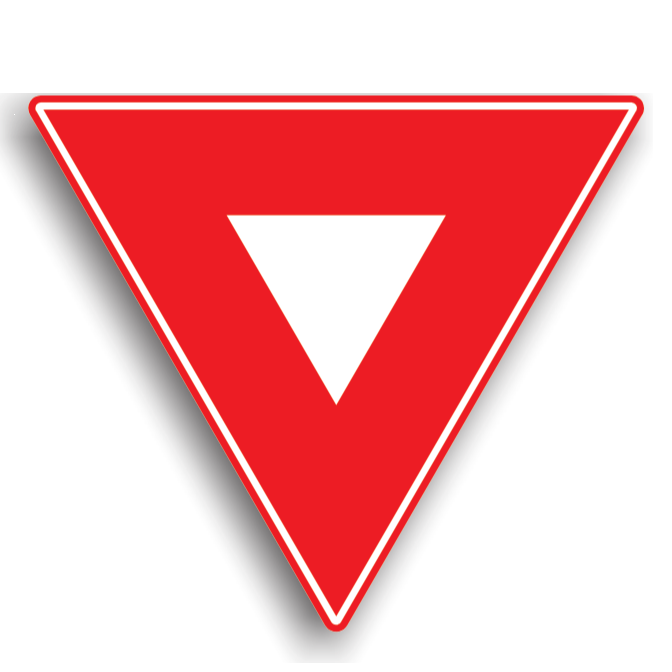
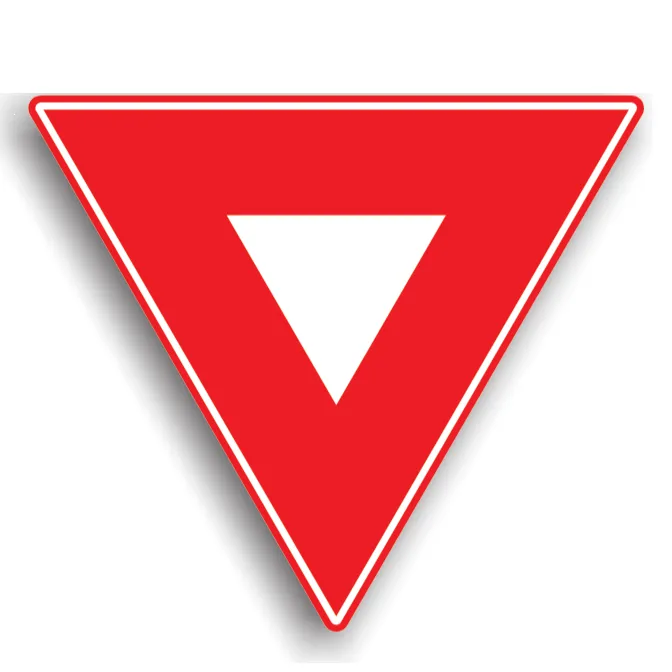
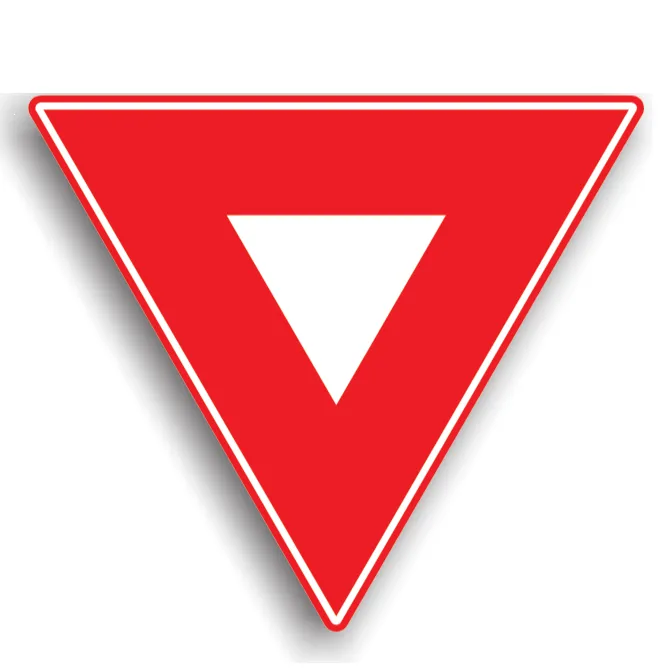
B1 - Yield (90 cm - CLASS I)
Product code: B1_90_I
- Material:: 1mm Oțel galvanizat
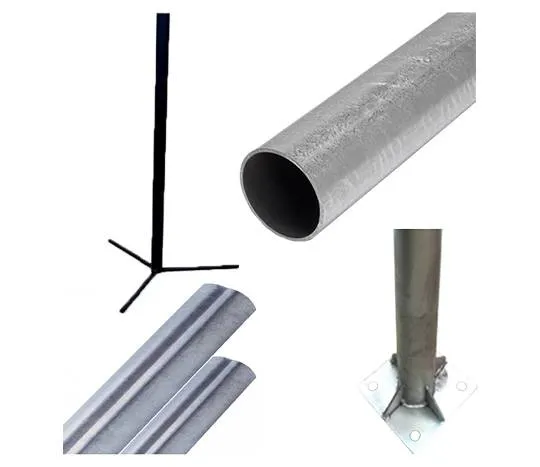
- Sistem de Prindere:: Cleme x2, Şurub si Piuliţa x4
- Reflectorizant:: Folie tip EG Cl.1
- Greutate: 2 kg
Complementary products

169,00 lei
VAT included
General features
| Material: | 1mm Galvanized steel |
|---|---|
| Reflective: | EG type film Cl.1 |
| Mounting System: | Clamps x2, Screw and Nut x4 |
| Weight | 2 kg |
| Height | 90 cm |
Product description
The placement of the sign "B1 - Yield" according to STAS-1848-1:2024
On public roads/bicycle paths without priority, at intersections of roads with ensured visibility, or at the intersection between the bike path/road and the roadway.
The sign obliges the driver to reduce speed sufficiently to have the opportunity to yield to vehicles already on the road they are approaching and, if necessary, to stop before crossing the edge of the road they intersect.
In situations where the priority road changes direction at the intersection, an additional panel figure P20 – Direction of the priority road is installed under the sign.
This sign can be pre-signaled by a similar sign, accompanied by an additional panel figure P4 – Distance between the sign and the beginning of the dangerous area, on which the distance to the edge of the intersected road is inscribed, expressed in meters.
B1 - Yield (70 cm - CLASS I) – The essential rule for safer traffic
One of the fundamental signs for accident prevention and traffic management is the Yield sign. It plays a crucial role in organizing traffic flow and ensuring a safe environment for all participants.Why is the “Yield” sign important?
-
Accident prevention
The “Yield” sign is essential for avoiding collisions between vehicles coming from different directions. It indicates to drivers that they must yield to vehicles already on the road or coming from other directions. This sign helps avoid dangerous encounters and ensures smooth traffic flow. -
Clarity and visibility
Yield is extremely visible due to its shape and distinctive color, and drivers are trained to yield clearly, without the need for an additional signal. This sign aids in a quick and easy understanding of traffic regulations. -
Traffic efficiency
The sign is frequently used at intersections where stricter traffic control is not necessary. However, it still requires certain vehicles to wait to allow others to pass. This helps manage traffic flow, reducing the risks of congestion or accidents. -
Reducing accident risks for pedestrians
By correctly applying the “Yield” sign, a safety zone for pedestrians and cyclists is created. Thus, the risks of accidents between vehicles and people crossing the roads are significantly reduced. -
Easy to install and maintain
The sign is easy to mount and can be used on both urban and rural roads. It is an efficient and affordable solution for regulating road traffic.
Where can the “Yield” sign be used?
- Intersections with moderate traffic: the sign is frequently used at intersections where there is no traffic light or roundabout, but where it is important for drivers to yield.
- Residential areas: near residential neighborhoods or schools, to ensure calmer and safer traffic.
- Near parks and other pedestrian-heavy areas: to protect the safety of pedestrians moving through these areas.
- Secondary roads: on roads intersecting with main arteries, the “Yield” sign regulates traffic and ensures better coordination between vehicles.
Advantages of using the “B1 - Yield (70 cm - CLASS I)” sign
- Increased safety for road users: protects pedestrians and drivers by reducing the risks of collisions.
- Reducing traffic congestion: regulates traffic, preventing blockages that could occur at busy intersections.
- Compliance with traffic regulations: the sign helps drivers adhere to priority rules and drive responsibly.
- Easy to identify and apply: the sign is simple and effective, easy to notice and implement on public roads.
- Durability: “Yield” signs are made from high-quality materials, ensuring high durability and resistance to adverse weather conditions.
Other similar models

Request for quote form
Fill in the fields below to request a quote. Submitting the form does not constitute an order.
We will get back to you shortly with a personalized offer for the desired quantity — leave us a comment with the quantity and, if applicable, the company's VAT number.
 B1 - Yield (90 cm - CLASS I) (B1_90_I)
The request has been sent!
We will get back to you with the offer as soon as possible, via email or phone.
Trusted partner since 1997
28 years of experience in road safety
Atto Trafic supplies complete road signage and safety equipment — signs, traffic signs, markings, parking barriers, speed bumps, mirrors, bollards and accessories.
- Durable products, compliant with STAS and SR EN
- ISO 9001 / 14001 / 27001 / 20671 certified
- Constant stock, delivery in 1-3 working days
- Support for municipalities, contractors, private car parks
Products in stock
Delivery in 1-3 working days
Custom offers