



Anyone looking for a warning tape usually has one of four problems: an area that has to be closed off quickly, a line to draw on a warehouse floor, an obstacle or a vehicle that cannot be seen at night, or a step where people slip. Each needs a different kind of tape, and the wrong choice shows on day one: barrier tape does not stick, PVC marking tape does not reflect headlights, and striped reflective tape does not go on asphalt.
Barrier and warning tapes
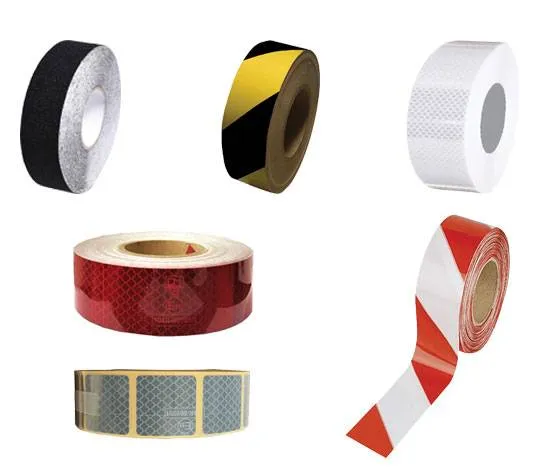
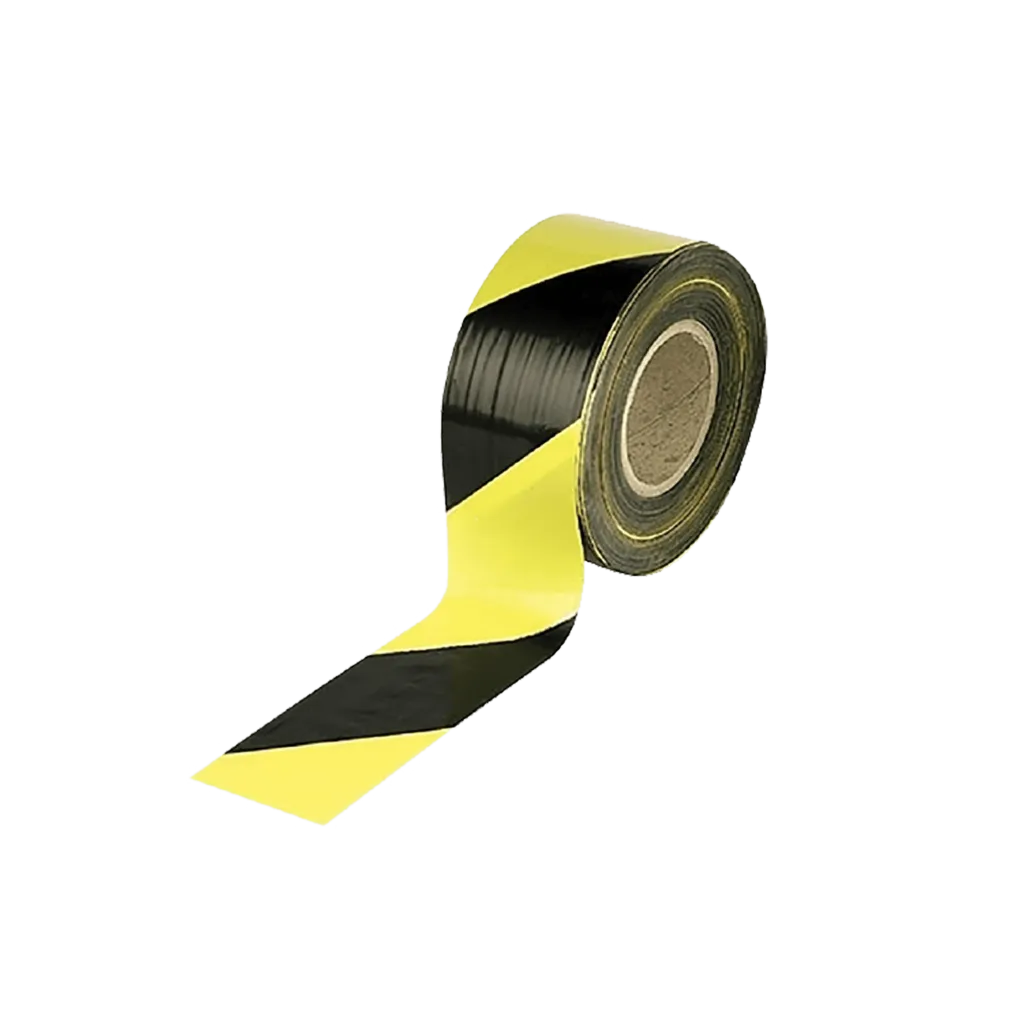
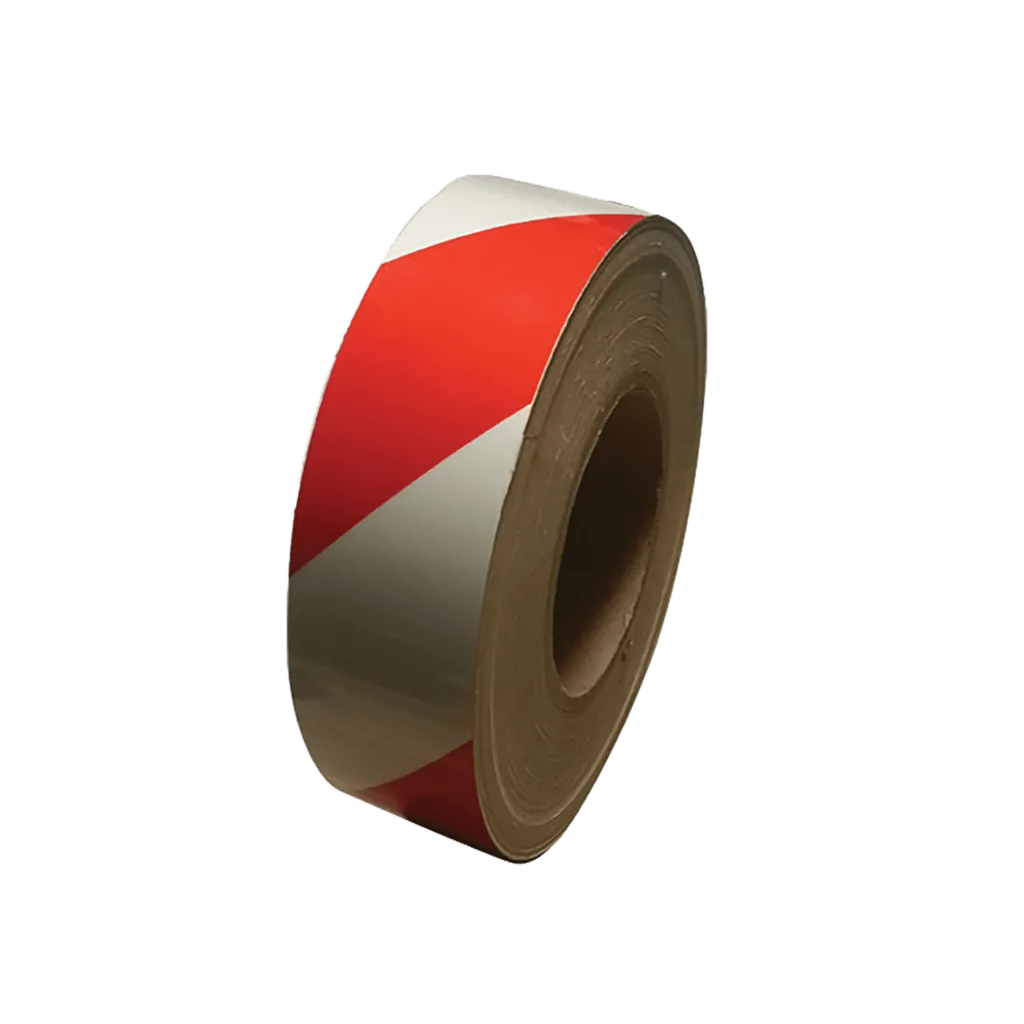
Barrier tape is the quickest way to close off an area: stretch it between two posts, cones or trees and everyone understands they cannot go through. It has no adhesive, so it leaves no marks, and it comes down as quickly as it went up. All models are polyethylene, at least 60 microns thick, 6 cm wide, with diagonal stripes:
- ATO 8020: red-white, 200 m per roll, 0.4 kg; for an open trench, a stretch of pavement under repair or the scene of an accident;
- ATZ R12: red-white, 500 m per roll, 1 kg; for crews who close off areas almost every day and do not want to change the roll on every job;
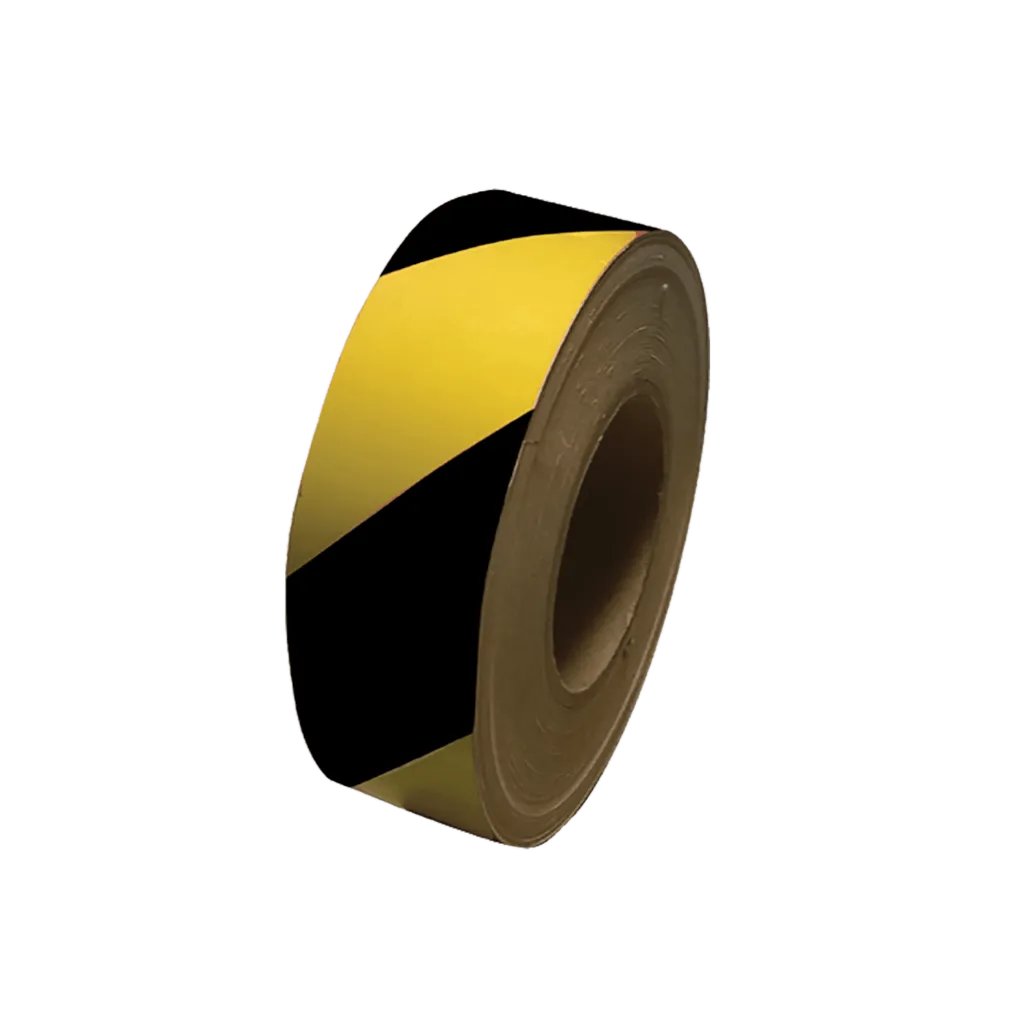
- ATO 8120: yellow-black, 200 m per roll, 0.4 kg; for a hazard in a workplace: a broken or wet floor, a damaged rack, the area under a crane.
Red-white is the tape for road works, building sites, events and accident scenes. Yellow-black means “caution, hazard” in warehouses, factories, workshops and underground car parks, but also outdoors, at the edge of a pit.
How much tape you need and how to put it up
Add up the sides of the area. A 30 x 20 m rectangle is 100 m, so a 200 m roll covers two such areas and a 500 m roll covers five. Tie the end of the tape to the first post, unroll it as you walk along the perimeter and wrap it once around each post so it does not slide. At the end, tie it to the last post. In strong wind, pull the tape tighter or set the posts closer together. Mobile posts, cones, fences, racks or railings all work as anchor points.
On a road, the tape shows where not to step, but it does not replace signs and beacons. You will find more about them in our guide to road beacons and our guide to signing road works with U signs. See barrier and warning tapes.
Floor marking tapes
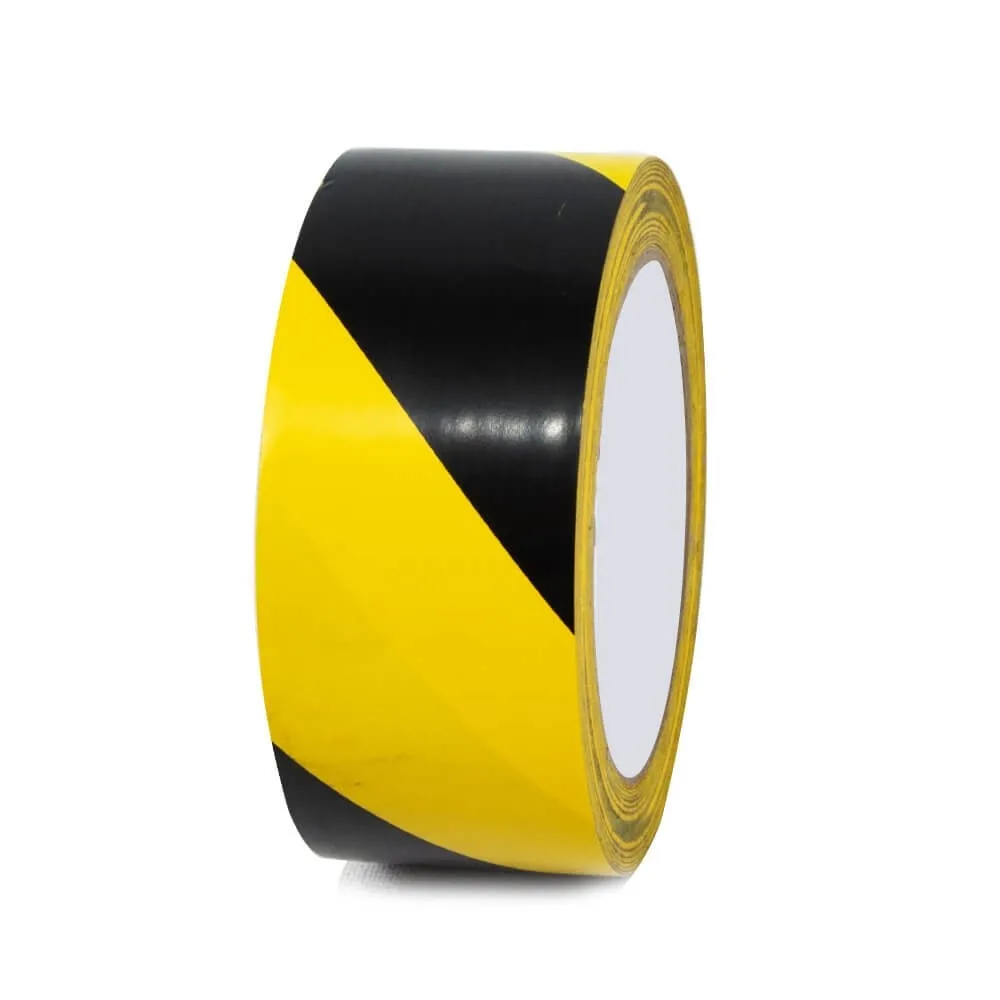
The lines on a warehouse floor tell people where to walk, where machines run, which spaces must be kept clear and where there is a hazard. PVC adhesive tape lays them out in a day, with no paint or drying time, and can be moved if the layout changes. All rolls are 30 m long, the backing is abrasion resistant and the tape tears by hand. They are made for temporary markings and for identifying fixed or mobile objects.
What the stripes mean
- red-white, ATO 8200-RW (5 cm) and ATO 8250-RW (10 cm): areas that must stay clear at all times, such as the space in front of an electrical panel or an emergency exit, and no-go zones;
- yellow-black, ATO 8200-YBK (5 cm) and ATZ R08 (10 cm): physical hazards, meaning things you can trip over, bump into or fall into: the edge of a step, a threshold, the edge of a ramp, the perimeter around a press or a conveyor.
The 5 cm tape is enough in small spaces and on objects: rack corners, low beams, doors, trolleys. The 10 cm tape is easier to see from a distance, on wide aisles or from a forklift seat.
How to apply it
- Plan the route on a layout: where people come in, where they cross the machine aisles, where they stop.
- Clean the floor. It must be dry, dust-free and free of oil, otherwise the adhesive will not hold.
- Mark the line with chalk or a string line and lay the tape along it, pressing it down as you unroll.
- At corners, cut or tear the tape and overlap the ends. Press the ends down firmly so they do not lift when someone walks over them.
As for quantities: a 1 x 1.5 m rectangle in front of an electrical panel needs 5 m of tape, so one roll of ATO 8200-RW marks 6 such areas. All floor marking tapes are under floor marking tapes.
Reflective tapes
A reflective tape returns the headlight beam to the driver, so a column, a barrier or a parked truck shows up in the dark from a distance. All rolls are 46 m long. They differ in colour, width and the job they are made for.
Striped, for fixed obstacles
- red-white: ATZ R01 (5 cm) and ATO 8403 (10 cm), for car park columns, barriers and access gates, building corners and bollards;
- yellow-black: ATO 8402 (5 cm) and ATZ R04 (10 cm), for a low beam at the entrance to an underground garage, the edge of a loading dock or a column in the middle of an aisle.
They are applied at +5 °C or more, on smooth, clean and dry surfaces: painted metal, plastic, painted wood or finished concrete. They do not go on asphalt. Once pressed down, the tape is ready. On a barrier arm, apply the tape in short segments with gaps between them, so the arm looks striped from a distance; on curved surfaces, cut it into smaller pieces so it does not crease. On a column with a 1 m circumference, three rings use 3 m, so a roll of ATZ R01 covers about 15 columns.
Honeycomb, for vehicle visibility
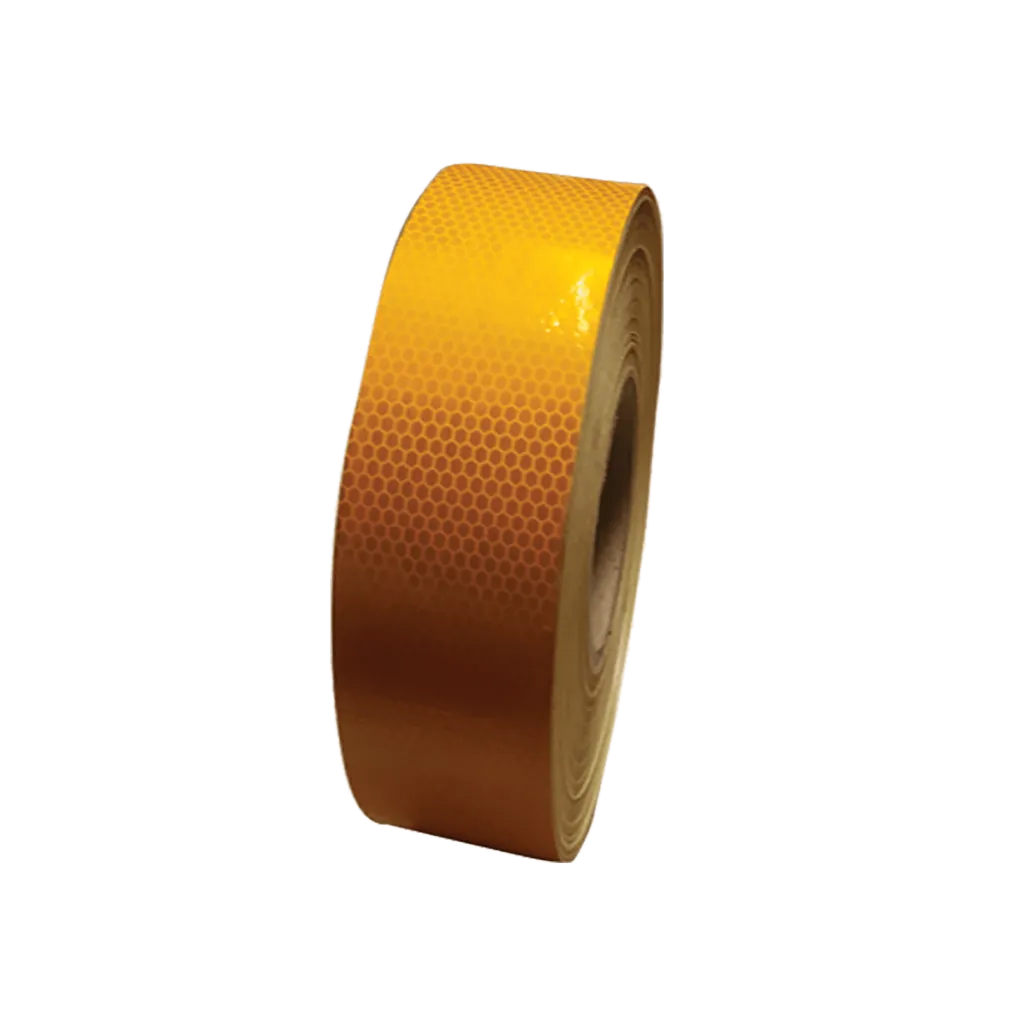
The honeycomb pattern, made of small hexagonal cells, is the one you see on the sides of trucks and the backs of trailers. The tape has an aggressive pressure-sensitive adhesive, goes straight on the bodywork and resists delamination, fading and peeling:
- yellow: ATO 8406 (5 cm) and ATO 8410 (10 cm); it shows well by day and by night, on the side and on the rear, which is why it often goes on construction machines, snow ploughs and refuse vehicles;
- red: ATO 8407 (5 cm) and ATO 8411 (10 cm); red is the colour of a vehicle’s rear, for trailers, tail lifts and farm machinery that goes out on the road;
- metallic silver: ATO 8408 (5 cm) and ATO 8412 (10 cm); by day it looks discreet on almost any body colour, for coaches, motorhomes and van fleets with a logo;
- white: ATO 8409 (10 cm), for the long sides of trucks, trailers, containers and buses.
ECE 104 Class C, for truck and trailer contour marking
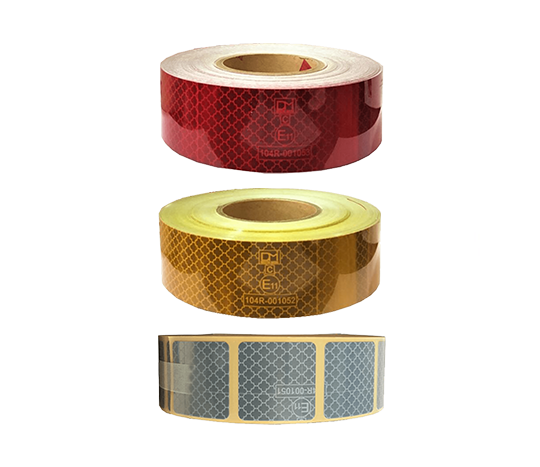
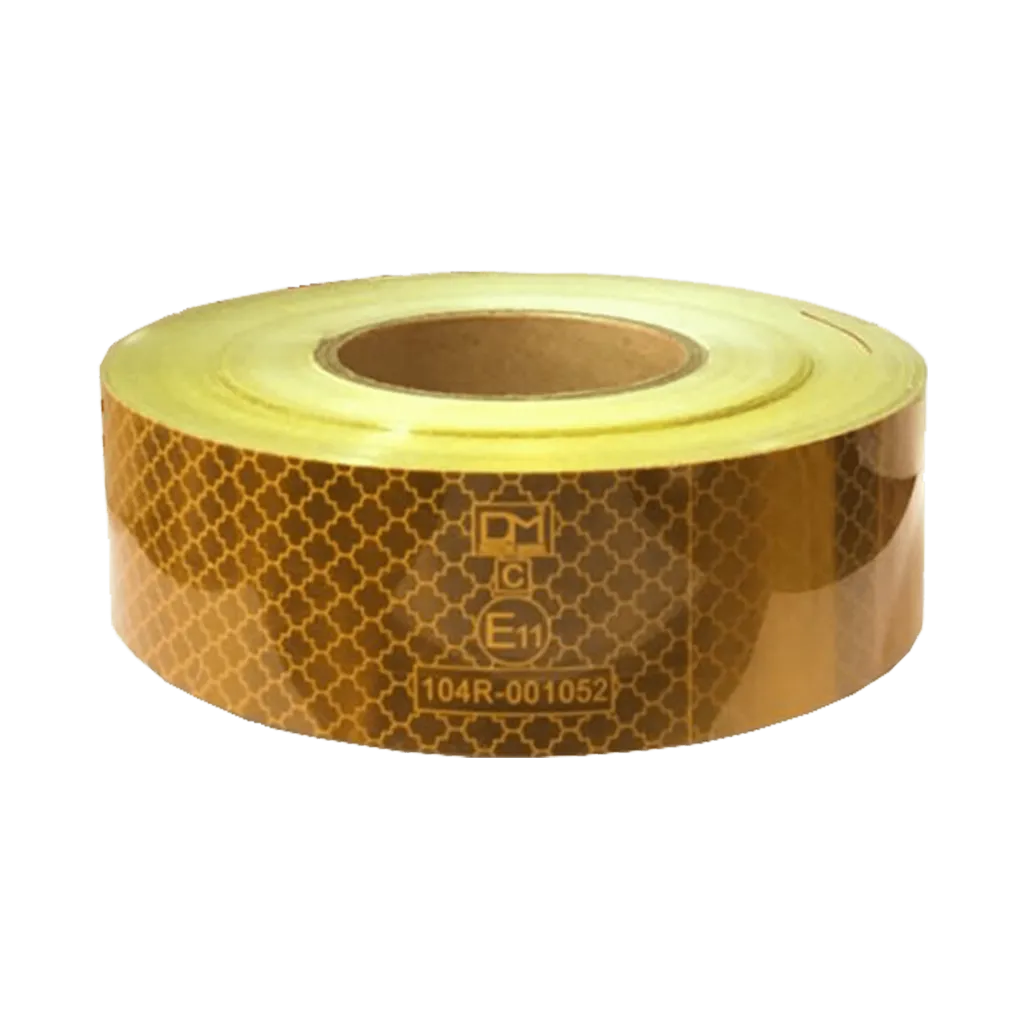
Large trucks and trailers must have their contour marked with approved reflective tape. That is the job of the three ECE 104 Class C tapes, all 5 cm wide, with the E11 approval mark and the number 104R printed on the tape. The colour decides where it goes:
- ATO 8413, yellow: the only colour that can be used on both the side and the rear;
- ATO 8414, red: rear only, where it shows the driver behind how wide and how tall the vehicle in front is;
- ATO 8415, white: side only, where at night it shows the length of the vehicle, so drivers coming out of a junction can see a trailer is there, not a gap.
The placement rules on the vehicle:
- on the side, at least 80% of the vehicle length is marked, excluding the cab; in difficult cases, at least 60% or 40%;
- the bottom line sits at least 250 mm above the ground and at most 1500 mm, 2500 mm in special cases;
- the upper corner markings are at least 250 mm long and go as high as possible, no more than 400 mm below the top edge of the vehicle;
- the rear gets a full contour, unless the vehicle’s construction does not allow it.
The full rear contour of a 2.55 x 4 m semi-trailer is about 13 m, so one roll of ATO 8414 covers 3 vehicles. A 13.6 m semi-trailer marked on both sides with the bottom line and upper corners uses around 25 m, which is one roll of ATO 8415 per vehicle.
How to apply tape to a vehicle
Honeycomb tapes are applied when the surface and the air are between 10 and 30 °C, on flat, clean, dry and rust-free panels, without rivets. On rusty or corroded metal the tape does not hold well, so the area has to be cleaned and painted first. For the ECE 104 tapes, the surface must be clean, dry and rust-free. In both cases, press the tape firmly along its whole length. On the sides of a van, a continuous line at the height of other cars’ headlights shows best at night. All reflective tapes are under reflective tapes.
Anti-slip tapes for steps and ramps
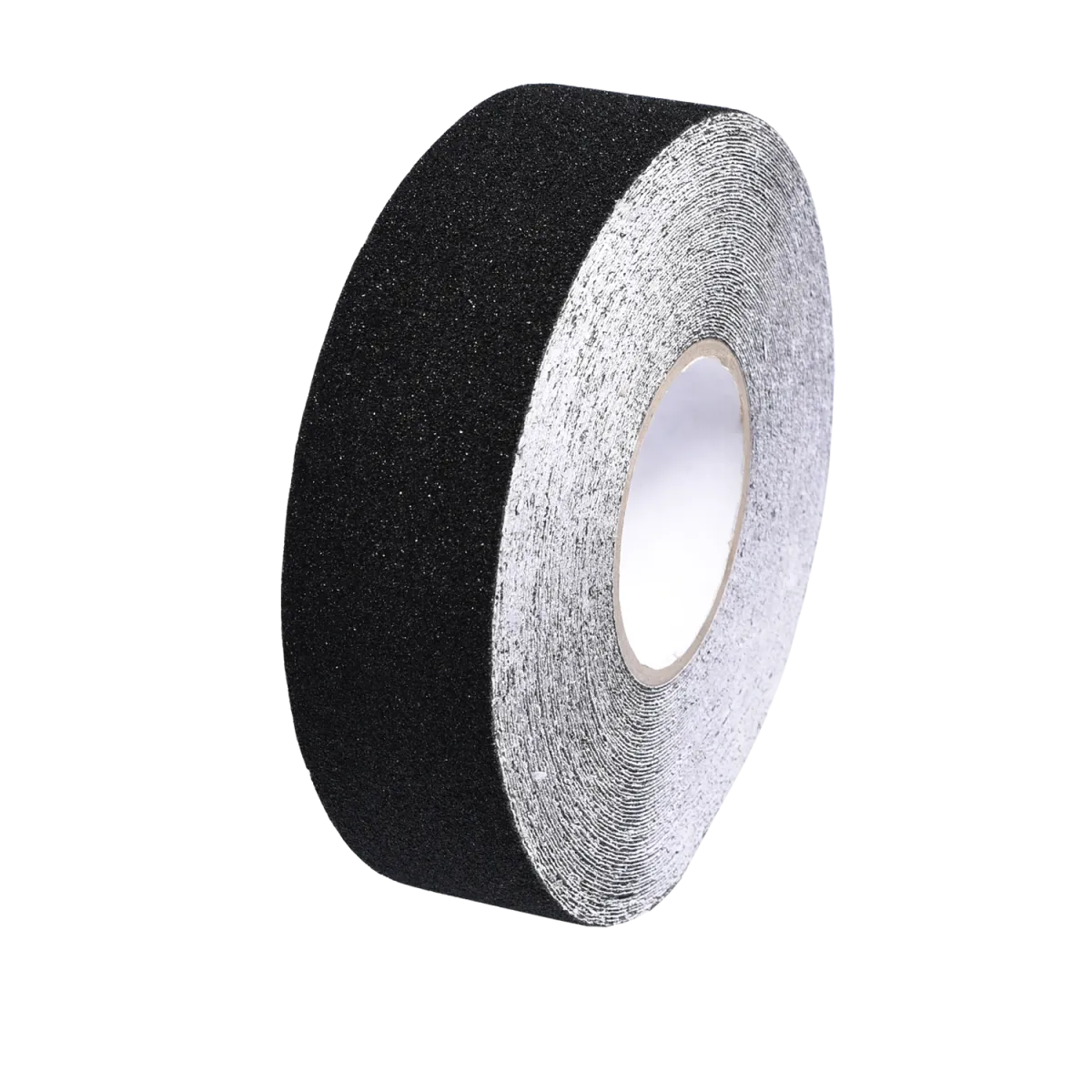
A wet step, a metal ramp or a dusty loading platform turns slippery exactly when you are in a hurry. Anti-slip tape, also called non-slip tape, has a gritty surface, like fine sandpaper, that gives the sole grip. It is black, self-adhesive and tears by hand:
- ATZ R11: 5 cm x 25 m, for steps, ramps and platforms; on 1 m wide steps it covers about 25 steps;
- ATZ R10: 5 cm x 15 m, a short roll for a single staircase, such as the steps at a house entrance;
- ATZ R09: 2.5 cm x 25 m, for ladder rungs, narrow edges, the pedals or steps of a machine.
It grips very well, does not shrink and withstands temperature changes, humidity, UV rays and detergents, so it works outdoors and in areas washed often. To work out how much you need, multiply the number of steps by their width: a staircase with 12 steps of 1.2 m uses 14.4 m, so the ATZ R10 is enough.
Clean, degrease and dry the surface. Lay the tape 1-2 cm from the edge of the step, where the foot lands, and press it down firmly along its whole length. On outdoor steps, apply the tape in dry weather. On a long ramp, lay the strips across it at equal spacing, for example every 30 cm, so the foot always lands on a strip. They are all under anti-slip tapes.

How to choose the right tape
Does it need to stick, or just be stretched?
For a temporary closure that leaves no marks, take barrier tape. If the line has to stay on a surface, you need an adhesive tape: marking tape on floors, reflective tape on columns, barriers and bodywork, anti-slip tape on steps.
Does it need to be seen at night?
PVC marking tape does not reflect light. Where vehicles drive with headlights on or the light is poor, for example in an underground car park, choose the reflective tape in the same colours: ATO 8402 or ATZ R04 instead of ATO 8200-YBK or ATZ R08, and ATZ R01 or ATO 8403 instead of red-white floor tape.
Which yellow-black tape should you choose?
There are three kinds for three situations: the ATO 8120 is stretched between posts and does not stick, the ATO 8200-YBK and ATZ R08 stick to floors and objects, and the ATO 8402 and ATZ R04 stick to obstacles that must also be seen in headlights.
Frequently asked questions
Is there an adhesive barrier tape?
The barrier tapes ATO 8020, ATZ R12 and ATO 8120 have no adhesive: they are tied to posts, cones or fences. If you want the same stripes stuck to the floor, use PVC marking tape, the ATO 8200-RW for red-white or the ATO 8200-YBK for yellow-black.
Can reflective tape be stuck on asphalt?
No. The striped reflective tapes go on smooth, clean surfaces such as painted metal, plastic, painted wood or finished concrete, at +5 °C or more.
What do E11 and 104R on the tape mean?
It is the approval mark printed on the ATO 8413, ATO 8414 and ATO 8415 tapes. It shows the tape is approved under ECE 104, Class C, for the contour marking of trucks and trailers.
Can I use honeycomb tape for a truck’s mandatory contour marking?
Mandatory contour marking uses ECE 104 approved tape, yellow, red or white depending on where it goes. Honeycomb tape adds visibility to all kinds of vehicles, from caravans to farm machinery.
Why does the tape not stay on my trailer?
Check the surface: rust, rivets, dirt or a temperature below 10 °C at application stop the adhesive bonding. Clean and paint corroded panels and press the tape down firmly on a flat area.
Is floor marking tape permanent?
No. The PVC backing is abrasion resistant, but the tape is made for temporary markings, for identifying objects and for trying out a route before painting it for good.
How we can help
All the tapes are under adhesive and warning tapes. If you are marking a warehouse, a truck fleet or several staircases, send us the sizes and we will work out how many rolls of each type you need.