You need to close an aisle for a day, keep a parking space free for a delivery or show people where to queue. A fence is too much, tape stretched across the floor stops nobody, and posts fixed into the asphalt stay there long after you no longer need them. This is what portable posts and plastic chain are for: a few posts set in a row, a chain passed through them, and the area is closed in a few minutes. This guide explains the portable posts we offer, which chain to choose, how many posts and metres of chain you need and how to set up a row. We mean plastic barrier chain, not snow chains or traction chains for wheels.
What a portable delineator post is
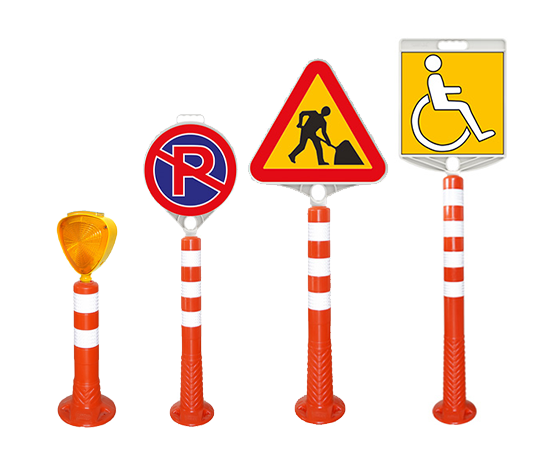
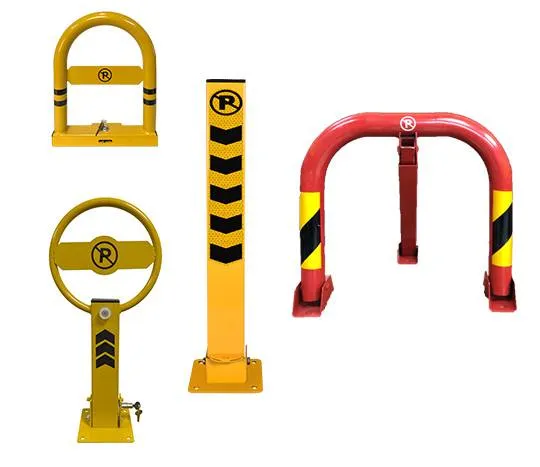
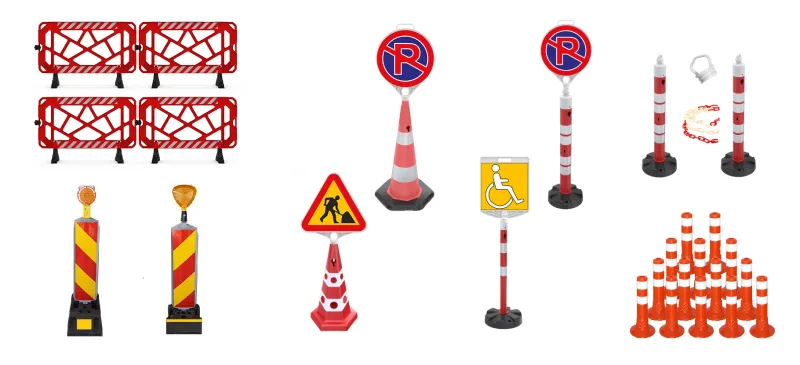
A portable post is not fixed into the asphalt: it stands on a heavy base and you move it wherever it is needed. With it you reserve a parking space, block an aisle, make a walkway for pedestrians or mark off a work area. The 100 and 120 cm posts have holes through which you pass a plastic chain, and every portable post has a threaded socket on top for a small plastic sign or a warning lamp. The chain and the attachments are bought separately.
The reflective films on the posts have glass lenses and a PET surface, so the row of posts shows up in the headlights at night.
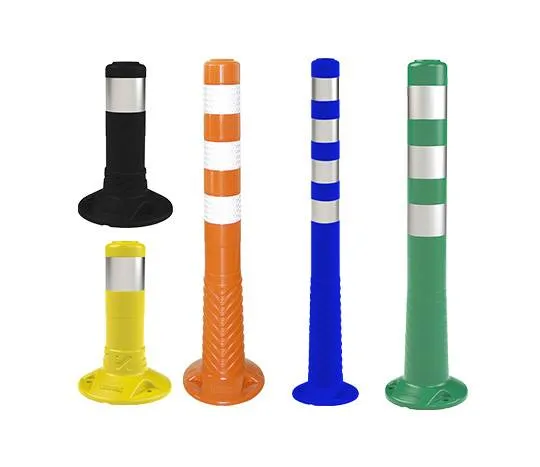
The types of portable posts
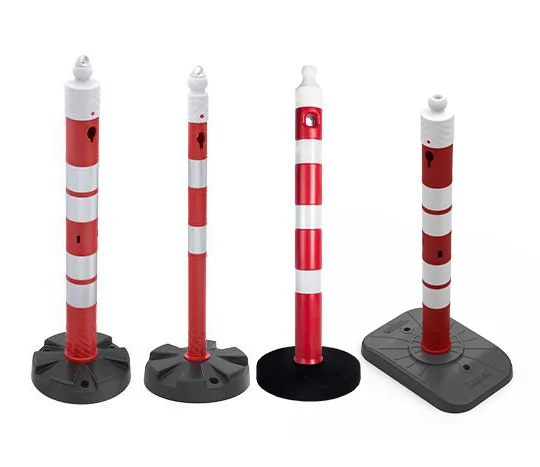
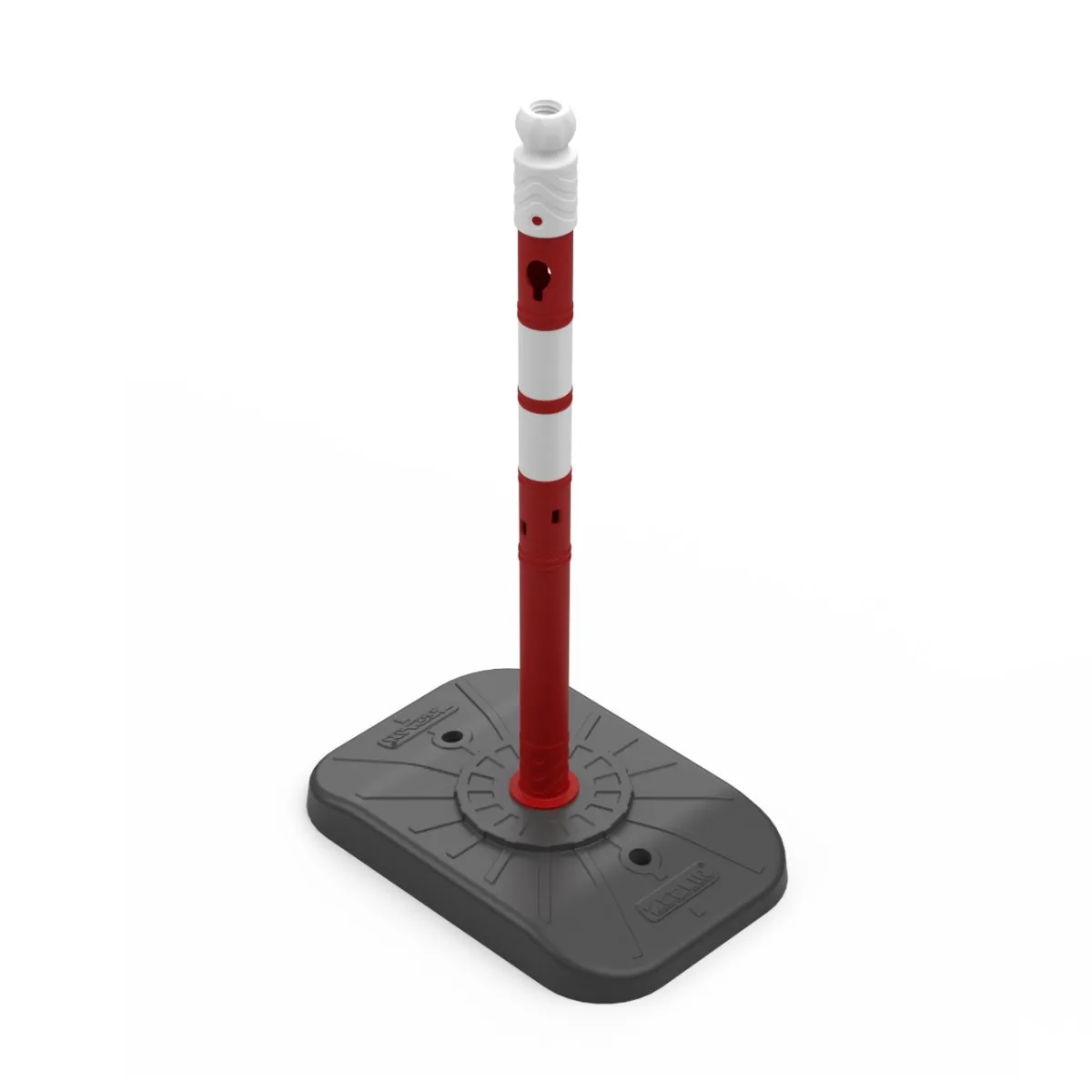
PPC posts on a round base
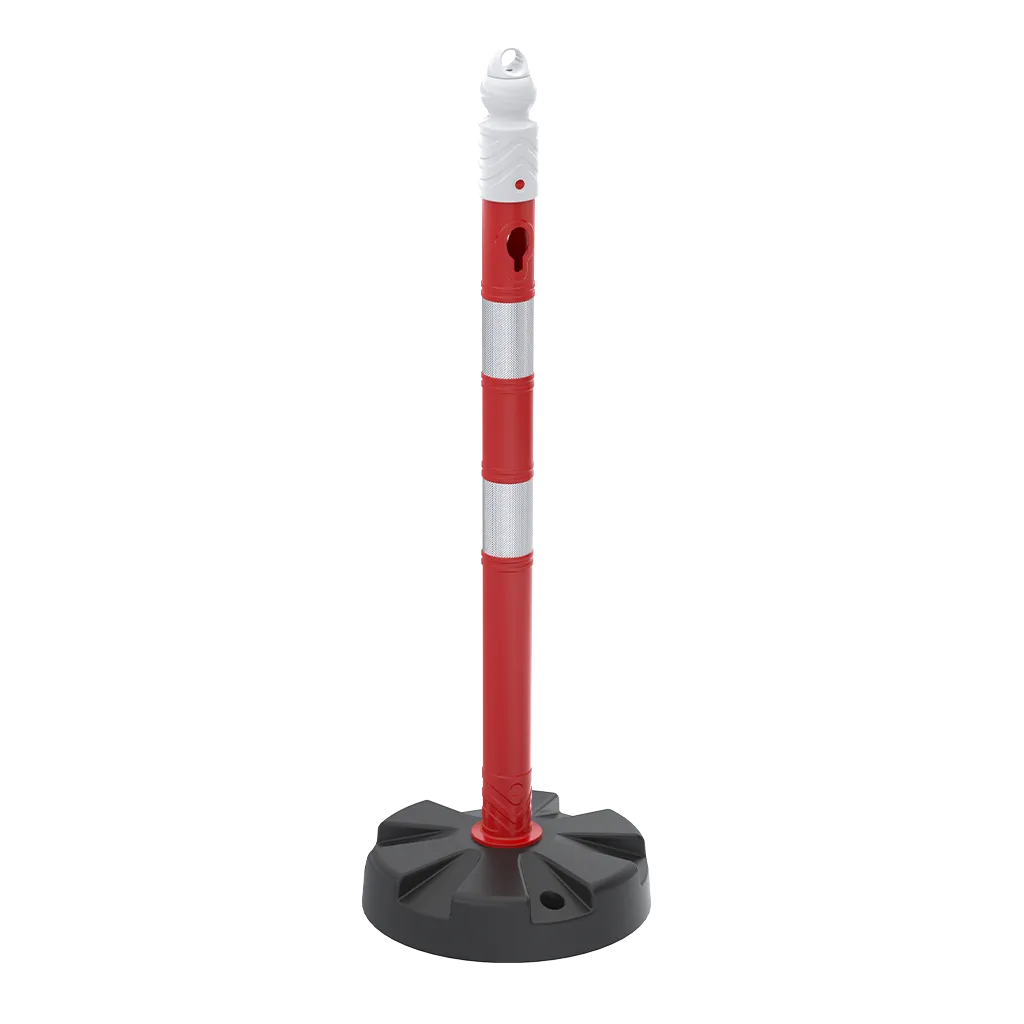
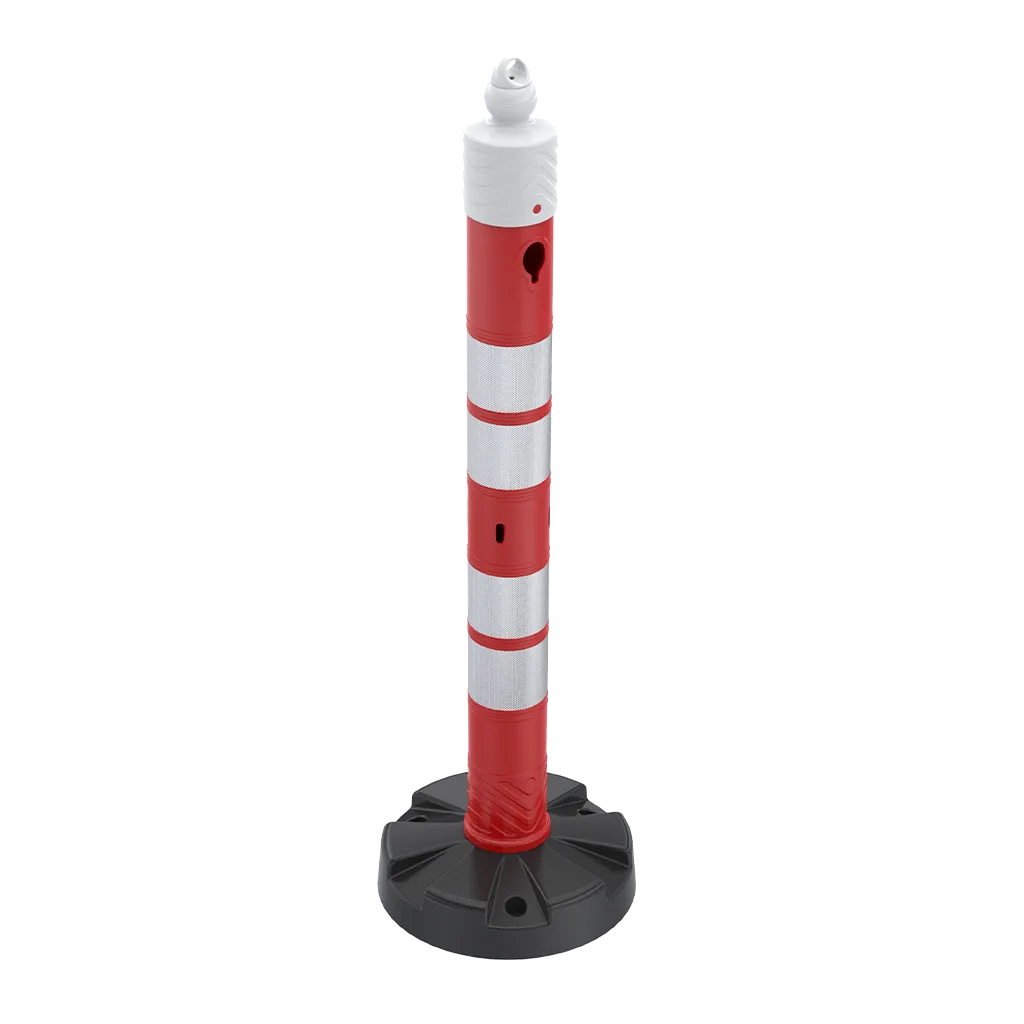
The PPC posts are red with white reflective films and stand on a 36 cm round base. They usually stand free, held by the weight of the base, but the base has 3 fixing points for dowels and screws if you want the post to stay in place for longer:
- ATZ 63315R2: Ø6.3 cm and 100 cm tall, 2 films, 5.5 kg; the lightest portable post in the range, for pedestrian walkways, reserved parking spaces, work areas and warehouses;
- ATZ 11015R4: Ø11 cm and 120 cm tall, 4 films, 6.2 kg; the tallest post on a round base, for large car parks, warehouses and halls, where a 1 m post would be too short, and for works on the carriageway, when a temporary sign is fitted on the post.
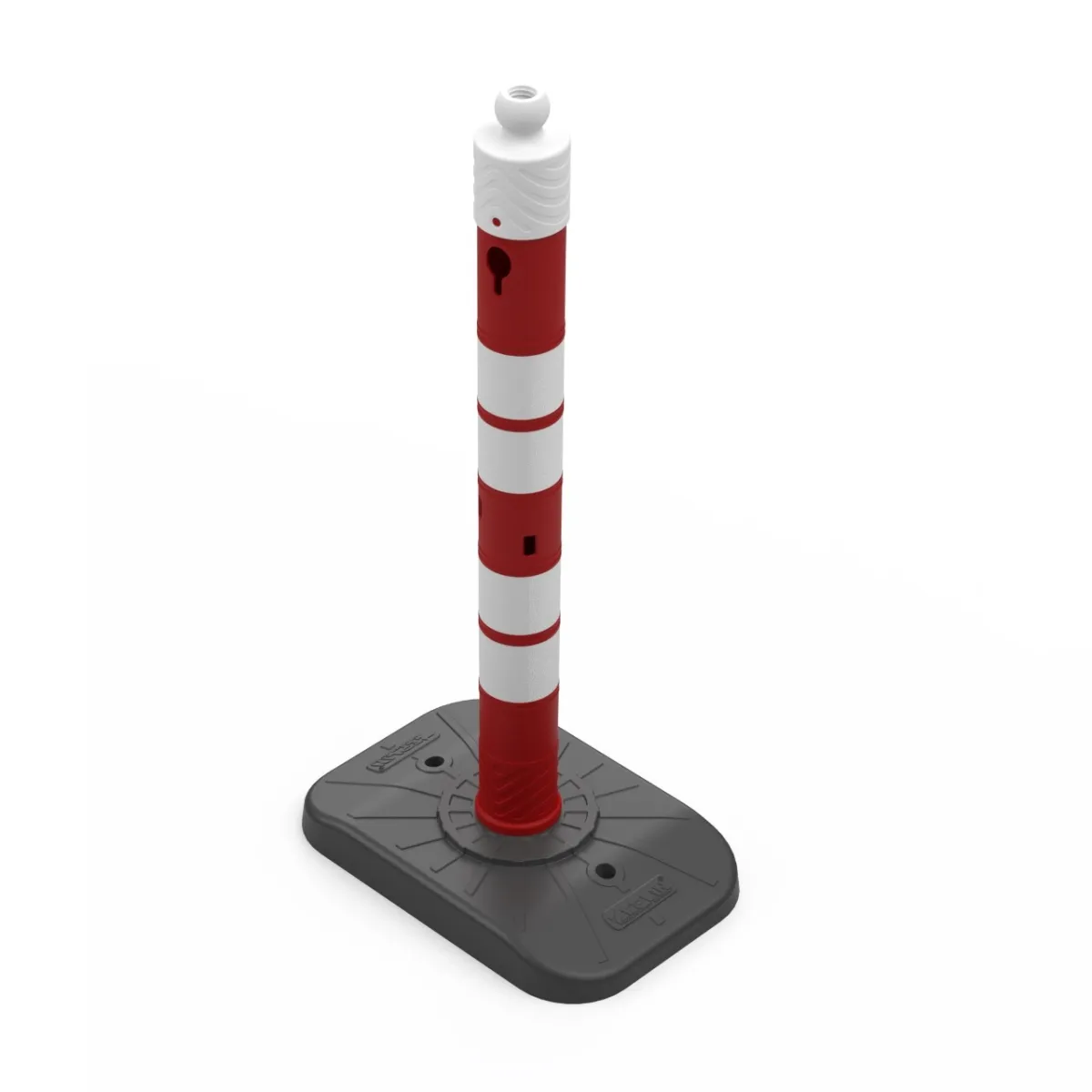
PPC posts with extra weight
These are the same posts on a 40 x 60 cm rectangular PVC base, with 2 fixing points for dowels and screws, for longer jobs:
- ATZ 63100R2: the Ø6.3 x 100 cm post with 2 films, 9 kg in total, 3.5 kg more than the ATZ 63315R2;
- ATZ 110120R4: the Ø11 x 120 cm post with 4 films, 9.5 kg, the heaviest in the range.
A chained post is pulled sideways every time someone touches the chain; the wide, heavy base holds it in place, and the row stays aligned for days. It also keeps the post upright better than the round base when it carries a sign, which catches the wind, or stands next to a busy road. All models are under portable delineator posts.
Plastic chain: by the metre or on a roll
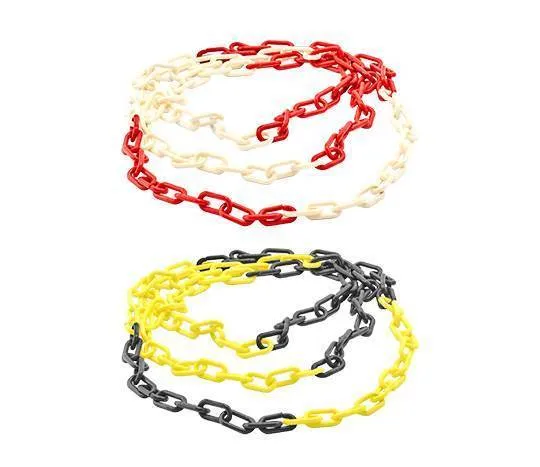
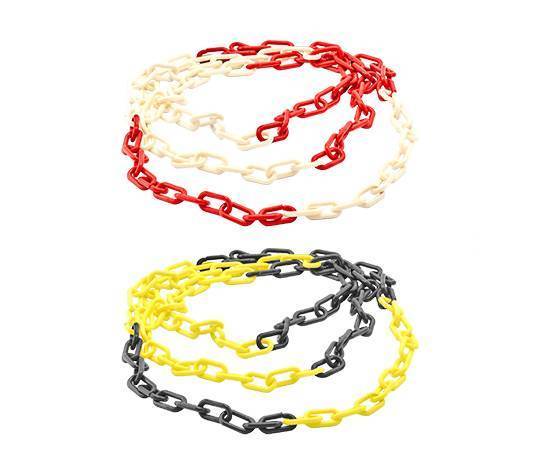
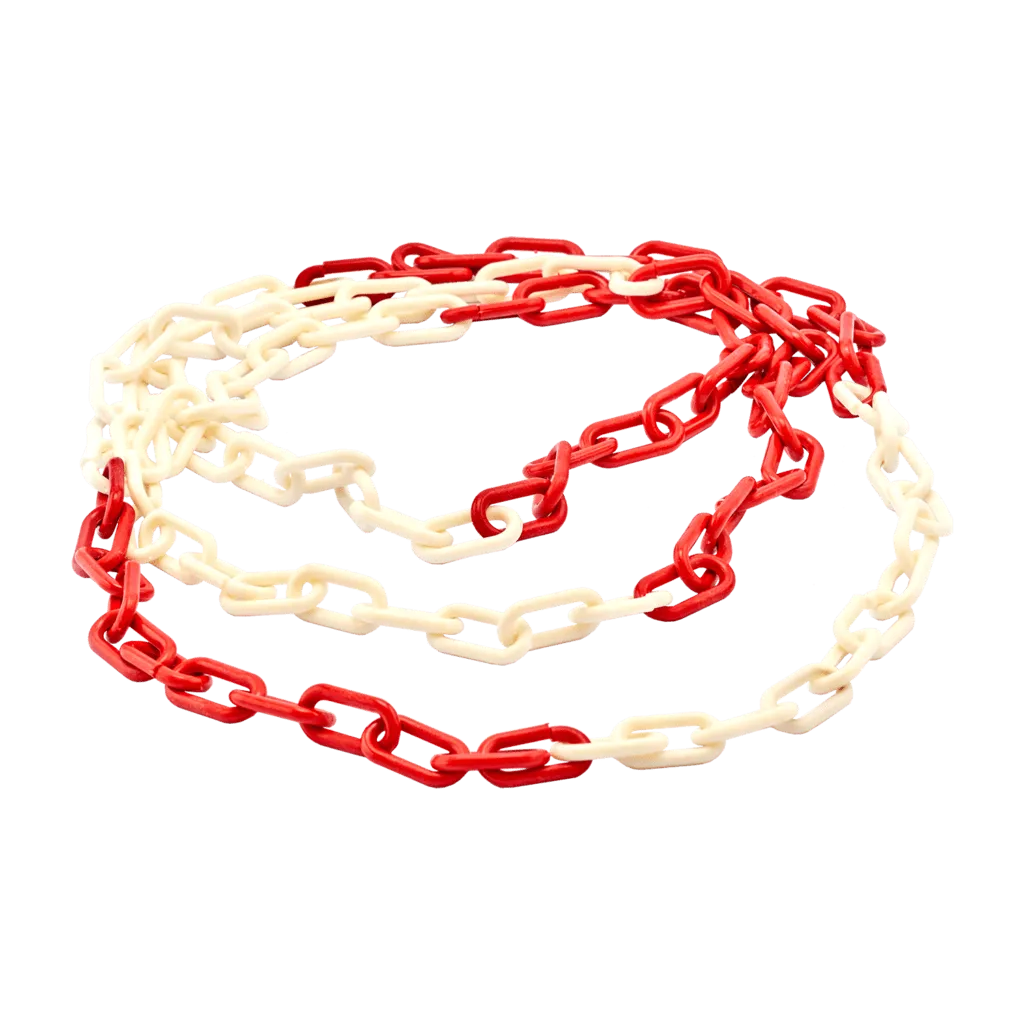
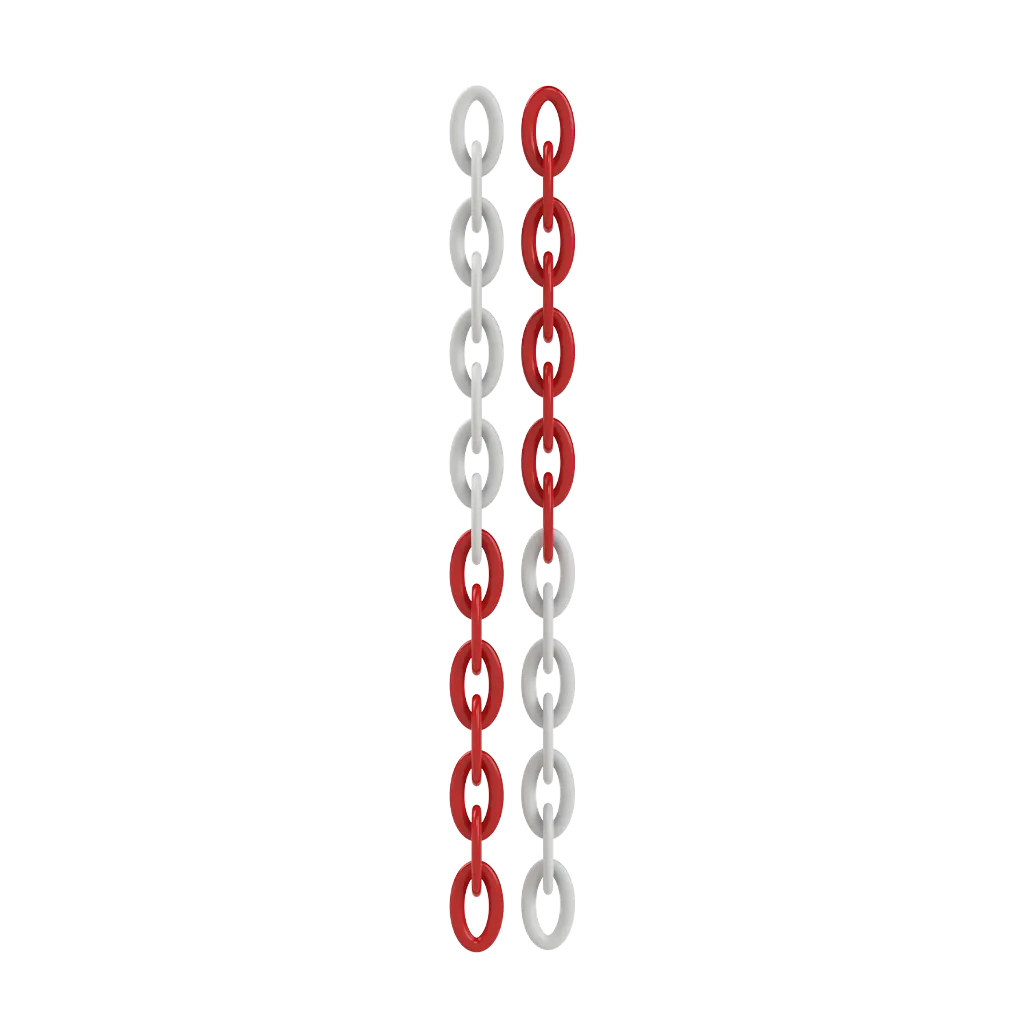
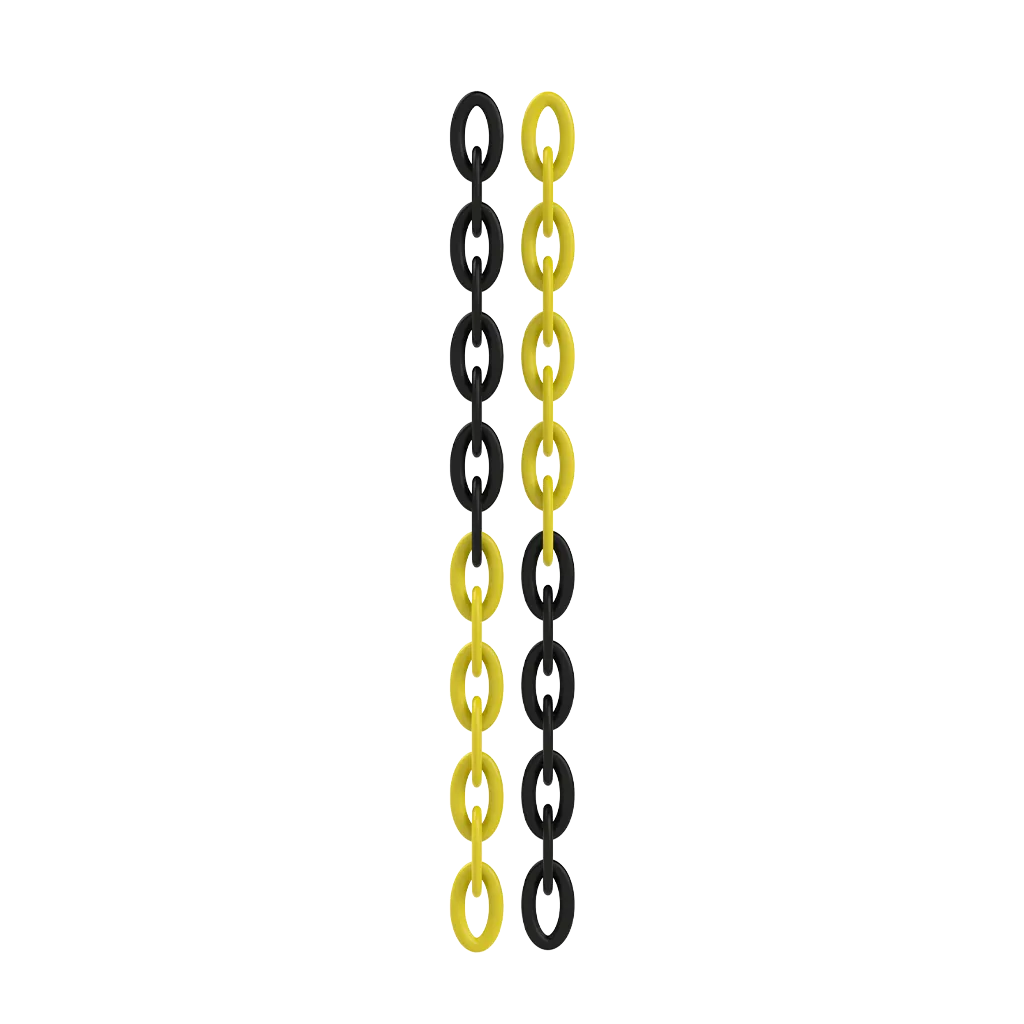
A chain passed between posts or cones turns a few separate points into a continuous barrier, without putting up a fence. Being plastic, it does not rust, it is much lighter than a metal chain and it cleans with water. The coloured links alternate in segments, so the chain stands out.
Chain by the metre
It is sold by the metre: the quantity in the cart is the number of metres. This is the option for a piece of an exact length or for a few metres:
One metre of V1-80RW or V1-80YB weighs 0.1 kg, so even 30 m of chain is easy to carry by hand.
Chain on a 25 m roll
A roll holds 25 m in a single piece and is more practical for long runs, for several areas or for anyone who sets up barriers often, such as construction companies and car park operators.
- V1-801: red-white, 8 mm, 2.5 kg;
- V1-802: green-white, 8 mm, 2.5 kg;
- V1-803: yellow-black, 8 mm, 2.5 kg;
- V1-602: green-white, 6 mm, 1.8 kg;
- V1-603: yellow-black, 6 mm, 1.8 kg.
Red-white comes only in 8 mm, and green-white only on a roll. All chains are under plastic chains.
How to choose: three questions
Which chain colour?
- red-white: the classic choice for works and building sites, an open hole in the pavement, a car park entrance or a pedestrian walkway;
- yellow-black: for hazards and obstacles in halls, warehouses and car parks, such as the edge of a loading ramp, a support column, the area where a forklift works or a parking space that must stay free;
- green-white: for parks, gardens, terraces, hotel or restaurant grounds, the edge of a freshly sown lawn and outdoor events, where red-white would look like a danger sign.
6 or 8 mm chain?
The 8 mm chain is easier to see from a distance; it is the one for building sites, car parks and long runs. The 6 mm chain is thinner, lighter and more discreet. Use it where the chain is a signal rather than a barrier: a queue at a counter, an access aisle in a warehouse, the area around a machine, especially between small or light posts.
Which post?
For chained rows in car parks and buildings, the 100 cm posts are enough. For works next to traffic, or when you fit a sign on the post, choose the 40 x 60 cm base. If the posts have to stay in place for months, it is no longer a temporary barrier: permanently fixed posts are explained in our guide to flexible delineator posts.
How many posts and how much chain you need
- Measure the run, from the first post to the last.
- Choose the spacing between posts. As an example, the chain roll sheet works with one post every 2 m.
- The number of posts is the length of the run divided by the spacing, plus one for the end.
- For the chain, add about 10% to the length of the run, so that the chain hangs a little between the posts instead of being pulled tight.
- Count the free ends of the chain: each one gets an ATZ 330A hook.
A few examples:
- a 20 m walkway with posts every 2 m: 11 posts, about 22 m of chain and 2 hooks; one V1-801 roll is enough, with some to spare, or you take 22 m of V1-80RW by the metre;
- a queue at a counter, with 10 m between the first and the last post: 11 m of V1-60YB;
- a green area to surround: the perimeter plus 10%, divided by 25 m, gives the number of rolls.
How to set up a chained row
- Place the posts along the run at equal distances and check that the row is straight.
- Pass the chain through the holes in the posts, from one end to the other, and let it hang a little between them.
- Fasten the ends with the ATZ 330A hook, to the post or back onto the chain itself.
- If people still need to pass, leave one end held only by the hook, so you can undo it in seconds.
- If the row stays for longer or stands next to traffic, fix the bases of the PPC posts through their fixing points, with dowels and screws.
For a building site enclosure that nobody must walk through, see the fences in our guide to traffic barriers.
Hooks and attachments
The end hook, ATZ 330A
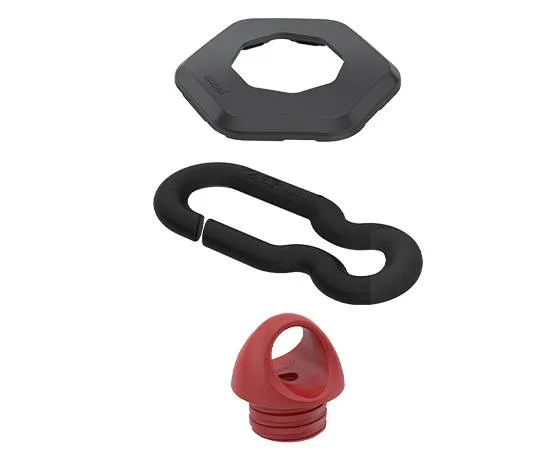
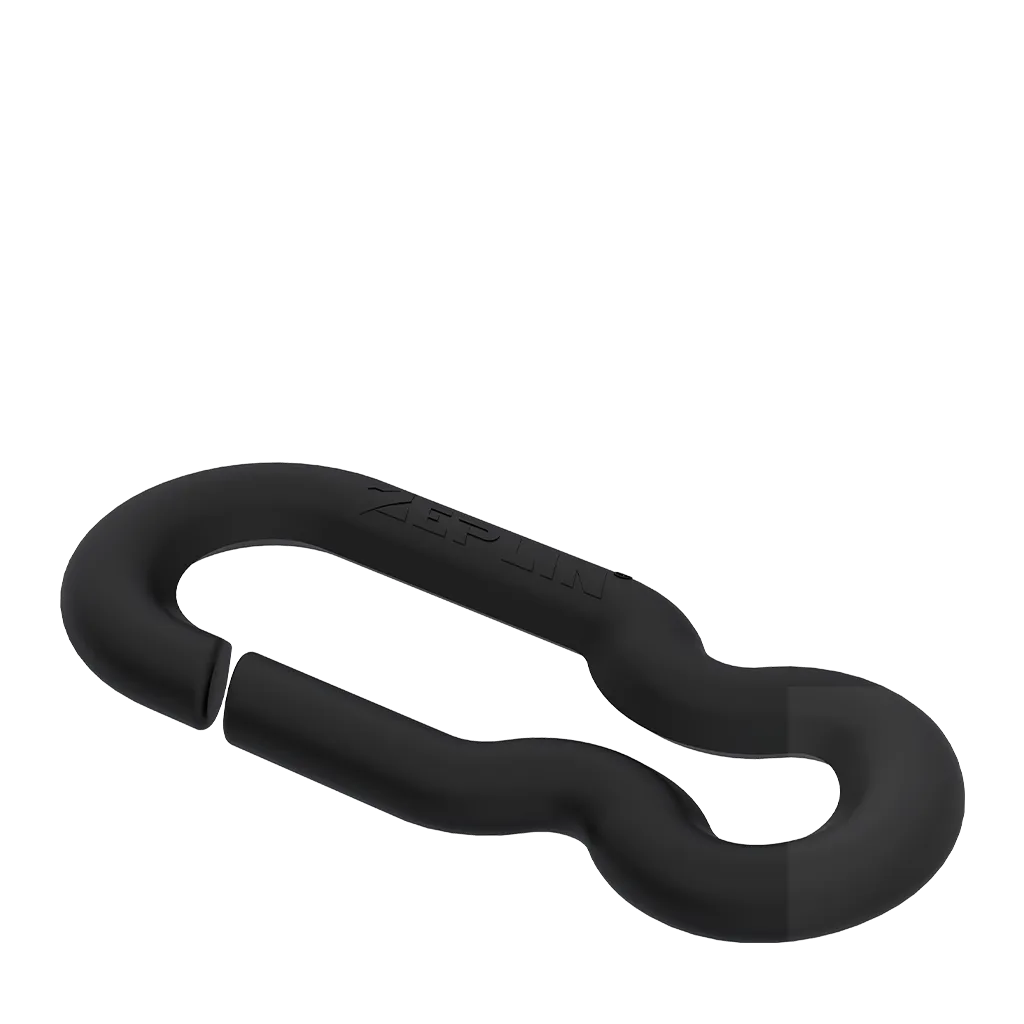
A chain run between posts has to stop somewhere. The ATZ 330A is shaped like an 8, with two loops, and is open on one side, where the link goes in. You clip one loop to a link and hang the other on a post ring, a hole or another piece of chain. That way you join two pieces of chain bought by the metre, or close and open a walkway quickly. It is black PPC and weighs 60 g. A chain between two posts needs 2 hooks, and each joint between two pieces needs one more.
The top hook, ATZ 101A
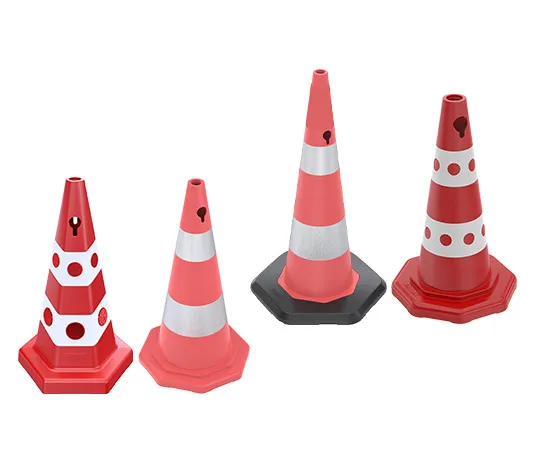
The ATZ 101A is a red PPC hook weighing 50 g. Its ribbed lower part goes into the opening at the top, and a ring stays above it, through which you pass a chain or a barrier tape. You put one hook on each post or cone in the row: 8 cones linked by a chain need 8 hooks. How cones are used at a work site is covered in our guide to traffic cones, and if you would rather use tape than chain, see our guide to barrier tapes.
One thread across the range
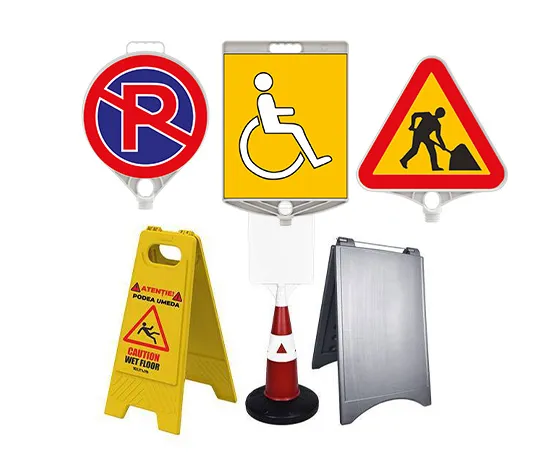
Every threaded product in our shop has exactly the same thread. The ATZ 101A hook, the small plastic signs and the warning lamps fit any of them: the portable posts, the cones sold in sets and the flexible delineator posts. A small sign on top of the post tells people why the area is closed, and a lamp makes the row visible where headlights do not shine directly. There is only one socket, so a post with the hook cannot take a lamp as well.
Car parks, queues and events
Car parks
For a single reserved space, one post set in the middle of the space is enough, for example the ATZ 63315R2. For several spaces or a closed aisle, put 100 cm posts at the ends with yellow-black chain between them, V1-80YB or V1-803. When the car park reopens, unhook the chain and move the posts to the side.
Queues at a counter or reception
A queue does not necessarily need retractable belt posts or rope posts. Two or more slim 100 cm posts, such as the ATZ 63315R2, with 6 mm chain between them, V1-60YB by the metre or the V1-603 roll, show clearly where to go. Fasten the end next to the counter with an ATZ 330A, so you can open the line when needed.
Events and green spaces
At an outdoor event or along park paths, green-white does not look like a building site: the V1-802 for runs seen from far away, the V1-602 for discreet barriers and, on large areas, the 120 cm ATZ 11015R4 posts.
Frequently asked questions
How do I link portable posts together?
Pass a plastic chain through the holes in the posts and fasten the ends with the ATZ 330A hook. Alternatively, fit an ATZ 101A hook on top of each post and pass the chain through its ring. The chain is sold separately.
Do portable posts have to be fixed into the asphalt?
No, they stand on the weight of their base. The PPC posts still have fixing points in the base for dowels and screws: 3 on the round base, 2 on the 40 x 60 cm one.
Can I put a lamp or a sign on a portable post?
Yes. Every portable post has a threaded socket on top, the same as on the cones sold in sets and the flexible posts, which takes a small plastic sign or a warning lamp. The attachments are bought separately.
Can the row be seen at night?
The PPC posts have 2 or 4 reflective films with glass lenses, which show up in the headlights. For works left overnight next to a road, fit lamps on the threaded sockets as well.
Which post should I choose for windy spots?
One on the 40 x 60 cm base: the ATZ 63100R2, at 9 kg, or the ATZ 110120R4, at 9.5 kg. The wide base keeps the post upright better than the round base, especially if a sign is fitted on it.
How we can help
The posts are under portable delineator posts, and the chains under plastic chains. If you are not sure how many posts and how many metres of chain you need, send us the length of the run, where the row will stand and how long it will stay, and we will put the list together for you, hooks included. We deliver in 24-48 hours.