
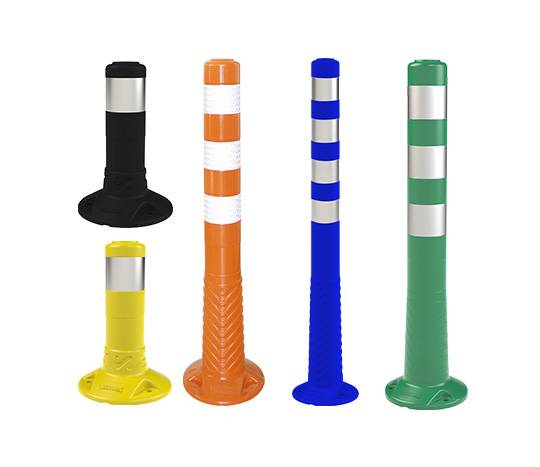
A parking space where nobody should stop, a cycle lane that cars keep driving into, an access lane that has to be kept apart from the rest of the road: road markings alone are not always enough, because drivers cross them without feeling a thing. A row of flexible delineator posts can be seen from far away, by day and by night, and shows clearly where the space for vehicles ends. If a wheel does touch one, the post bends and comes back up. This guide explains the types of posts, how TPU differs from PE, how to choose the height and the colour, how many posts you need and how to fix them into asphalt.
What a flexible delineator post is
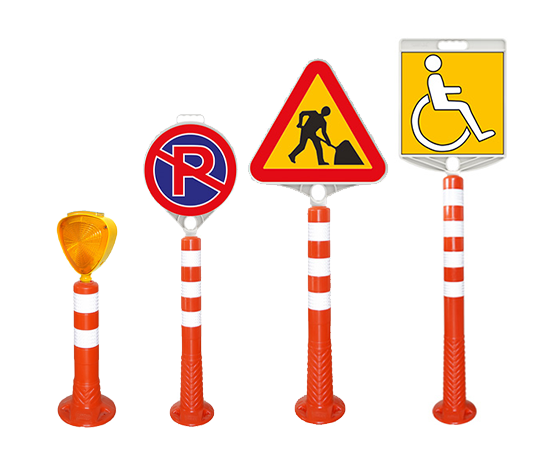
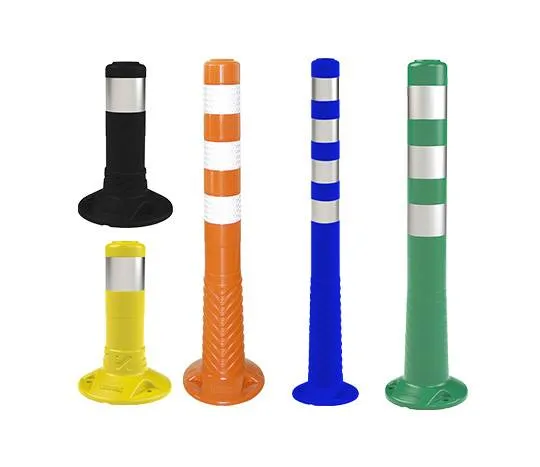
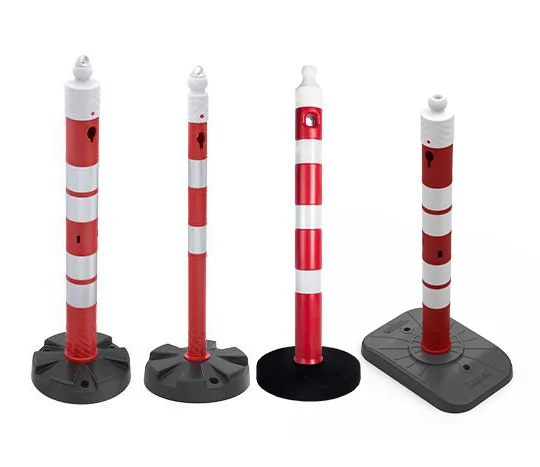
A delineator post, also known as a lane divider post or simply a parking post, is a flexible plastic post with reflective bands at the top, standing on a round base that is screwed into the asphalt. It marks a boundary that drivers see and respect. When a vehicle drives over it, the post bends and returns to its original position.
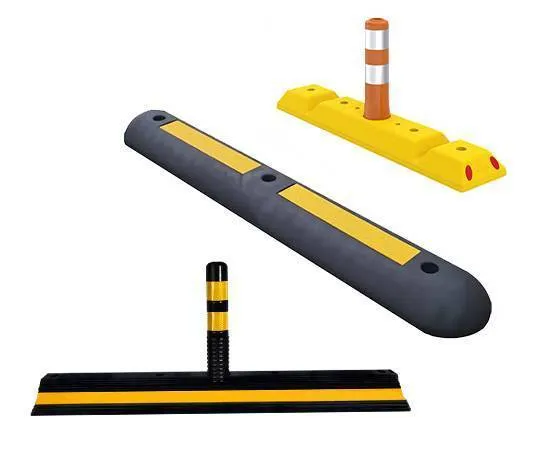
The posts in this guide are made of plastic, TPU or PE, and have no light. They are not garden or path lighting bollards, nor ornamental metal posts: their job is to separate traffic, not to decorate. And if you came here looking for a “speed delineator”, you are probably after the low piece fitted across the road that makes drivers slow down; everything about it is in our guide to speed bumps.
Where they are used
According to the product sheets, the usual places for delineator posts are:
- separating lanes or directions of traffic, on public roads and on the internal roads of companies, warehouses and factories;
- access lanes in restricted areas and private traffic zones;
- marking road works and showing how to pass an obstacle on the carriageway;
- cycle lanes and pedestrian zones, including pedestrian walkways in halls and industrial yards;
- car parks: between spaces, around access lanes, at the entrances;
- anti-parking posts that keep cars off the pavement, off green areas or off spaces where parking is not allowed.
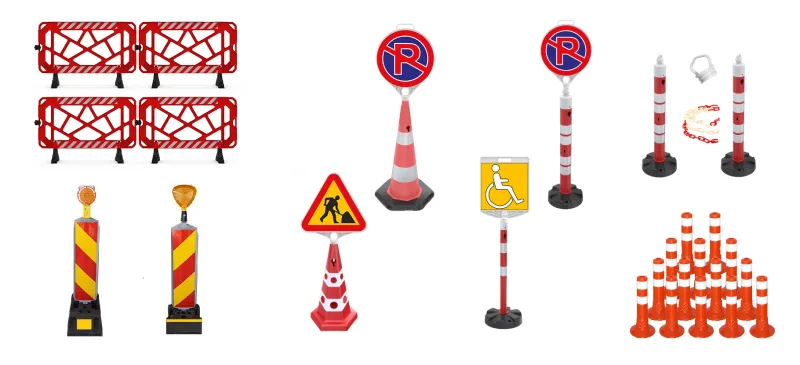
At road works, the posts add to the temporary signs; they do not replace them. Which signs a work site needs, and in what order, is covered in our guide to signing road works with U signs.
The types of delineator posts
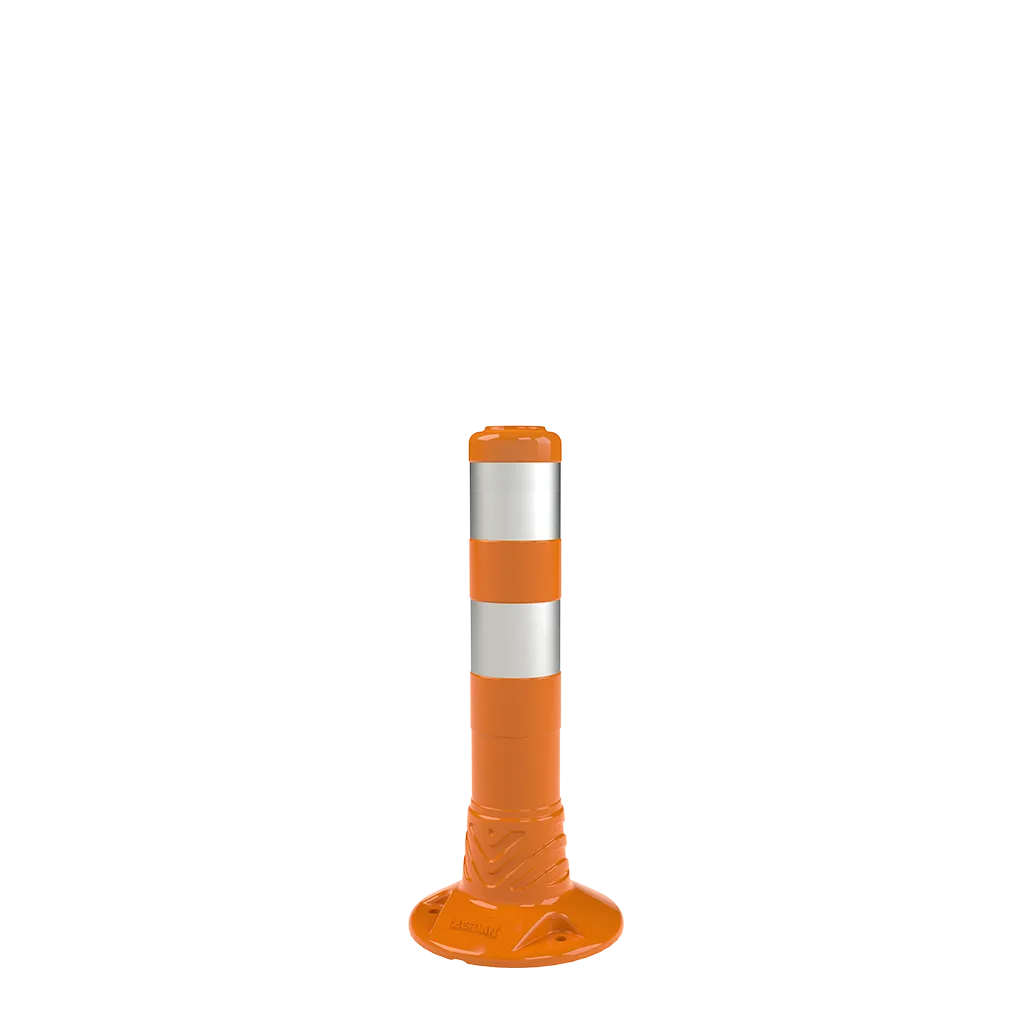
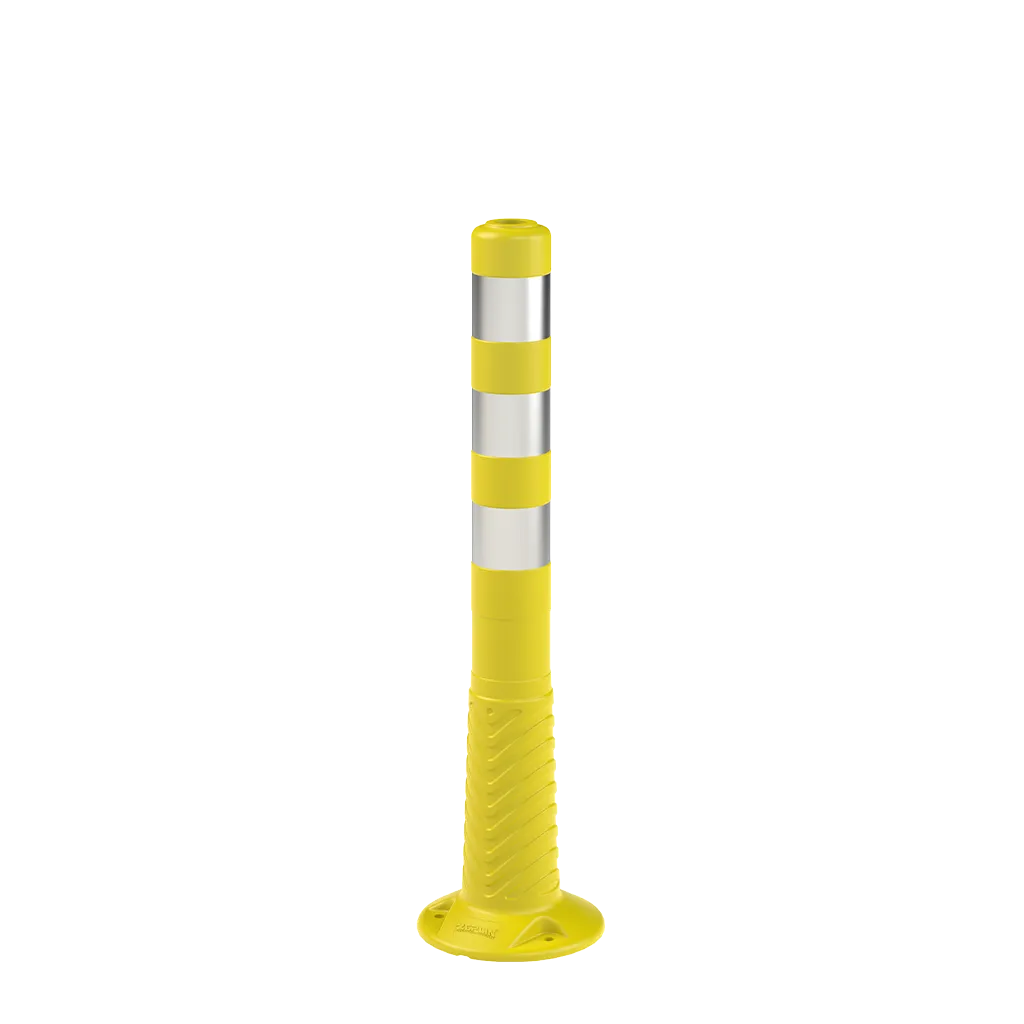
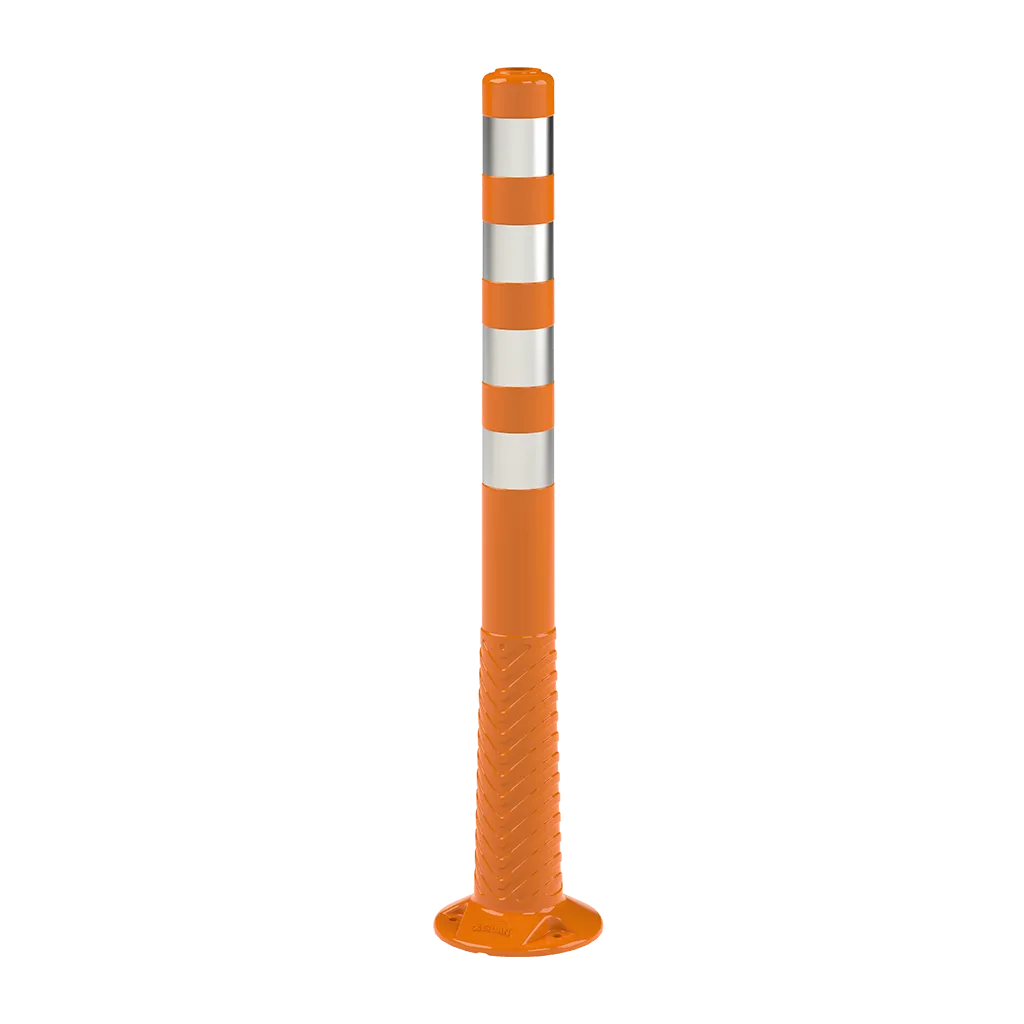
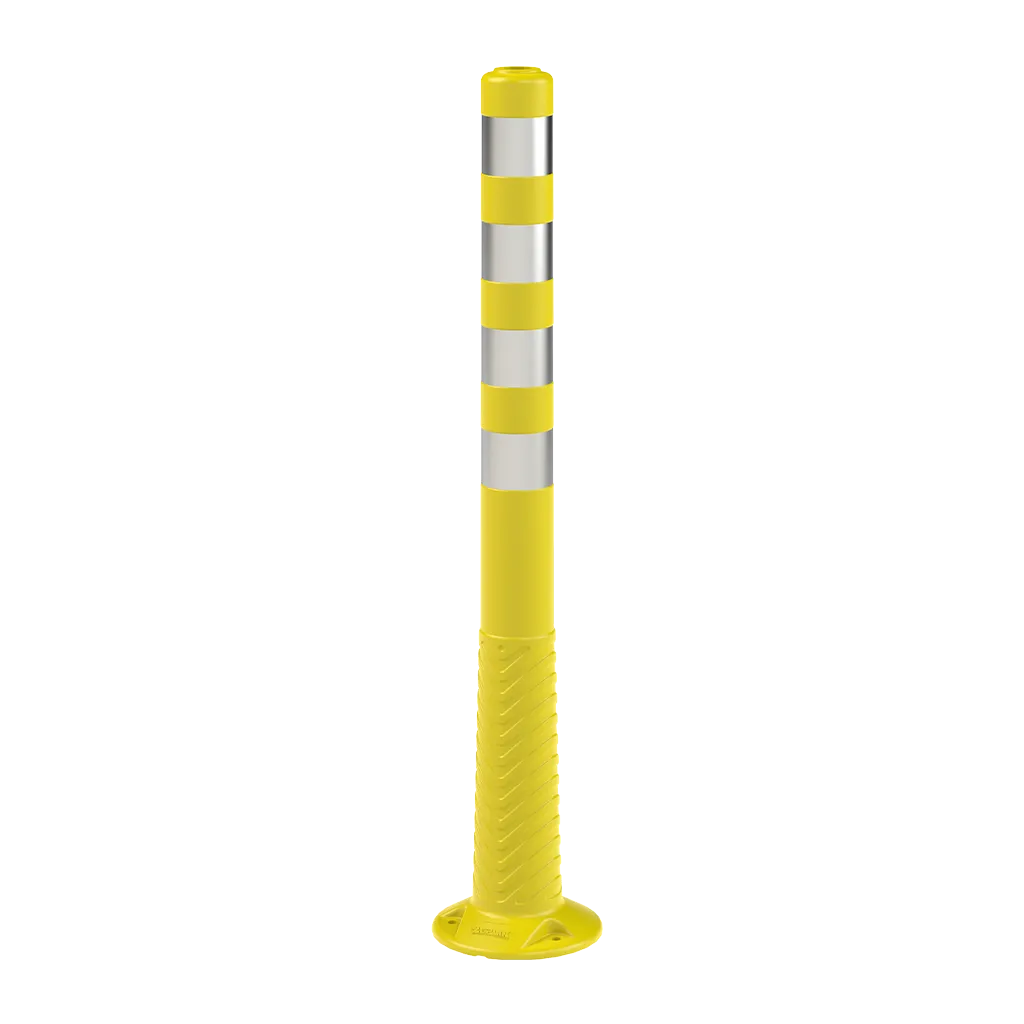
The ATZ series has one design: an Ø8 cm post on a round Ø20 cm base, fixed into the asphalt at 3 points. What changes is the material, the height and the colour. There are two materials, TPU and PE, three heights, 45, 75 and 100 cm, and three colours, orange, black and yellow, in every combination.
TPU posts, the premium series
TPU, thermoplastic polyurethane, bends when a vehicle drives over the post and then returns to upright. It has enhanced resistance to UV radiation and withstands the weather. The reflective bands are metallised:
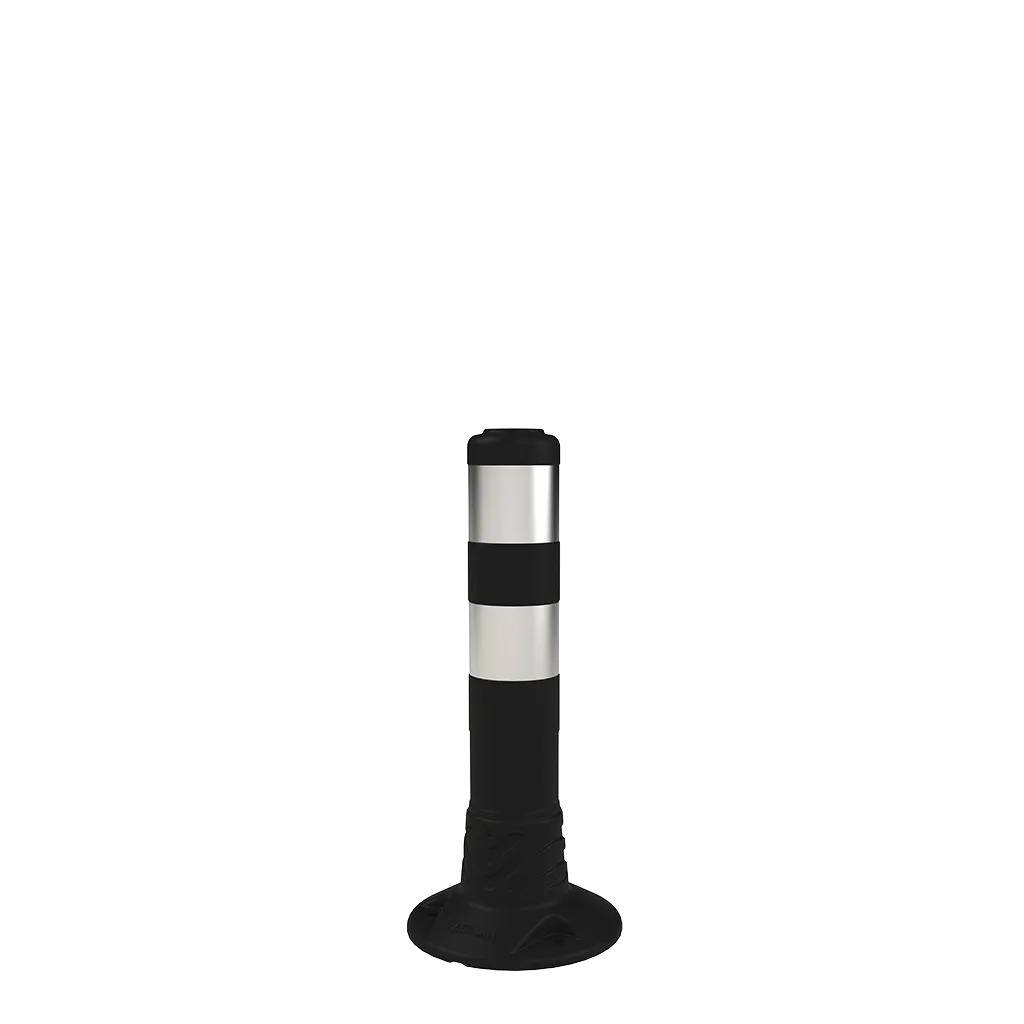
- 45 cm: ATZ 8045 (orange RAL 2009), ATZ 8045-BK (black) and ATZ 8045-Y (yellow), with 2 reflective bands; the black and the yellow ones weigh 0.93 kg;
- 75 cm: ATZ 8075 (orange RAL 2009), ATZ 8075-BK and ATZ 8075-Y, 1.2 kg; the black and the yellow ones have 3 reflective bands;
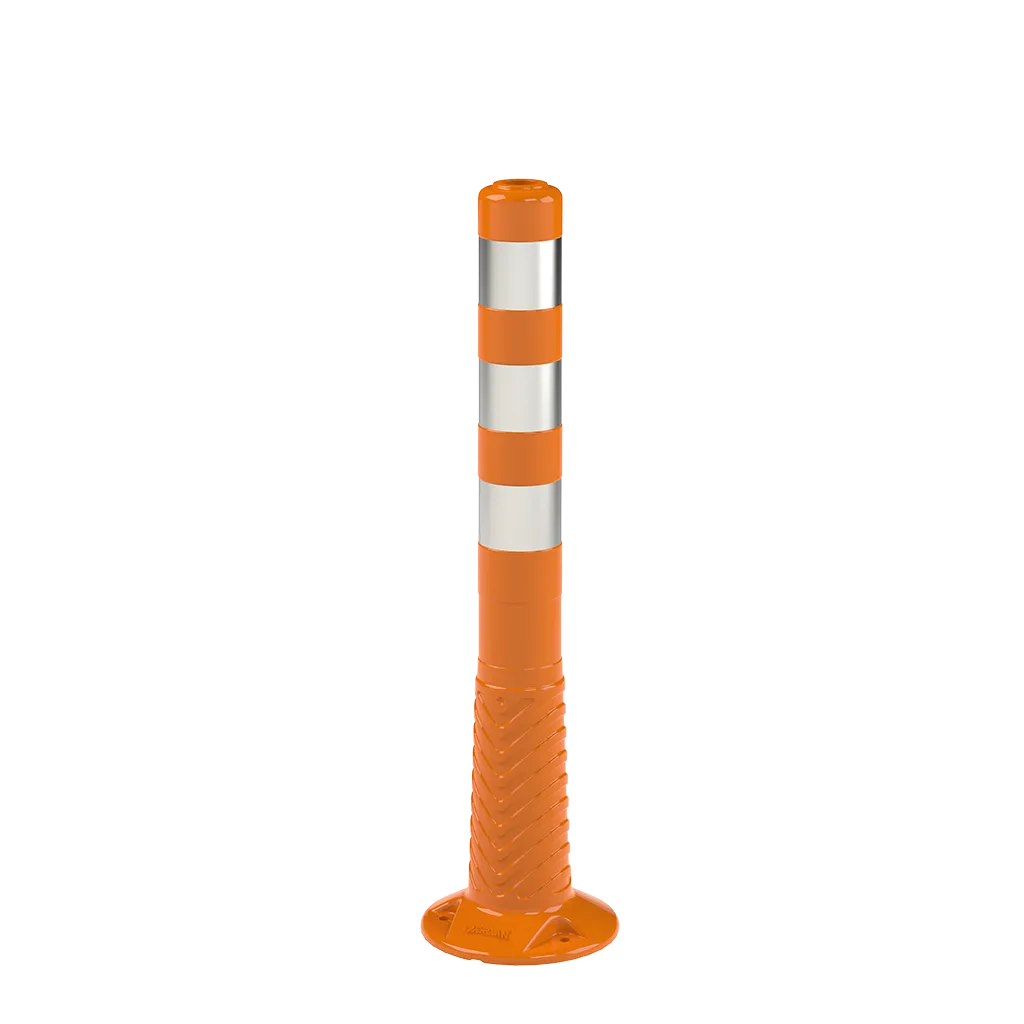
- 100 cm: ATZ 80100 (orange RAL 2009), ATZ 80100-BK and ATZ 80100-Y, 1.7 kg; the black and the yellow ones have 4 reflective bands.
The black TPU posts have white bands that stand out clearly against the black body in the headlights. The whole series is under TPU delineator posts.
PE posts, the economy series
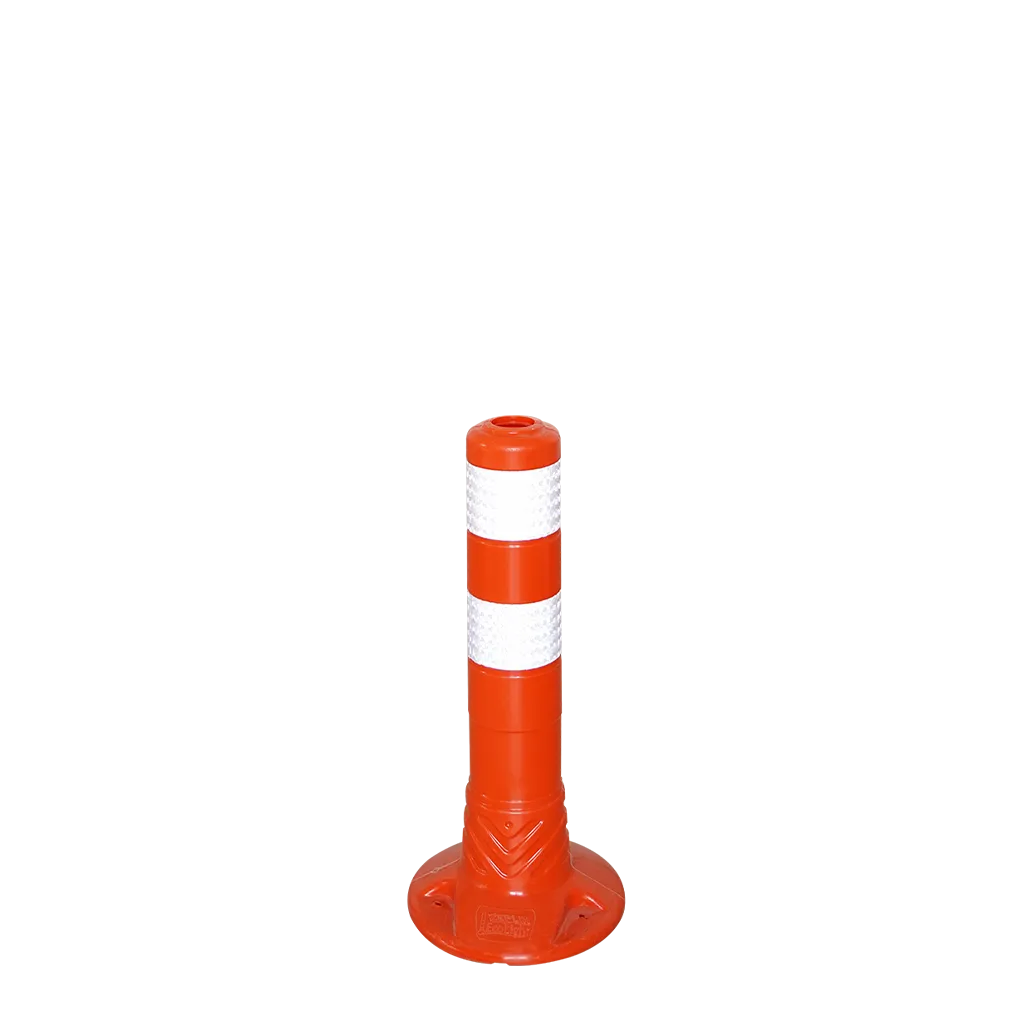
PE, polyethylene, is also flexible, weatherproof and UV-protected, but lighter. The series is meant for places where you have many posts to fit: a long cycle lane, the edge of a large car park, the internal roads of a company. The reflective bands are honeycomb type, and their number grows with the height:
- 45 cm: ATZ 8045E (orange), ATZ 8045E-BK (black) and ATZ 8045E-Y (yellow), 0.51 kg, 2 bands;
- 75 cm: ATZ 8075E, ATZ 8075E-BK and ATZ 8075E-Y, 0.8 kg, 3 bands;
- 100 cm: ATZ 80100E, ATZ 80100E-BK and ATZ 80100E-Y, 1.3 kg, 4 bands.
You will find them under PE delineator posts.

TPU or PE: how they differ
At first sight, the posts of the two series look the same: same shape, same 8 cm diameter, same Ø20 cm base, same heights and colours. Both materials are flexible, UV-protected and weatherproof. There are three differences:
- weight: at the same height, the PE post is lighter, 0.51 kg against 0.93 kg at 45 cm (compared with the ATZ 8045-BK and ATZ 8045-Y), 0.8 kg against 1.2 kg at 75 cm and 1.3 kg against 1.7 kg at 100 cm;
- reflective bands: metallised on TPU, honeycomb on PE;
- fixings: every post comes with 3 dowels and 3 screws, but only for the orange TPU posts of 45, 75 and 100 cm does the sheet also give the sizes, Ø16 x 90 mm dowels and Ø10 x 110 mm screws.
In short, PE is the economy series, lighter, suited to jobs where you fit dozens of posts and want the whole row to be easy to carry to the site. TPU is the premium series: the post has more material in it and metallised bands. The rules for height and colour below are the same for both.
How to choose: three questions
Which height do you need?
You choose the height by where the post stands and from how far away it has to be seen:
- 45 cm, the height used most often: it can be seen from the car but does not block the view; for separating lanes or directions, access lanes, passing obstacles, car parks, between spaces and along cycle lanes;
- 75 cm, which can be seen over the bonnets of the cars in front: on roads, for lane separation, at road works and around obstacles, on car park access lanes and in warehouse yards;
- 100 cm, when the post has to be seen from tens of metres away: on roads with traffic, around work zones, on the internal roads of warehouses and industrial sites, from the far end of a hall or a large car park.
Because the Ø20 cm base is the same at every height in the ATZ series, you can combine 45 cm and 75 cm posts in one row.
Which colour should you choose?
At every height, in both materials, you have three colours to choose from:
- orange, RAL 2009 in the TPU series: for roads and road works, where the post has to stand out against grey asphalt;
- black: for posts that stay fitted permanently where you do not want loud colours, in office car parks, residential courtyards and on the walkways in front of shops; by day it blends in quietly, at night the reflective bands show up;
- yellow: easy to see on dark asphalt and a match for the yellow markings in car parks and industrial yards.
If you want the posts to follow a line painted on the asphalt, the right paint is explained in our guide to road marking paint.
How many posts do you need?
You choose the spacing by the place: the closer the posts, the clearer the line and the harder it is to cut across with a car. The arithmetic is simple: divide the length of the line by the spacing and add one, for the end of the row. A few examples from the product sheets:
- a 50 m cycle lane, one post every 5 m: 11 posts; every 2.5 m: 21;
- a lane separated over 20 m, one post every 2 m: 11 posts;
- a 24 m dividing line on an internal road, one post every 3 m: 9 posts;
- the edge of a 40 m car park, one post every 5 m: 9 posts;
- a 6 m wide entrance closed with one post every 1.5 m: 5 posts.
Weight matters when you carry the posts to the site: 9 PE posts of 75 cm weigh 7.2 kg, and 10 black 45 cm PE posts weigh 5.1 kg, so they are easy to take along even in a small car.
How to fit them
The posts need no foundation and no other parts. The base is screwed straight into the asphalt, and the dowels and screws come in the pack: 3 dowels and 3 screws with every post in the ATZ series.
- Mark the line of the row on the asphalt and the place of each post, at the spacing you chose.
- Put the base on the mark and mark the 3 holes.
- Drill the holes into the asphalt and insert the dowels.
- Put the base back and tighten the 3 screws.
On the orange TPU posts of 45, 75 and 100 cm, the dowels are Ø16 x 90 mm and the screws Ø10 x 110 mm, so you know in advance which drill bit to bring.
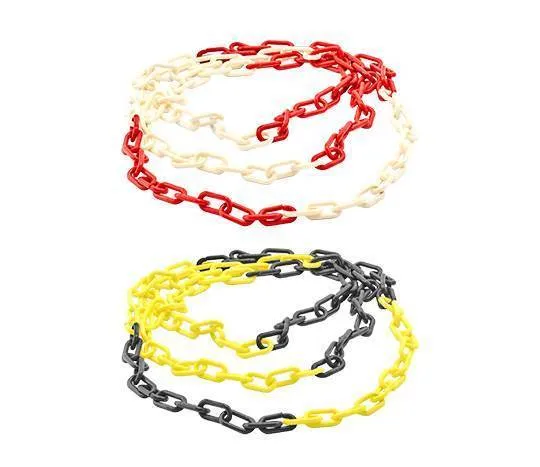
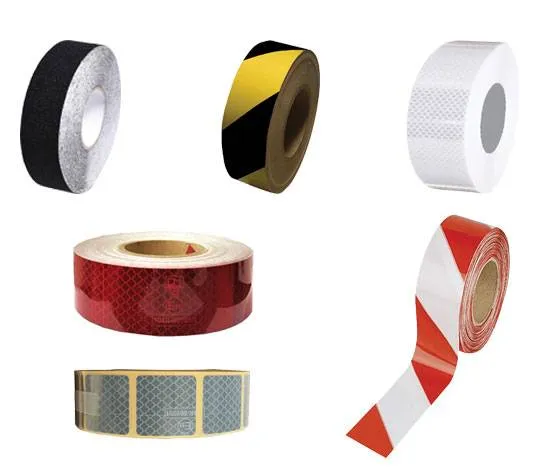
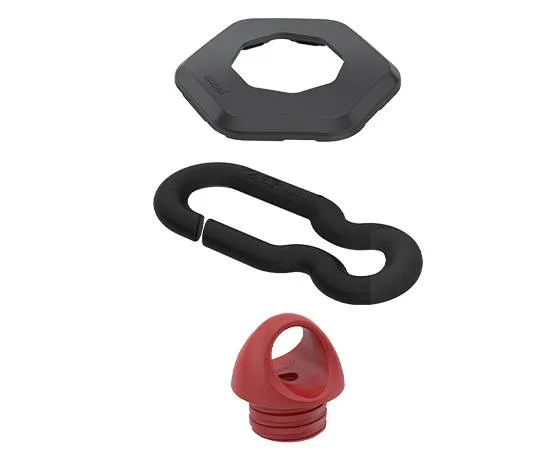
If you want to link the posts together, the ATZ 101A is a red PPC hook, 50 g, fitted at the top: its ribbed lower part goes into the opening at the top, and a ring stays above it, through which you pass a chain or a barrier tape. You put one hook on each post in the row; the same hook also fits on cones. Barrier tapes are explained in our guide to barrier and warning tapes.
What happens when a car hits a post
This is the difference from a rigid post. A flexible post gives way: when a vehicle drives over it or hits it, it bends, lies down and then returns to upright. With TPU posts, a light touch damages neither the car nor the post.
Flexibility is not an invitation to drive over them. The post is still there to keep drivers in their lane, and a row that is easy to see, with its reflective bands caught by the headlights, keeps those touches rare.
Frequently asked questions
Which posts should I put in a car park?
Between spaces and along the access lanes, 45 cm posts, which can be seen from the car without blocking the view. As anti-parking posts, on the pavement or on green areas, the ATZ 8045-BK or the ATZ 8045E-BK work well if you want them to be discreet by day. On the access lanes of large car parks, 75 cm posts can be seen over the bonnets of the cars.
Do the posts break if a car drives over them?
No. Both the TPU and the PE posts are flexible: they bend and return to their original position.
Can black posts be seen at night?
Yes. Black posts have 2 reflective bands at 45 cm, 3 at 75 cm and 4 at 100 cm, and the bands catch the headlights. On the ATZ 8075-BK, for example, the white bands stand out clearly against the black body.
Do I need a foundation?
No. The base is screwed straight into the asphalt with the dowels and screws from the pack, with no foundation and no other parts.
Can I mix posts of different heights in one row?
Yes. All ATZ posts have the same Ø20 cm base, so you can combine, for example, 45 cm and 75 cm posts in the same line.
What is in the pack?
The post and its fixings: 3 dowels and 3 screws. On the orange TPU posts of 45, 75 and 100 cm, the sheet gives the sizes too: Ø16 x 90 mm dowels and Ø10 x 110 mm screws.
How we can help
All the posts, from 45 to 100 cm, and the chain hook are under flexible delineator posts. If you are not sure which height or how many posts you need, send us the length of the line, what you want to separate and the surface they go on, and we will put the list together for you. We deliver in 24-48 hours.